Table of Contents >> Show >> Hide
- Why fake Funko Pops are so common
- The 7 telltale signs of a fake Funko Pop
- 1. The box print looks cheap, blurry, or just plain wrong
- 2. The bottom of the box does not tell a believable story
- 3. The figure itself looks off-model, sloppy, or weirdly lightweight
- 4. The sticker flex looks suspicious
- 5. The listing photos and seller behavior are waving red flags
- 6. The price is too goodor the quantity is too weirdto be believable
- 7. Official references do not match the Pop in front of you
- How to check a Funko Pop before you buy
- What to do if you already bought a fake
- Collector experiences: what this feels like in real life
- Final thoughts
- SEO Tags
Funko Pops are supposed to be fun. That is literally in the name. What is not fun is paying real-money collector prices for a fake figure that looks like it was printed in a basement next to a suspiciously humming space heater.
If you collect long enough, you will eventually run into a counterfeit Pop. Maybe it is a “rare grail” priced way too low. Maybe it is a convention exclusive with a sticker that looks almost right. Maybe it is a listing with photos so blurry they seem to have been taken during an earthquake. Whatever the setup, fake Funko Pops are a real problem in the resale market, especially for vaulted, exclusive, and high-demand figures.
The good news is that most counterfeits are not perfect. In fact, many of them leave behind a trail of clues. Some are obvious, like misspelled packaging. Others are subtler, like bad paint edges, odd vinyl texture, or serial numbers that do not add up. Once you know what to look for, you can usually spot a fake before it takes up permanent residence on your shelf.
This guide walks through seven telltale signs of a fake Funko Pop, along with practical advice on how to compare listings, verify details, and avoid getting bamboozled by a “deal” that is really just disappointment in a window box.
Why fake Funko Pops are so common
Counterfeiters go where the money is. Rare Pops, vaulted releases, convention exclusives, and hard-to-find characters attract strong demand, which means they also attract bootlegs. The more famous the figure, the greater the temptation for shady sellers to churn out lookalikes and hope buyers either do not notice or do not know enough to challenge them.
That does not mean every imperfect Pop is fake. Real Funko Pops are mass-produced collectibles, not hand-polished museum sculptures. A slightly messy paint line or minor box wear does not automatically equal “counterfeit.” The trick is to look for patterns of problems. One tiny flaw may be normal. Five weird details at once? That is your cue to stop, breathe, and back away from the checkout button.
The 7 telltale signs of a fake Funko Pop
1. The box print looks cheap, blurry, or just plain wrong
The packaging is usually the first and easiest place to catch a fake Funko Pop. Authentic boxes tend to have crisp printing, clean lines, readable text, and consistent color. Counterfeit boxes often look like they were produced on a printer that had given up on life.
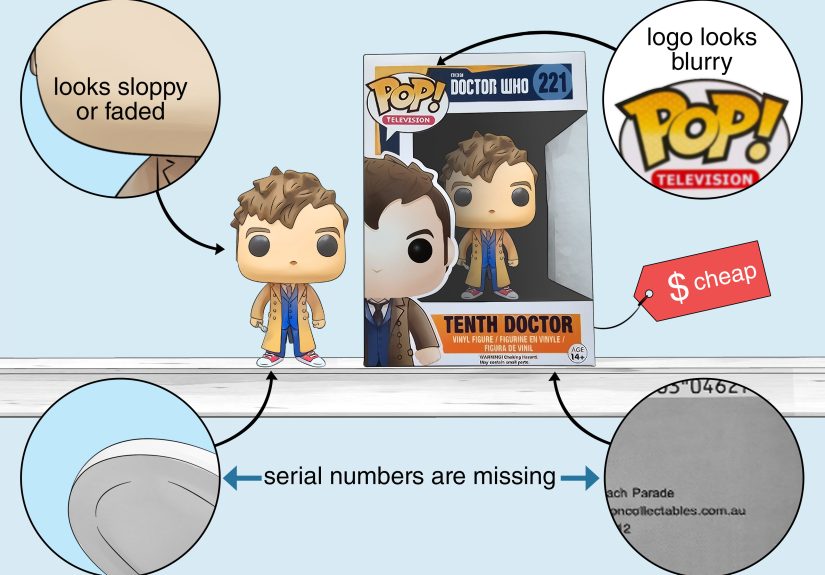
Look closely at the character name, the Pop! logo, side panel artwork, license text, and trademarks. Common warning signs include fuzzy printing, off-center logos, wrong fonts, odd spacing, muted colors, misspellings, or cardboard that feels extra glossy or flimsy. If the plastic window looks thin, warped, or poorly fitted, that is another red flag.
This is one reason collectors obsess over close-up photos. A fake may look decent from three feet away, but the closer you zoom in, the more the details start confessing their crimes.
2. The bottom of the box does not tell a believable story
The bottom flap is collector gold. It often contains manufacturing details that can help separate a legit Pop from a knockoff. On many authentic figures, you should see a date stamp or production code, the Funko logo, and factory information. If those details are missing, blurry, printed strangely, or inconsistent with the figure, you should get suspicious fast.
For more recent releases, matching serial or production details between the box and the figure can be especially helpful. For older Pops, the codes may not always match perfectly, so avoid acting like a one-person crime lab over a single mismatch. Instead, use the code as one piece of the puzzle. When the bottom info looks wrong and the box print is sketchy and the figure paint is sloppy, the case gets much stronger.
In short: the bottom of the box should look official, intentional, and cleannot like it was added in a hurry five minutes before listing day.
3. The figure itself looks off-model, sloppy, or weirdly lightweight
Sometimes the box passes the first glance test, but the figure gives the game away. A counterfeit Funko Pop may have the right general pose, yet still feel oddly “wrong” once you inspect it in person.
Check the paint first. Authentic Pops may have small factory imperfections, but bootlegs often show paint bleeding, uneven edges, strange color tones, overspray, dull finishes, or facial features that look slightly misplaced. Then inspect the mold. Fakes may have rough seams, softer details, weird proportions, warped accessories, or a head shape that seems just a little too cursed.
Material quality matters too. Real Funko vinyl usually has a consistent feel. Counterfeits can feel lighter, rougher, or more rubbery. That does not mean you need to weigh your Pop like a jeweler examining diamonds, but if it feels cheap in the hand, trust your instincts and keep checking.
4. The sticker flex looks suspicious
Exclusive stickers are where many collectors get tricked. A fake seller knows people love convention exclusives, retailer exclusives, and special-edition badges, so they may slap on a sticker that looks close enough to fool a rushed buyer.
But here is the important nuance: not every sticker variation means fake. Some Pops have shared stickers, retailer versions, regional partner releases, or territory-specific packaging. So do not treat every sticker difference like a courtroom confession. Instead, compare the whole package: box number, artwork, retailer tie-in, character details, and release type.
On newer authenticated exclusives, Funko has introduced security features such as QR-linked stickers and unique item codes tied to Octane5 verification. If a seller is offering a recent exclusive that should include modern authentication packaging, and the sticker looks generic, missing, or obviously off, that is a major warning sign.
5. The listing photos and seller behavior are waving red flags
Sometimes the Pop is not the problem. The seller is.
If a listing only shows stock photos, refuses to provide close-ups, or conveniently crops out the bottom of the box and the figure base, that is not charming mysteryit is suspicious. A trustworthy seller should be willing to show the front, back, sides, bottom, sticker, and the figure itself, especially for a valuable Pop.
Also pay attention to seller history. Do they have solid feedback? Do they specialize in collectibles? Are other buyers complaining about authenticity? Are they selling ten copies of a supposedly rare vaulted Pop like they discovered a secret warehouse beneath their garage?
Good listings make verification easier. Bad listings make excuses. That difference matters.
6. The price is too goodor the quantity is too weirdto be believable
Everybody loves a bargain. Collectors also love hope. Counterfeiters love both of those things even more.
If a vaulted Pop that typically sells for serious money suddenly appears at a laughably low price, you should assume something is wrong until proven otherwise. The same goes for sellers offering multiple units of a supposedly limited or rare figure. Real scarcity does not usually look like endless inventory.
This is where market context matters. Check trusted price databases, sold listings, and collector references before buying. A suspiciously cheap “grail” is often not a miracle. It is tuition for a lesson you did not want to take.
7. Official references do not match the Pop in front of you
One of the smartest ways to spot a fake Funko Pop is to compare it against official or trusted references. Do not rely on memory. Collectors misremember details all the time, especially when sticker variants, exclusives, and reissues are involved.
Use the Funko app, Funko product pages, trusted retailer listings, and well-known collector databases to verify the box number, character art, color scheme, retailer association, and release type. For example, if a Pop is supposed to be tied to a specific store or event, that information should make sense when compared to known checklists.
If the box number is wrong, the art does not match official references, the sticker seems invented, and the figure colors are off, congratulations: you have likely found a fake. Not the kind of congratulations anyone wants, but still.
How to check a Funko Pop before you buy
Before you spend your money, run through this quick process:
- Ask for clear photos of the front, back, sides, bottom, sticker, and the figure out of the box if possible.
- Compare the box number and artwork with official Funko pages, trusted retailers, or collector databases.
- Inspect the serial or production information on the box and figure base.
- Look for paint quality, molding sharpness, and accurate character details.
- Check whether the exclusive sticker matches the known release pattern.
- Review seller ratings, return policy, and sales history.
- Compare the asking price with current market value.
If two or three things feel off, pause. If five things feel off, do not “sleep on it.” Just skip it.
What to do if you already bought a fake
First, document everything. Take photos of the box, sticker, bottom flap, figure base, paint flaws, and listing screenshots. Then contact the seller and request a refund. If you bought through a marketplace with buyer protection, file a claim promptly and include the evidence.
Do not turn around and resell the fake as if it were real. That only continues the problem and can get you into trouble on major marketplaces. If the platform supports reporting counterfeit items, use that process too. You may not save the entire collecting world, but you can at least make life harder for the person trying to unload bootlegs by the dozen.
Collector experiences: what this feels like in real life
One of the most common collector experiences starts with adrenaline. You find a Pop you have wanted forever. Maybe it is vaulted. Maybe it is a convention exclusive. Maybe it is one of those figures people talk about in forums with the same tone usually reserved for lost treasure. Then you see the price, and your brain starts doing acrobatics. “Could this be the deal of the year?” it asks. Sometimes the answer is yes. More often, the answer is, “Why does this seller have six of them?”
Another familiar experience is sticker panic. New collectors often assume that one sticker difference means instant counterfeit. Then they discover shared stickers, international partner stickers, reissues, and retailer variants, and suddenly the whole hobby feels like it comes with a side quest in detective work. Many collectors learn this lesson the stressful way: by staring at side-by-side photos at midnight, zooming in so far they can practically count cardboard fibers.
There is also the moment when a Pop arrives and your instincts start whispering. The box might look okay at first, but then the colors seem muddy. The plastic window feels thin. The figure’s eyes are slightly off. The paint line around the hair looks like it lost an argument with gravity. You tell yourself not to overreact, because nobody wants to admit they may have been duped. So you compare it with official images, check the bottom, inspect the base, and slowly realize your shelf has welcomed a fraud.
Plenty of collectors also go through the “not mint versus not authentic” confusion. A damaged corner, shelf wear, or a factory scuff does not automatically mean fake. That is an important distinction. Some perfectly real Pops arrive with less-than-perfect boxes, especially from resale listings. The learning curve in this hobby is figuring out the difference between ordinary wear and details that signal a counterfeit product. Experience teaches you that condition issues are frustrating, but authenticity issues are a whole different beast.
Then there is the refund dance. You gather screenshots, take photos from seven angles, write a message more polite than your mood deserves, and hope the marketplace sides with common sense. It is annoying, but it also teaches a lasting lesson: the best defense is patience before purchase. The collectors who get burned once usually become much more methodical the next time. They ask for better photos. They compare box numbers. They check seller ratings. They stop treating suspiciously cheap grails like destiny and start treating them like risk.
In a strange way, spotting fakes becomes a rite of passage. Not a fun rite of passage, admittedly. More like a pop-culture survival skill. The upside is that once you learn the warning signs, you shop smarter, collect with more confidence, and become the person friends message when they ask, “Hey… does this Funko Pop look weird to you?”
Final thoughts
If you want to know how to spot a fake Funko Pop, the secret is simple: do not rely on one sign alone. Check the box. Check the bottom. Check the paint. Check the sticker. Check the seller. Check the price. Then compare everything against trusted references.
Authentic Pops usually hold up when you look closer. Fake ones usually fall apart under scrutiny. So the next time a listing promises a holy-grail collectible for suspiciously little money, remember this timeless collector wisdom: when a deal looks magical, it may actually be haunted.