Table of Contents >> Show >> Hide
- Why “So Marcia” Became a Thing
- The Fan Theory: One Dentist Appointment Broke the Universe
- Evidence From the Show: Pre-Dentist Marcia vs. Post-Dentist Marcia
- Flanderization, 1970s Sitcom Edition
- Why the Dentist Theory Actually Makes Psychological Sense
- Alternative Explanations That Still Fit the Evidence
- Why We Still Care About Marcia’s “So Marcia” Moment
- How to Rewatch the Theory Like a Detective
- Bonus: of “Been There, Rewatched That” Experiences
- Conclusion
Every long-running TV show eventually hits that moment where you blink and go, “Wait… since when did that become their whole personality?”
It’s the sitcom equivalent of ordering a regular latte and getting a triple-espresso milkshake with a fog machine and fireworks.
And if you’ve ever watched The Brady Bunch in order (or even in the chaotic, rerun-fueled swirl most of us grew up with),
you may have noticed something odd about Marcia Brady: early on, she’s confident and popular, surebut later she becomes So Marcia
that it feels like the writers installed a tiny spotlight over her head and then lost the dimmer switch.
The phrase “So Marcia” is fan shorthand for Peak Marcia: the version who’s not just pretty and poised, but seemingly powered by applause,
compliments, and the mild terror of not being the center of the room. (Yes, Jan would like to speak to the manager.)
So what happened? One fan theory suggests Marcia didn’t slowly evolve into this bigger-than-life persona
she snapped into it, practically overnight, thanks to one very specific episode.
Why “So Marcia” Became a Thing
The Jan Problem: “Marcia, Marcia, Marcia!”
Before we diagnose Marcia with “Main Character Syndrome,” let’s remember the show itself helped build the legend.
In Season 3’s “Her Sister’s Shadow,” Jan is exhausted from being compared to her seemingly flawless big sister and finally explodes with that
immortal chant: “Marcia, Marcia, Marcia!” It’s one of the most enduring running gags in classic sitcom history, and it works because it’s relatable:
everyone knows someone who collects compliments the way other people collect stamps.
The point isn’t that Marcia is evil. The point is that Marcia’s presence is so strong it warps the emotional gravity in the room.
Teachers praise her. Parents trust her. Friends follow her. Jan is left trying to form an identity in the shadow of a human highlight reel.
That’s the ecosystem where “So Marcia” thrives.
The Fan Theory: One Dentist Appointment Broke the Universe
Here’s the core idea: Marcia didn’t become extra because of a slow, natural character shift.
She became extra because of one bizarrely influential episodethe one fans lovingly summarize as:
“Marcia accidentally thinks her dentist is asking her on a date, and then reality politely refuses to correct her fast enough.”
Quick recap of “Love and the Older Man”
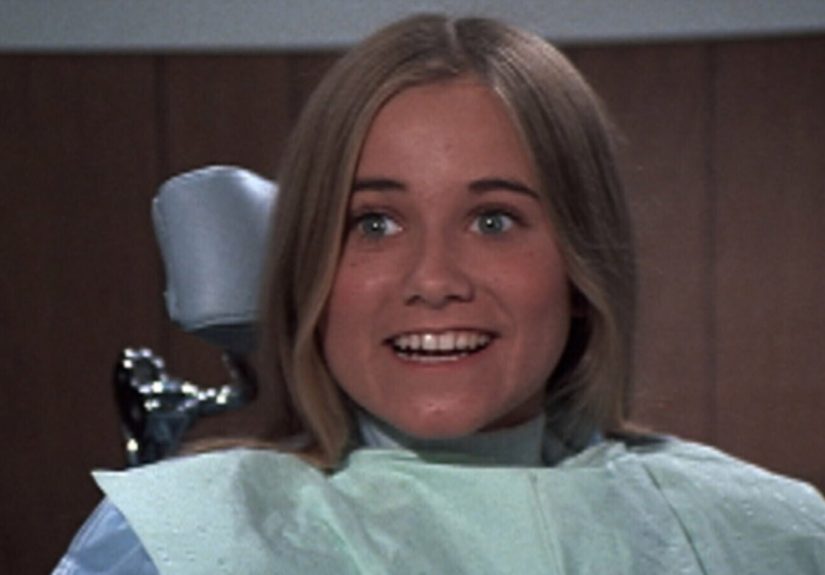
In “Love and the Older Man,” Marcia develops a crush on the family’s new dentist, Dr. Stanley Vogel.
Then comes the misunderstanding: Dr. Vogel mentions something that Marcia interprets as a romantic invitation
(in her mind, it’s practically a proposal with strings and a dramatic orchestra). In reality, he wants to ask if she’ll babysit
while he and his wife go out. Marcia, running on pure teenage movie logic, imagines herself entering a glamorous older-man romance
that would absolutely not fly past today’s HR department.
When Marcia discovers he’s married, she doesn’t just feel embarrassedshe launches into a heartbreak scene like she’s auditioning
for a soap opera called “As the Molar Turns.” And here’s the key: the dentist doesn’t immediately yank the emergency brake and say,
“Whoa, sorry, no, this is babysitting.” He plays along just enough to keep her from feeling mortified.
So Marcia walks away believing something far more powerful than “I misunderstood a babysitting request.”
She believes: “A grown, successful, handsome professional wanted meand I nobly shut it down.”
Why this moment is a perfect “Marcia origin story”
If you wanted to create a recipe for “So Marcia,” you could do worse than:
take a self-assured teen, add a misunderstanding that flatters her, sprinkle in a moral victory she didn’t technically earn,
and bake until her ego rises like a soufflé in a wind tunnel.
The fan theory argues that this single event rewired Marcia’s self-image. Before: “I’m pretty and capable.”
After: “I am so pretty and capable that married professionals require my heroic restraint.”
That’s not just confidencethat’s confidence wearing a cape.
Evidence From the Show: Pre-Dentist Marcia vs. Post-Dentist Marcia
Before: confident, yescartoonishly smug, not quite
Early-season Marcia is often the family’s calm, responsible big sister. She’s popular, she’s admired, and she knows it
but she’s not usually written as a parody of herself. She can be competitive, she can be image-conscious,
but she still feels like a recognizable teenager: sometimes thoughtful, sometimes dramatic, and sometimes hilariously wrong.
Even in episodes that position her as “the perfect one,” the show tends to give her human edges:
she can overreact, misjudge a situation, or learn a lesson without turning into a full-time compliment vacuum.
After: vanity becomes the story engine
Soon after the dentist episode, Marcia’s image-conscious side is no longer a traitit’s an episode generator.
The most famous example is “The Subject Was Noses,” where Marcia is hit in the nose by a football and spirals
because (in her mind) her face is her entire future. The comedy lands because it’s such a perfectly Marcia fear:
not “I’m hurt,” but “What if I’m… slightly less adored?”
That episode is iconic partly because it crystallizes what “So Marcia” means. She’s not just living life;
she’s managing her brand. And once a character becomes brand management in human form, the show can keep turning that crank forever:
more attention, more jealousy, more identity crises around her orbit.
Flanderization, 1970s Sitcom Edition
Media nerds have a word for what happens when a character’s most noticeable trait gradually balloons until it crowds out everything else:
flanderization. It’s when writers simplify and exaggerate because it’s easy, it’s consistent,
and it makes punchlines faster. A “smart one” becomes only smart. A “weird one” becomes only weird.
A “popular, pretty girl” becomes… a walking spotlight.
The fun twist with Marcia is that fans argue it feels less like a slow drift and more like a sudden gear shift.
And if you’re looking for a single moment that could plausibly explain the shift, “Love and the Older Man” is suspiciously convenient.
Why the Dentist Theory Actually Makes Psychological Sense
1) Accidental reinforcement is still reinforcement
Teen brains are basically suggestion engines with good hair. If Marcia experiences a situation that implies,
“You are irresistible,” she’s likely to absorb iteven if it started as a misunderstanding.
The dentist’s gentle “let her down easy” approach becomes a weird kind of validation.
She doesn’t learn “I misread signals.” She learns “I have signals.”
2) Moral licensing: “I did the right thing, so I’m amazing”
The episode frames Marcia as noble. She believes she’s giving up a romance out of principle.
That kind of moral “win” can inflate self-image fast. It’s not just, “I’m attractive.”
It’s “I’m attractive and morally superior.” That’s basically a power-up in Sitcom World.
3) A story you tell yourself becomes a personality
People build identity around the stories that make them feel coherent and special.
If Marcia privately rewrites the episode as “I turned down the dream guy for the greater good,”
she’s going to show up in later episodes with a little extra sparkle in her confidence
and a little less patience for anything that challenges her status.
Alternative Explanations That Still Fit the Evidence
The writers discovered a reliable comedy lever
Sitcom writing is ruthless. If a trait gets laughs, it gets used again.
Marcia’s popularity creates instant conflict: Jan feels overshadowed, Greg feels protective,
parents get proud, and the audience recognizes the dynamic in five seconds.
That’s efficient storytelling, especially in a 25-minute episode format.
Syndication makes the “sudden change” feel sharper
Many fans didn’t watch the series in strict order. Reruns shuffle your perception.
One day you see grounded Marcia; the next day you get “brand manager Marcia.”
The whiplash makes it feel like a single switch flippedeven if the shift was gradual in broadcast order.
Marcia became a cultural symbol, not just a character
Over time, Marcia Brady turned into shorthand for a particular kind of all-American, perfectly styled teen.
Pop culture latched onto that imageso later portrayals and references lean into it.
When your character becomes a symbol, nuance often gets traded for recognizability.
Why We Still Care About Marcia’s “So Marcia” Moment
Because Marcia isn’t just a charactershe’s a mirror for how families assign roles.
The “perfect” kid gets praised so often they start performing perfection. The siblings react.
The household becomes a tiny ecosystem of expectations, resentment, and identity experiments.
That’s why the jokes still land decades later.
Also, the cultural afterlife is enormous. The “Marcia” aura echoes everywherefrom parody films
to modern tributes and even drag performance personas built around that polished, slightly untouchable vibe.
“So Marcia” is a meme because it’s a recognizable human pattern with great hair.
How to Rewatch the Theory Like a Detective
If you want to test this Brady Bunch fan theory for yourself, watch these episodes in this order and pay attention to Marcia’s vibe:
- “Her Sister’s Shadow” The “Marcia, Marcia, Marcia!” baseline: Marcia as the standard everyone is measured against.
- “Love and the Older Man” The proposed “origin event”: the misunderstanding that flatters her into legend status.
- “The Subject Was Noses” The vanity crystallizer: when image anxiety becomes full episode fuel.
Whether you end up fully convinced or just amused, you’ll at least come away with a stronger appreciation for how sitcom characters
can changesometimes because of deep narrative logic, sometimes because one dental appointment accidentally became character destiny.
Bonus: of “Been There, Rewatched That” Experiences
There’s a very specific experience that happens when you rewatch The Brady Bunch as an adult: you start noticing
the tiny behavioral “tells” you missed when you were younger. As a kid, Marcia can look like the effortless older sister
who always knows what to do. As an adult, you start seeing how much of that “effortless” vibe is actually performance.
You can almost hear the internal monologue: Stand up straight, smile nicely, don’t let anyone see you sweat.
Rewatching with friends makes it even better because everyone brings a different lens. One person watches and says,
“Marcia is iconic.” Another says, “Marcia is exhausting.” Someone else inevitably blurts out,
“If a married dentist misunderstood me that badly, I’d never emotionally recover either.”
And suddenly you’re not just watching a sitcomyou’re holding a tiny cultural book club about ego, adolescence,
and the strange social currency of being the kid who seems to have it together.
The dentist fan theory becomes especially fun in group chats because it turns a simple episode into a “lore event.”
It’s like fans do with superhero movies: you start building a timeline of psychological cause-and-effect.
You watch Marcia float into the house after the dentist visit and you think, “Okay, that’s not just a crush.
That’s a personality patch update.” Then you watch later episodes and find yourself pointing at the screen like a sports commentator:
“There it is! That’s the confidence level from the babysitting misunderstanding, right there in the wild!”
Another oddly relatable experience is noticing how the rest of the family responds to “So Marcia” energy.
Mike and Carol often treat Marcia’s confidence like it’s proof they’re doing parenting correctly.
Alice, being Alice, will support her while also dropping the occasional reality check.
Jan reacts like a pressure cooker. The boys drift between teasing and admiration.
It’s the kind of family dynamic that feels cartoonishuntil you remember most families really do assign roles:
the responsible one, the funny one, the sensitive one, the star.
And then there’s the nostalgia factor. Rewatching isn’t just about plots; it’s about the texture of the era:
the outfits, the music cues, the earnest moral lessons, the way a problem can be solved with one heart-to-heart
and a commercial break. That’s why the Marcia theory works so wellit’s a modern, internet-style way of engaging
with an old-school show. You’re taking something wholesome and giving it the playful intensity of a true-crime podcast,
except the “crime” is that someone’s ego got upgraded by a polite adult trying not to embarrass a teenager.
In the end, whether you believe the theory or not, the experience is the same: you watch Marcia’s arc with fresh eyes,
you laugh harder than you expected, and you realize “So Marcia” isn’t just a joke about one character.
It’s a funny little shorthand for how easily people become the story everyone keeps telling about themincluding themselves.
Conclusion
The best fan theories don’t “ruin” a showthey add a new way to enjoy it. The idea that Marcia became “So Marcia” because of one
spectacular misunderstanding in “Love and the Older Man” is funny, oddly plausible, and surprisingly insightful about how identity works.
Whether you treat it as the canon explanation or just a playful rewatch lens, it turns a classic sitcom into a mini character study:
confidence, validation, and the unintended consequences of someone being too nice when a teen is already mid-drama.