Table of Contents >> Show >> Hide
- What Exactly Is the “Death-Ball” Sponge?
- Why a Sponge Became a Predator
- Not the First Killer Sponge, But Maybe the Best Named
- Why the South Sandwich Islands Matter So Much
- Why This Discovery Matters Beyond the Headline
- What Scientists Still Need to Learn
- Experiences from the Edge of the Abyss
- Conclusion
The ocean really needs a better publicist. Just when humanity is starting to feel reasonably confident about sea turtles, coral reefs, and fish that mind their own business, the deep sea clears its throat and introduces a new character: a carnivorous “death-ball” sponge.
Yes, a sponge. Not a shark. Not a fang-faced eel. Not some villainous jellyfish with a side hustle in nightmares. A sponge. The same category of life-form that most people mentally file under “stationary, squishy, and not especially dramatic.” But the deep ocean has a talent for humiliating our assumptions, and this newly reported predator is the latest reminder that the seafloor is not a sleepy wasteland. It is a living laboratory packed with animals that look like science fiction and behave like they missed the memo about being simple.
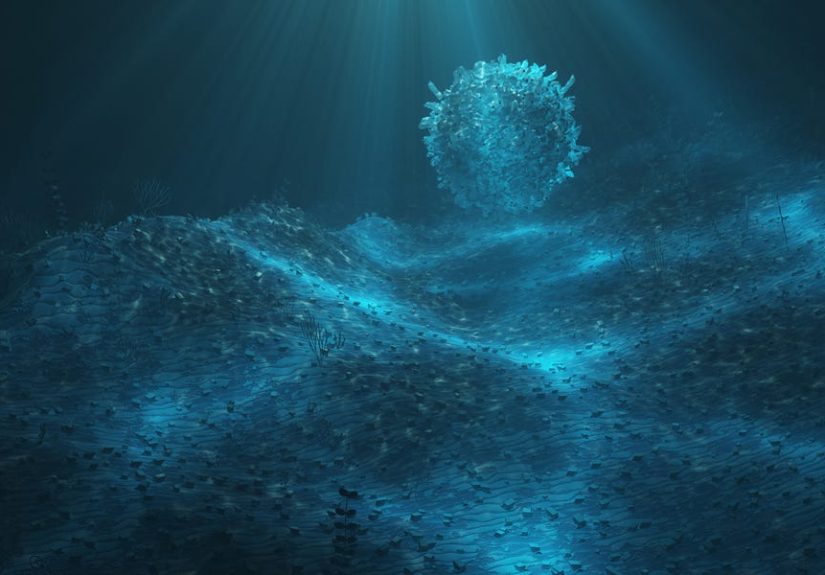
The creature now nicknamed the death-ball sponge was found in the Southern Ocean near the South Sandwich Islands, one of the most remote and least explored marine regions on the planet. Scientists currently refer to it as Chondrocladia sp. nov., meaning it appears to be a new species in a genus already known for carnivorous sponges. That alone is enough to make marine biologists lean forward in their chairs. But its shape is what really launched the headlines: stalk-like appendages ending in orb-like structures, armed with tiny hooks designed to trap prey. In other words, this isn’t your average sponge minding its own porous business. This thing appears to hunt.
And that is exactly why the discovery matters. The “death ball” is not just a creepy deep-sea oddity with excellent branding. It is a clue—about evolution, survival, biodiversity, and how much of Earth remains underexplored. The more scientists look into the abyss, the more they find animals that challenge old textbook ideas. This sponge does not merely sit there looking weird. It helps tell a much bigger story about life at the edge of what seems possible.
What Exactly Is the “Death-Ball” Sponge?
At first glance, the newly discovered sponge looks like something a concept artist would sketch after being told to design a sea creature that is “beautiful, unsettling, and maybe a tiny bit rude.” It was observed at roughly 3,600 meters, or more than two miles below the ocean surface, near Montagu Island in the South Sandwich chain. In that world, sunlight is gone, pressure is enormous, temperatures are low, and food is often scarce. Everything that survives there has to solve the same brutal equation: how do you get enough energy to live in a place where calories are not exactly floating by like drive-thru fries?
Most sponges solve that problem by filter-feeding. They pump water through specialized canal systems, trapping tiny particles, bacteria, and organic debris. It is an elegant, low-key lifestyle. The sponge version of staying home, ordering takeout, and avoiding drama.
But carnivorous sponges took a very different career path. Members of the family Cladorhizidae abandoned the usual sponge feeding strategy, or reduced it dramatically, and evolved ways to capture small animals directly. That means the death-ball sponge is part of a very strange club: sponges that act more like passive ambush predators than underwater strainers.
In this case, the defining feature is those orb-tipped appendages. The spheres are covered with microscopic hooks, also called spicules, which are ideal for snagging small crustaceans such as amphipods and isopods. Think of them as nature’s tiniest, meanest Velcro. If a little deep-sea creature brushes the wrong surface in the wrong neighborhood, the sponge wins.
The nickname “death ball” is dramatic, sure, but not entirely unfair. The structure looks spherical, the feeding strategy is predatory, and the discovery arrived with a visual punch that made scientists and the public do the same thing at once: stare, laugh nervously, and immediately want to know more.
Why a Sponge Became a Predator
The Deep Sea Is a Tough Place to Be Picky
The deep ocean is often described as food-poor, and that phrase deserves more respect than it usually gets. In many abyssal habitats, there simply is not enough suspended organic material in the water for conventional filter-feeding to be efficient. If you are a sponge living in that environment, waiting politely for tiny edible particles to drift into your body is a risky long-term strategy.
Evolution, unsurprisingly, does not reward polite starvation. Over time, certain deep-sea sponges appear to have shifted away from classic filter-feeding and toward carnivory. Instead of investing energy in pumping water constantly, they developed ways to snag living prey. It is an elegant solution to a lousy neighborhood. When the buffet disappears, become the trap.
This is one reason carnivorous sponges are so scientifically interesting. They show that even animals considered among the simplest on Earth are capable of extraordinary evolutionary innovation. Sponges are ancient lineages. They lack the flashy organs that humans often associate with complexity. Yet in the right environment, some of them evolved into highly specialized predators. Nature, once again, refuses to read our categories before rewriting them.
Hooks, Surfaces, and Slow-Motion Predation
Unlike a fish, a squid, or anything with a dramatic chase sequence, a carnivorous sponge does not sprint after lunch. Its style is closer to patient, silent entrapment. The prey brushes against hooked surfaces and becomes stuck. Then the sponge’s cells begin to envelop and digest the victim. It is not fast food. It is very slow food, and for the unfortunate crustacean involved, it is also the last meal plan it will ever join.
Scientists have learned a lot about this feeding strategy from previously described carnivorous sponges. The famous harp sponge, Chondrocladia lyra, discovered off California, uses barbed branches to catch small crustaceans. Other species in the group have filaments, globular structures, or branch-like surfaces that function as traps. The new death-ball sponge appears to fit this broader pattern while adding its own especially creepy architecture.
So no, this sponge is not “aggressive” in the movie-monster sense. It is not rolling through the deep like a murderous tumbleweed. But it absolutely belongs to a predatory lineage, and its anatomy strongly suggests it is built to catch living animals rather than merely filter water. The ocean does not need jump scares when it can deliver something far stranger: a motionless predator that looks decorative until it isn’t.
Not the First Killer Sponge, But Maybe the Best Named
Part of what makes the death-ball sponge so compelling is that it sits inside a larger history of one of marine biology’s weirder plot twists. For a long time, sponges were assumed to be exclusively passive filter-feeders. That changed in the mid-1990s, when researchers documented carnivory in a sponge called Asbestopluma hypogea. That discovery cracked open an entirely new way of thinking about sponge biology.
Since then, researchers have found more predatory species, especially in deep-sea environments. The harp sponge became a minor celebrity because it looked almost graceful—like an elegant instrument built by an alien orchestra, except every “string” was bad news for tiny crustaceans. Other species have inspired nicknames such as the ping-pong tree sponge because of their swollen, globe-like ends.
The death-ball sponge feels like the next chapter in that story. It is not evidence that scientists were wrong about all sponges, but it is excellent evidence that the group is more diverse, flexible, and surprising than the average classroom diagram suggests. The deep ocean keeps producing these evolutionary side quests where an ancient, supposedly simple animal quietly reinvents itself in bizarre ways.
And honestly, the nicknames help. Marine taxonomy is important, but public curiosity often starts with a phrase that sounds like a B-movie prop and ends with a real appreciation for biodiversity. If calling something a death ball gets people to care about sponge evolution, remote expeditions, and ocean science, that is not bad marketing. That is outreach with teeth. Or, in this case, outreach with hooks.
Why the South Sandwich Islands Matter So Much
The death-ball sponge did not come from just any patch of ocean. It came from a region that sounds remote on a map and feels even more remote in reality. The South Sandwich Islands sit in the South Atlantic near Antarctica, surrounded by frigid waters, deep trenches, underwater volcanoes, and hard-to-reach habitats that few humans have ever observed directly.
This isolation is exactly what makes the area so valuable for science. Remote marine systems often preserve biodiversity that has gone undocumented for decades, if not centuries. In 2025, expeditions associated with Ocean Census and Schmidt Ocean Institute surveyed this region and reported a series of remarkable finds, including hydrothermal vents, coral gardens, footage of a juvenile colossal squid, and dozens of new deep-sea species. The death-ball sponge was one headline-grabber among many, but it stood out because it condensed the whole spirit of the expedition into one image: the deep still holds creatures that seem almost unreasonable.
That matters for more than bragging rights. Species discovery is the foundation of conservation, ecology, and evolutionary biology. You cannot protect what you have not documented. You cannot understand how deep-sea ecosystems function if you do not know who lives there, how they feed, what they reproduce on, or how geological forces shape their habitats.
The South Sandwich region is especially compelling because it combines extreme geology with biological isolation. Trenches, seamounts, volcanism, and hydrothermal activity create a patchwork of habitats. Over long timescales, such environments can encourage highly specialized forms of life. The result is an ecosystem that may look barren from above but turns out to be densely packed with evolutionary experiments once cameras reach the seafloor.
Why This Discovery Matters Beyond the Headline
The obvious appeal of the death-ball sponge is that it sounds like a rejected villain from a superhero movie. But the real importance of the discovery goes deeper than click-worthy creepiness.
First, it reinforces how incomplete our inventory of life remains. Even in the 21st century, researchers are still finding new animal species in some of Earth’s largest habitats. That should make us humble. It should also make us cautious about assuming we understand deep-ocean ecosystems well enough to disturb them without consequences.
Second, the sponge highlights the role of adaptation in extreme environments. In a place where food is scarce, some lineages do not just survive; they reinvent how survival works. A sponge becoming a predator is the kind of evolutionary pivot that reminds us life is not lazy. Give it enough time and enough pressure, and it will find weird solutions.
Third, discoveries like this help correct a common misconception: that the deep sea is monotonous. It is not empty. It is not uniform. It is not just mud plus darkness plus occasional fish with lanterns on their heads. It is layered, dynamic, geologically active, and biologically inventive. Every new expedition chips away at the myth that the abyss is mostly blank space.
What Scientists Still Need to Learn
For all the excitement, the death-ball sponge is still early in its scientific story. It does not yet have a finalized formal species name. Researchers must compare its body structure with related sponges, examine spicule shapes carefully, and confirm distinctions through genetics and morphology. That process takes time, and science is better for it. The point is not to name the weird thing quickly; the point is to name it correctly.
There are also bigger ecological questions. How common is this sponge? Is it restricted to a narrow range around the South Sandwich Islands, or does it live more widely in the Southern Ocean? What prey does it rely on most often? Does it reproduce seasonally? How quickly does it grow in such a cold, high-pressure environment? And what other species interact with it?
Those questions may sound niche, but they are how marine science builds real understanding. A single odd animal can become a doorway into food webs, ecosystem structure, biogeography, and the evolutionary effects of extreme habitats. In other words, the death-ball sponge is not just a weird sponge. It is data wearing a horror nickname.
Experiences from the Edge of the Abyss
One reason discoveries like this land so hard with readers is that they create a very specific kind of experience: a mix of awe, dread, curiosity, and delight. The deep ocean has a way of making people feel tiny without making them feel bored. You look at a death-ball sponge and your first thought is usually some version of, “Well, that seems unnecessary.” Then your second thought arrives: “Actually, that is incredible.” That emotional whiplash is part of the appeal.
Imagine the shipboard experience for the scientists and crew watching live feeds from a remotely operated vehicle. Hours can pass in what looks, to an untrained eye, like endless darkness and sediment. Then suddenly the camera glides over a shape that makes everyone pause. It is not just because it is new. It is because the deep sea rewards patience with moments that feel almost surreal. Something on the monitor looks like a sculpture, a fungal chandelier, or a prop from a science-fiction set. Then someone identifies hooks, spheres, body form, attachment point. The room changes. Curiosity turns electric.
That is part of modern ocean exploration that people on land do not always appreciate. Discovery is often a long stretch of technical focus punctuated by seconds of pure astonishment. Mapping, sample handling, vehicle operations, weather windows, instrument checks, annotation logs—then boom, a living thing no human has properly documented before. The death-ball sponge belongs to that category of moment: the instant when the ocean stops being abstract and becomes shockingly personal, even through a screen.
There is also the public experience of meeting such creatures through images and headlines. Most people will never descend to 3,600 meters. But seeing a deep-sea animal for the first time still triggers something primal. The ocean remains one of the few places on Earth where discovery can feel genuinely wild. Not “new phone update” new. Not “same product, different color” new. Actually new. Biology-new. World-expanding new.
And that experience matters. It is easy to support science in the abstract. It is harder, and more powerful, to feel emotionally connected to it. A strange predator with orb-tipped arms can do that in seconds. It turns marine biology from a chapter heading into a living story. It reminds people that the planet is still full of unanswered questions, and that curiosity is not some luxury add-on to human life. It is how we figure out where we are.
There is a quieter experience wrapped inside all this too: humility. The death-ball sponge is a reminder that human beings are still beginners in huge parts of Earth’s own house. We have satellites, autonomous vehicles, high-definition cameras, DNA barcoding, and still we keep meeting animals that make us sound like amateurs. The deep sea does not care how advanced we think we are. It simply waits until we show up, then hands us another impossible-looking organism and says, in effect, “You’ve seen almost nothing.”
That feeling—part wonder, part intellectual embarrassment, part joy—may be the most valuable experience of all. The death-ball sponge is eerie, yes. It is also a gift. It gives scientists another clue, readers another reason to care, and the rest of us another healthy reminder that nature is still several chapters ahead of the script we wrote for it.
Conclusion
The carnivorous death-ball sponge is more than a creepy nickname attached to a deep-sea oddity. It is a vivid example of how life adapts when conditions get harsh, how little of the ocean we have truly explored, and how misleading simple categories can be. A sponge can be a predator. A remote trench can be a cradle of biodiversity. A single strange organism can reshape how people think about an entire ecosystem.
That is the real power of this discovery. It proves that the deep ocean is not done surprising us—not even close. Somewhere below the waves, in cold black water under crushing pressure, evolution is still workshopping ideas that would make a science-fiction writer ask for revisions. And every time we send cameras down, the planet answers back with another impossible little masterpiece.