Table of Contents >> Show >> Hide
- What Is a Fully-Transparent Air Bubble Display?
- Why Bubbles Make Surprisingly Good “Pixels”
- How It Works (Without Turning Your Living Room Into a Lab)
- Bubble Display vs. Transparent OLED vs. “Invisible” Glass Screens
- Where a Fully-Transparent Air Bubble Display Actually Shines
- Design Challenges (and Practical Fixes That Don’t Involve Tears)
- Future Directions: From Maker Curiosity to Architectural Medium
- Conclusion
- Field Notes: Experiences With a Fully-Transparent Air Bubble Display
- SEO JSON
Picture a screen that doesn’t glow, doesn’t block your view, and doesn’t even pretend to be “a screen.”
Instead, it whispers information into a column of water using… bubbles. Yeptiny pockets of air doing the job
we usually hand to glass, pixels, and far too many acronyms.
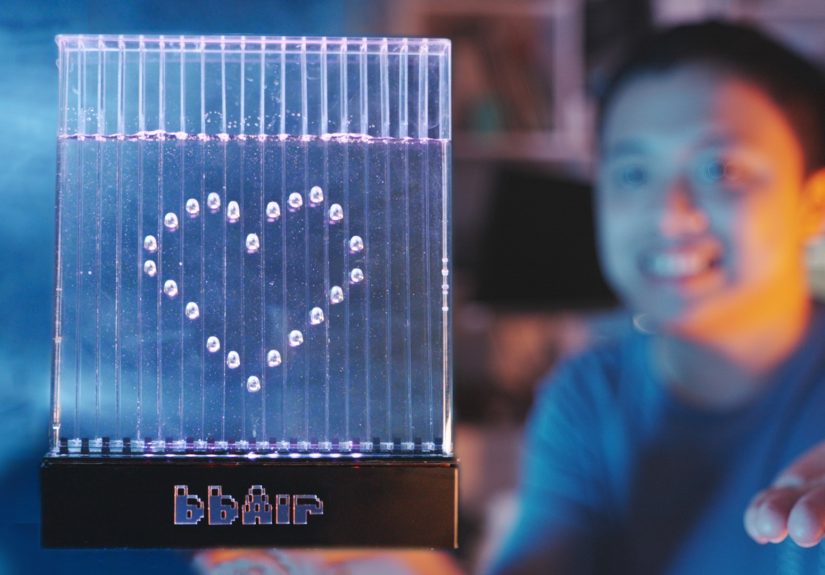
A fully-transparent air bubble display is exactly what it sounds like: a display that uses rising air bubbles
as “pixels,” so the “panel” is basically nothingjust water, air, and timing. It’s part kinetic sculpture,
part science fair flex, part calming aquarium vibes… and somehow it can still spell your name.
[1][2]
What Is a Fully-Transparent Air Bubble Display?
The short version
It’s a clear tank (or channel) filled with water. Along the bottom are controllable air outlets (often arranged in columns).
When the system releases air at the right moments, bubbles rise in patterns that form letters, icons, or scrolling messages.
Add lighting and your bubbles become crisp, readable shapeslike a slow-motion LED matrix that took a yoga class.
[1][3]
Why “fully transparent” matters
Most “transparent displays” are still made of visible stuff: glass, electrodes, and pixel structures. A bubble display’s
“active image” is air inside waterso when it’s off, you’re basically looking through a clear vessel. In the right setting
(a window feature, a museum case, a retail installation), that’s a superpower: the display can appear and disappear without
the usual slab-of-black-screen energy.
[8][10]
Why Bubbles Make Surprisingly Good “Pixels”
Bubbles seem chaotic, but they’re also wonderfully predictableif you respect the laws of physics and don’t treat them like
obedient little spheres. Here’s why they work as display elements:
-
They move upward automatically. Buoyancy is the world’s simplest animation engineno moving belts, no rails,
just a natural vertical “refresh.”
[5][6] -
They’re high-contrast when lit. With LEDs placed behind or beside the tank, bubbles catch and refract light
so they pop against a darker background (or a controlled lighting environment).
[3] -
They have built-in “persistence.” Unlike a pixel that flips instantly, bubbles linger as they rise, which
can make text feel smootheralmost like dot-matrix calligraphy.
[1] -
They’re emotionally disarming. Humans are hardwired to stare at moving water. A bubble display can deliver
information without screaming for attentionuseful for ambient signage, art, or calm UX.
[1]
How It Works (Without Turning Your Living Room Into a Lab)
1) The tank: your “screen”
The container is often acrylic or glass. The key is clarity and consistent geometry:
if bubbles drift sideways too much, your “font” starts looking like it’s melting. Many builds use internal dividers
to keep bubble columns separated, so each column behaves like a predictable lane.
[6]
2) The bubble generator: valves, pressure, and timing
Most maker-style bubble displays use a shared air source (like an aquarium pump or compressor) feeding multiple outlets
controlled by solenoid valves. Think of it like plumbing plus percussion: open a valve, a bubble pops out;
close it, silence. Do this quickly across multiple columns, and you can “print” characters by sequencing bubbles over time.
[3][5]
One modern desktop build highlights how “resolution” in bubble displays isn’t just about columnsit’s also about bubble size,
spacing, and how fast you can reliably generate consistent bubbles without turning them into a frothy chaos smoothie.
[1][3]
3) Lighting: the secret sauce
Without lighting, bubbles can be subtleespecially in bright rooms. Add LED illumination (backlight, edge light, or base light),
and suddenly your bubbles have definition. Some builds combine RGB lighting with bubble timing to create a more dramatic,
“living UI” effect that’s closer to kinetic art than plain text.
[3]
4) The brain: microcontroller choreography
A microcontroller (commonly something like an ESP32-class device in maker builds) receives text/icons and converts them into
timing instructions: which column opens, for how long, and at what interval. You’re not drawing pixels on a gridyou’re
scheduling bubble births so they rise into legible shapes at just the right moments.
[3]
Bubble Display vs. Transparent OLED vs. “Invisible” Glass Screens
If you’re searching “transparent display,” you’ll find glossy product shots of see-through TVs and retail glass signage.
Bubble displays live in a different neighborhoodbut they’re worth comparing because they solve “transparency” in a radically
different way.
Transparent OLED (the premium, polished route)
Transparent OLED products can show vivid imagery while letting you see through the panelgreat for luxury retail, museums,
and architectural installs. But they’re still electronic panels with cost, power requirements, and the visual presence of a
manufactured display surface. Recent transparent OLED TV launches in the U.S. highlight both the wow factor and the reality:
these are cutting-edge, high-end devices.
[8][9][12]
Optical “transparent monitors” (the clever mirror trick)
Some “transparent” displays use optical combinationsreflecting an image onto glass in a way that feels see-through.
It can look futuristic, but it’s a different technique than a true transparent pixel matrix.
Bubble displays, by contrast, are literally air in water. No mirror required. Just physics doing its thing.
[11]
Nanoparticle scattering displays (glass that becomes a screen)
Research into transparent scattering displays shows how nanoparticles embedded in a clear material can scatter projected light
while remaining mostly transparentturning “plain glass” into something that can host imagery.
It’s a fascinating middle ground between “nothingness” and “traditional screen.”
[10]
So why bubbles still matter
Bubble displays won’t replace your laptop. That’s not the point. Their value is experiential:
they’re transparent by nature, visually soothing, and physically playful. In an era where every device competes
for attention, bubbles offer a rare thing: information that feels like ambiance.
[1]
Where a Fully-Transparent Air Bubble Display Actually Shines
Bubble displays are best when you want the display to feel alivemore like a fountain that happens to deliver a message
than a screen that happens to sit there.
-
Retail windows and product showcases: Floating bubbles can call out “New Drop,” “Limited,” or “Open”
without blocking the view of what you’re selling.
[8] -
Museums and galleries: Kinetic, ephemeral visuals fit exhibitions about nature, time, and perceptionand
bubble mechanisms have already been explored as art-display techniques.
[7] -
Hospitality and lobbies: A bubble display can serve as wayfinding (“Elevators →”) or mood-setting signage
that looks custom-built for the space.
[1] -
STEM education: It’s a hands-on way to teach fluid dynamics, control systems, and human perception
with instant “ooh” and “ahh” feedback.
[4]
Design Challenges (and Practical Fixes That Don’t Involve Tears)
Resolution and “refresh rate”
Bubbles rise at a speed you can’t overclock. That means your vertical “resolution” depends on bubble spacing and timing,
not a fixed pixel grid. The fix is to embrace the medium: use bold fonts, simple icons, and scrolling patterns designed for
slow motion. Bubble displays look best when they’re not trying to cosplay as a smartphone.
[1][5]
Bubble size consistency
Inconsistent bubbles turn your message into a ransom note written by sea foam. Builders often stabilize output by tuning
pressure, using one-way valves, selecting consistent nozzle sizes, and separating channels so bubbles don’t merge into
unpredictable blobs.
[6]
Water clarity and maintenance
Clear water is your “screen resolution.” Cloudiness, algae, or micro-debris will soften contrast. Practical habits help:
keep the tank sealed as much as possible, use distilled water when appropriate, avoid direct sunlight, and plan a simple
cleaning routine that doesn’t require dismantling the universe.
[4]
Noise, heat, and the reality of hardware
Solenoids click. Pumps hum. LEDs generate heat. None of that is a deal-breaker, but it’s part of the experience. If you’re
designing for a quiet space (a spa, a library, your “I swear I meditate” corner), prioritize quieter pumps, dampened mounts,
and conservative valve timing.
[1][3]
Safety (because water + electronics is a spicy combo)
Use proper isolation, drip loops, and sealed connectors. Treat the bottom of the display like a “wet zone” and keep electronics
elevated, protected, and serviceable. The goal is not merely a cool displayit’s a cool display that doesn’t audition for a
disaster movie.
Future Directions: From Maker Curiosity to Architectural Medium
Bubble displays are already branching into new mechanisms. Research and art projects have explored generating bubbles via
electrolysis, reducing the need for external air plumbing and moving parts in some designsopening doors for
different shapes, channels, and interactive installations.
[7]
The bigger opportunity is hybrid experiences: bubble-based visuals combined with sensors, projection, or transparent signage.
Imagine a museum case where a transparent OLED layer provides high-resolution labels while bubbles create slow, ambient motion
a layered interface that feels more like storytelling than signage.
[10][12]
Conclusion
A fully-transparent air bubble display is a reminder that “display technology” doesn’t have to mean another rectangle of glass
yelling at your eyeballs. Bubbles are soft, physical, imperfectand that’s exactly why they’re memorable. They’re not here to
replace screens. They’re here to make information feel like an environment.
If you want something that people photograph, talk about, and irrationally stare at for longer than they meant to, bubbles are
a surprisingly effective user interface. And honestly? We could all use a little more calm, floating data in our lives.
Field Notes: Experiences With a Fully-Transparent Air Bubble Display
If you build (or install) a bubble display, you quickly learn it behaves less like a monitor and more like a musical instrument.
You don’t “render” contentyou perform it. Builders often describe a weirdly satisfying moment when the first clean
character forms: it’s not just readable, it’s alive. The bubbles wobble, accelerate, sometimes merge, and still your brain
happily recognizes the pattern. That little triumph is a big part of the appeal.
[1][4]
The next lesson is humility. Bubbles will expose every shortcut. If the base manifold leaks, you’ll get ghost bubbles.
If pressure fluctuates, letters look like they’re gaining and losing weight mid-sentence. If you skip dividers, bubbles wander
sideways and your “HELLO” becomes “HE…maybe?” The good news: once you tune pressure and spacing, the display feels more stable
than you’d expect. Many makers end up treating calibration like a ritualadjust, test, watch, repeatuntil the bubble “font”
becomes consistent.
[6][5]
Lighting is where the display goes from “neat” to “I can’t stop staring.” People commonly underestimate how much LEDs define
legibility. Side lighting can highlight edges and give bubbles a crisp outline. Backlighting can silhouette them like floating
punctuation marks. And if you’re feeling extra, RGB lighting can turn a plain scrolling message into something that feels like
underwater neon signage. The practical takeaway: plan lighting early, not as an afterthought, because it changes everything from
contrast to mood.
[3]
In real spaces, the most successful content is simple and intentional: a time display, a slow ticker, a small set
of icons, short phrases, and patterns that embrace motion. Bubble displays don’t reward tiny text. They reward bold, friendly shapes.
Think “wayfinding” and “atmosphere,” not “spreadsheet replacement.” Even a single wordOPEN, WELCOME, NOWcan feel premium if it’s
floating up a clear column with clean timing.
[1][7]
Maintenance is the unglamorous truth that becomes part of ownership. Clear water is your clarity. Dust and micro-debris soften the
effect over time. People who love their displays tend to keep a low-drama routine: periodic top-offs, occasional cleaning, and
keeping the tank away from aggressive sunlight that can encourage growth. The upside is that a well-maintained bubble display ages
gracefullybecause it’s not fighting pixel burn-in or panel uniformity. It’s just managing a small ecosystem of water and air.
[4]
Finally, there’s the human factor: bubble displays are conversation magnets. Visitors lean in. They ask how it works. They wait for
the next word. In a world of instant, disposable screens, the slow rise of bubbles creates a tiny pocket of patience. That’s the
weird magic: your display isn’t just showing informationit’s changing how people feel while they receive it.
[1]