Table of Contents >> Show >> Hide
- Why Build a Garden Arbor Bench?
- Before You Build: Plan Like a Smart Person
- Tools and Materials
- Step by Step Guide to Building a Garden Arbor Bench
- Step 1: Sketch the Design and Make a Cut List
- Step 2: Mark the Layout on the Ground
- Step 3: Dig the Post Holes
- Step 4: Set the Posts Plumb and Secure
- Step 5: Build the Bench Frame
- Step 6: Install the Seat and Back
- Step 7: Build the Side Panels or Trellis Sections
- Step 8: Add the Top Arbor Structure
- Step 9: Sand, Soften, and Inspect
- Step 10: Apply Exterior Finish
- Step 11: Dress It Up With Plants
- Mistakes to Avoid
- How Much Does a DIY Garden Arbor Bench Cost?
- Conclusion
- Extra Experience and Real-World Lessons From Building a Garden Arbor Bench
If your backyard feels a little too “patch of grass with commitment issues,” a garden arbor bench can fix that fast. It adds structure, shade, charm, and a place to sit with your coffee while pretending you totally planned your landscaping masterpiece all along. Better yet, a DIY garden arbor bench is one of those projects that looks wildly expensive once it is finished, even when it was built with practical lumber, a sensible cut list, and a weekend’s worth of determination.
This step by step guide to building a garden arbor bench walks you through the planning, materials, sizing, construction process, finishing, and real-world lessons that make the difference between a beautiful garden focal point and an outdoor bench that leans like it has given up on life. Whether you want a classic cedar arbor bench, a painted cottage-style trellis bench, or a sturdy backyard seating area for climbing roses and clematis, this guide will help you build something that looks good and lasts longer than your last impulse project.
Why Build a Garden Arbor Bench?
A garden arbor bench does three jobs at once. First, it creates seating. Second, it frames a space, which instantly makes a yard feel more intentional. Third, it supports climbing plants that soften the structure over time and make the whole thing look like it belongs in a magazine spread instead of next to the hose reel.
From an SEO perspective and a homeowner perspective, this is the sweet spot: useful, attractive, and highly customizable. You can tuck one at the end of a path, use it to mark the entrance to a vegetable garden, place it near a patio edge, or make it the star of a small backyard. In short, it is furniture, architecture, and plant support rolled into one hardworking outdoor feature.
Before You Build: Plan Like a Smart Person
1. Pick the Right Location
Choose a level or mostly level spot with enough clearance around the bench for comfortable access and future plant growth. Think about what you want to see when you sit down. A great garden arbor bench should frame a view, not face the side of the trash bin like a punishment chair.
If you plan to dig post holes, check underground utilities before you start. That step is not optional. It is the difference between “successful DIY project” and “why is the cable company here?” Also pay attention to drainage. A soggy area can shorten the life of wood and make the bench feel damp, muddy, and generally cursed.
2. Choose Your Material Strategy
For the visible structure, cedar and redwood are popular choices because they naturally hold up well outdoors and look great with a clear or semi-transparent finish. If the arbor posts will be buried or set near ground contact, many builders use properly rated pressure-treated lumber for those structural parts, then use cedar for the exposed trim and bench components. That approach balances durability, cost, and appearance.
Whatever wood you choose, pair it with exterior-grade screws, corrosion-resistant fasteners, and outdoor-rated connectors. This is not the time for random leftover hardware from a kitchen shelf project. Garden structures live outside full-time, and the hardware needs to act like it knows that.
3. Start With Practical Dimensions
A comfortable bench usually lands around 18 inches high, with a seat depth in the 16- to 20-inch range. For a two-person garden arbor bench, a width of about 48 to 60 inches is a practical starting point. Arbor height varies with style, but most DIY builds look balanced when the vertical posts rise high enough to create a sense of enclosure without feeling bulky. A simple rectangular arbor with lattice or slats on the sides and an open top crosspiece is usually the easiest design for first-time builders.
The key is proportion. If the bench is too deep, it feels clunky. If the arbor is too narrow, it looks pinched. If everything is oversized, your cute garden seat turns into a tiny bus stop.
Tools and Materials
Basic Tools
- Measuring tape
- Carpenter’s square
- Level
- Post-hole digger or auger
- Miter saw or circular saw
- Jigsaw for curved details if desired
- Drill/driver and drill bits
- Clamps
- Sander or sanding block
- Shovel and tamper
- Safety glasses, hearing protection, and work gloves
Common Materials
- 4×4 posts for the arbor supports
- 2x4s for the bench frame and arbor framing
- 1x4s or 1x6s for seat slats, back slats, lattice strips, or trim
- Exterior wood screws
- Outdoor-rated construction adhesive if desired
- Concrete mix
- Gravel for drainage
- Post bases or anchors if mounting to a slab
- Exterior stain, sealer, or paint
Step by Step Guide to Building a Garden Arbor Bench
Step 1: Sketch the Design and Make a Cut List
Before the first board is cut, draw the project. It does not have to look like an architect made it. It just needs accurate measurements. Decide on overall width, bench height, seat depth, back height, side panel size, and top arbor width. Then turn those measurements into a cut list. This single step saves time, material, and the emotional damage of realizing you cut four identical pieces beautifully and none of them fit.
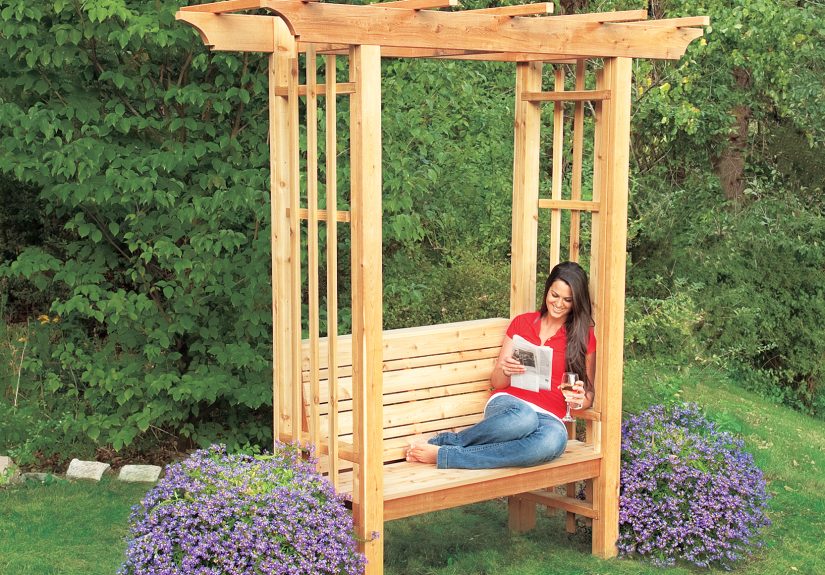
A simple design usually includes two front posts, two rear posts, a bench frame between them, slatted seat boards, optional back slats, two side trellis panels, and top rails or crosspieces overhead.
Step 2: Mark the Layout on the Ground
Set the post locations using stakes and string or spray paint. Double-check the spacing between posts and confirm the layout is square by measuring diagonally corner to corner. Equal diagonal measurements mean your layout is square. Unequal measurements mean the structure will look “rustic” in the worst possible way.
If your build is going into soil, plan for post holes below the local frost line. In many areas that means roughly 30 inches or more, but your local code and climate should guide the final depth.
Step 3: Dig the Post Holes
Dig each hole wide enough for the post and concrete, with a gravel base at the bottom for drainage. A common rule of thumb is that the hole diameter should be several times the width of the post. For 4×4 posts, many DIY builds use holes around 10 to 12 inches wide.
Add a few inches of gravel to the bottom of each hole and tamp it down. This helps drainage and reduces the chance of moisture hanging around the base of the post like an uninvited guest.
Step 4: Set the Posts Plumb and Secure
Place the posts in the holes, brace them temporarily, and use a level to make sure they are plumb in both directions. Pour concrete around the posts, following the product instructions. Keep checking for plumb as you go. Once the posts are aligned, let the concrete set properly before adding weight or framing.
If you are building on a patio or existing slab, use outdoor-rated post bases or anchors approved for that application instead of burying the posts. Either way, the goal is the same: the arbor must be stable long before the vines and weather start testing your confidence.
Step 5: Build the Bench Frame
After the posts are secure, build the bench frame between them. Start with the front and rear rails, then add side rails and center supports if the span is wide. The frame should be level, square, and fastened with exterior screws. Pre-drill near board ends to reduce splitting, especially with cedar.
This is the moment where everything starts to look real. Up until now, you have mostly had holes, lumber, and opinions. Once the frame goes in, the project becomes a garden arbor bench instead of a pile of expensive intentions.
Step 6: Install the Seat and Back
Attach the seat slats across the bench frame with even spacing for drainage and visual balance. If you want a more comfortable sit, slightly round over the front seat edge with sandpaper or a router and leave small gaps between boards so rainwater does not pool.
You can also add a backrest using vertical or horizontal slats mounted between the rear posts. A slight recline is more comfortable than a straight-up 90-degree angle that makes guests feel like they are sitting in detention.
Step 7: Build the Side Panels or Trellis Sections
The side panels give the arbor its signature look and help support climbing plants. You can keep it simple with evenly spaced vertical slats, create a lattice pattern with crossing strips, or frame out a more decorative panel with a gentle arch. Whatever style you choose, keep the pattern strong enough to support future plant growth and attach all pieces with exterior-rated fasteners.
If you plan to grow roses, remember they often need to be tied to the arbor. Tendril and twining vines like clematis or some honeysuckles may grab on more naturally, but even those appreciate a structure that is sturdy and easy to guide.
Step 8: Add the Top Arbor Structure
Now connect the tops of the posts with side rails and overhead crosspieces. This creates the arbor shape and visually ties the whole structure together. For a basic style, straight rails and evenly spaced top slats are clean and classic. For a softer look, cut gentle curves into the top rails. Just make sure both sides match unless asymmetry is part of your personal design philosophy.
Keep the top structure rigid. This overhead section is not just decorative; it helps resist racking and gives vines a place to travel.
Step 9: Sand, Soften, and Inspect
Before finishing, sand rough edges, soften corners that will be touched often, and inspect every joint. Tighten any loose fasteners and confirm the bench sits level and feels solid. If there is wobble now, it will not magically improve after the first rainstorm.
Pay special attention to exposed end grain, splinter-prone edges, and any places where water may sit. Small details here make a big difference in comfort and long-term durability.
Step 10: Apply Exterior Finish
An exterior stain or sealer helps protect the wood from water, weathering, and sun exposure. For a natural wood look, use a clear or semi-transparent finish. For a cottage-garden vibe, paint can be beautiful, but it requires more prep and maintenance over time.
Apply the finish evenly and follow the manufacturer’s dry times. Outdoor furniture and garden structures take a beating from sun and moisture, so this step is not cosmetic fluff. It is part of the survival plan.
Step 11: Dress It Up With Plants
Once the finish cures, add climbing plants. Clematis is a favorite for color and elegance. Climbing roses are gorgeous but often need tying and training. Annual flowering vines are great if you want quick seasonal coverage. Grapes and vigorous vines can become heavy, so make sure your structure is genuinely sturdy before inviting them to take over.
Plant a little away from the posts rather than right against them, then guide young stems toward the side panels. Mulch the base, water deeply, and be patient. A brand-new arbor bench is handsome. A vine-covered arbor bench is downright smug.
Mistakes to Avoid
- Using indoor or non-rated fasteners: Rust never sleeps, especially outdoors.
- Skipping the utility locate: No DIY project is improved by surprise infrastructure.
- Making the bench too deep or too low: Comfort matters as much as appearance.
- Ignoring drainage: Water is patient, destructive, and weirdly good at finding weak spots.
- Choosing flimsy trellis parts for heavy vines: Wisteria, grapes, and climbing roses do not believe in moderation.
- Rushing the layout: A crooked arbor is extremely noticeable, and plants will not hide bad geometry as quickly as you hope.
How Much Does a DIY Garden Arbor Bench Cost?
Cost depends on wood species, hardware, and finish, but a DIY arbor bench can range from budget-friendly to premium pretty quickly. Pressure-treated framing with simple slats costs less. Cedar, decorative trim, better hardware, and premium stain raise the total. Still, building your own usually gives you better size, better materials, and better style than many ready-made options at the same price point.
The bigger value is customization. You choose the width, the finish, the details, and the level of sturdiness. You also get the deeply satisfying right to say, “Thanks, I built it,” when someone asks where you bought it.
Conclusion
Building a garden arbor bench is one of the best outdoor DIY projects for homeowners who want function and beauty in the same footprint. With the right lumber, solid footing, weather-friendly hardware, and a careful plan, you can build a structure that serves as backyard seating, plant support, and a standout landscape feature all at once.
The process is straightforward: choose a good location, plan the dimensions, set stable posts, build a comfortable bench, add strong trellis panels, top it with an arbor frame, and finish it for the weather. Do that well, and your garden arbor bench will not just fill space. It will create a destination in your yard.
Extra Experience and Real-World Lessons From Building a Garden Arbor Bench
Here is the truth that glossy before-and-after photos do not always mention: the hardest part of building a garden arbor bench is not usually the cutting or the screwing or even the digging. It is slowing down enough to make the boring parts accurate. The first time many people build one, they are eager to get to the “pretty” stage where the arbor goes up and the bench starts looking Pinterest-worthy. But the real success of the project lives in the first few hours: measuring carefully, making the layout square, checking every post for plumb, and resisting the temptation to eyeball something just because you are tired of crouching in the yard.
Another lesson that comes up again and again is that outdoor projects always seem simple until the outdoors joins the conversation. Soil is rarely perfectly cooperative. One hole hits roots. Another fills with water. One side of the yard is more level than you thought, and the other side appears to have its own opinions about gravity. That is why flexibility matters. A good builder leaves room for minor adjustments in post depth, seat slat spacing, and trim details. The people who enjoy these projects most are not the ones who avoid every surprise. They are the ones who treat surprises like part of the process instead of a personal insult from the backyard.
Comfort is another area where experience speaks loudly. A lot of first builds look fantastic and sit terribly. The bench is too upright, too narrow, too deep, or too high. The fix is simple: think like a person who plans to actually use the bench. Sit on a chair you already find comfortable and measure it. Mock up the seat with scrap boards before final assembly. Even a beautiful cedar arbor bench loses some of its magic if it feels like a decorative prop for people with no hips.
Plant choice matters more than beginners expect. Light annual vines can cover an arbor quickly and make you feel like a genius by midsummer. Heavy, woody vines are another story. They can be stunning, but they ask much more from the structure. Over time they also ask more from your pruning routine, your patience, and your willingness to untangle things without muttering. A smart approach is to start with a strong arbor frame from day one, even if the plants are small. Future you will appreciate that very much, especially when the “tiny vine” from year one turns into a botanical powerlifter by year three.
Finally, one of the best experiences tied to a garden arbor bench has nothing to do with carpentry at all. It is what happens after the build is finished. The bench becomes a place you actually use. Morning coffee tastes more official there. Evening air feels calmer there. People stop when they walk through the yard. Kids climb around it. Dogs nap under it. Plants start winding through it. In other words, it stops being a project and becomes part of the rhythm of the home. And that is the real win. You are not just building an outdoor bench or a garden arbor. You are building a reason to spend more time outside, which is a pretty great return on a few boards, some screws, and one weekend of determined DIY ambition.