Table of Contents >> Show >> Hide
- What Exactly Is the Pantsir S-1 (and Why Do People Whisper About It)?
- The Libya Backstory: How a Russian Air Defense System Became “Finders Keepers”
- The Reported Airlift: What We Know (and What We Don’t)
- What the U.S. Would Want to Learn From an Intact Pantsir
- Does Pantsir “Work”? Libya Suggests a More Complicated Answer
- Foreign Materiel Exploitation: The Long Game Behind the Headlines
- What It Means for U.S. Airpowerand for Everyone Buying Air Defenses
- Quick FAQ
- Conclusion
- Field Notes & Experiences: What Planning Against a Pantsir Feels Like
If you’ve ever “borrowed” a neighbor’s ladder and hoped nobody noticed, congratulationsyou already understand the vibe of this story. According to multiple open-source reports, the U.S. Air Force quietly took possession of a Russian-made Pantsir S-1 air defense system that surfaced in Libya, then allegedly moved it out under tight operational security. The idea wasn’t to start a trophy room of foreign hardware (although, let’s be honest, that would be a very American garage flex). It was to learn how the system really worksits sensors, its habits, its weaknessesand to help U.S. aircraft and drones survive in the kind of modern battlespace where the sky is crowded, noisy, and full of surprises.
This article synthesizes open reporting and analysis from a range of reputable U.S.-based defense and security publications and research organizations. We’ll stick to what’s supported by public information, clearly separate fact from informed inference, and avoid the Hollywood version where someone plugs in a USB drive and instantly downloads “all the secrets.” Real life is messierand way more interesting.
What Exactly Is the Pantsir S-1 (and Why Do People Whisper About It)?
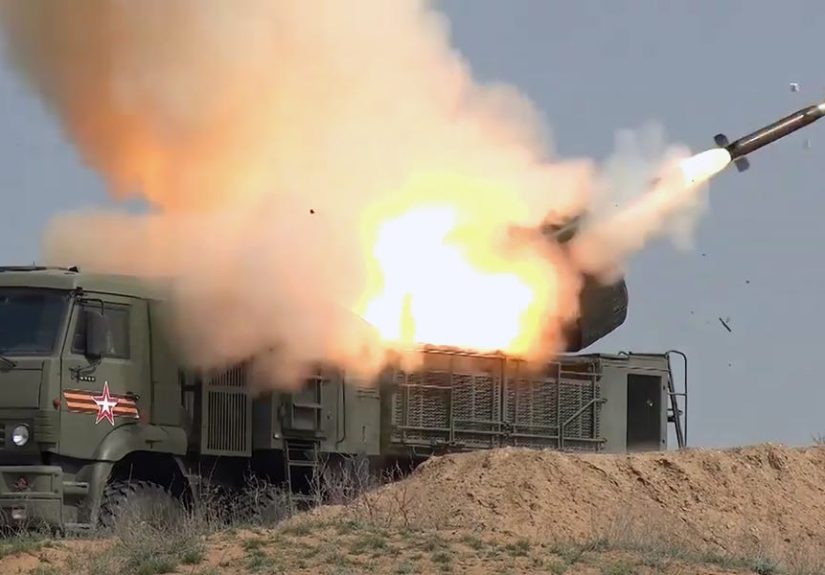
The Pantsir S-1 (NATO reporting name: SA-22 “Greyhound”) is Russia’s mobile, point-defense air defense system designed to protect valuable stuffairfields, command posts, radar sites, and bigger long-range air defense systemsfrom low-flying threats. Think of it as a “close-in security guard” for the air defense neighborhood: it’s not meant to patrol the entire city, but it’s supposed to be deadly around the things Russia really doesn’t want to lose.
A Swiss Army Knife for the Low-Altitude Fight
The Pantsir’s signature move is combining missiles and guns on one vehicle. In simple terms: missiles for reaching out, cannons for finishing the job when something gets too close or too fast. It also pairs radar and electro-optical sensors so it can, at least in theory, keep working even in some jamming environments or when it wants to be less “radio loud.”
In an era where drones can be cheap, numerous, and hard to spot, this kind of layered “shoot with whatever is best right now” approach is appealing. A system like Pantsir is designed to react quickly, handle multiple targets, and defend against everything from drones and helicopters to precision-guided munitionsat least on paper.
Why the U.S. Cares About a Short-Range System
Long-range systems get the headlines, but short-range air defense (SHORAD) is where a lot of real-world danger lives. If you’re flying a strike, escorting a convoy, operating drones, or trying to suppress enemy air defenses, the “last few miles” around a defended site can be the most lethal. That’s the zone Pantsir was built forthe uncomfortable distance where timing, detection, crew discipline, and electronic warfare all collide.
The Libya Backstory: How a Russian Air Defense System Became “Finders Keepers”
Libya’s civil conflict became a laboratory for modern air warfare: drones, air defenses, electronic warfare, foreign backers, and shifting front lines. Pantsir systems reportedly appeared in the country supporting the eastern-based Libyan National Army (LNA) aligned with Khalifa Haftar, with reporting frequently tying specific systems to outside sponsors. Meanwhile, the internationally recognized government in the west (often described in open reports as the GNA during that period) received support from Turkeyincluding drone capabilities that changed the tempo of the fight.
Drones vs. Air Defenses: A Brutal Stress Test
In Libya, Pantsir became famous for two reasons: it was dangerous when positioned well and operated competentlyand it was very beatable when it wasn’t. Multiple incidents and analyses describe Pantsir units being destroyed while parked, repositioning, under-resupplied, poorly integrated with other sensors, or simply not ready at the moment they were targeted. That distinction matters, because it’s less a “the system is trash” story and more a “war punishes sloppy process” story.
Capture Creates Opportunity
Open reporting described at least one Pantsir system being captured in western Libya around mid-2020 amid major fighting and reversals. A battlefield capture is not just a propaganda photo-op; it’s a technical intelligence gift. A complex system that’s intactradars, control computers, cabling, and allcan reveal how it detects targets, how it prioritizes shots, what it struggles with, and how it behaves under stress.
The Reported Airlift: What We Know (and What We Don’t)
The “Air Force secretly acquires Pantsir S-1” storyline comes from open-source reporting describing a covert-ish logistics operation: the system moved from Libya to a U.S. facility abroad (often described as Ramstein Air Base in Germany in public accounts), reportedly using a large cargo aircraft. Accounts vary in detail, and official confirmation has been limited or absent in the public recordunsurprising for a foreign materiel exploitation effort, which tends to live in the shadows even when everyone suspects what’s happening.
Why Secrecy Would Be the Point
“Secretly” doesn’t necessarily mean “spy-movie illegal.” It can simply mean operational security: reduce the risk of the system being stolen, sabotaged, sold off, or used as leverage by local armed groups; avoid turning a sensitive handoff into a diplomatic circus; and keep adversaries from knowing exactly what you now understand about their technology.
There’s also a quieter reason: once an adversary believes you’ve studied a system in depth, they may change tactics, update software, alter employment, or adjust export variants. The less fanfare, the longer your insights remain useful.
“Acquired” Doesn’t Necessarily Mean “Purchased”
A key nuance: much of the open reporting frames the Pantsir as captured and then transferredrather than the U.S. buying it directly from Russia. That distinction matters ethically, legally, and politically. It also matches a pattern seen in past conflicts: when foreign equipment changes hands, major powers often seek access for evaluation, training, and countermeasure development.
What the U.S. Would Want to Learn From an Intact Pantsir
If you’re expecting a single “aha!” moment, here’s the reality: the value of foreign systems is usually cumulative. It’s a hundred small discoveries, each shaving risk off future missions. In broad terms, an intact Pantsir could help answer five high-impact questions.
1) How Its Sensors Really See the World
Advertised radar ranges and glossy brochures are one thing; real detection in clutter, heat, dust, coastal humidity, and electronic interference is another. Engineers want to know what the radar reliably tracks, what confuses it, what “signature” it expects from targets, and how its electro-optical systems perform when radars are limited or turned off.
2) How It Engages TargetsTiming, Prioritization, and “Human Factors”
Air defense systems aren’t just hardware; they’re workflows. How quickly can a crew go from search to track to fire? How does the system prioritize a swarm versus a single higher-value target? What does the operator interface encourage people to do under pressureand what mistakes does it invite? Those answers shape training, tactics, and electronic attack strategies.
3) Its Weak Spots in Electronic Warfare (EW)
The U.S. doesn’t need to “turn it off forever.” It needs to create windowsseconds and minuteswhere friendly aircraft can pass through, strike, or survive. Studying a system closely helps identify frequencies, modes, cueing behaviors, and potential points where jamming or deception becomes most effective. In the modern air domain, EW isn’t a side quest; it’s part of the map.
4) Its Missiles, Fuzes, and Engagement Envelope in Practice
Understanding missile kinematics, guidance, and fuzing behavior helps planners model risk: what altitudes are most dangerous, which approach angles reduce exposure, and what maneuvers are actually useful versus “makes pilots feel better.” Informed risk modeling improves everything from route planning to decoy selection.
5) How to Train Against It Without Guessing
The U.S. military invests heavily in realistic training. A real systemor a deeply characterized onehelps build better threat simulators and more accurate electronic signatures in training ranges. That means crews don’t just practice against a generic “SAM,” but against behaviors that resemble the real thing. Better training saves lives, which is a pretty solid return on investment.
Does Pantsir “Work”? Libya Suggests a More Complicated Answer
Pantsir has a reputation roller coaster because it’s been filmed both failing spectacularly and performing credibly. The easiest hot take is “overhyped” or “unstoppable.” The grown-up take is: air defense performance depends on readiness, crew skill, integration, and tactics.
Operational Discipline Beats Marketing
Many well-circulated strike videos show systems caught in vulnerable statesmoving, parked, poorly camouflaged, radar silent, low on missiles, or positioned without supporting sensors. That’s not unique to Pantsir; it’s what happens to most air defenses when a smart adversary finds a seam and keeps pressure on it.
Integration Matters: A System Is Not a Network
A single unit defending itself is one thing. A unit connected to radars, command-and-control nodes, other air defense layers, and electronic support is another. When layered properly, even short-range systems become more dangerous because they’re cued earlier, fed better tracking, and can hold fire until the moment that maximizes kill probability. When isolated, they’re easier to saturate and surprise.
Drones Changed the Math (and Everyone’s Ego)
Drones are not magic, but they shift the cost equation. If a relatively inexpensive unmanned aircraft can force an air defense crew to reveal itself, expend missiles, or focus attention while another weapon strikes, that’s operational leverage. Libyaand later conflictshelped normalize the idea that the “air picture” might include swarms, decoys, and persistent surveillance, not just a few fast jets and the occasional cruise missile.
Foreign Materiel Exploitation: The Long Game Behind the Headlines
The alleged Pantsir acquisition fits a long-standing defense intelligence practice: collect, study, and test foreign systems to reduce uncertainty in future conflicts. Engineers and analysts aren’t just curiousthey’re trying to answer practical questions: How do we defeat it? How do we avoid it? How do we recognize it? How do we protect our own forces if allies face it?
Even limited access can pay off. Knowing a radar’s behavior can help design better tactics. Understanding operator workflows can inform deception. Learning how the system behaves after taking damage can help assess whether a strike truly neutralized it. These are not theoretical wins; they are the difference between “we think” and “we know.”
What It Means for U.S. Airpowerand for Everyone Buying Air Defenses
If open reports are broadly accurate, then the U.S. gained more than a metal box with missiles. It gained a chance to refine how it trains, how it plans suppression of enemy air defenses (SEAD), and how it protects drones and manned aircraft against point-defense threats.
For countries purchasing systems like Pantsir, the message is awkward but useful: buying the vehicle is only the beginning. Sustainment, training, doctrine, integration, and discipline determine whether the system becomes a shield or a very expensive roadside decoration.
Quick FAQ
Was this officially confirmed by the U.S. Air Force?
Public, detailed confirmation appears limited. Much of the story is built from credible defense reporting, contextual evidence, and consistent open-source timelines rather than a single official press release with fireworks and a ribbon-cutting ceremony.
Where is the Pantsir now?
Open reporting often points to initial movement to a U.S. facility in Europe, with later disposition not reliably confirmed in public sources. If it was used for exploitation, it may have been moved again for testing, storage, or training support.
Why would the U.S. risk the politics of touching Russian equipment?
Because understanding threats reduces risk to U.S. and allied forces. In defense planning, knowledge is a form of protectionand sometimes the safest way to learn is to get your hands on the real thing.
Conclusion
The story of the Air Force and the Pantsir S-1 sits at the intersection of modern warfare and modern curiosity: drones stress-test air defenses, conflicts shuffle advanced systems into unexpected places, and intelligence organizations move fast when a rare technical opportunity appears. If a Pantsir truly made its way into U.S. custody, the point wasn’t bragging rights. It was reducing uncertaintyfiguring out what the system does well, where it struggles, and how U.S. forces can outthink it the next time a mission routes through contested airspace.
And if you’re wondering whether the U.S. is “done” learning from systems like this, the safest bet is no. In a world where technology spreads quickly and tactics evolve even faster, the most valuable weapon isn’t always the missile. Sometimes it’s the homework.
: experiences related to the topic
Field Notes & Experiences: What Planning Against a Pantsir Feels Like
Talk to anyone who’s spent time around airpower planningpilots, intelligence analysts, electronic warfare folks, range staffand you’ll hear a consistent truth: the scariest threat is the one you don’t understand. Not because it’s invincible, but because uncertainty has teeth. That’s why the idea of studying a real Pantsir S-1 makes professionals lean in like someone just whispered, “We finally found the user manual.”
In training environments, the “Pantsir problem” often shows up as a vibe before it shows up as a plot on a screen. You’re building a route and someone asks, casually, “Okay, but what’s the point-defense layer doing?” Suddenly the room gets quieter. Not dramatic-quiet like a movie. More like spreadsheet-quiet, which is somehow worse. People start talking in ranges and probabilities, and the conversation becomes less about heroics and more about timing: Who goes first? Who makes noise? Who stays quiet? What do we want the air defense operator to believe is happening?
One common “experience” in this kind of planning is learning how quickly optimism gets audited by math. A mission profile that looks smooth on a map can get ugly when you model the last few mileswhere a point-defense system has the advantage of proximity. That’s where tactics get practical: terrain masking, altitude management, emission control, decoys, and electronic support. Not because any single trick is magic, but because the stack of small advantages can create a safe corridorbriefly, deliberately, and only as long as you can protect it.
Another repeated lesson: air defenses don’t live alone. Even when a Pantsir is the “star of the threat board,” it’s often part of a bigger ecosystemspotters, radars, comms, and sometimes a messy human chain of command. In exercises, you can watch crews learn to “see the whole chessboard” rather than treat the Pantsir like a boss fight. The best teams don’t just ask, “How do we kill it?” They ask, “How do we make it irrelevant for the 90 seconds we need?” That shiftfrom destruction to controlis where modern airpower gets very grown-up.
Then there’s the emotional experience of drone-versus-defense dynamics, which can be summarized as: nobody gets to be smug for long. Drone operators will tell you the sky feels huge until it suddenly doesn’t. Air defense crews will tell you everything is fine until your radar picture fills with ambiguous tracks and your warning time shrinks to the length of a deep breath. Analysts sit in the middle, trying to translate between two different kinds of stress: the stress of being hunted and the stress of hunting.
The most instructive “experience,” though, is what happens after a missionreal or simulatedwhen everyone is honest enough to do the unglamorous autopsy. That’s where foreign materiel exploitation pays off. Instead of guessing why something happened (“Maybe the radar saw us?” “Maybe it didn’t?” “Maybe the operator sneezed?”), you can replace folklore with evidence. You can update simulators, refine tactics, and teach the next crew something more useful than confidence: competence.
So when you hear that the Air Force may have quietly acquired a Pantsir S-1, the most realistic takeaway isn’t “secret weapon unlocked.” It’s “months (or years) of engineers, maintainers, and analysts doing careful work so future crews face fewer surprises.” It’s not flashy. It’s not cinematic. It’s exactly how serious militaries stay alive.