Table of Contents >> Show >> Hide
- The Viral Story: Husband Sells the House Behind His Wife’s Back
- Legally Speaking: Can a Spouse Sell “Our” House Without Telling the Other?
- Emotionally Speaking: This Is Classic Financial Infidelity
- What the Internet Had to Say: Was He the Jerk?
- Hidden Red Flags in Stories Like This
- How to Avoid Becoming the “Jerk” in Your Own Relationship
- Can a Relationship Survive This Kind of Betrayal?
- Real-Life Experiences and Lessons from Similar Situations (Extra Deep Dive)
- Conclusion: So… Is He the Jerk?
If you’ve ever argued with your partner about where to put the couch, imagine skipping the argument entirely and just… selling the entire house.
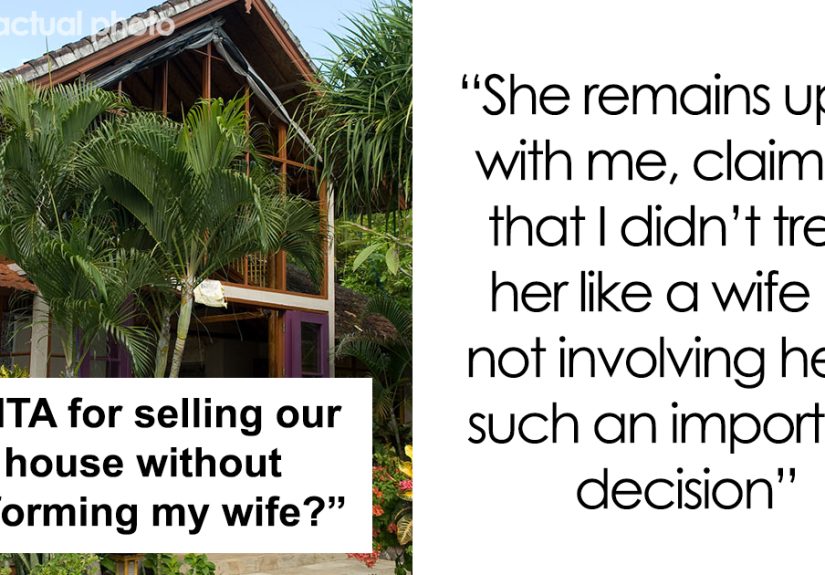
That’s exactly what happened in this viral “Am I The Jerk?” story, shared on Reddit and later picked up by Bored Panda: a husband quietly sold the family home and only told his wife at the last possible moment.
The internet, predictably, had thoughts. Lots of them. And while it’s easy to yell “You’re the jerk!” from behind a screen, this story also opens up a bigger conversation about trust, financial infidelity, and what it really means to make “joint decisions” in a marriage.
In this deep dive, we’ll break down the infamous house-selling drama, explore the legal and emotional implications of making huge financial moves behind your partner’s back, and pull out real-life lessons so you never end up starring in your own Bored Panda relationship saga.
The Viral Story: Husband Sells the House Behind His Wife’s Back
The core of the story goes like this: a married couple is living in a house located in the wife’s hometown. The husband, unhappy with the small-town job market and convinced that their future lies elsewhere, decides to sell the house. Instead of sitting down for a long, probably uncomfortable conversation, he negotiates the sale largely on his own and only tells his wife when the deal is already in motion.
Online commenters quickly zoomed in on three key details that show up in variations of this scenario:
- The house is legally in his name. He argues this gives him the right to decide.
- The town has limited opportunities. He believes he’s making a “smart” move for the family’s future.
- He deliberately avoids his wife’s input because he assumes she’ll say “no” or “make it difficult.”
In other words, the sale isn’t just about real estate. It’s about control, communication (or lack of it), and a massive decision made unilaterally in a supposedly equal partnership.
Legally Speaking: Can a Spouse Sell “Our” House Without Telling the Other?
One of the first questions people ask after reading this kind of story is simple: “Is that even legal?”
The answer in the U.S. is: it depends on where you live, whose name is on the deed, and whether the place counts as a marital or homestead property.
Whose Name Is on the Deed Matters… But It’s Not the Whole Story
In some states, if only one spouse’s name appears on the deed and the property is considered a non-marital or separate asset, that person may have the technical legal authority to sell the property.
However, many states (and especially family courts) care less about “whose name is printed where” and more about:
- When the property was acquired (before or during the marriage)
- Whether marital funds were used to pay the mortgage, taxes, or renovations
- Whether the home is considered the couple’s primary residence or “homestead”
For homestead property, several states require both spouses’ signatures to sell, even if only one name is on the deed.
Some legal guides also highlight that it’s “extremely unlikely” a spouse can sell the marital home without the other’s consent unless very specific exceptions apply.
Community Property vs. Separate Property
In community property states, assets acquired during the marriage are typically treated as jointly owned, regardless of whose name appears on the paperwork. Even where separate ownership is technically recognized, courts can consider how both partners contributed financially or otherwise to the property’s value.
So yes, a spouse might manage to push through a sale on a technicality. But that doesn’t mean they’re safe from:
- Legal challenges over whether the sale was valid
- Claims in divorce court for a larger share of remaining marital assets
- Serious damage to their credibility in front of a judge
In short: even if the husband in the story found a way to make the sale “legal,” that doesn’t make it wise or fair.
Emotionally Speaking: This Is Classic Financial Infidelity
While the law debates ownership, psychology weighs in with a different term: financial infidelity. This is when one partner hides or lies about money, accounts, debts, or major financial decisions.
Research and surveys in the U.S. show that financial deception is more common than most couples want to admit. One national poll found that over 40% of people who share finances with a partner have hidden financial information things like secret spending, hidden credit cards, or concealed debt.
Selling a house without telling your spouse isn’t just “secret spending.” It’s the nuclear version of that.
Financial infidelity hurts because it hits three core parts of the relationship:
- Trust: “If you can sell our house without telling me, what else are you capable of hiding?”
- Safety: A home is more than property; it’s stability, routines, kids’ schools, and community.
- Respect: A unilateral decision says, “My judgment matters more than yours.”
Therapists often compare financial infidelity to romantic cheating: it may not involve another person romantically, but the emotional fallout betrayal, anger, anxiety, and resentment can feel eerily similar.
What the Internet Had to Say: Was He the Jerk?
On Reddit and in Bored Panda’s comment section, the verdict was… blunt. The vast majority of commenters agreed that the husband was, in fact, the jerk.
Common reactions included:
- “You didn’t avoid conflict, you postponed the explosion.” Instead of arguing about moving, he guaranteed a much bigger fight later.
- “You treated your wife like a dependent, not a partner.” Making a life-altering decision without her input felt paternalistic and dismissive.
- “Legal isn’t the same as ethical.” Even if the deed is in his name, their life is in that house.
A smaller number of commenters tried to defend him by pointing to job opportunities, financial pressure, or the wife’s alleged resistance to change. But even many of those people ultimately admitted: you still talk to your spouse first.
Hidden Red Flags in Stories Like This
It’s tempting to read these posts for entertainment a bit of popcorn drama between emails. But buried in the chaos are some important red flags that show up again and again in similar cases:
1. “I Knew They’d Say No, So I Just Did It”
Anytime someone justifies a secret decision with “they’d never agree,” it usually means the real problem is avoiding conflict, not solving it. Healthy relationships don’t require unanimous enthusiasm for every decision, but they do require both people being informed, heard, and involved.
2. Using Logic to Steamroll Emotions
Job markets, mortgage rates, and long-term financial planning matter. But so do emotional ties, family networks, and mental health. Many posts like this frame the decision as “rational” and the spouse’s objections as “emotional” as if emotions are automatically less valid. In reality, both parts matter equally when you’re making a life-changing move.
3. Treating Marriage Like a Solo Project
Reddit is full of variations: someone sells a house, cashes out retirement savings, signs a loan, or secretly gifts large sums of money to family all “for the good of the family,” but without telling their partner. Underneath is the same pattern: one person sees themselves as the decision-maker, and the other as an accessory.
How to Avoid Becoming the “Jerk” in Your Own Relationship
The good news? You can absolutely avoid starring in your own “Am I The Jerk?” thread. It doesn’t require perfection just honesty, respect, and a willingness to have the harder conversation before the bigger disaster.
1. Make a Pact: No Major Financial Surprises
Many couples find it helpful to set clear ground rules: no secret accounts, no major purchases, and no property decisions without both people being fully in the loop. Some even define “major” with a specific dollar amount or category (housing, vehicles, investments, family support).
2. Treat Your Partner as a Co-CEO of the Household
If you wouldn’t sell a business asset behind your co-founder’s back, don’t sell a house behind your spouse’s back. Big decisions are slower and sometimes messier with two people at the table but the resentment is far lower.
3. Use Professionals as Neutral Referees
When you’re genuinely stuck one wants to move, the other doesn’t bringing in a neutral third party can help. Real estate agents, financial planners, or couples’ therapists can reframe the conversation around long-term goals instead of “you’re wrong / I’m right.”
4. Be Honest About Fears, Not Just Facts
Often, a partner clings to a house not just because it’s “nice” but because it represents security, identity, or connection to family. The other partner might push for a move because they feel financially trapped or professionally stuck. Saying “I’m scared we’ll never get ahead” or “I’m terrified of starting over somewhere I know no one” is more productive than just throwing spreadsheets at each other.
Can a Relationship Survive This Kind of Betrayal?
It’s not automatically game over but it’s close. Rebuilding after financial infidelity usually requires:
- Full transparency about accounts, assets, and decisions going forward
- Genuine accountability from the person who kept the secret, not just “I’m sorry you’re mad”
- Time and possibly therapy to repair trust and renegotiate how decisions get made
Some couples do come out stronger after confronting money secrets, but only when both partners openly acknowledge the damage, not just the “logic” behind the original decision.
Real-Life Experiences and Lessons from Similar Situations (Extra Deep Dive)
Stories like “Am I The Jerk For Selling Our House Without Informing My Wife?” go viral because they hit something raw and universal: almost everyone has at least one story where money, home, and trust collided in a very messy way.
Consider a common scenario shared in various relationship forums: a spouse doesn’t sell the house, but secretly takes out a home equity loan to cover debts, hobbies, or to help family. Months later, the other partner discovers their home is now collateral for decisions they never approved. The dollar amount may be smaller than selling the whole property, but the emotional impact is similar the ground under their feet suddenly feels less solid.
In many of these cases, the “secret-keeper” insists they were trying to protect their partner from stress:
“You were already anxious; I didn’t want to worry you.”
“I thought I could fix it before you ever had to know.”
“I was sure this was the right decision, and you’d overreact.”
The intention might sound noble in their own head, but the effect on the other person is anything but. People describe feeling:
- Emotionally blindsided: Like they’ve been living in a story someone else was writing for them.
- Intellectually insulted: As if they were deemed “too emotional” or “too irrational” to be trusted with the truth.
- Suddenly powerless: Major life outcomes where they live, what they can afford, how secure they are were decided without them.
Couples who manage to recover from these blows usually describe a similar turning point: the person who made the secret decision finally admits that it wasn’t just about money it was about fear. Fear of conflict. Fear of being told “no.” Fear of confronting their own mistakes.
On the flip side, there are success stories where partners navigated big housing decisions together, even when they disagreed. For example, one partner might desperately want to move to chase better job opportunities while the other clings to the current neighborhood for the kids’ stability. Instead of pulling the trigger in secret, they:
- Set a clear timeline for instance, “Let’s revisit this in 12 months after we pay off X and see how the local market looks.”
- Experiment with compromises remote work, renting out rooms, or trying a temporary relocation.
- Bring in professionals a financial planner to run different scenarios, or a therapist to help them listen instead of just argue.
These couples don’t avoid discomfort they lean into it. They accept that sometimes both options kind of hurt: staying might mean slower career growth; moving might mean leaving support networks behind. But because they work through those trade-offs side by side, no one ends up feeling ambushed.
The biggest takeaway from real-life experiences is this:
People can forgive bad decisions a lot more easily than they can forgive being excluded from those decisions.
When partners look back on the worst moments a risky investment, a sudden move, a house sold at the wrong time what hurts most is usually not “you made a mistake,” but “you didn’t trust me enough to make the mistake with you.” That’s exactly why the man in the Bored Panda story drew so much outrage. He didn’t just sell a house. He sold the illusion that they were making a life together as equals.
So if you ever find yourself secretly filling out paperwork that will completely change your partner’s life, consider this your flashing red warning sign: pause, close the laptop, and invite them into the conversation even if it means a fight now. It’s almost always better than the explosion later.
Conclusion: So… Is He the Jerk?
Legally, the husband in “Am I The Jerk For Selling Our House Without Informing My Wife?” might be able to argue technicalities depending on the state, the deed, and how the property is classified. But ethically and relationally, the internet’s instinctive answer rings true: yes, selling your shared home behind your spouse’s back makes you the jerk.
Marriage is not a solo financial speedrun; it’s a very slow, occasionally chaotic co-op game. You don’t have to love every choice your partner wants to make, and they won’t love all of yours. But if you want to stay out of Bored Panda-level drama, keep the big decisions on the table not in your drafts folder.
Talk early. Talk honestly. And if you ever have to ask the internet, “Am I the jerk for doing something huge without telling my spouse?” deep down, you probably already know the answer.
SEO JSON TAGS