Table of Contents >> Show >> Hide
There are ordinary years, there are memorable years, and then there is 2020the year when markets face-planted, recovered, and somehow ended up acting like they had chugged three cold brews and discovered a commission-free trading app. If you want a phrase that captures the mood swings of that year, “animal spirits” fits like sweatpants in lockdown: a little messy, strangely accurate, and impossible to ignore.
In economics, animal spirits describe the emotions, instincts, and confidence that drive people to spend, invest, hire, buy homes, launch businesses, and occasionally convince themselves that maybe this banana company or electric scooter stock really is the future. In 2020, those impulses went from fear to hope to speculation at record speed. It was the year panic met policy support, boredom met trading platforms, and living rooms became offices, classrooms, theaters, anddepending on the weekmini existential crisis centers.
This article looks at the best of 2020 through the “Animal Spirits” lens: not just the best media, market moments, and lessons, but the deeper story of how Americans lived through a year that felt like ten years duct-taped together. It was a brutal year in human terms. But it was also a year that revealed how fast behavior can change, how resilient people can be, and how quickly confidence can return once fear loosens its grip.
What “Animal Spirits” Meant in 2020
If 2019 felt like a steady highway drive, 2020 was more like hydroplaning through a thunderstorm while the GPS kept rerouting. Early in the year, the economy slammed into a sudden stop. Businesses closed. Events vanished. Travel collapsed. Millions of workers were furloughed or laid off. Investors sold first and asked questions later. Then, almost as quickly, a new mood began to emerge.
That shift was the story of 2020: fear did not disappear, but it had company. Massive government intervention, ultra-low rates, stimulus checks, emergency lending programs, and a belief that life would eventually normalize helped bring confidence back to households and markets. The result was one of the strangest combinations in recent memory: a weak real-world economy in many sectors paired with a shockingly strong appetite for risk in financial assets.
That’s what made 2020 such a pure animal-spirits year. People weren’t responding only to spreadsheets and earnings estimates. They were responding to emotion, survival, hope, boredom, momentum, and the deep human desire to believe tomorrow will be better than today.
The Year Fear Took the Wheel
A historic economic shock
It is hard to overstate how violent the economic break was in the first half of 2020. Businesses that had been humming along in February suddenly faced empty storefronts, frozen demand, and a future nobody could model. Families worried about paychecks, rent, health, childcare, and how many times one can cook pasta before it becomes a personality trait.
The shock showed up everywhere. Employment cratered. Consumer behavior changed overnight. Entire industries were forced into survival mode. Even the language of daily life shifted. Words like “shutdown,” “stimulus,” “social distancing,” and “Zoom fatigue” became part of the national vocabulary at warp speed.
And yet, the weirdness of 2020 is that this collapse was not the whole story. It was merely Act One.
Policy stepped in fast
One reason 2020 became such a remarkable market year is that policymakers responded aggressively. The Federal Reserve rolled out emergency measures and lending facilities at a pace that would have looked dramatic in any other era and downright cinematic in this one. Congress also pushed direct support into the economy. Together, those moves did not erase the pain, but they changed expectations.
Once investors believed the financial system would keep functioning and that policy support would remain powerful, the mood began to turn. In other words, the lights didn’t all come back on at once, but enough bulbs flickered to convince people the house might not burn down after all.
Then the Comeback Got Weird
Markets rebounded faster than emotions
One of the defining lessons of 2020 is that markets and human feelings rarely move in sync. Plenty of people still felt scared, uncertain, and exhausted even as stocks rebounded. That disconnect made the year feel almost rude. Real life was stressful. Portfolios, somehow, were starting to behave like they had not gotten the memo.
For long-term investors, this created a painful but useful reminder: the market often turns before the headlines feel reassuring. Waiting for perfect clarity usually means missing the sharpest part of the recovery. That is not a fun lesson. It is, however, a stubbornly real one.
Retail investors entered the chat
2020 also turbocharged a new era of retail investing. Stay-at-home life, stimulus money, market volatility, social media, and easy-to-use trading platforms drew more individuals into the investing conversation. Some came to build wealth. Some came to learn. Some came because sports betting options were limited and the stock market looked like the only game in town. Financial history has many elegant theories; 2020 often preferred chaos in gym shorts.
This surge mattered because it changed the vibe of markets. Finance became more public, more social, and more memetic. Portfolio talk moved out of conference rooms and into group chats. Options trading gained a larger audience. Speculation became entertainment for some and education for others. As always, a few people learned timeless investing principles, and a few others learned that “to the moon” is not a fiduciary strategy.
The stay-the-course crowd aged well
For every trader chasing the next hot move, 2020 also rewarded boring discipline. Research from large investment firms reinforced an old truth: most investors who resisted the urge to panic were better off than those who bailed to cash during the worst of the turmoil. It was not glamorous. Nobody made a documentary called The Quiet Brilliance of Rebalancing. But patience worked.
That may be the most “Animal Spirits” lesson of all: emotions are real, powerful, and impossible to eliminatebut systems, rules, and good habits can keep them from hijacking your decisions.
The Best of 2020 in Markets, Money, and Behavior
Best lesson: diversification is still undefeated
Every crisis creates a brief temptation to believe old investing wisdom has expired. In 2020, it didn’t. Diversification still mattered. Long-term thinking still mattered. The difference between “I have a plan” and “I have vibes” still mattered quite a lot.
The investors who came out of 2020 looking smartest were often not the ones with the boldest predictions. They were the ones who kept saving, kept investing, stayed diversified, and let time do the heavy lifting. Not sexy, but effectivelike a Honda Accord for your net worth.
Best behavior shift: home became everything
One of the most important shifts of 2020 was the redefinition of home. It became office, classroom, gym, restaurant, movie theater, refuge, and sometimes prison with snacks. That changed spending patterns in a major way. Housing demand strengthened. People rethought where they wanted to live. Remote work encouraged relocation. Home improvement, digital subscriptions, delivery services, and e-commerce all received a giant tailwind.
In hindsight, this was one of the clearest examples of animal spirits moving beyond Wall Street. When daily life changes, confidence and demand change with it. The places people choose, the tech they buy, and the habits they build become economic forces, not just lifestyle preferences.
Best reminder: technology stopped being optional
2020 made digital adaptation feel less like a trend and more like oxygen. Video calls, streaming, mobile investing, online shopping, and cloud-based work tools became everyday essentials for millions. This acceleration changed business models, consumer expectations, and the rhythm of work. It also highlighted a digital divide that could no longer be treated as background noise.
If 2019 still allowed the fantasy of “we’ll digitize later,” 2020 laughed in that fantasy’s face and muted it on Zoom.
The Best of 2020 in TV, Film, and Books
The year-end “Animal Spirits” conversation did something smart: it treated 2020 as more than a market story. That mattered, because survival in 2020 was not just financial. It was emotional. People needed distraction, comfort, meaning, insight, and the occasional prestige miniseries to stop them from checking the news every seven minutes.
Best TV comfort food
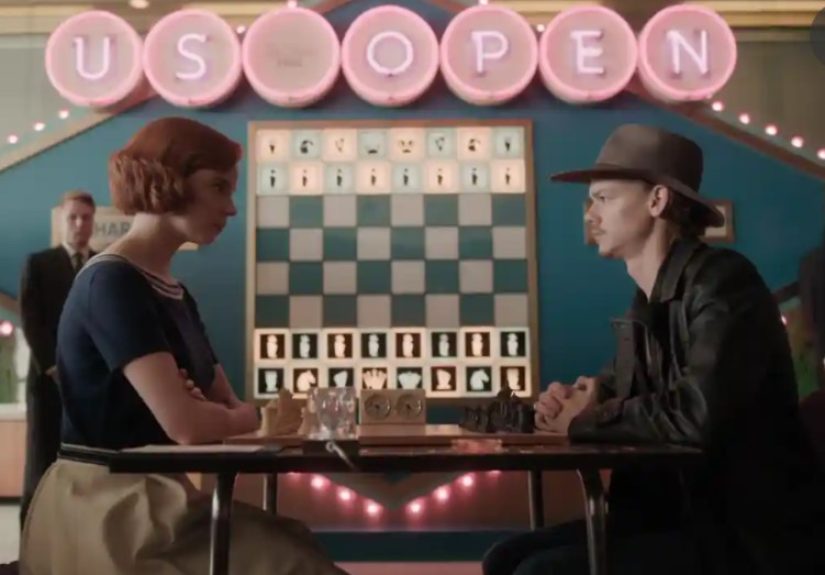
The Queen’s Gambit felt like a cultural event because it was stylish, smart, and just accessible enough to make viewers think, “Maybe I, too, should dramatically stare at a chessboard.” It had elegance, momentum, and that rare ability to feel both classy and bingeable.
The Last Dance delivered nostalgia at exactly the right moment. During a time of shutdowns and uncertainty, the Michael Jordan documentary gave audiences a shared weekly ritual. It was sport, history, personality, and mythmaking rolled into one beautifully timed release.
Better Call Saul, The Crown, and I May Destroy You also stood out for very different reasons. One offered master-level tension and character development, one gave viewers lavish historical drama, and one provided a brave, inventive, deeply modern story that critics and audiences kept talking about.
Best movie escape routes
Movies in 2020 had a tough job: they had to compete with anxiety, fragmented attention, and the fact that everyone’s couch had become both a sanctuary and a crater. But several still broke through. Palm Springs captured the repeating-loop feeling of the year with eerie comic precision. It was funny, charming, and somehow managed to make emotional stagnation feel entertainingwhich, to be fair, was the most 2020 achievement imaginable.
Critics also rallied around films such as Nomadland, Mank, First Cow, and Lovers Rock. These films reminded audiences that even when theaters were disrupted, strong storytelling still found a way to matter.
Best books for a year that needed perspective
Books in 2020 often succeeded by doing one of two things: helping readers understand the world or helping them temporarily escape it. On the nonfiction side, works like Caste, Minor Feelings, and The Price of Peace gave readers big frameworks for understanding history, power, race, economics, and public life. These were not light beach reads unless your beach comes with a policy seminar and a notebook.
On the fiction side, acclaimed titles such as The Vanishing Half, Shuggie Bain, and Deacon King Kong gave readers voice, character, and the strange comfort of disappearing into someone else’s world for a while.
That mixserious analysis plus immersive escapewas exactly what 2020 demanded. People wanted to understand the moment and take a break from it. Sometimes both in the same week. Sometimes in the same afternoon.
Why 2020 Still Matters
It is tempting to think of 2020 as a one-off madness event, filed somewhere between “please never again” and “what was sourdough culture really about?” But the year still matters because it revealed patterns that continue to shape markets and daily life.
It showed how rapidly economic behavior can change when external shocks force new habits. It accelerated the role of retail investors and digital platforms. It intensified housing migration trends. It proved that policy response can alter the emotional temperature of markets. And it reinforced a timeless rule: the economy runs on more than data. It runs on confidence, belief, imagination, fear, momentum, and stories people tell themselves about the future.
That is what animal spirits are. And in 2020, they were loud.
Experiences From a Year When Panic and Optimism Shared the Same Couch
To understand “Animal Spirits: The Best of 2020,” you also have to understand what the year felt like. It felt like waking up every day to a fresh push notification and wondering whether you should stretch, make coffee, or move to a cabin. It felt like one giant national experiment in uncertainty. Even people who kept their jobs, kept investing, and kept functioning were still operating with a low-grade hum of stress that never fully shut off.
There was a strange intimacy to 2020. Colleagues met each other’s kids, pets, bookshelves, and questionable lamp choices over video calls. Friends recommended shows with the urgency of wartime logistics. Families who never used delivery apps suddenly had opinions about contactless drop-off. People who had never cared about markets started checking them because the market seemed to be one of the only things moving at all. People who had always cared about markets learned that even seasoned investors can feel queasy when volatility shows up swinging a folding chair.
And yet there were bright spotsodd, specific, very human bright spots. A favorite show dropped at exactly the right time. A documentary became a shared national conversation. Someone opened an investing account and bought their first index fund. Someone else realized their house mattered more than they had ever admitted, not as an asset class but as an emotional headquarters. Readers found books that made the year feel legible. Viewers found stories that made the year feel survivable. Investors discovered that staying calm is not a personality trait; it is a practice.
The experience of 2020 was also incredibly uneven. For some, it was financially devastating. For others, it became a year of forced reflection, career reevaluation, geographic flexibility, or even unexpected financial progress. That contrast is part of what made the year so disorienting. One person saw a terrifying economy. Another saw a roaring stock market. Both were right. One family felt trapped. Another felt newly mobile. One worker burned out at home. Another discovered they never wanted a daily commute again. 2020 was not one story. It was a thousand overlapping stories, all happening at once.
That is why the phrase “the best of 2020” sounds almost cheeky at first. Best? In that year? But maybe that is exactly the point. The best of 2020 was never about pretending the hard parts didn’t happen. It was about noticing what people carried forward anyway: resilience, adaptation, curiosity, better habits, stronger systems, richer conversations, and a renewed appreciation for whatever got them through the week. Sometimes that was a diversified portfolio. Sometimes it was The Queen’s Gambit. Sometimes it was takeout and a group text.
So if “Animal Spirits: The Best of 2020” means anything lasting, it means this: human beings are emotional creatures, not spreadsheets with shoes. We panic. We hope. We overshoot. We adapt. We look for patterns. We crave stories. We bounce between dread and optimism with astonishing speed. And every once in a while, out of all that chaos, we learn something useful enough to keep.
Conclusion
2020 was the year animal spirits became impossible to miss. Fear crushed the economy, policy changed expectations, markets rebounded, retail investors arrived in force, and culture stepped in to keep many people sane. The best of that year was not perfection. It was proof of adaptability. It was the reminder that even in a wildly unstable environment, people keep searching for signal, comfort, meaning, and opportunity.
That is the real story of “Animal Spirits: The Best of 2020.” It was a year when the numbers mattered, but behavior mattered more. And if you want to understand marketsor peopleyou ignore that emotional layer at your own risk. In 2020, the data told one story. The mood told another. Together, they told the truth.
Note: This article is formatted for web publication, written in original language, and cleaned of unnecessary citation-placeholder artifacts.