Table of Contents >> Show >> Hide
- What “animal spirits” actually means
- Why sentiment feels so bearish right now
- Why the economy may not be as doomed as the mood suggests
- What bearish animal spirits do to the real economy
- How to read this moment without becoming melodramatic
- A 500-Word Reality Check: What Bearish Animal Spirits Feel Like in Real Life
- Conclusion
There is a special kind of economic mood that arrives before the spreadsheets fully catch up. It shows up at dinner tables, in boardrooms, and inside brokerage accounts opened “just to check something” and then immediately regretted. Economists have a name for this mood: animal spirits. It is the mix of confidence, fear, instinct, and collective storytelling that pushes people to spend, hire, invest, or slam the brakes like they just saw a raccoon in the headlights.
Right now, the question hanging over markets and the broader economy is simple: Why so bearish? Why do consumers sound gloomy, why do investors keep leaning defensive, and why does sentiment feel fragile even when parts of the economy are still standing upright and trying to look calm in public?
The answer is not one giant disaster movie. It is more annoying than that. Bearishness today comes from a pileup of smaller forces: weaker confidence, sticky price anxiety, labor-market nerves, policy uncertainty, tariff-driven cost pressures, and the unsettling feeling that markets are expensive enough to punish even mildly bad news. In other words, the economy is not necessarily falling off a cliff, but plenty of people are walking around like they heard pebbles rolling near the edge.
What “animal spirits” actually means
The phrase animal spirits goes back to John Maynard Keynes, who used it to describe the instincts and emotions that shape economic behavior. People do not make every financial decision with robot-like precision. They make calls based on confidence, headlines, hunches, and that weirdly persuasive text from a friend who says, “I don’t know, something feels off.”
When animal spirits are strong, households feel comfortable booking vacations, replacing cars, remodeling kitchens, and saying yes to restaurant appetizers they absolutely do not need. Business leaders are more willing to hire, raise wages, expand capacity, and greenlight capital spending. Investors reach for growth, risk assets, and future dreams with names like “platform,” “disruption,” and “synergy.”
When animal spirits turn bearish, the whole machine gets moodier. Consumers postpone purchases. Executives hedge. Investors rotate into safety. The economy can keep moving, but with less enthusiasm and more suspicious side-eye.
Why sentiment feels so bearish right now
1. The soft data looks uncomfortable
One of the clearest reasons for the bearish mood is that survey-based sentiment remains weak. That matters because soft data often captures how people feel before hard data confirms whether their anxiety was justified. And lately, the feelings have not exactly been wrapped in sunshine and acoustic guitar music.
Consumer attitudes have been under pressure. The Conference Board’s expectations gauge has recently sat well below the level that has historically been associated with economic expansion, while the University of Michigan’s preliminary March 2026 survey showed consumer sentiment at 55.5, with expectations at 54.1. Those are not numbers that scream “buy the patio set and book the ski trip.” They suggest households are uneasy about the road ahead.
That distinction matters. People may still be paying bills and showing up to work, but if they are increasingly pessimistic about the next six to twelve months, that can change behavior fast. A worried consumer does not always stop spending immediately. First, they become choosier. Then they become promotional. Then suddenly they are comparing the cost of eggs like they are managing a hedge fund.
2. The labor market is okay, but no longer magical
Bearishness also grows when the labor market shifts from “bulletproof” to merely “pretty decent.” In February 2026, the U.S. unemployment rate was 4.4%, which is not recession-level panic, but it is high enough to make people notice that the labor market is not as effortlessly strong as it once looked.
More important than the headline rate is the feeling of job security. The New York Fed’s consumer expectations data has shown a softer tone in labor-market confidence, including a lower expected quit rate and a relatively weak probability of finding a new job quickly if one is lost. That is classic bearish fuel. People can live with inflation. They can live with market volatility. What they hate is the idea that the backup plan may be worse than advertised.
Once workers believe jobs are harder to get, they spend more cautiously. Once employers suspect demand may soften, they hire more carefully. Nobody has to panic for the economy to cool. They just have to become slightly less brave.
3. Inflation may be cooler, but price pain still lives rent-free in everyone’s head
Official inflation has cooled from its worst levels, but the emotional residue is still everywhere. The Bureau of Economic Analysis reported that the January 2026 PCE price index was up 2.8% from a year earlier, while core PCE was up 3.1%. Those figures are much better than the inflation spike that haunted previous years, but they are not low enough for households to forget what higher prices did to their budgets.
And then there is the tariff question. The Federal Reserve’s Beige Book recently noted that tariffs were contributing to higher costs in multiple districts. Some businesses have absorbed part of the hit, while others have passed through at least some of the added cost. That creates exactly the kind of messy environment people dislike: uncertainty about prices, margins, and demand all at once.
Consumers do not need a giant inflation shock to feel bearish. They just need the sense that costs remain sticky, deals are harder to find, and the next round of price increases might show up disguised as smaller packages, fewer discounts, or “premium enhancements” nobody asked for.
4. Markets look strong enough to be scary
Here is one of the stranger features of modern bearishness: people can feel bearish even when markets are not cheap enough to justify total despair. In fact, elevated valuations can make people more nervous, not less. Why? Because when prices are rich, the margin for error gets thinner. Good news has to keep arriving. Earnings have to keep landing. Policy shocks have to stay contained. That is a lot of emotional load-bearing for one market.
Morningstar has warned that 2026 could bring higher stakes and more volatility, especially in areas where expectations are already lofty. That makes sense. Investors are not just asking whether growth will continue. They are asking whether growth will be strong enough, fast enough, and smooth enough to justify what is already priced in. That is not optimism. That is optimism wearing a stress rash.
5. Individual investors are genuinely cautious
Sometimes the cleanest answer is the obvious one: people are bearish because they say they are bearish. The AAII Sentiment Survey recently showed bearish sentiment jumping above its long-term average, with pessimism around the six-month market outlook reaching notably elevated levels. That kind of reading does not prove the crowd is right. But it does confirm that caution is not a niche hobby right now.
And once bearishness becomes a shared social mood, it spreads quickly. Financial media amplifies it. Social feeds meme it. Group chats turn every market dip into evidence that civilization peaked three Tuesdays ago. Sentiment can feed on itself even before earnings, employment, or GDP fully respond.
Why the economy may not be as doomed as the mood suggests
Now for the plot twist: hard data has not completely rolled over. That is why this moment feels so psychologically weird. The vibes are fragile, but the economy is not uniformly collapsing.
Personal income rose in January 2026, disposable personal income increased more sharply, and personal consumption expenditures also moved higher. That tells us households are still earning, still spending, and still participating in the economy even while sounding anxious about it. In plain English: people are nervous, but many are still swiping the card.
Business data is mixed rather than catastrophic. NFIB’s Small Business Optimism Index dipped slightly in February to 98.8, yet remained a touch above its long-run average, and uncertainty actually eased from January. At the same time, The Conference Board’s CEO confidence measure improved sharply in the first quarter of 2026, with more executives saying conditions had improved and more expecting better conditions ahead.
That disconnect is one of the most important clues in the whole story. Consumers are nervous. Investors are cautious. But some business leaders still see room for expansion. Goldman Sachs, for example, has projected that U.S. GDP growth in 2026 could outperform the broader consensus. That does not erase risk, but it does challenge the idea that bearish sentiment automatically equals imminent recession.
So the current mood is not “everything is broken.” It is closer to “the future feels less reliable than it did, and markets are priced like reliability should continue.” That difference matters.
What bearish animal spirits do to the real economy
Bearishness is not just a feeling; it changes outcomes.
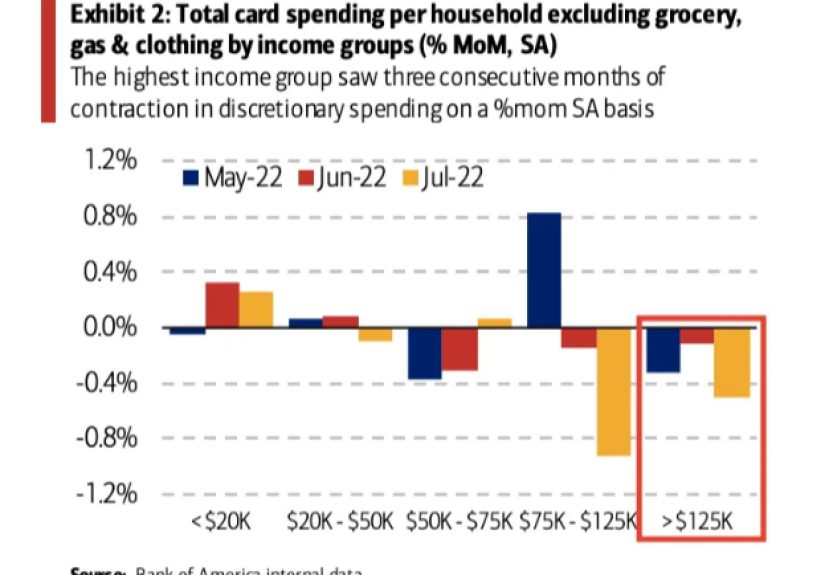
When households get cautious, discretionary spending slows first. That can hit travel, dining, home goods, apparel, and other categories that rely on confidence more than necessity. When businesses get cautious, hiring gets slower, bonus pools tighten, and capital expenditures get delayed. When investors get cautious, money shifts into cash, bonds, defensives, or whatever asset currently has the least chaotic aura.
This is how sentiment can become partially self-fulfilling. A fearful public spends less. Lower spending weakens sales. Weaker sales make executives more conservative. Conservative executives hire less. A softer labor market reinforces public anxiety. Suddenly everyone feels vindicated, which is rarely the same thing as being thrilled.
Still, bearish animal spirits do not guarantee a crash. Sometimes they simply create a slower, choppier expansion. Sometimes they reset unrealistic expectations. Sometimes they keep speculative excess from turning into full-blown nonsense. Fear is uncomfortable, but it is not always irrational. In markets and economics, a little skepticism can be healthy. The trouble starts when skepticism turns into paralysis.
How to read this moment without becoming melodramatic
If you are trying to make sense of why sentiment is so downbeat, the smartest approach is to separate mood from mechanics.
Mood says consumers are uneasy, investors are defensive, and policy uncertainty is corrosive. Mechanics say incomes are still rising, spending is still positive, and parts of the business sector remain constructive. Mood says the labor market feels shakier. Mechanics say unemployment is higher than ideal but not a full-scale disaster. Mood says inflation is infuriating. Mechanics say it has cooled, though not enough to feel painless.
The real takeaway is that bearishness today is rational enough to be believable, but not complete enough to be definitive. People are reacting to genuine risks: cost pressures, weaker confidence, labor-market softness, and elevated expectations in asset prices. They are also reacting to a world where every headline is delivered with the emotional subtlety of a fire alarm.
That is why the bearish tone feels so persistent. It is not built on one clean recession call. It is built on cumulative fatigue. Higher prices. Uncertain policy. Nervous workers. Expensive markets. Conflicting indicators. Too many reasons to worry, and not enough clarity to fully dismiss any of them.
A 500-Word Reality Check: What Bearish Animal Spirits Feel Like in Real Life
Bearish animal spirits rarely announce themselves with a trumpet. They show up in tiny, ordinary choices. A couple with stable jobs decides to postpone replacing a car because the old one still “basically works,” which is a phrase that has saved and ruined many budgets. A homeowner shelves the kitchen remodel not because the money is unavailable, but because uncertainty suddenly feels more expensive than granite.
At work, bearishness often sounds responsible. A manager says, “Let’s wait one more quarter before hiring.” A finance team calls for tighter assumptions. A founder who was talking about expansion three months ago is suddenly using phrases like “capital discipline” and “path to resilience,” which usually means the vibe has changed and the snacks in the office may soon follow.
Investors experience bearishness in a particularly human way. They do not just fear losses; they fear looking foolish. Nobody wants to buy near a top, hold through a drawdown, and then explain at brunch that they were “focused on the long term” while making eye contact with a mimosa. So they get cautious. They trim risk. They hold more cash than usual. They tell themselves they are waiting for clarity, even though clarity in markets is often what arrives after prices have already moved.
Consumers feel it too, especially after years of elevated prices. Even when incomes rise, people remember the shock of essentials becoming more expensive. They become more tactical. More coupons, more comparisons, more “let’s just eat at home.” None of those choices alone is dramatic. Together, they describe a public that is still participating in the economy, just with less swagger.
One of the strangest parts of a bearish period is how social it becomes. A single anxious headline is manageable. A dozen anxious conversations can reshape perception. One friend mentions layoffs in their industry. Another says their company has frozen hiring. A parent complains about grocery prices. A market pundit predicts doom before lunch and a soft landing by dinner. The result is not clarity. It is emotional overfitting.
And yet bearish animal spirits are not always a sign of weakness. Sometimes they are a sign that people are paying attention. They force better questions. Is demand still real? Are margins sustainable? Is spending broad or narrow? Are investors buying growth or just buying hope with nicer graphics? That kind of skepticism can prevent bigger mistakes.
The challenge is knowing when caution is useful and when it becomes contagious pessimism. In real life, the line is thin. A little caution protects balance sheets. Too much caution drains momentum. That is why bearish animal spirits matter so much. They are not just market commentary. They are the emotional climate in which households spend, businesses invest, and investors decide whether every dip is a danger or an opportunity wearing ugly shoes.
Note: This article is publication-ready and intentionally stripped of citation artifacts or placeholder source markers.
Conclusion
So why are animal spirits so bearish? Because confidence has been dented from several directions at once. Consumers remain uneasy. The labor market feels less secure. Inflation is cooler but not forgotten. Tariffs and policy uncertainty muddy the outlook. Markets are expensive enough to make disappointment feel dangerous. That is a potent combination.
But bearishness is not the same thing as inevitability. The economy still has pockets of resilience, incomes are still growing, spending has not collapsed, and some business surveys remain more upbeat than the public mood suggests. The most honest conclusion is this: sentiment is sour because the future feels less predictable, not because the outcome is already settled.
And in economics, that distinction matters. Animal spirits can push the story darker than the data deserves, or they can warn about trouble before the hard numbers fully show it. Right now, they are doing a bit of both. Which is inconvenient, of course, because the one thing markets love more than optimism is certainty. And certainty, at the moment, appears to be on vacation.