Table of Contents >> Show >> Hide
Some headlines don’t gently knock on the door of your curiosity. They kick it off the hinges, stroll into the living room, and drop a prehistoric bird claw on the coffee table.
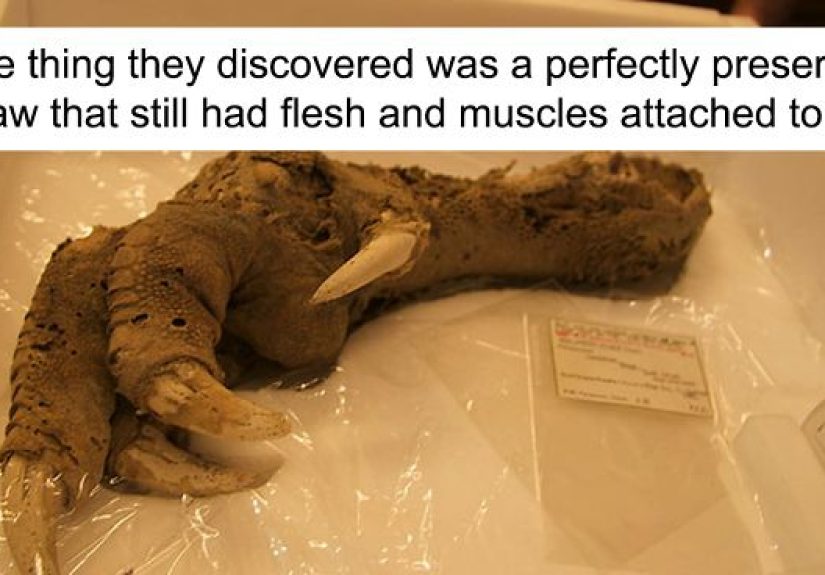
That was basically the internet experience when a photo of a remarkably preserved moa claw made the rounds again in 2020. The image looked less like a museum specimen and more like something a fantasy villain would wear as a keychain. The reaction was immediate: awe, horror, jokes, and a whole chorus of “Absolutely not. Not in 2020. Put it back.”
And honestly? Fair.
But beneath the memes was a genuinely fascinating scientific story. The claw belonged to an upland moa, one of New Zealand’s extinct flightless birds. The specimen was about 3,300 years old, yet it still looked shockingly lifelike because cold, dry cave conditions helped preserve soft tissue. That combination of age and preservation made it feel like a glitch in time. It also sparked the obvious pop-culture question: if scientists can recover ancient DNA and reconstruct genomes, are we one dramatic lab announcement away from a moa comeback?
This is where the story gets even better. The real answer is not a simple yes or no. It is a mix of archaeology, paleogenetics, extinction science, conservation ethics, and one stubborn biological fact: birds are not easy to “clone” in the way movies have trained people to imagine.
The claw that launched a thousand “nope” comments
The first thing worth clearing up is that the claw was not some fresh 2020 excavation. The specimen itself was collected decades earlier in a cave on Mount Owen in New Zealand. What happened in 2020 was a classic internet move: an old discovery found a new audience. Suddenly, millions of people were staring at a mummified foot from a long-lost bird and reacting like someone had accidentally opened a side quest called Jurassic Park: Bird Edition.
The claw is generally identified as belonging to an upland moa, a smaller moa species adapted to cooler, mountainous parts of New Zealand’s South Island. “Smaller,” however, is doing some heavy lifting here. Moa as a group ranged from relatively modest species to giants that towered over humans. They were ratites, the same broad lineage that includes ostriches, emus, rheas, cassowaries, and kiwi. Unlike the ostrich, though, moa had no visible wings at all. Not tiny wings. Not useless wings. Basically none. Evolution looked at the situation and said, “Walking is enough.”
What makes this claw so memorable is not just its size. It is the preservation. Skin, sinew, and structure survived in a way that makes the foot look unsettlingly recent. Most extinct animals reach us as bone and dust. This one practically arrives with attitude.
What exactly was a moa?
Not one bird, but an entire extinct lineup
When people say “the moa,” it sounds like one dramatic species with a personal trailer and ominous background music. In reality, moa were a whole group of large, flightless birds that evolved in New Zealand over millions of years. Different species occupied different habitats and likely played different ecological roles, from browsing forest understory to moving through open country like feathered lawn equipment with opinions.
The upland moa, the species usually linked to the famous claw, was among the smaller members of the group. It lived in cooler high-country forests and subalpine zones and appears to have been particularly well suited to harsh environments. Evidence from preserved remains suggests it even had feathers extending farther down its legs than many people would expect, likely an adaptation for life in colder places. So yes, even this eerie claw belonged to a bird that was, in its own way, dressed for the weather.
A world built around birds
Part of what makes moa so fascinating is the ecosystem they belonged to. Before humans arrived, New Zealand had very few land mammals. Birds filled roles that mammals often fill elsewhere. Moa functioned as major herbivores, shaping vegetation, dispersing spores and seeds, and influencing the structure of forests and shrublands. Later research into fossilized droppings showed that moa diets were varied and ecologically important. In other words, these were not just oversized oddballs wandering around for style points. They were major players in the landscape.
That matters because extinction is not just the loss of a species. It is the removal of a job from an ecosystem. When moa disappeared, New Zealand did not just lose big birds. It lost ancient behaviors, feeding patterns, plant relationships, and ecological interactions that had taken a very long time to evolve.
Why the moa disappeared
Humans, not a slow fade-out
For years, people debated whether moa were already in decline before humans showed up. Modern research has sharpened that picture considerably. The strongest evidence points to human arrival as the decisive turning point. Polynesian settlement in New Zealand began in the late thirteenth century, and moa disappeared not over some grand, misty age of gradual decline, but surprisingly fast.
That speed still startles scientists. These birds were enormous, widespread, and evolutionarily successful for a very long time. Yet once people entered the picture, the combination of hunting, egg harvesting, and habitat burning seems to have been devastating. Moa did not need a thousand years to vanish. They likely needed only a few generations of sustained human pressure.
That is one reason the claw hits so hard emotionally. It is not just ancient. It is a reminder that a creature can dominate a landscape for ages and still disappear quickly when conditions change in the wrong way. The specimen feels eerie because it makes extinction look close enough to touch.
A cautionary tale hidden in a cave
The preservation of the claw tempts people to think in reverse. If a bird can look this intact after 3,300 years, maybe the species is not as gone as “gone” sounds. Science, however, is ruder than nostalgia. Preserved tissue is not the same as living cells. A spectacular fossil or mummified remnant is a biological archive, not a reset button.
That distinction is the whole story.
Could scientists actually clone a moa?
The short answer: not in the simple movie version
The viral reactions in 2020 were funny, but the science underneath them is where things get interesting. Yes, researchers have recovered ancient DNA from moa remains. Yes, scientists have reconstructed moa genomes, including draft nuclear genome work on the little bush moa. And yes, de-extinction researchers often talk about birds such as the dodo, passenger pigeon, and moa as thought-provoking candidates for future biotechnology.
But none of that means someone can just take a 3,300-year-old claw to a lab, add dramatic lighting, and hatch a baby moa by Friday.
True cloning requires intact living cells or at least a pathway that mimics that biology closely enough to produce a genetically identical organism. Ancient remains do not give us that. DNA degrades after death. What scientists recover are fragments, sometimes incredibly useful fragments, but still fragments. Genome reconstruction is like piecing together a shredded library with help from the bookshelves of living relatives. That is impressive. It is not the same as having the original book, complete and ready to print.
Birds are an extra-hard mode problem
Now add the fact that birds are especially difficult to clone. Standard mammalian cloning techniques rely on reproductive biology that birds do not share. Avian embryos develop in eggs, and the mechanics of manipulating bird reproduction are far trickier than the public usually realizes. As of now, birds have not been cloned the way mammals have.
That means any future “moa revival” would almost certainly involve a more indirect route, such as advanced genome editing in a living relative, or some form of germ-cell manipulation using surrogate birds. Even then, the result would not be a perfect rewind of an extinct species. It would be, at best, a proxy: a new organism designed to resemble or function like a moa in certain ways.
That is a huge scientific distinction. A proxy is not a resurrection in the fairy-tale sense. It is a human-built approximation.
And then there is the ethics
This is where the internet joke about 2020 actually stumbles into a serious point. People were joking that the world did not need one more chaos patch. Scientists, meanwhile, have their own version of that concern. Even if de-extinction technology improves, should conservation money go toward rebuilding lost species while living species are still slipping away? What kinds of animal welfare risks would be involved in failed attempts? Where would a revived moa-like bird even live? And who gets to decide, especially when the animal belongs to a landscape and cultural history much larger than any single lab?
Those are not killjoy questions. They are the grown-up questions. The claw is spooky. The ethics are spookier.
Why people said 2020 was not the right year to clone it
Because the internet has timing
Let’s be honest: part of the headline’s power was comic timing. In 2020, people were exhausted, anxious, and already suspicious of any sentence that began with “scientists have found” and ended with something that looked like it belonged in a cave boss battle. So when the moa claw resurfaced online, commenters responded the only way the internet knows how: with humor, dread, and approximately twelve thousand variations of “Nope.”
The jokes worked because the claw genuinely looks unreal. It resembles a prop from a dark fantasy series, except it is real, ancient, and attached to the history of a bird that people actually hunted into extinction.
Because the joke hides a truth
The funny part is that the public instinct was not entirely wrong. We should be cautious about how we talk about de-extinction. Sensational language can make scientific work sound closer, simpler, and cleaner than it really is. A spectacular specimen is a gateway to knowledge, not a promise of resurrection. The real value of the claw is not that it lets us play god. It lets us learn.
It helps scientists study morphology, preservation, ancient environments, and the biology of a vanished species. It also helps everyone else feel the weight of extinction in a strangely personal way. A bone is abstract. A claw with skin still on it is not.
What the claw really gives us
If you strip away the meme energy, this discovery offers three lasting lessons.
First, extinction can be heartbreakingly recent. Moa were not dinosaur-old in the cultural imagination. They survived long enough that human beings encountered them directly, hunted them, and erased them from the living world.
Second, ancient DNA is powerful, but it is not magic. Recovering genetic information can illuminate evolution, diet, behavior, and relationships. It can even support conversations about future biotech. But preserved DNA does not erase the difference between research and resurrection.
Third, specimens like this claw make science feel immediate. They collapse time. You stop thinking about “deep history” as a vague blur and start thinking about weather, touch, habitat, flesh, movement, and loss. The moa stops being a trivia answer and becomes an animal.
The experience of encountering the moa claw story
There is a very specific feeling that comes from seeing the moa claw for the first time, whether in a museum image, a science article, or a wildly dramatic repost online. It is not the same as looking at a dinosaur skeleton or a fossil shell. Those feel ancient in a comfortable way. The brain files them under “long gone” and moves on. The moa claw does something else. It creates a tiny delay in your thinking, the mental equivalent of a double take.
At first glance, it looks too fresh. Too present. Too detailed. The curvature of the claw, the leathery surface, the suggestion of tendons and skin still holding form after thousands of yearsit all makes the object seem like it should be attached to something breathing just off camera. That is why so many people react with nervous humor. Jokes are often what humans do when wonder and discomfort arrive holding hands.
Imagine standing in front of a display case and realizing that the thing behind the glass belonged to a bird that vanished only a few centuries ago. Not millions of years ago. Not in some abstract prehistoric fog. This animal existed in a world that overlapped with human memory, migration, hunting, and storytelling. You are not just looking at “nature.” You are looking at evidence of a relationship between humans and nature that ended badly for one side.
That experience becomes even heavier when you know the broader context. Moa were not weird side characters in New Zealand’s ecological history. They helped shape it. Their bodies moved through forests, their feeding habits influenced plants, and their disappearance changed the rhythm of entire habitats. So when you look at the claw, you are not only seeing the remains of an individual bird. You are seeing a leftover piece of a system that no longer exists in its original form.
There is also something deeply modern about how this story spread. A preserved claw from a cave became a viral object because it photographed so well for the internet age. It was scientific evidence transformed into a global reaction image. One person saw ancient life. Another saw a monster. Another saw a cloning debate. Another saw a reason to make a very good 2020 joke. All of those reactions say something about how we process the past now: through science, through fear, through humor, and through the strange intimacy of high-resolution images on glowing screens.
And yet the longer you sit with the story, the less it feels like a novelty post and the more it feels like a mirror. The claw is dramatic, yes, but the real force of it comes from what it says about us. Humans are capable of destroying extraordinary species quickly, then centuries later becoming emotional over the remains. We are the animal that wipes something out and then builds a museum label about it. That tension is what makes the moa claw linger in the imagination. It is creepy, fascinating, sad, and scientifically rich all at once.
Maybe that is why the image keeps resurfacing. Not because people secretly want a cloned moa stomping around a fenced reserve, but because the claw gives us a rare, uncomfortable, unforgettable feeling: the sense that extinction is not just about the past. It is also about what kind of future we choose to make from the evidence it leaves behind.
Final thoughts
The famous moa claw is one of those discoveries that seems tailor-made for the internet: ancient, creepy, visually unforgettable, and just close enough to modern science to trigger a cloning debate. But the smartest reaction is not panic, and it is not fantasy. It is curiosity.
The claw matters because it bridges worlds. It connects archaeology, paleontology, genetics, ecology, and public imagination in one deeply weird package. It reminds us that extinct birds were once real animals in real ecosystems, not just entries in a lost-species hall of fame. And it underscores a truth that matters far beyond New Zealand: preserving life now is simpler, kinder, and more meaningful than trying to rebuild it later from fragments.
So yes, the internet was funny when it said 2020 was not the right year to clone that bird. But behind the joke was a surprisingly wise instinct. The claw is not a command to resurrect the past. It is a warning, a lesson, and a marvelone that still manages to grip us, quite literally, thousands of years later.