Table of Contents >> Show >> Hide
- What Is Bare-Root Hornbeam Hedging?
- Why Choose Hornbeam for a Hedge?
- European Hornbeam vs. American Hornbeam
- Best Growing Conditions for Bare-Root Hornbeam
- When to Plant Bare-Root Hornbeam Hedging
- How to Plant Bare-Root Hornbeam Hedging
- First-Year Care for Bare-Root Hornbeam
- How to Prune Hornbeam Hedging
- Common Problems and How to Avoid Them
- Design Ideas for Hornbeam Hedging
- Is Bare-Root Hornbeam Hedging Worth It?
- Conclusion: A Smart Hedge for Patient Gardeners
- Practical Experience: What Bare-Root Hornbeam Hedging Teaches You
- SEO Tags
Some hedges whisper, “I’m decorative.” Bare-root hornbeam hedging says, “I’m elegant, tough, practical, and yes, I can still look good after winter has thrown a small tantrum.” For homeowners who want a natural privacy screen without the instant sticker shock of mature container-grown plants, bare-root hornbeam is one of the smartest choices in the landscape toolbox.
Hornbeam, especially European hornbeam (Carpinus betulus), has long been valued for dense foliage, smooth gray bark, strong tolerance of pruning, and its ability to form a formal or semi-formal hedge. It is deciduous, but it often holds some of its dried leaves into the colder months, giving the hedge structure when many other plants have clocked out for the season. Plant it well, prune it wisely, and it becomes the green wall your yard did not know it needed.
What Is Bare-Root Hornbeam Hedging?
Bare-root hornbeam hedging refers to young hornbeam plants sold without soil around their roots while they are dormant. Instead of arriving in pots, the plants usually come bundled with exposed roots protected by damp packing material. This makes them lighter, easier to ship, and more affordable than container-grown or balled-and-burlapped plants.
The bare-root format is especially useful when planting a long hedge. Buying thirty, fifty, or one hundred potted shrubs can make your wallet hide behind the sofa. Bare-root plants reduce the cost and make mass planting far more realistic for homeowners, gardeners, and landscape designers.
Why Choose Hornbeam for a Hedge?
Hornbeam is not the loudest plant at the nursery. It does not scream with neon flowers or behave like a tropical diva. Its strength is quieter: dense branching, attractive leaves, winter structure, and excellent response to trimming. That makes it ideal for privacy screens, garden boundaries, windbreaks, outdoor rooms, and classic clipped hedges.
It Creates a Dense Living Screen
Hornbeam branches naturally fill in well when pruned from a young age. This is important because a hedge is not just a line of plants. A true hedge is a trained living structure. With regular heading back and side trimming, hornbeam develops thick growth from the base upward, helping block views, soften noise, and define garden spaces.
It Handles Pruning Like a Professional
One reason hornbeam is loved for hedging is that it responds well to hard pruning. You can keep it neat and formal, or allow it to grow into a looser, more natural screen. Either way, the plant can tolerate shaping far better than many ornamental trees. It is the botanical equivalent of someone who says, “Sure, I can make that work.”
It Offers Seasonal Interest
In spring and summer, hornbeam produces crisp green leaves with a textured, serrated edge. In fall, the foliage turns yellow to yellow-green. In winter, the smooth gray bark and fine branch structure keep the hedge visually interesting even after the leaves have faded. It is not flashy, but it has quiet confidencethe garden version of a well-tailored coat.
European Hornbeam vs. American Hornbeam
When people search for bare-root hornbeam hedging, they are often looking for European hornbeam, Carpinus betulus. This species is widely used for formal hedges because of its upright growth, dense foliage, and strong tolerance of clipping. It typically grows into a medium to large tree if left unpruned, but regular trimming keeps it hedge-sized.
American hornbeam, Carpinus caroliniana, is native to eastern North America and is also known as musclewood or blue beech. It is beautiful, shade tolerant, and valuable in native landscapes, but it is slower growing and less commonly sold as bare-root hedging in large quantities. For a classic clipped hedge, European hornbeam is usually the more common choice.
Best Growing Conditions for Bare-Root Hornbeam
Hornbeam is adaptable, but “adaptable” does not mean “plant it in a gravel driveway and hope for poetry.” Give it decent conditions at the beginning, and it will reward you for years.
Light
Hornbeam grows best in full sun to partial shade. For the densest hedge, full sun is ideal. In partial shade, the plants can still perform well, but growth may be slightly more open. If you are planting in shade, be extra committed to smart pruning so the lower branches stay leafy.
Soil
Hornbeam tolerates a range of soil types, including clay, loam, and sandy soils, as long as drainage is reasonable. It prefers moist, well-drained soil and can handle urban conditions better than many delicate ornamentals. Heavy clay is not automatically a dealbreaker, but standing water around the roots is not your friend.
Space
For hedging, spacing depends on how quickly you want the plants to knit together. A common approach is to plant hornbeam about 18 to 24 inches apart in a single row. For a thicker screen, some gardeners use a staggered double row. The goal is to give each plant enough room to establish while keeping them close enough to become one continuous hedge.
When to Plant Bare-Root Hornbeam Hedging
The best time to plant bare-root hornbeam is during dormancy, typically from late fall through early spring, depending on your local climate. The plants should be installed before buds break and active new growth begins. Dormant planting gives the roots time to settle before the leaves demand water.
A cool, cloudy day is perfect. A windy, hot day is not. Bare roots dry out quickly, and dry roots are where good hedging dreams go to become compost. Keep the plants wrapped and shaded until they are ready to go into the ground.
How to Plant Bare-Root Hornbeam Hedging
Planting bare-root hornbeam is not complicated, but it rewards patience. Think of it like assembling furniture, except the furniture is alive and will judge you silently for the next three years.
1. Prepare the Site
Remove grass, weeds, rocks, and old roots from the planting line. If you are creating a straight hedge, stretch a string between stakes to guide the row. A wavy hedge may look charming in a cottage garden, but an accidental zigzag hedge usually looks like the gardener was chased by bees.
2. Soak the Roots
Before planting, soak the bare roots in clean water for a short period, often one to several hours depending on the condition of the plants. The purpose is to rehydrate the roots, not to turn them into aquatic creatures. Do not leave them soaking overnight unless the supplier specifically recommends it.
3. Dig a Trench or Individual Holes
For long hedges, a trench is often easier than individual holes. Make it wide enough for the roots to spread naturally without bending or circling. If you are planting only a few hornbeams, individual holes are fine. Either way, avoid planting too deep.
4. Set the Correct Depth
Look for the original soil mark on the stem and plant at roughly the same depth. The root flare should not be buried under several inches of soil. Deep planting can reduce oxygen around the roots and slow establishment. Hornbeam is tough, but it still prefers breathing.
5. Backfill and Firm Gently
Backfill with the native soil you removed, breaking up large clumps as you go. Gently firm the soil around the roots to remove large air pockets. Do not stomp like you are crushing grapes for a medieval festival. Firm is good; compacted concrete soil is not.
6. Water Thoroughly
Water immediately after planting to settle the soil around the roots. During the first growing season, consistent moisture is critical. Newly planted hedges do not yet have wide root systems, so they depend on your attention while they establish.
7. Mulch Correctly
Apply a 2- to 3-inch layer of organic mulch along the hedge line. Keep mulch away from the stems so it does not trap moisture against the bark. Mulch helps reduce evaporation, control weeds, and protect the young roots from temperature swings.
First-Year Care for Bare-Root Hornbeam
The first year is about establishment, not perfection. Your hedge may not look like a glossy estate garden right away. It may look like a row of hopeful sticks with leaves. This is normal. The roots are doing the important work underground.
Watering
Water deeply rather than lightly. Shallow sprinkling encourages weak surface rooting, while slow watering helps moisture move into the root zone. During dry weather, check the soil regularly. If the upper several inches are dry, water thoroughly.
Weed Control
Keep grass and weeds away from the hedge base. Turf competes aggressively with young woody plants for water and nutrients. A clean mulched strip along the hedge line gives your hornbeam a better start and saves you from hand-weeding while muttering dramatic things under your breath.
Pruning After Planting
Lightly cutting back new bare-root hornbeam plants after planting can encourage branching near the base. The exact amount depends on plant size and condition, but the principle is simple: do not let young hedge plants race upward as skinny poles. Encourage side growth early, and the hedge will become denser over time.
How to Prune Hornbeam Hedging
Pruning is where hornbeam hedging becomes art. Without pruning, hornbeam becomes a tree. With pruning, it becomes a hedge, screen, wall, backdrop, or outdoor room divider.
Build Density from the Bottom
The biggest mistake is allowing the hedge to reach the desired height before shaping it. That creates a tall, thin screen with bare legsnot the look most people are going for. Instead, trim lightly and regularly while the hedge is young to encourage side branching low on the plant.
Use a Slight Taper
A good hedge should be slightly wider at the bottom than at the top. This shape allows sunlight to reach the lower branches. If the top grows wider than the base, the bottom can thin out. In hedge language, that is called “oops.”
Best Time to Trim
Hornbeam hedges are commonly trimmed once or twice during the growing season. A light summer trim keeps the shape crisp. Avoid severe late-season pruning in colder climates because tender new growth may not harden before winter.
Common Problems and How to Avoid Them
Hornbeam is generally durable and low maintenance, but no plant is completely invincible. Watch for stress caused by drought, poor drainage, deep planting, mower damage, and competition from weeds.
Slow Establishment
Bare-root plants often spend their first season rebuilding roots. Above-ground growth may seem modest. Do not panic. If stems are alive, buds are swelling, and the soil is evenly moist, the plants are likely settling in.
Leaf Scorch
Leaf scorch can occur during hot, dry weather, especially in newly planted hedges. Improve watering, maintain mulch, and reduce weed competition. Avoid fertilizing stressed plants heavily, because fertilizer is not a substitute for water and good root conditions.
Uneven Growth
Some plants may grow faster than others. This is common in new hedges. Replace dead plants quickly, and prune vigorous plants lightly so slower neighbors can catch up. A hedge is a team project, not a race where one hornbeam gets a trophy.
Design Ideas for Hornbeam Hedging
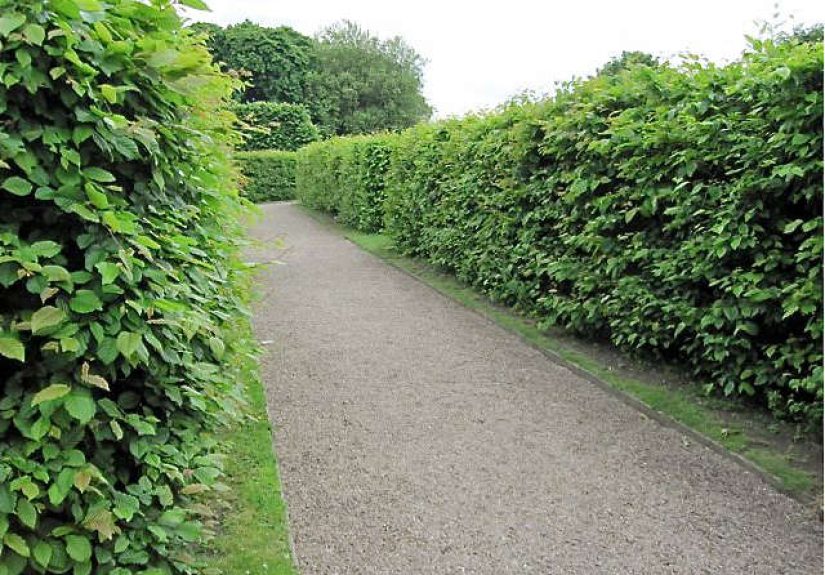
Bare-root hornbeam hedging can suit many landscape styles. In a formal yard, clip it into a clean green wall along a path or patio. In a relaxed garden, let it grow slightly looser for a softer boundary. Around a seating area, hornbeam creates privacy without the heavy feel of a fence.
Hornbeam also works beautifully as a backdrop for perennials, roses, ornamental grasses, and spring bulbs. Its dark green summer foliage makes colorful flowers stand out, while its winter framework gives the garden structure after the growing season ends.
Is Bare-Root Hornbeam Hedging Worth It?
Yes, if you are patient. Bare-root hornbeam is not an instant hedge. It is an investment. The first year is quiet. The second year is encouraging. By the third and fourth years, the hedge begins to show its personality. With consistent watering, mulching, and pruning, it becomes dense, elegant, and long-lasting.
It is especially worth considering if you need a long hedge and want to keep costs manageable. You get more plants for your budget, easier handling, and strong establishment potential when planting is done correctly.
Conclusion: A Smart Hedge for Patient Gardeners
Bare-root hornbeam hedging is a practical, handsome, and budget-friendly way to build a living boundary. It offers privacy, seasonal texture, pruning flexibility, and long-term durability. The key is to treat the first year as a foundation: plant during dormancy, keep the roots moist, set the plants at the right depth, mulch properly, water deeply, and prune for density rather than instant height.
In return, hornbeam gives you a hedge that can look refined without being fussy. It is not the kind of plant that demands applause every morning. It simply gets on with the jobscreening, shaping, sheltering, and making your landscape look more intentional than your garage storage system.
Practical Experience: What Bare-Root Hornbeam Hedging Teaches You
The first real lesson with bare-root hornbeam hedging is that patience is not optional. When the plants arrive, they may look underwhelming. A bundle of bare-root whips can seem more like kindling than the beginning of a beautiful hedge. This is the moment when many new gardeners quietly wonder if they have made a terrible financial decision. Usually, they have not. Bare-root plants are dormant, and dormancy is not death. It is more like the plant version of “do not disturb.”
One of the best experiences comes from preparing the planting line carefully before opening the bundle. If the trench is ready, the string line is straight, and the water bucket is nearby, planting feels smooth and almost satisfying. If not, you end up holding exposed roots while searching for a shovel, arguing with a measuring tape, and discovering that your “straight line” has the confidence of a garden hose. Preparation makes the whole project calmer.
Another practical discovery is that watering matters more than almost anything else in year one. Many bare-root hedge failures are not mysterious. They come from roots drying before planting, soil drying after planting, or weeds stealing moisture around the base. A mulched strip is not just decorative; it is a survival system. It keeps the root zone cooler, reduces competition, and makes the hedge look intentional even while the plants are still small.
Pruning young hornbeam can feel emotionally wrong at first. You buy plants because you want growth, and then someone tells you to cut them back. Rude, but useful. Heading back encourages branching lower down, which is exactly what a hedge needs. A plant that shoots straight upward too quickly may give you height, but not density. A slightly shorter, bushier young hedge usually becomes a better screen in the long run.
Homeowners often notice that individual plants behave differently. One hornbeam may leaf out early and look smug about it, while its neighbor wakes up slowly as if it hit the snooze button three times. This unevenness is normal. As long as stems remain flexible and buds are alive, give slow plants time. Replace only the clearly dead ones, and do it early so gaps do not become permanent design features.
The most rewarding moment usually arrives in the second or third growing season. The plants begin to connect visually. The row stops looking like separate sticks and starts becoming a hedge. Birds may explore it, wind movement softens, and the garden suddenly feels more enclosed. That is when the early trench digging, muddy boots, and suspicious looks from neighbors begin to feel completely worth it.
In the long term, bare-root hornbeam hedging teaches a simple gardening truth: the best landscapes are often built gradually. A fence appears in a weekend, but a hedge matures into the site. It changes with the seasons, supports wildlife, improves privacy, and gives the garden a living edge. That slow transformation is the charm. Hornbeam does not deliver instant drama, but it delivers lasting structureand frankly, lasting structure ages better than drama.