Table of Contents >> Show >> Hide
- Quick First Aid: The 60-Second Playbook
- When It’s More Than a Nuisance: Signs of a Serious Reaction
- Home Remedies: What Actually Helps (and What Doesn’t)
- Step-By-Step: Bee Sting Treatment You Can Trust
- What to Avoid
- How Long Will the Swelling Last?
- If You’re Allergic (or Think You Might Be)
- Prevention Tips (Beyond “Don’t Bother the Bees”)
- FAQ: Rapid-Fire Answers
- Your Ready-to-Go Sting Kit
- Real-World Experiences & Field Notes
- Bottom Line
- SEO Wrap-Up
Got stung? Ouch. Whether a honey bee mistook your arm for a pincushion or a wasp decided you looked like a rental deposit, the good news is that most stings are minor and respond well to simple first aid. The better news: once you know what actually works (and what belongs in the Hall of Fame for Myths), you can go from panic to practical in about a minute.
Quick First Aid: The 60-Second Playbook
1) Get to a safe spot. If you’re near a hive or nest, step away to avoid additional stings. 2) Remove the stinger fast (if it’s a honey bee). Scrape it out with a fingernail, credit card, or firm edge as soon as you can; the key is speed. 3) Wash the area gently with soap and water. 4) Cool it down with a cold pack or cloth-wrapped ice for 10–20 minutes to reduce pain and swelling. 5) Elevate the area if it’s on an arm or leg. 6) Ease symptoms with an over-the-counter oral antihistamine and/or 0.5–1% hydrocortisone cream as directed on the label. Resist the urge to scratch. These steps are consistent with first-aid guidance from major U.S. health organizations.
Should you use tweezers?
Older advice warned against tweezers for fear of squeezing more venom. Today, the safest take-home is simpler: remove the stinger quicklymethod matters less than speedwhile avoiding a squeeze on the venom sac if you can. Many first-aid sources still prefer scraping, and removing it promptly is the bigger win.
Bee vs. wasp vs. hornetwhy it matters
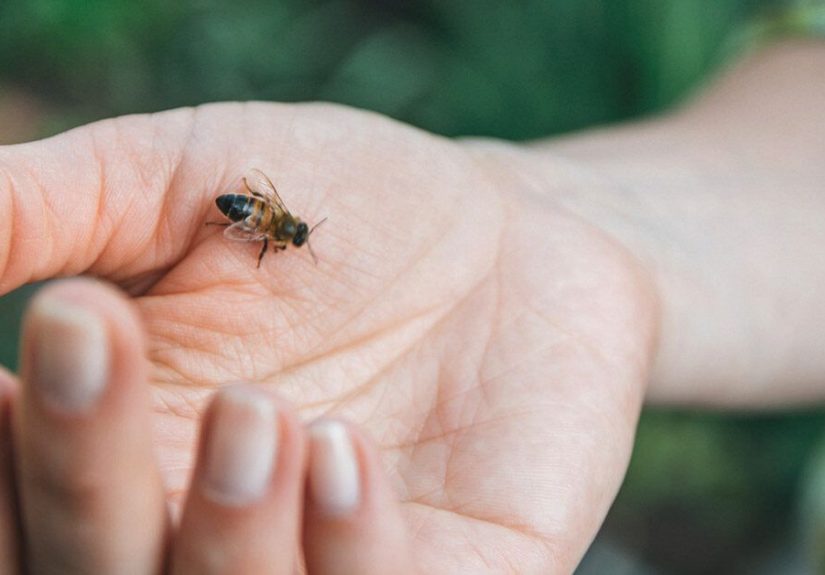
Honey bees leave behind a barbed stinger with an attached venom sac; wasps and hornets do not and can sting more than once. Practically speaking, if you see a stinger, remove it; if you don’t, proceed with the same first-aid steps.
When It’s More Than a Nuisance: Signs of a Serious Reaction
Call 911 immediately if you notice trouble breathing, wheezing, throat or tongue swelling, dizziness, chest tightness, or a widespread rash/hives distant from the sting site. That cluster points to anaphylaxis, a medical emergency. Epinephrine is the first-line treatmentantihistamines can’t replace it in severe reactions. If you have an auto-injector (or, now, an FDA-approved epinephrine nasal spray option), use it right away and seek emergency care.
Other red flags: multiple stings (especially in kids or older adults), stings in the mouth or throat, stings near the eyes, rapidly spreading swelling, or signs of infection over the next 24–48 hours (increasing redness, warmth, pus).
Home Remedies: What Actually Helps (and What Doesn’t)
Cold is king
Ice packs or cold compresses are the simplest, best-supported remedy for pain and swelling. Apply for 10–20 minutes at a time, with a barrier (like a cloth) to protect the skin. Elevation helps, too.
OTC MVPs: antihistamines & hydrocortisone
For itching and swelling, a non-drowsy oral antihistamine (e.g., cetirizine) or diphenhydramine can help; for localized inflammation, 0.5–1% hydrocortisone cream or calamine lotion are sensible options. Always follow label directions and your clinician’s guidance.
Baking soda paste: folklore with a small asterisk
Many guides mention a baking soda paste for itching. Scientifically, the evidence is limited; it may soothe, but it’s not a must-do and shouldn’t replace proven steps like cold compresses and antihistamines. If you try it, be gentlevery alkaline substances can irritate skin.
Meat tenderizer (papain): let’s retire this one
Despite decades of word-of-mouth, controlled data don’t support meat tenderizer on stings, and pediatric authors have advised against it for years. Potential for skin irritation, minimal upside. Pass.
Vinegar, honey, toothpaste, and other pantry adventures
These have little to no direct evidence for bee stings. Some may cool or distract, but none change venom effects. If you use anything, keep it brief, patch-test on intact skin first, and stop if irritation starts. When in doubt, go back to cold + OTCs.
Step-By-Step: Bee Sting Treatment You Can Trust
- Move to safety. Walk away from bees/wasps to prevent repeat stings.
- Remove the stinger fast (if present). Scrape with a card or fingernail; don’t fuss over the perfect tool. Speed wins.
- Wash with soap and water. Simple, effective hygiene.
- Apply a cold compress for 10–20 minutes. Repeat as needed, with a cloth barrier.
- Elevate the limb. Helpful for hands, arms, legs, or feet.
- Control symptoms. Consider an oral antihistamine and/or 0.5–1% hydrocortisone cream; add acetaminophen or ibuprofen for pain as labeled.
- Watch for red flags for 24–48 hours. If symptoms escalate or spread, seek care.
These steps align with first-aid guidance from the Mayo Clinic, CDC/NIOSH, MedlinePlus, and Cleveland Clinic.
What to Avoid
- Don’t scratch. It increases swelling and infection risk.
- Don’t delay epinephrine for severe reactions. It’s the priority in anaphylaxisantihistamines are add-ons, not substitutes.
- Skip meat tenderizer pastes. Not supported; can irritate skin.
How Long Will the Swelling Last?
Typical local reactions peak within 24–48 hours and resolve over a few days. Large local reactions can look dramatic (think: an entire forearm puffy after a hand sting) but still be localized. Monitor, cool, medicate symptoms, and get care if swelling races up a limb or you develop systemic symptoms.
If You’re Allergic (or Think You Might Be)
People who have had a systemic (body-wide) reaction to a sting should talk with an allergist about venom immunotherapy (VIT). VIT is a highly effective long-term treatment that can prevent future severe reactions. Carry prescribed epinephrine and know how to use it; note that a needle-free epinephrine nasal spray has been approved, offering another emergency option for eligible patients.
Prevention Tips (Beyond “Don’t Bother the Bees”)
- Wear closed-toe shoes and avoid bright floral prints or heavy fragrances when you’ll be around flowering plants.
- Keep food and drinks covered outdoors (yellowjackets love sugary beverages).
- Use caution around lawns and eaves where nests may hide; hire a pro for nest removal.
- For outdoor workers, follow stinging-insect safety guidance and keep a buddy system for emergencies.
FAQ: Rapid-Fire Answers
Do I need antibiotics?
Not for a simple sting. Infection is uncommon; focus on hygiene and watchful waiting. Seek care if redness, warmth, pain, or pus worsen after a day or two.
Can a wasp sting me more than once?
Yes. Wasps and hornets don’t leave the stinger behind and can sting repeatedlyanother reason to move away from the area quickly.
Who should go to the ER right away?
Anyone with trouble breathing, throat/tongue swelling, fainting, widespread hives, or multiple stingsespecially children, older adults, or people with known allergies. Use epinephrine if prescribed, then call 911.
Your Ready-to-Go Sting Kit
- Credit card or stinger scraper
- Small soap or wipes + water bottle
- Instant cold pack or ice wrap
- Oral antihistamine (per label)
- Hydrocortisone 1% cream or calamine
- Bandage and hand sanitizer
- Epinephrine auto-injector or nasal spray if prescribed
- Poison Control number (1-800-222-1222) on your phone contacts
Real-World Experiences & Field Notes
On summer trails, stings tend to follow the same script: someone brushes past clover, a honey bee reacts, and a chorus of “Do we have tweezers?” ensues. In practice, the teams that handle stings best are the ones that keep it boring. One hiking group I worked with (let’s call them the “Slow and Steady Club”) made a ritual of it: step away from the swarm zone, scrape, wash, cool, and keep moving. Their secret wasn’t an exotic pasteit was having a credit card in the first-aid pouch and a fold-flat ice pack next to the trail mix. Elevation and cool compresses bought comfort quickly; an antihistamine in the pocket made the next hour a lot less itchy.
Parents often report the scariest part is not knowing whether a child will have an allergic reaction. The families who feel most confident do practice drills at home: show the older kid how to spot a stinger, let them “scrape” a raisin off a sponge with a gift card, and rehearse the two questions after any sting“Are you breathing okay?” and “Is the swelling staying near the sting?” If a child does have a known allergy, the prep expands: two epinephrine devices in the backpack, a written plan, and a quick role-play for the soccer coach or camp counselor about where the device is and when to use it (right away if symptoms suggest anaphylaxis). That rehearsal turns a chaotic moment into a calm, decisive one.
Gardeners swap plenty of folk wisdom. Some swear by a baking-soda dab, others reach for calamine. What distinguishes the smooth recoveries is less the exotic remedy and more the sequence: scrape, wash, chill, medicate. A community garden in late July is a laboratory for practical preventioncover the lemonade, wear gloves while weeding, and skip the floral perfume. One member joked that her wide-brimmed hat prevented more stings than any cream; it also reminded her not to lean into blossoms without looking.
Outdoor workers have a different set of stories. A landscaping crew leader told me his “bee protocol” is posted in the truck: first five minutes focused on safety and removal, then monitoring beyond the site. He’s added a checklist item most people overlookbuddy up for 30 minutes after a sting. If someone starts to wheeze or feel dizzy, a partner is there to act. The kit rides along with laminated instructions, a few doses of non-drowsy antihistamines, and the boss’s reminder to call Poison Control anytime there’s uncertainty. That number saved them unnecessary ER tripsand sent them in quickly when symptoms didn’t fit the “mild local” pattern.
Camp counselors collect “it happened so fast” tales. The ones that end well sound similar: a counselor recognized throat tightness as more than just nerves, administered epinephrine immediately, and called 911. The camper was stable before the ambulance arrived. No one wasted time on creams or concoctions while systemic symptoms were developing. The take-home for every staffer afterward: anaphylaxis is about seconds and epinephrine; everything else can wait.
Finally, the bee enthusiastsbeekeepersoffer a grounded perspective. They expect occasional stings and are meticulous about technique: gloves, veils, calm movements. Their advice for the rest of us? Treat stings like splinters: remove what doesn’t belong (the stinger), clean the spot, keep it cool, watch for signs of trouble. And keep your picnic drinks covered. Apparently, yellowjackets love soda more than we do.
Bottom Line
Most bee stings are manageable at home with quick stinger removal, soap and water, cold compresses, and sensible symptom relief. Know the red flags, treat anaphylaxis with epinephrine immediately, and consider venom immunotherapy if you’ve had a systemic reaction. When it comes to home remedies, the boring basics win.
SEO Wrap-Up
meta_title: Bee Sting Treatment & Home Remedies That Work
meta_description: Fast bee sting treatment, real home remedies, and when to use epinephrine. Learn what worksand what to skip.
sapo: Bee sting? Breathe. Move away, remove the stinger fast, wash, and chill with a cold compress. Then use simple, proven toolsantihistamines, hydrocortisone, and patienceto dial down itching and swelling. Learn when to call 911, what to keep in a sting kit, and why some home remedies are more hype than help. This no-nonsense guide blends expert first aid with friendly, real-world tips so you can get back to your daywithout the buzzkill.
keywords: bee sting treatment, home remedies for bee stings, remove bee stinger, anaphylaxis epinephrine, hydrocortisone for stings, cold compress swelling, venom immunotherapy
This article is informational and not a substitute for professional medical advice. If you think you’re having a severe reaction, use epinephrine (if prescribed) and call 911.