Table of Contents >> Show >> Hide
- What Are Salmon Salad Tartines?
- Ingredients That Make This the Best Salmon Salad Tartines Recipe
- 1) The Salmon: canned, leftover cooked, or smoked
- 2) The Creamy Base: mayo + yogurt = the sweet spot
- 3) Crunch + Bite: celery and red onion (or their well-behaved cousins)
- 4) Brightness + Brine: lemon and capers
- 5) Herbs + Heat: dill, parsley, Dijon, and optional horseradish
- 6) The Bread: thick slices that can handle the job
- How To Make Salmon Salad Tartines (Step-by-Step)
- Pro Tips for Salmon Salad Tartines That Taste Like a Cafe Lunch
- Easy Variations (Because Your Fridge Is the Real Chef)
- Serving Ideas and Pairings
- Make-Ahead, Storage, and Food Safety
- Troubleshooting: Common Salmon Salad Tartine Problems
- Conclusion
- Kitchen Notes & Real-World Tartine Moments (Experience-Based Tips)
A tartine is basically toast that went to Paris for the weekend and came back with opinions. It’s an open-faced sandwich
that’s equal parts simple and fancythe kind of lunch that looks like you tried really hard, even if you made it
in the time it takes your toaster to stop judging you.
These salmon salad tartines hit all the big wins: creamy, bright, crunchy, herby, and salty in the best way.
They’re perfect for quick lunches, brunch spreads, or that “I need something real but I don’t want to cook” moment.
And yes, they’re absolutely allowed to be eaten over the sink. This is a safe space.
What Are Salmon Salad Tartines?
A tartine is an open-faced sandwichusually built on a thick slice of good bread, toasted for structure, then topped
with something delicious. Think of it as the grown-up cousin of avocado toast who carries a tiny jar of flaky salt and says
things like “mouthfeel.”
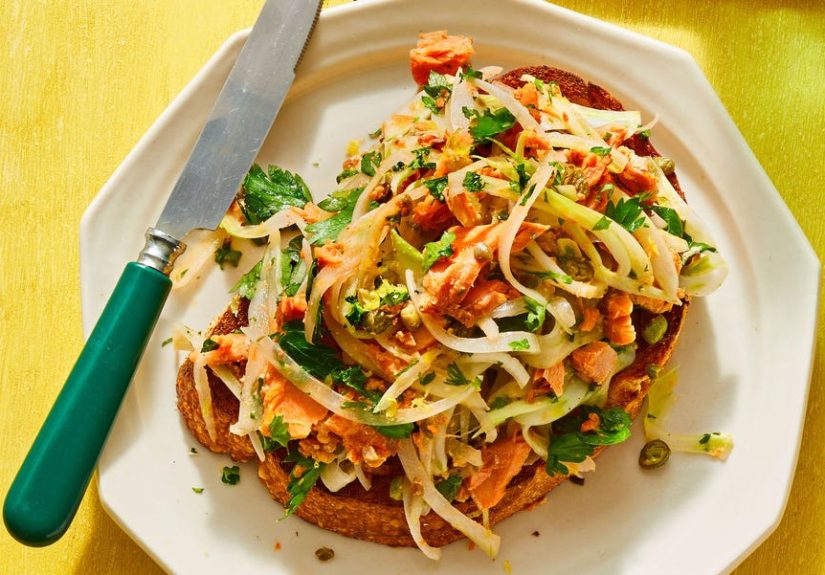
A salmon salad tartine combines a creamy salmon salad (made with canned salmon, leftover cooked salmon, or smoked salmon)
and piles it onto toasted bread with crisp toppings and a finishing squeeze of lemon. You get protein, texture, and a lunch that
feels restaurant-y without the restaurant price tag or the mysterious “service fee.”
Ingredients That Make This the Best Salmon Salad Tartines Recipe
1) The Salmon: canned, leftover cooked, or smoked
- Canned salmon is fast, affordable, and pantry-friendly. (Bonus: it often contains soft, edible bones that can be mashed in for extra nutrientstotally optional.)
- Leftover cooked salmon gives you a slightly meatier texture and a fresher “I cooked a real fish!” vibe.
- Smoked salmon makes it brunch-level fancy, with a saltier, silkier bite.
2) The Creamy Base: mayo + yogurt = the sweet spot
Pure mayo can be rich; pure yogurt can be tangy and a little too “health class.” Together? Balanced, creamy, and still bright.
If you want the classic deli-style salmon salad, go heavier on mayo. If you want a lighter, fresher vibe, let Greek yogurt lead.
3) Crunch + Bite: celery and red onion (or their well-behaved cousins)
Celery brings snap. Red onion brings personality. If raw onion feels too intense, soak it in cold water for 5–10 minutes, then drain.
You’ll keep the crunch while dialing down the “I just ate a whole onion” energy.
4) Brightness + Brine: lemon and capers
Lemon wakes everything up. Capers add salty, briny pops that scream “this belongs on toast.” No capers? Try chopped pickles or a splash
of pickle brine.
5) Herbs + Heat: dill, parsley, Dijon, and optional horseradish
Dill is basically salmon’s best friend. Parsley adds freshness. Dijon adds depth. A tiny dab of prepared horseradish gives you that
subtle nose-tingle that makes people say, “Wait… what is that?!” in a happy way.
6) The Bread: thick slices that can handle the job
Tartines work best with sturdy breadthink sourdough, rye, or a dense whole-grain loaf. Thin sandwich bread turns into a soggy trampoline
the second it meets salmon salad. You deserve better toast than that.
How To Make Salmon Salad Tartines (Step-by-Step)
Yield: 4 tartines (serves 2–4 depending on hunger and toast confidence)
Prep time: 15 minutes
Cook time: 5 minutes (mostly “toast time”)
Total time: about 20 minutes
Ingredients
- Salmon salad
- 2 (6–7 oz) cans salmon, drained (or 2–2½ cups flaked cooked salmon)
- 3 tbsp mayonnaise
- 3 tbsp plain Greek yogurt (or use all mayo for richer, all yogurt for lighter)
- 1 tsp Dijon mustard
- 1 tbsp fresh lemon juice + ½ tsp lemon zest (optional but awesome)
- 2 tbsp chopped fresh dill (or 1 tbsp dill + 1 tbsp parsley)
- ⅓ cup finely chopped celery
- 2 tbsp finely chopped red onion (or scallions)
- 1–2 tbsp capers, drained and chopped
- ¼ tsp black pepper
- Salt to taste (start smallsalmon and capers can be salty)
- Optional: 1 tsp prepared horseradish, or a pinch of chili flakes
- For the tartines
- 4 thick slices sourdough or rye
- Olive oil or butter (for toasting)
- Optional spread: a thin layer of cream cheese, ricotta, or mashed avocado
- Toppings (choose 2–3): sliced cucumber, radish, arugula, microgreens, tomato, thinly sliced red onion, extra dill, flaky salt
- Lemon wedges, for serving
Step 1: Prep the salmon (2 minutes)
Drain the salmon well. Add it to a bowl and flake with a fork. If you’re using canned salmon with skin or bones, remove them if you prefer,
or mash them in for a smoother salad. (The tiny bones are soft and meant to be edibletotally your call.)
Step 2: Build the dressing (2 minutes)
In the same bowl (because dishes are not a personality trait), whisk together the mayo, Greek yogurt, Dijon, lemon juice, lemon zest (if using),
dill, pepper, and horseradish/chili flakes (if using).
Step 3: Add crunch and brine (3 minutes)
Stir in the celery, red onion, and capers. Taste. Then taste again like a responsible adult. Adjust with more lemon for brightness, more pepper
for edge, or a pinch of salt if it needs it.
Step 4: Toast the bread like you mean it (5 minutes)
Toast your bread until deeply golden. This isn’t just for flavorit’s for architecture. You want a crisp surface that can hold creamy salmon salad
without collapsing into toast sadness.
Optional power move: brush the bread lightly with olive oil or butter before toasting. Optional extra power move: rub the warm toast with a cut garlic
clove for a whisper of garlic that makes everything taste 12% more expensive.
Step 5: Assemble and finish (3 minutes)
- If using a spread (cream cheese/ricotta/avocado), add a thin layer to the toast.
- Mound salmon salad on top. Don’t be shythis is the point.
- Add crunchy toppings (cucumber/radish/arugula).
- Finish with extra dill and a squeeze of lemon. Optional: flaky salt.
Pro Tips for Salmon Salad Tartines That Taste Like a Cafe Lunch
Toast is your foundation, not an afterthought
The biggest tartine mistake is under-toasting. A tartine should have a crisp edge and a sturdy centerespecially with creamy toppings.
If your bread is very airy, consider toasting it a little longer or using thicker slices.
Don’t let your salmon salad turn watery
- Drain canned salmon well.
- Chop celery and onion small so they distribute crunch without weeping too much liquid.
- If adding cucumber or tomato, keep them on topnot mixed into the salad.
Balance richness with acid and herbs
Salmon + mayo can be rich fast. Lemon juice and dill keep everything bright. If it tastes “flat,” it usually needs one of three things:
more lemon, more pepper, or a pinch of salt.
Easy Variations (Because Your Fridge Is the Real Chef)
1) Smoked salmon salad tartines
Swap in chopped smoked salmon (or use half smoked, half canned). Reduce added salt, and lean into fresh dill, lemon, and a little cream cheese spread.
Add capers and thin red onion for that classic lox-shop vibe.
2) Mediterranean-style salmon salad tartines
Add chopped olives, a pinch of oregano, and a little feta (or keep it dairy-free). Top with cucumber and tomatoes. Use extra lemon and olive oil for brightness.
3) Spicy salmon salad tartines
Mix in a teaspoon of sriracha or a pinch of cayenne. Top with sliced cucumber and a sprinkle of sesame seeds. It’s like your lunch took a tiny vacation.
4) Dairy-free / mayo-free option
Use mashed avocado plus a drizzle of olive oil and extra lemon. Add mustard and herbs to keep it lively. The texture is differentmore creamy-green and less deli-salad
but still absolutely tartine-worthy.
Serving Ideas and Pairings
- Brunch: serve with fruit, a soft-boiled egg, and coffee that deserves respect.
- Lunch: pair with a simple green salad and a crunchy pickle.
- Entertaining: slice the toast into smaller pieces for mini tartines and let people build their own toppings.
- Meal prep: keep salmon salad in a container and toast bread fresh when ready to eat.
Make-Ahead, Storage, and Food Safety
Salmon salad can be made ahead and stored in an airtight container in the refrigerator. For the best texture, keep juicy toppings (tomatoes, cucumbers)
separate until serving.
- Chill promptly: refrigerate seafood-based dishes within 2 hours (or 1 hour if it’s very hot out).
- Keep it cold: your fridge should be at 40°F or below.
- Use within: about 3–4 days for best safety and quality.
Troubleshooting: Common Salmon Salad Tartine Problems
“My salmon salad tastes bland.”
Add lemon juice, pepper, and a pinch of salt. If it still feels sleepy, add Dijon or a little caper brine. Herbs help, toofresh dill wakes everything up.
“My tartine got soggy.”
Toast more deeply and assemble right before eating. If you’re packing lunch, store salmon salad separately and build the tartine when you’re ready.
(Yes, this is mildly annoying. But so is a limp tartine.)
“The salmon salad is too thick.”
Loosen with a teaspoon of lemon juice or a tiny drizzle of olive oil. Avoid adding too much yogurt at oncego small and stir.
Conclusion
If you want a fast lunch that feels special, salmon salad tartines are the move. You get creamy salmon salad, crunchy toppings, and toast that
actually holds upno soggy regrets. Keep the formula in your back pocket: sturdy toast + creamy base + crunch + lemon + herbs. Once you’ve got that,
you can riff forever with whatever’s in your fridge.
Kitchen Notes & Real-World Tartine Moments (Experience-Based Tips)
Salmon salad tartines have a funny way of becoming a “regular” in the rotation, mostly because they solve a very specific modern problem: you want lunch to feel
satisfying, but you don’t want lunch to require a meeting with your stove. The first time you make them, you might build carefullymeasuring, tasting, adjusting,
placing toppings like you’re auditioning for a brunch menu. The second time, you’ll realize the tartine is forgiving. It’s toast. It’s salad. It’s freedom.
In everyday kitchens, the biggest win is how the textures play together. That first bite should have a crisp “crack” from the toast, followed by
creamy salmon salad, then a clean snap from cucumber or radish. If your bite feels a little one-note, it’s almost always missing crunch or acid. A squeeze of lemon
fixes more than you’d think. It’s like turning on the lights in a roomsame furniture, suddenly better.
There’s also a real-life lesson in timing. If you assemble tartines too early and wander off “just for a second,” toast can absorb moisture and
go soft. The trick is to treat tartines like a last-minute outfit: the toast is your base layer, but the toppings go on right before you leave the house (or right
before you sit down). If you’re packing lunch, it feels extra fancy to bring toasted bread in one container and salmon salad in another. Not because it’s complicated,
but because you get that fresh-built texture wherever you aredesk, park bench, or passenger seat (no judgment).
Serving tartines to other people is its own kind of experience. A platter of toast plus bowls of toppings turns into a build-your-own situation, and suddenly
everyone is happily busy making choices. Someone adds avocado. Someone goes heavy on capers. Someone discovers that arugula makes everything taste like it has a
point of view. It’s low-effort hosting with high-effort vibes.
And then there are the “fridge stories.” Maybe you only have dill that’s slightly tired, so you add parsley. Maybe the lemon is missing, so you use a splash of
vinegar and call it innovation. Maybe your onion feels too sharp, so you soak it in water and feel like a culinary genius. The best tartines come from these little
decisions. The recipe becomes less of a script and more of a reliable template: creamy + bright + crunchy on sturdy toast, and you’re in business.
Finally, the most relatable tartine experience: eating one while standing up because you said you “just needed a quick bite,” and then realizing you made something
genuinely delicious. That’s the magic here. Salmon salad tartines look like brunch, eat like lunch, and feel like you did something nice for yourselfwithout turning
your kitchen into a disaster zone.