Table of Contents >> Show >> Hide
- Jump to
- What “species” means in bird world
- How many bird species are there?
- Why the number keeps changing
- New birds: discovery, splits, and surprises
- How scientists decide a bird is “new”
- Why it matters (beyond trivia night)
- How you can help (and have fun doing it)
- FAQ
- Experiences: what it feels like to chase the number (about )
- SEO Tags
If you’ve ever typed “how many bird species are there?” into a search bar, you’ve already discovered the
first rule of birds: they refuse to stay neatly on the shelf where we label them. Birds fly. Bird taxonomy
also fliessometimes in formation, sometimes directly into a window.
Still, we can answer the question in a way that’s both accurate and useful. The modern “official-ish” counts
hover around 11,000+ bird species worldwide, but the exact number depends on which global
checklist you’re using and how you define “species.” And yes, new birds are still arrivingsome
newly discovered by scientists, some newly recognized after a taxonomic split, and some newly “showing up”
in places they didn’t used to live.
What “species” means in bird world
In everyday conversation, a species is “a kind of animal.” In biology, it’s more like a long-running debate
club with excellent binoculars.
Species can be defined in different ways
Two of the biggest ideas you’ll see in bird classification are:
-
Biological species concept: species are groups that can interbreed and produce fertile
offspring. This sounds simple until you meet gulls, ducks, and other birds that treat “species boundaries”
like a polite suggestion. -
Phylogenetic species concept: species are the smallest distinct lineages (often using DNA,
plumage, and voice). This approach tends to recognize more species, because it splits “one widespread
bird” into multiple locally distinct birds.
That’s why you’ll sometimes hear birders groan, “My life list just got smaller,” or cheer, “I just gained three
species without leaving my couch!” Both can happen when scientists decide a bird should be lumped together or
split apart.
Splits and lumps: the birding soap opera
Splitting is when one recognized species becomes two (or more). Lumping is the
reverse. The evidence might come from genetics, vocal recordings, new measurements, or simply better sampling
from places that were historically understudied.
And this is the key point: the number of bird species isn’t only about “discovering brand-new birds.” A large
portion of “new birds” are created by improving our understanding of existing birds.
How many bird species are there?
Most modern global counts land in a tight neighborhood: roughly 11,000 to 11,300 species.
The wobble comes from differences in how checklists interpret species limits.
Why different lists give different totals
Think of bird checklists like different streaming services: they’re all showing “the same show,” but the episode
order and bonus features aren’t identical.
-
eBird/Clements (Cornell Lab): currently recognizes 11,167 species worldwide.
This taxonomy powers eBird, Merlin, Birds of the World, and the Macaulay Library ecosystem. -
AviList (unified global checklist effort): recognizes 11,131 bird species,
aiming to harmonize disagreements among major lists. -
IOC World Bird List: recognizes 11,276 species (including extinct species),
and updates regularly. -
BirdLife/HBW tradition (BirdLife taxonomy used in conservation contexts): counts can differ
because the list may split more aggressively in certain groups.
If your goal is a single practical answer: “About eleven thousand bird species” is a solid,
honest response. If your goal is to win an argument online, you now have a menu of numbers and can select your
preferred chaos.
Species vs. individual birds: different questions entirely
“How many bird species are there?” is about types of birds. “How many birds are there?” is about
individual animals. A well-known estimate suggests there may be tens of billions of individual wild
birds on Earthan enormous number that can still be made up of “only” ~11,000 species. One number measures
diversity; the other measures abundance.
Why the number keeps changing
1) New science reveals hidden diversity
Birds that look nearly identical can turn out to be different lineages once scientists compare their songs,
genetics, and subtle plumage traits. These are often called cryptic species.
2) Better data from more places
Some regions are bird-rich and historically under-sampled. As fieldwork, recordings, and community science expand,
especially in tropical mountains and remote islands, the odds of finding distinct populationsand sometimes new species
go up.
3) Checklist decisions (yes, humans are involved)
Even with the same evidence, committees can differ in how much difference is “enough” to call something a species.
That’s why counts vary across authorities.
4) Extinctions and rediscoveries
Sadly, the list can shrink when species go extinct. Occasionally, birds thought lost are rediscoveredor successfully
reintroducedreminding us that conservation isn’t just doomscrolling in feather form.
New birds: discovery, splits, and surprises
When people say “new birds,” they often mean one of three things. Let’s break it downlike a biologist, but with
fewer grant applications.
Type A: New-to-science bird species
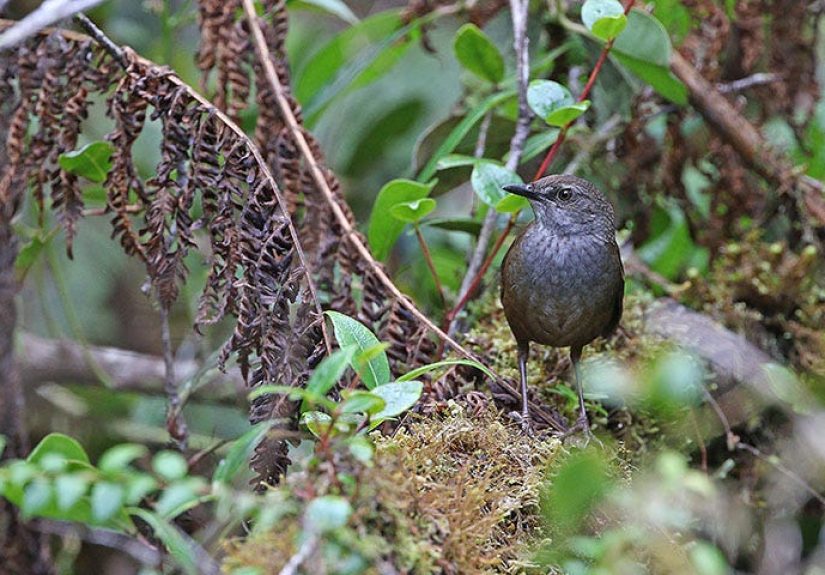
These are the headline-grabbers: birds formally described as species that weren’t recognized by science before.
They’re rare compared to insects or plants, but they still happen.
-
A “remarkably tame” new tinamou species (Western Amazon mountains): In late 2025, researchers
described a new tinamou species in the Serra do Divisor regionan example of how even relatively large, charismatic
animals can remain undescribed in rugged habitats. -
A new jewel-babbler from Papua New Guinea: A new species of jewel-babbler was described from
a remote mountain region, supported by multiple lines of evidence (including vocalizations and genetics). -
Galápagos lava heron recognized through formal work: In 2025, researchers at the California
Academy of Sciences and collaborators highlighted the formal description/recognition of the Galápagos lava heron
a great reminder that “new” sometimes means “we finally solved a long-standing identity problem.”
The tricky truth: some new-to-science birds may already be rare or threatened by the time we meet them on paper.
Discovery is exciting; it can also be an alarm bell.
Type B: Newly recognized species (splits)
This is where “new birds” multiply quickly. When one species splits into two, you didn’t suddenly create new feathers
out of thin airyou improved the labels so they match evolution more closely.
Example: the eBird/Clements taxonomy regularly adds species via splits. In one recent update, the taxonomy gained
species through splits and lost some through lumps, producing a net change in the total. That’s not taxonomy being
fickle; it’s taxonomy responding to better evidence.
A concrete example from recent checklist updates: Whimbrel was partitioned into
Eurasian Whimbrel and Hudsonian Whimbrela split that matters for birders, field
guides, and conservation tracking because the populations have different ranges and potentially different pressures.
Type C: New birds to a place (range shifts and vagrants)
Sometimes the species isn’t new at allit’s just new to your county. Birds expand ranges for many reasons:
climate, habitat change, food availability, storms, and sheer “oops, I took the wrong exit at the jet stream.”
Community-science platforms and local checklists help document these changes in near real time. That’s how the story
of “new birds” becomes something you can watch unfoldseason by season.
How scientists decide a bird is “new”
Naming a new bird species isn’t like yelling “dibs!” in the forest. (If it were, birders would have discovered
40,000 species by now, including “That Little Brown Job Over There.”)
The evidence toolkit
- Vocalizations: Birds often advertise species identity through song and calls.
- Genetics: DNA can reveal deep splits that aren’t obvious in plumage.
- Morphology: Measurements, plumage patterns, and structure still matter.
- Ecology and behavior: Habitat choice, breeding behavior, timing, and diet can support separation.
- Geography: Islands and mountain “sky islands” are famous for producing distinct lineages.
From discovery to checklist
A new species description is typically published in a peer-reviewed journal, then evaluated by checklist authorities.
That’s why a bird can be “new to science” on publication day, but “new to your app” only after the relevant taxonomy
updates.
And because taxonomy is updated regularly, your favorite bird app may change names, groupings, or species limits
over time. It’s not your memory failing; it’s science improving.
Why it matters (beyond trivia night)
Species counts aren’t just a fun fact. They shape conservation priorities, laws, funding, research design, and
how we measure biodiversity change over time.
Conservation depends on the right “units”
If two populations are actually different species, combining them can hide risk. If one endangered species is split
into two, each new species might have a smaller range and smaller populationmeaning higher vulnerability.
Birds are sending a clear signal
In the United States, recent major reporting on bird conservation has highlighted that many species are in
steep decline, including a set of “tipping point” species that have lost large portions of their populations
over recent decades. The details vary by habitat, but the overall message is consistent: protecting habitat and reducing
key threats works, and waiting does not.
The good news is that birds also respond quickly to smart conservationwetland restoration, safer power infrastructure,
targeted protection, and better land management can produce visible recoveries.
How you can help (and have fun doing it)
You don’t need a PhD or a pith helmet to participate in the living story of bird species. Modern bird knowledge is
powered by a combination of professional research and public participation.
1) Join a global bird count
Events like the Great Backyard Bird Count routinely document thousands of species in a single weekendshowing both
the scale of global bird diversity and the power of many observers paying attention at once.
2) Use modern tools responsibly
Birding apps and platforms make identification and data sharing easier than ever. Used well, they improve our maps of
where birds live and when they move. Used poorly (for example, disturbing sensitive birds for a photo), they can cause
real harmso always prioritize the bird’s welfare over your bragging rights.
3) Learn one family at a time
Want an easy way to make “11,000 species” feel less like a math problem? Pick a groupwarblers, raptors, shorebirds
and get to know their patterns. Bird diversity becomes more magical when it becomes more familiar.
FAQ
How many bird species are alive today?
Depending on the global checklist used, current totals land in the low 11,000s. Different authorities disagree
because species boundaries can be interpreted differently.
Are scientists still discovering new bird species?
Yesboth by finding truly undescribed birds and by recognizing that “one species” is actually multiple species.
New descriptions tend to come from remote or complex habitats (mountains, islands, dense forests), and some discoveries
are essentially “we finally looked closely enough.”
Why do bird species totals go up even if extinctions happen?
Because new species recognition through splits can outpace losses in the short term. This doesn’t mean biodiversity
is safeit means our classification is getting more precise at the same time the natural world is under stress.
How many bird species are in North America or the U.S.?
The exact number depends on boundaries and taxonomy, but North America hosts roughly around a thousand or more species,
and checklists and field guides vary in how broadly they define the region. The U.S. alone regularly records hundreds
of species across habitats, migration routes, and seasons.
What’s the fastest way to understand “new birds”?
Remember the three categories: new-to-science, newly split/recognized, and
new to a place. Each tells a different story about natureand about how we measure it.
Experiences: what it feels like to chase the number (about )
The first time you hear “there are over eleven thousand bird species,” your brain usually does one of two things:
it either gets excited (hello, endless adventure) or it quietly opens a trapdoor and disappears (hello, overwhelming
spreadsheet). Both reactions are normal. Bird diversity is big enough to be awe-inspiring and ridiculous at the same
timelike trying to count every type of sandwich in America once you include “breakfast burritos that are basically
sandwiches.”
A surprisingly common experience for birders is the “split surprise.” You wake up, open your birding app, and discover
that a bird you’ve known for years now has a slightly different nameor has been split into two species. Suddenly your
life list changes without you moving a single muscle. It’s the only hobby where you can gain a species while still
wearing pajamas. The emotional arc is real: confusion (“Wait, wasn’t that just a Whimbrel?”), bargaining (“Do I really
need to re-learn this?”), and finally acceptance (“Okay fine, now I want to see both.”).
Then there’s the experience of realizing how much information is carried in a bird’s voice. You might see two birds
that look almost identicalsame general size, same general color palette, same “I am a professional leaf-dweller”
posture. But one sings a sharp, repeated phrase and the other sings something softer and more complex. Once your ear
clicks in, the forest stops being a wall of green and becomes a neighborhood full of distinct characters. Bird species
counts stop feeling abstract; they become the difference between “one bird” and “two stories.”
If you want the most honest “new birds” feeling, try doing a local walk once a week for a month. The “new” won’t always
be a brand-new species to scienceit might be a migrant that wasn’t there last week, or a winter visitor that suddenly
shows up in the exact tree you’ve been ignoring. Even better: you start noticing patterns. Swallows appear when insects
surge. Certain warblers arrive like clockwork. Raptors show up when thermals behave. Over time, you experience the
species count as movement and timing, not just a number.
And sometimes the experience is humbling. You read about a newly described bird and learn it may already be threatened.
That lands differently than a trivia fact. It turns “how many bird species are there?” into a question with urgency:
how many will still be here, singing, in fifty years? The good part is that birdingdone respectfullyoften becomes a
gateway to action. You start caring about native plants, safer windows, local wetlands, and dark skies during migration.
The number isn’t just a count anymore. It’s a reminder that the living world is both astonishingly diverse and
astonishingly worth protecting.