Table of Contents >> Show >> Hide
- Quick note: Are bivalent boosters still used?
- What counts as a “side effect” vs. a “red flag”?
- 8 common side effects of a bivalent COVID-19 booster
- Why side effects happen (and why not having them is also normal)
- How long do bivalent booster side effects last?
- What helps (without trying to “hack” the vaccine)
- When to call a healthcare professional (don’t wait it out)
- How (and why) to report side effects
- Bottom line
- Real-world experiences (what people commonly report)
If you got (or keep hearing about) a bivalent COVID-19 booster, you’re not alone. “Bivalent” basically meant the shot was designed to train your immune system using two spike recipes: one from the original virus and one from an Omicron variant. In real life, that translated to a familiar question the next day: “Is it normal to feel like I got lightly bonked by a truck?”
The good news: for most people, side effects from bivalent mRNA boosters looked a lot like side effects from earlier mRNA COVID shotstemporary, mostly mild to moderate, and gone within a few days. The not-so-fun news: your immune system sometimes throws a little “training camp” party, and you’re the venue.
This guide covers 8 common side effects, why they happen, what helps, and when it’s time to call a clinician instead of toughing it out with vibes and soup.
Quick note: Are bivalent boosters still used?
In the U.S., vaccine formulas have been updated over time as variants changed. So while many people still refer to “the bivalent booster,” you may now see “updated” or “seasonal” COVID-19 vaccines instead. Side effects across mRNA COVID vaccines tend to be similar, so this article remains useful for understanding the typical reactions people experience after an mRNA booster dose.
What counts as a “side effect” vs. a “red flag”?
A common side effect is your immune system practicinglocal soreness, fatigue, headache, chills, that sort of thing. A red flag is something intense, unusual, or escalatingespecially symptoms that suggest an allergic reaction or inflammation around the heart.
Most common reactions show up within the first day and improve quickly. If you’re getting worse after day two or three, that’s your cue to check in with a healthcare professional.
8 common side effects of a bivalent COVID-19 booster
1) Sore arm (injection-site pain)
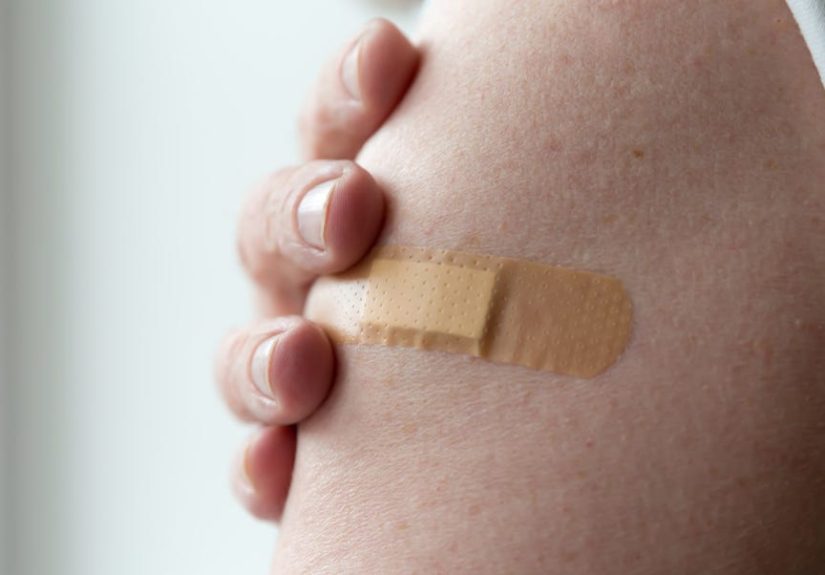
This is the headliner. The shot goes into the muscle, your immune system notices, and your arm responds with a formal complaint. You might feel soreness, tenderness, or pain when you lift your arm or sleep on that side.
- When it starts: Often within hours
- How long it lasts: Commonly 1–3 days
- What helps: Gentle arm movement, light stretching, cool compresses
2) Redness or swelling where you got the shot
Some people get visible redness or swelling. It can feel warm or itchy. This is typically a local inflammatory responseannoying, but not alarming. (If swelling is severe, spreading fast, or you have hives elsewhere, treat that as a “call now” situation.)
3) Fatigue (a.k.a. “Why am I yawning at 2 p.m.?”)
Feeling wiped out is one of the most common systemic reactions. Your body is building and practicing an immune response, and that takes energy. The fatigue can range from “I want a nap” to “I have become one with my couch.”
- What helps: Hydration, a lighter schedule for 24 hours, and sleep you don’t have to negotiate for
4) Headache
Headaches can pop up after boosterssometimes from immune activation, sometimes from dehydration, stress, or poor sleep (hello, appointment-day adrenaline). The key is that it should improve with rest and fluids.
- What helps: Water, a snack, dimmer lights, and (if appropriate for you) an over-the-counter pain reliever after vaccination
5) Muscle aches (myalgia)
Achy musclesespecially in the back, shoulders, or legsare another classic “immune system is doing push-ups” sign. It can feel like you did a workout you absolutely do not remember signing up for.
6) Chills
Chills often travel with feverish feelings. You might feel shivery even under a blanket, then fine an hour later, then shivery againlike your thermostat is being controlled by a mischievous raccoon.
7) Fever
A low-grade fever can happen as your immune system ramps up. The typical pattern is: mild fever, maybe a little sweaty, then it fades within a day or two. Fevers that are high, persistent, or paired with worsening symptoms deserve medical advice.
8) Swollen or tender lymph nodes (usually near the armpit on the shot side)
Lymph nodes are part of your immune system’s “logistics department.” If they swell, it’s often because they’re actively processing immune signals. People notice tenderness or a small lump near the armpit or neckmost commonly on the same side as the injection.
- What helps: Time. If it persists for weeks or is rapidly enlarging, get it checkedespecially if you’re due for breast imaging so you can coordinate timing.
Why side effects happen (and why not having them is also normal)
After an mRNA booster, your immune system produces inflammatory signals (cytokines) that help train your defenses. That inflammation is what can cause fatigue, headache, aches, fever, and chills.
Important: no side effects doesn’t mean “the shot didn’t work.” People’s immune responses vary. Age, prior infection, time since last dose, and individual biology all influence how you feel afterward.
How long do bivalent booster side effects last?
For most people, common reactions peak within about 24 hours and improve over the next day or two. Some symptoms can linger a bit longer, but the overall direction should be steady improvement.
What helps (without trying to “hack” the vaccine)
Plan for a lighter day
If you can, schedule the shot before a low-stakes day. Think: laundry and streaming, not a wedding, presentation, and marathon.
Move the arm, gently
Light movement can reduce stiffness. You don’t need a heroic workoutjust normal use and a few slow shoulder rolls.
Hydrate and eat something
Dehydration can make headaches and fatigue feel worse. A simple meal or snack helps tooespecially if you’re prone to dizziness around needles.
About pain relievers
Many clinicians advise not taking pain relievers before vaccination “just in case,” but using them after vaccination for symptoms is commonly considered reasonable for most adults (assuming you can safely take them). If you have medical conditions, take blood thinners, or have kidney/liver issues, ask your clinician what’s appropriate.
When to call a healthcare professional (don’t wait it out)
Serious reactions are rare, but they matter. Seek medical advice promptly if you have:
- Symptoms of a severe allergic reaction: trouble breathing, swelling of the face/throat, widespread hives, or feeling faint
- Chest pain, shortness of breath, or palpitations (especially within a week after vaccination)
- Fever that won’t come down or symptoms that worsen after 48–72 hours instead of improving
- Severe headache with neurologic symptoms (confusion, weakness, vision changes) or anything that feels “not like your usual headache”
If you think it’s an emergency, seek emergency care immediately.
How (and why) to report side effects
If you have a reaction that concerns you, contact a healthcare provider. You can also report adverse events to U.S. vaccine safety monitoring systems such as VAERS. Reporting helps public health experts spot patternseven when a report doesn’t prove the vaccine caused the event.
Bottom line
Most bivalent booster side effects are short-lived and look a lot like the reactions seen with earlier mRNA COVID-19 shots: sore arm, fatigue, headache, aches, chills, fever, and occasional lymph node swelling. Plan for a mellow day, hydrate, move your arm, and keep an eye out for rare red flags.
Real-world experiences (what people commonly report)
The stories below are composite examples based on common, widely reported patterns from mRNA COVID boostersmeant to help you picture what “normal” can look like. Your experience might be milder, different, or you might feel absolutely fine (which is also a valid personality for an immune system).
The “I scheduled this like a genius” experience
One person books their booster on a Friday afternoon, grabs takeout on the way home, and declares Saturday a “soft life” day. By bedtime, their arm is sore, but not dramatic. Saturday morning comes with a sleepy fog and a mild headache. They drink water, eat something salty, and do the bare minimum of being a human: pajamas, scrolling, and occasionally standing up to prove they still can.
By Saturday evening, the fog lifts. Sunday feels normal again, and they brag (quietly) that their planning skills are elite. The lesson: if you can choose the timing, give yourself a recovery window. It’s not weakness; it’s logistics.
The “surprise chills” experience
Another person feels fine until late afternoon the next daythen suddenly gets chills like they walked into an aggressively air-conditioned grocery freezer. They pile on a hoodie and a blanket, feel slightly ridiculous, and thenplot twistwake up an hour later sweaty and annoyed. Their temperature is a little elevated, but it settles after rest and fluids.
They describe it as “a mini flu, but with a clear end date.” They’re mostly back to normal within 24–36 hours. The takeaway: chills and mild fever can come in waves, and that’s still within the range of expected immune responses.
The “lymph node plot twist” experience
Someone else feels pretty okay overall, but notices tenderness in the armpit on the same side as the shot. It’s not debilitatingjust weird. They Google it, regret that immediately, and then learn that swollen lymph nodes can happen when immune cells are active in that region.
The tenderness fades over the next week or two. They file this under “things I wish someone mentioned before I panicked” and promise to be that person who tells friends, “Hey, if your armpit feels a little spicy afterward, it can be normal.”
The “I didn’t feel muchdid it work?” experience
A final common experience is… almost nothing. Some people only get a mildly sore arm and no systemic symptoms. They start questioning everything: “Was it saline? Did my immune system ghost the assignment?”
In reality, side effects are an imperfect, unreliable indicator of protection. Immune responses vary, and a lack of noticeable symptoms doesn’t automatically mean the vaccine didn’t do its job. The most helpful mindset here is: judge the vaccine by evidence, not vibes.
Across these experiences, the most consistent pattern is timing: most side effects peak within the first day and fade soon after. If your symptoms are severe, unusual for you, or getting worse instead of betterespecially chest pain, shortness of breath, or signs of an allergic reactionreach out to a clinician. Your immune system can practice without you having to tough it out alone.