Table of Contents >> Show >> Hide
- What Is a Boxer’s Fracture?
- Common Causes of a Boxer’s Fracture
- Symptoms of a Boxer’s Fracture
- When to Seek Medical Care
- How Doctors Diagnose a Boxer’s Fracture
- Boxer’s Fracture Treatment Options
- When Is Surgery Needed for a Boxer’s Fracture?
- Recovery Time: How Long Does a Boxer’s Fracture Take to Heal?
- Hand Therapy and Rehabilitation
- Possible Complications
- Returning to Work, Sports, and Normal Life
- Prevention: How to Lower Your Risk
- 500-Word Experience Section: What Recovery Often Feels Like Day by Day
- Conclusion
A boxer’s fracture sounds like an injury reserved for prizefighters, heavy bags, and dramatic movie scenes where someone learns the wall is undefeated. In real life, it is much more commonand much less glamorous. A boxer’s fracture is usually a break near the neck of the fifth metacarpal, the long bone in the hand that connects the wrist to the little finger. It often happens after a clenched fist hits something harder than expected, such as a wall, door, floor, helmet, or occasionally another person’s stubborn jaw.
Despite the name, you do not have to box to get one. Athletes, weekend warriors, students, mechanics, martial artists, and anyone who takes a bad fall can end up with a fifth metacarpal fracture. The good news is that many boxer’s fractures heal well with proper diagnosis, splinting, follow-up care, and a sensible recovery plan. The not-so-good news is that ignoring it, “walking it off” with your hand, or returning to activity too soon can lead to stiffness, poor alignment, grip weakness, and a finger that points in a direction it was not invited to explore.
This guide explains boxer’s fracture treatment, diagnosis, recovery time, warning signs, and practical healing tips in plain American Englishno medical-school decoder ring required.
What Is a Boxer’s Fracture?
A boxer’s fracture is most commonly a fracture of the fifth metacarpal neck. The fifth metacarpal is the bone beneath the pinky-side knuckle. The “neck” is the narrowed area just below the head of the bone, close to the knuckle. When a fist strikes a hard object, force travels through the little-finger side of the hand. If the force is strong enough, the bone can crack, bend, or shift out of position.
Because the little-finger metacarpal is more mobile than some other hand bones, it can tolerate a certain amount of angulation. That does not mean every boxer’s fracture is harmless. Doctors still look closely for rotation, shortening, open wounds, joint involvement, nerve problems, and blood-flow issues. A small-looking bump can sometimes hide a fracture that needs more than an ice pack and positive thinking.
Common Causes of a Boxer’s Fracture
The classic cause is punching a hard surface with a closed fist. However, boxer’s fractures can happen in several ways:
- Punching a wall, door, table, locker, or other solid object
- Falling onto a closed fist or the outside edge of the hand
- Direct trauma during sports, martial arts, or recreational activities
- Motor vehicle crashes or bicycle accidents
- Workplace injuries involving tools, machinery, or heavy objects
The injury is especially common in young and active people, but it can happen at any age. The main lesson is simple: bones are strong, but drywall, concrete, and metal are terrible emotional support systems.
Symptoms of a Boxer’s Fracture
Symptoms often appear quickly after injury. Some people hear or feel a pop at the moment of impact, while others notice swelling first. Typical boxer’s fracture symptoms include:
- Pain on the pinky side of the hand
- Swelling around the fifth knuckle
- Bruising across the palm or back of the hand
- Tenderness when pressing near the little-finger knuckle
- Difficulty making a fist
- A sunken or flattened knuckle
- Reduced grip strength
- Finger stiffness or trouble moving the pinky
- Visible deformity or crooked finger alignment
One important sign is rotation. When you slowly make a fist, the fingers should curl toward the same general area. If the pinky crosses over or points oddly beneath another finger, that may suggest rotational deformity. Rotation matters because even a fracture that looks “not too bad” on the outside can interfere with normal hand function.
When to Seek Medical Care
You should seek medical care promptly if you suspect a boxer’s fracture. Early treatment usually gives the hand a better chance of healing in a good position. Delayed care can make the fracture harder to align and may increase the risk of long-term stiffness or reduced function.
Go urgently if you notice:
- Numbness, tingling, or loss of feeling
- Cold, pale, or blue fingers
- An open cut near the fracture
- Bone visible through the skin
- Severe swelling or worsening pain
- A finger that looks crooked, rotated, or badly misaligned
- Inability to move the finger or hand normally
An open wound over a hand fracture deserves special attention because of infection risk. If the injury happened during a punch to someone’s mouth, tell the clinician honestly. Human bite contamination can be serious, and doctors are not there to judge your life choicesthey are there to protect your hand.
How Doctors Diagnose a Boxer’s Fracture
Diagnosis begins with the story of how the injury happened. A healthcare provider will ask when the pain started, what caused the injury, where it hurts most, and whether you have numbness, weakness, or an open wound. They will examine swelling, bruising, tenderness, skin condition, finger motion, grip, sensation, circulation, and alignment.
Physical exam
During the exam, the clinician may ask you to open and close your hand, gently make a fist, or move the injured finger. They may compare both hands to check knuckle height and finger position. A flattened fifth knuckle is common with boxer’s fractures, but the most important question is whether the finger still lines up correctly.
X-rays
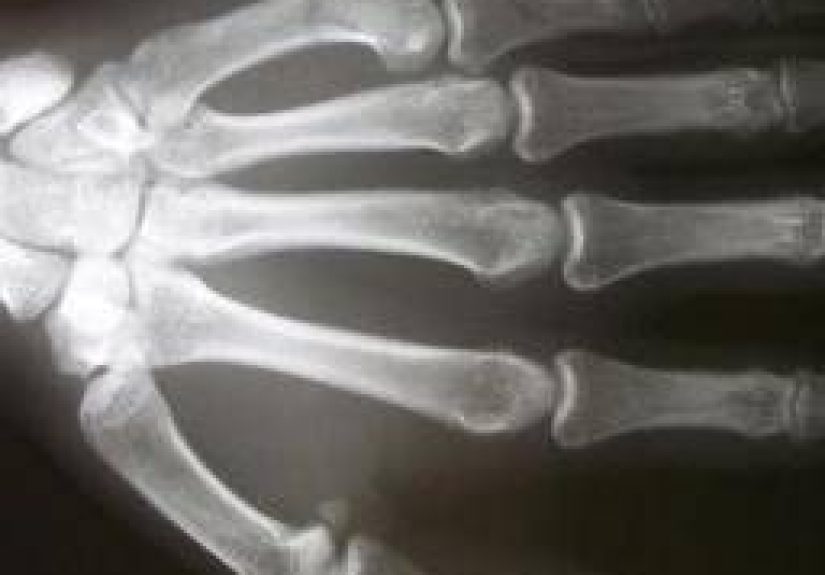
X-rays are the standard test used to confirm a boxer’s fracture. They show the location of the break, the amount of angulation, whether the bone is shortened, and whether the fracture extends into the joint. Several views may be taken because one angle can miss details that another angle reveals.
Additional imaging
Most boxer’s fractures do not need advanced imaging. However, if symptoms are severe, the diagnosis is unclear, or there is concern for another injury, a clinician may order additional tests. MRI or CT imaging may be considered for complex injuries, tiny fractures, joint involvement, or associated ligament damage.
Boxer’s Fracture Treatment Options
Treatment depends on the fracture pattern, alignment, open versus closed injury, symptoms, hand dominance, job demands, sports goals, and overall health. The goal is not simply to make the X-ray look pretty. The real goal is a hand that heals with good function, comfort, strength, and range of motion.
First aid before medical evaluation
Before you are seen by a professional, you can protect the hand with basic first aid. Remove rings immediately if possible, because swelling can turn jewelry into a tiny metal villain. Rest the hand, avoid using it, apply ice wrapped in a cloth, and keep it elevated. Do not try to straighten a deformed finger yourself. Homemade bone-setting is not a hobby; it is a shortcut to regret.
Immobilization with a splint or cast
Many closed boxer’s fractures can be treated without surgery. A splint, brace, or cast keeps the hand still while the bone heals. An ulnar gutter splint is commonly used because it supports the ring and little fingers along the pinky side of the hand. The wrist and affected fingers may be positioned to protect alignment and reduce strain on the fracture.
The length of immobilization varies, but many patients wear a splint or cast for several weeks. Follow-up X-rays may be used to make sure the bone has not shifted. Even when pain improves quickly, the bone still needs time to rebuild. Feeling better is not the same as being fully healedyour hand may be enthusiastic, but biology keeps its own calendar.
Closed reduction
If the fracture is angled or displaced, the clinician may perform a closed reduction. This means they realign the bone without making an incision. Local anesthesia, numbing medicine, or other pain-control methods may be used. After reduction, the hand is usually immobilized, and follow-up imaging checks whether the alignment is acceptable.
Pain control
Pain management may include rest, elevation, ice, and over-the-counter pain relievers such as acetaminophen or nonsteroidal anti-inflammatory drugs when appropriate. Not everyone should take every medication, especially people with certain stomach, kidney, bleeding, or medication-interaction risks. A healthcare provider can recommend the safest option for your situation.
Antibiotics and wound care
If the fracture is open or there is a cut near the injury, wound care becomes a major part of treatment. The clinician may clean the wound, check for deeper damage, update tetanus protection, prescribe antibiotics, or recommend surgical cleaning. Open fractures and bite-related injuries need careful care because infection can threaten hand function.
When Is Surgery Needed for a Boxer’s Fracture?
Surgery is not required for every boxer’s fracture. In fact, many heal well with nonsurgical treatment. However, surgery may be recommended when the fracture is unstable, severely displaced, significantly rotated, open, associated with multiple fractures, or affecting joint surfaces. Surgery may also be considered when the finger alignment would interfere with grip or when the bone cannot stay in a good position with splinting alone.
Common surgical methods
Surgical fixation may involve pins, screws, plates, or wires. The specific method depends on the fracture type and surgeon preference. Some patients have temporary pins removed after healing; others may keep plates or screws unless they cause irritation. After surgery, splinting and hand therapy are still often needed. Surgery can align the bone, but therapy helps remind the hand how to act like a hand again.
Recovery Time: How Long Does a Boxer’s Fracture Take to Heal?
Recovery time varies. A simple, stable boxer’s fracture may heal enough for light daily activity in several weeks, while full strength, comfort, and sports readiness can take longer. Many people need four to six weeks for basic bone healing, followed by additional time for stiffness, swelling, and weakness to improve. More complex fractures, surgery, heavy manual work, or return to contact sports can extend the timeline.
Healing also depends on age, smoking status, nutrition, diabetes, medication use, fracture severity, and whether the hand is protected properly. A person who follows splint instructions, attends follow-up visits, and gradually returns to activity usually has a smoother recovery than someone who removes the splint early because “it felt fine yesterday.” Bones appreciate confidence, but they prefer compliance.
Hand Therapy and Rehabilitation
Rehabilitation is a key part of boxer’s fracture recovery. After immobilization, the hand may feel stiff, weak, or awkward. That is normal. Joints dislike being parked in one position, and soft tissues can tighten while the bone heals.
What therapy may include
- Gentle range-of-motion exercises
- Grip-strength progression
- Swelling control
- Scar care after surgery
- Fine motor coordination work
- Return-to-sport or return-to-work planning
A hand therapist may guide exercises that restore motion without overloading the fracture. The timing matters. Starting too late may increase stiffness, but starting too aggressively may irritate healing tissue. The sweet spot is usually determined by your clinician based on X-rays, pain, stability, and healing progress.
Possible Complications
Most boxer’s fractures heal well, but complications can happen. These may include stiffness, persistent swelling, reduced grip strength, malunion, nonunion, infection, chronic pain, and cosmetic changes such as a flattened knuckle. Some people notice their knuckle looks different even after the bone heals. A changed knuckle shape does not always mean poor function, but it should be evaluated if pain, weakness, or motion problems continue.
Rotational deformity is one of the biggest functional concerns. If the little finger overlaps another finger when making a fist, everyday tasks like gripping a tool, typing, playing sports, or carrying groceries can become frustrating. That is why proper diagnosis and follow-up are so important.
Returning to Work, Sports, and Normal Life
Return to activity should be gradual. Desk work may be possible earlier if pain is controlled and the hand is protected. Jobs requiring lifting, gripping, tools, or repetitive hand use may need more time or modified duties. Athletes should not return to punching, catching, grappling, climbing, or contact play until cleared by a healthcare provider.
Practical return-to-activity tips
- Do not test the fracture by squeezing hard “just to see.” It saw. It did not like it.
- Keep follow-up appointments even if pain improves.
- Protect the hand during daily tasks.
- Ask about safe exercises instead of guessing.
- Return to sports only when strength, motion, and healing are adequate.
If you box, train martial arts, or lift weights, your clinician may recommend protective gear, technique adjustments, taping, or a staged return. Reinjury can restart the entire healing clock, and nobody wants a sequel called “Boxer’s Fracture 2: The Knuckle Strikes Back.”
Prevention: How to Lower Your Risk
Not every injury can be prevented, but risk can be reduced. Use proper punching technique, wear appropriate gloves or wraps for combat sports, avoid striking hard objects in anger, and strengthen the hands gradually. In work settings, use protective gloves and follow safety procedures. During sports, learn safe falling techniques when possible.
Emotional prevention counts too. Many boxer’s fractures happen during impulsive moments. If you are angry enough to punch a wall, step away, breathe, call someone, go for a walk, or punch a pillow instead. The wall has excellent defense and never pays your medical bill.
500-Word Experience Section: What Recovery Often Feels Like Day by Day
People recovering from a boxer’s fracture often say the first surprise is how much they use the pinky side of the hand without thinking about it. Opening a car door, pulling up a blanket, holding a phone, turning a key, carrying a backpack, washing hair, and typing can suddenly feel like tiny obstacle courses. The little finger may not be the star of the hand, but when it is injured, it becomes the dramatic lead actor.
In the first few days, swelling and bruising usually dominate the experience. The back of the hand may look puffy, and the knuckle can appear lower than usual. Pain may be sharp with movement and dull when resting. Elevation helps many people because gravity is not always your friend. Ice wrapped in a cloth can reduce discomfort, but it should not be placed directly on the skin. Rings should come off early if possible because swelling can increase quickly.
Once the splint or cast is applied, the next challenge is patience. Many patients feel better after a week or two and start wondering whether the splint is still necessary. This is the danger zone. Pain can fade before the bone is strong. The fracture may still be healing even if daily tasks feel easier. Removing protection too soon, lifting heavy items, or returning to sports early can shift the bone or delay recovery.
Another common experience is annoyance with basic hygiene and sleep. Keeping a splint dry can turn showering into a low-budget engineering project. Sleeping may be uncomfortable because the hand needs support and protection. Some people find it helpful to prop the hand on a pillow, especially early on when swelling is active. If the splint feels too tight, causes numbness, increases pain, or changes finger color, that should be checked promptly.
After the immobilization phase, stiffness can feel surprisingly intense. The fingers may not bend normally at first, and making a full fist may seem impossible. This does not automatically mean something is wrong. Stiffness is common after hand fractures because joints, tendons, and soft tissues have been resting. Gentle exercises, guided by a clinician or hand therapist, help restore movement. The process can feel slow, but small gains matter. One day the finger bends a little more; another day grip feels less awkward; eventually the hand starts behaving like it belongs to you again.
Emotionally, recovery can be frustrating. People may feel embarrassed about how the injury happened, especially if it involved punching something. Others worry because the knuckle looks different. A flattened knuckle can remain even after healing, but appearance is less important than alignment, motion, and strength. If the finger does not rotate, pain improves, and function returns, a cosmetic change may be mostly a souvenir.
The best recovery mindset is calm consistency. Protect the hand, attend follow-ups, do approved exercises, eat well, avoid smoking, and do not rush impact activities. Boxer’s fracture recovery is not usually glamorous, but it is very manageable when treated properly. The hand has a remarkable ability to healas long as you stop challenging furniture to combat sports.
Conclusion
A boxer’s fracture is a common hand injury, usually involving the fifth metacarpal near the little-finger knuckle. It often happens after punching a hard object, but falls and direct trauma can cause it too. Symptoms include pain, swelling, bruising, a flattened knuckle, stiffness, and difficulty making a fist. Diagnosis usually involves a physical exam and X-rays.
Treatment may include splinting, casting, closed reduction, pain control, wound care, hand therapy, or surgery when alignment and stability require it. Most people recover well, but proper follow-up matters. The key is to protect the fracture while it heals, restore motion gradually, and avoid returning to heavy use too soon.
Medical note: This article is for general educational purposes only and is not a substitute for professional medical advice, diagnosis, or treatment. If you suspect a boxer’s fracture, especially with numbness, severe swelling, open wounds, deformity, or worsening pain, seek medical care promptly.