Table of Contents >> Show >> Hide
- What You’ll Learn
- Why Use a Bread Machine for Donuts?
- Ingredients for Bread Machine Donuts
- Equipment Checklist
- Step-by-Step Bread Machine Donuts Recipe
- Glazes and Toppings (Pick Your Personality)
- Frying Safety Tips (Quick, Not Scary)
- Troubleshooting: Fix the Usual Donut Drama
- Make-Ahead, Storage, and Freezing
- FAQ: Bread Machine Donuts
- of Real-Life Bread Machine Donut Experiences (So You Don’t Have to Learn the Hard Way)
Want fresh, fluffy donuts without turning your kitchen into a flour crime scene? This bread machine donuts recipe
lets your bread machine do the kneading and first rise while you take the credit (and eat the donut holes “for quality control”).
You’ll get classic yeast-raised donuts that fry up light and pillowy, plus an easy baked option if you’d rather skip the oil.
This guide is written for home cooks using a standard “Dough” cycle. It includes proven temps, timing, shaping tricks, and
troubleshootingbecause the only thing that should be deflated is your willpower, not your donuts.
Why Use a Bread Machine for Donuts?
Yeast donuts are basically a tiny, delicious science project: you need mixing, gluten development, and a warm, steady rise.
Bread machines are great at exactly that. The “Dough” cycle typically kneads for you and handles the first rise at a consistent
temperature, which means fewer variables and fewer “Is my yeast mad at me?” moments.
One important detail: ingredient order matters for many machines. A common approach is liquids first, then dry
ingredients, and yeast last (so it doesn’t get prematurely activated by liquids or bullied by salt). If your manufacturer says
otherwise, follow the manualyour machine knows itself better than any of us.
Ingredients for Bread Machine Donuts
Donut Dough (Yeast-Raised)
- 1/2 cup warm milk (about 105–110°F; warm, not “hot tub”)
- 1 large egg, lightly beaten
- 1/4 cup unsalted butter, softened (or melted and cooled slightly)
- 1/4 cup granulated sugar
- 1 teaspoon salt
- 2 cups all-purpose flour (plus more for rolling)
- 1 teaspoon active dry yeast (or instant/bread machine yeast)
For Frying (or Baking)
- Neutral oil with a high smoke point (canola, vegetable, peanut)
- Optional baked method: oven at 350°F
Classic Vanilla Glaze (Fast + Dangerous)
- 2 cups powdered sugar
- 1/4 cup milk (add gradually)
- 1 teaspoon vanilla extract
- Pinch of salt (tiny, but mighty)
Smart Swaps and Notes
- Milk: dairy or unsweetened non-dairy milk works; richer milk = softer crumb.
- Butter: can be swapped with neutral oil, but butter tastes like happiness.
- Yeast: instant yeast usually works interchangeably; active dry is fine too.
- Flour: all-purpose keeps it tender; bread flour can make donuts slightly chewier.
Equipment Checklist
- Bread machine (with a Dough cycle)
- Rolling pin
- Donut cutter (or 3-inch round cutter + a 1-inch cutter for the hole)
- Sheet pan + parchment (for proofing)
- Heavy pot/Dutch oven or deep fryer
- Thermometer for oil temperature (highly recommended)
- Wire rack + paper towels (draining station)
- Spider strainer or slotted spoon
Step-by-Step Bread Machine Donuts Recipe
1) Load the Bread Machine (5 minutes)
Add ingredients to the bread machine pan in the order recommended by your machine. A common order is:
milk → egg → butter → sugar → salt → flour → yeast (yeast goes last, sitting on top of the flour).
Select the Dough cycle and press start. Most dough cycles take about 90 minutes, including
kneading and the first rise.
2) Do the “Dough Reality Check” (2 minutes)
Peek during the first few minutes of kneading. You want a smooth, slightly tacky dough ball.
If it looks like batter, add flour 1 tablespoon at a time. If it looks dry or crumbly, add milk or water
1 teaspoon at a time. This small step prevents a big heartbreak later.
3) Shape the Donuts (15–20 minutes)
- When the dough cycle finishes, turn dough onto a lightly floured surface.
- Gently press it into a rough rectangle and give it a few folds to release big bubbles (don’t knead aggressively).
- Roll to about 1/2-inch thickness.
- Cut donuts with a floured cutter. Place them on parchment-lined sheet pans.
- Gather scraps, rest 5 minutes, then re-roll once. (If you re-roll repeatedly, donuts can turn tough.)
4) Proof Until Puffy (45–60 minutes)
Cover donuts loosely (a clean towel or lightly greased plastic wrap). Let rise in a warm spot until noticeably puffy and light.
If your kitchen is cold, proof in an oven that’s turned off with the light on.
How to tell they’re ready: press the edge gently with a fingertip. If the indentation slowly springs back but
doesn’t fully disappear, you’re in the sweet spot.
5) Fry the Donuts (8–12 minutes)
Pour oil into a heavy pot to a depth of about 2–3 inches, leaving plenty of headspace.
Heat to 350°F. Try to keep the oil between 350–375°F as you fry.
- Set up a draining station: a wire rack over a sheet pan lined with paper towels.
- Fry 2–3 donuts at a time (don’t crowd the potcrowding drops oil temp and causes greasy donuts).
- Fry about 45–60 seconds per side, until golden brown. Donut holes fry fasterkeep an eye on them.
- Transfer to the rack to drain for a minute or two.
6) OR Bake the Donuts (Lower-mess option)
Prefer “baked-not-fried”? After cutting, proof for 45–60 minutes. Bake at 350°F for
about 12–14 minutes until lightly golden. Baked donuts won’t taste exactly like fried (because frying is
basically magic), but they can still be fluffy and deliciousespecially when glazed.
7) Glaze or Toss While Warm (Because Timing Matters)
Donuts take topping best when they’re warmnot scorching. Give them about 2–3 minutes after frying, then glaze or coat.
If you wait too long, the glaze sits there like a sad puddle instead of hugging the donut.
Glazes and Toppings (Pick Your Personality)
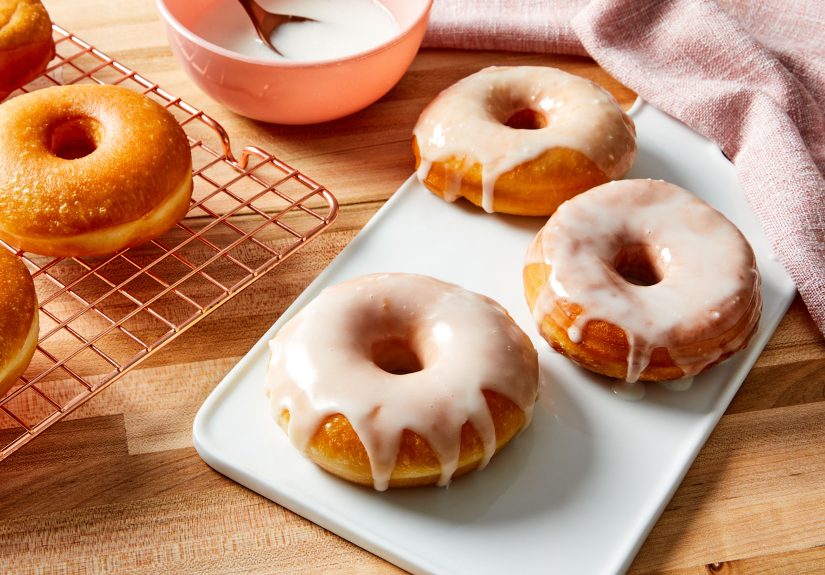
Classic Vanilla Glaze
- Whisk powdered sugar, salt, vanilla, and most of the milk until smooth.
- Add more milk a teaspoon at a time until it’s thick but pourable.
- Dip donut tops (or dunk fully if you’re bold). Set on a rack to let glaze set.
Chocolate Glaze (The “I’m an Adult” Choice)
Melt 2 tablespoons butter with 2 tablespoons milk, whisk in 1–1 1/4 cups powdered sugar, then whisk in
2–3 tablespoons cocoa powder and a splash of vanilla. Adjust thickness with milk.
Cinnamon Sugar (Fastest Route to Joy)
Mix 1/2 cup sugar + 1 tablespoon cinnamon. Toss warm donuts in the mix right after frying (or brush lightly with melted butter
first if baked).
Maple Glaze
Whisk 2 cups powdered sugar + 2–3 tablespoons maple syrup + 2 tablespoons milk + pinch of salt. Add more milk if needed.
Filled Donuts (Jelly, Custard, or “Whatever’s in the Fridge”)
Skip the center hole and cut rounds. After frying and cooling slightly, poke a hole in the side and pipe in jam, pastry cream,
or sweetened whipped cream. Dust with powdered sugar or glaze the top.
Frying Safety Tips (Quick, Not Scary)
- Use a thermometer: oil that’s too cool makes greasy donuts; too hot burns the outside fast.
- Never leave hot oil unattended and keep kids/pets away from the “splash zone.”
- Leave headspace above the oil to prevent overflow and splatter.
- Lower dough gently into oil to avoid splashes (a spider strainer helps).
- Have a lid nearby that fits your potif oil ever smokes aggressively, turn off heat and cover carefully.
Troubleshooting: Fix the Usual Donut Drama
My donuts are dense (a.k.a. “bagels in disguise”).
- Under-proofed: give the cut donuts more time to get puffy before frying.
- Too much flour: spoon-and-level flour (or weigh it). Add flour slowly during the dough check.
- Cold kitchen: proof in a warmer spot (oven light trick works).
My donuts are greasy.
- Oil too cool: keep it around 350–375°F and fry in small batches.
- Crowding the pot: too many donuts at once drops the temperature fast.
- Over-proofed: overly airy dough can soak oil and collapse.
They browned too fast but are raw inside.
- Oil too hot: lower heat and let oil return to target temp.
- Dough too thick: roll to about 1/2 inch for even cooking.
My dough didn’t rise in the machine.
- Yeast issues: expired yeast or overheated liquid can stop rising.
- Salt contact: avoid placing yeast directly on salt (keep yeast on flour mound).
- Wrong cycle: make sure it’s “Dough,” not a quick-bake bread cycle.
Make-Ahead, Storage, and Freezing
Make-ahead dough
After the bread machine finishes the dough cycle, you can cover the dough and refrigerate it overnight. Cold dough is easier to
roll and cut, and it can develop deeper flavor. The next day, let it sit at room temperature for 20–30 minutes before rolling,
then proceed with shaping and proofing.
Storing donuts
Donuts are best the day they’re made (this is not me judging your self-control; it’s just physics). Store unglazed donuts at room
temp in a loosely covered container for up to 1 day. Glazed donuts can get sticky; keep them in a single layer if possible.
Freezing
Freeze unglazed donuts in a single layer, then transfer to a freezer bag. Rewarm briefly in a 300°F oven until
soft, then glaze. This avoids the “frozen glaze sadness” that can happen when sugar coatings sweat.
FAQ: Bread Machine Donuts
Can I use instant yeast instead of active dry?
Yes. Instant/bread machine yeast works well in bread machines. If using active dry, it also worksjust keep your liquid warm (not hot)
and follow your machine’s ingredient order guidance.
Do I really need a donut cutter?
Not required. Use a 3-inch round cutter (or a glass) and a 1-inch cutter for holes. For filled donuts, just cut rounds and skip the center.
What oil is best for frying donuts?
Choose a neutral oil with a high smoke point (canola, vegetable, peanut). Neutral flavor lets the donut and glaze shine.
How many donuts does this make?
It depends on your cutter size and thickness, but expect about 10–14 full-size donuts plus donut holes.
of Real-Life Bread Machine Donut Experiences (So You Don’t Have to Learn the Hard Way)
There’s a special kind of optimism that appears the moment you press “Dough” on a bread machine. It’s the same optimism that makes
you believe you’ll only eat one donut hole while waiting for the rise. (Adorable.)
Most home bakers who try bread machine donuts for the first time have a similar first surprise: the dough looks a little weird early
on. Sometimes it’s too sticky, sometimes it’s too dry, and occasionally it just sits there like it’s silently judging your life choices.
That’s why the “dough reality check” is a game-changer. Taking 30 seconds to peek during kneading and nudging the dough with a spoonful
of flour or a teaspoon of liquid can mean the difference between fluffy donuts and dense rings of regret.
The second classic experience is discovering that proofing is less about the clock and more about the vibesspecifically, the warm,
puffy, “I’m full of air and confidence” vibe. In a chilly kitchen, donuts can proof slowly and tempt you into rushing. When you rush,
the donuts fry up heavier because the dough hasn’t relaxed and expanded enough. Many bakers eventually develop a ritual: turn the oven
off, switch the light on, and let the donuts rise in that gentle warmth like they’re at a spa day.
Then comes the frying stage, which feels dramatic even when everything goes right. The oil temperature is the main character here.
When oil is too cool, donuts absorb oil and get greasy; when it’s too hot, the outside browns before the inside is done. People often
remember their first “oops” batch vividly: the donuts look perfect in the pot, then you bite in and discover a doughy center. After that,
thermometers suddenly become everyone’s best friend, and frying in smaller batches feels less like a suggestion and more like a survival strategy.
Another very relatable moment: the donut hole effect. You cut holes “just because,” then you fry them, then you realize donut holes are
basically edible popcorn. They’re quick, snacky, and extremely hard to stop eatingespecially while you wait for your glaze to set.
Some bakers start making extra dough just so there are more holes. This is not a problem. This is planning.
Finally, there’s the topping personality test. Some people are classic glaze loyalists; others immediately go full chaos with sprinkles,
cinnamon sugar, maple, or chocolate. The shared lesson is simple: glaze while donuts are warm, and set them on a rack so the coating
stays pretty instead of turning into a sticky puddle. When you get it right, the experience is honestly ridiculousin the best way.
Fresh donuts taste like you smuggled them home from a great bakery, except you didn’t smuggle anything. You just pressed a button,
rolled some dough, and performed a tiny breakfast miracle.