Table of Contents >> Show >> Hide
- Why Spontaneity Makes Life Feel More Alive
- !0 Ways to Be More Spontaneous & Live in the Moment
- 1. Say “Yes” a Little More Often
- 2. Break Your Routine Without Burning It Down
- 3. Plan “Unplanned Time”
- 4. Put Your Phone on a Leash
- 5. Use Micro-Mindfulness to Drop Into the Present
- 6. Play MoreEven as a Serious Adult
- 7. Try Tiny Doses of Risk
- 8. Follow Your Curiosity, Not Just Your Schedule
- 9. Use Nature as a Shortcut to Presence
- 10. End the Day With a “Present Moment Replay”
- Common Myths About Spontaneity (and Why They’re Wrong)
- of Real-Life Experiences & Experiments
If your calendar has more color-coding than a box of crayons, and your idea of risk is trying a new latte flavor, this article is for you. Being organized is great, but when every second is planned, life can start to feel like a to-do list with a pulse. Spontaneity is the messy, joyful antidote: it pulls you out of autopilot and drops you right into the present moment.
The good news? You don’t have to quit your job and backpack across Europe to “live in the now.” A more spontaneous life is built out of small, doable choices that fit inside your existing world. Let’s walk through !0 ways (yes, we’re leaving that exclamation mark right where it is) to be more spontaneous and actually enjoy the moment you’re in.
Why Spontaneity Makes Life Feel More Alive
Spontaneity is more than “doing random stuff.” Psychologists often link it to a sense of freedom, novelty, and possibility. When you occasionally choose the unexpected route instead of the familiar one, your brain gets a hit of curiosity and engagement. You’re no longer just getting through the day; you’re in the day.
Living in the moment is also tied to emotional well-being. When you’re present, you’re not replaying yesterday’s arguments or catastrophizing tomorrow’s problems. You’re paying attention to what’s happening right nowyour breath, your surroundings, the person in front of you, the food in your mouth. That presence calms your nervous system and makes joy easier to access.
Spontaneity and mindfulness might sound like opposites, but they’re actually teammates. Mindfulness trains you to notice what’s happening; spontaneity gives you the courage to act on what you notice.
!0 Ways to Be More Spontaneous & Live in the Moment
1. Say “Yes” a Little More Often
If your default answer to invitations is “maybe later” (translation: no), start experimenting with micro-yeses. You don’t need to agree to every road trip or last-minute party. Instead, try a simple rule: once a week, say yes to something you’d usually decline for no good reason.
Examples:
- A coworker invites you to coffee at a new café instead of your usual spot.
- A friend asks if you want to try a new workout class.
- Your partner suggests eating dinner on the balcony instead of at the dining table.
Notice that none of these require you to rearrange your life. But each “yes” stretches your comfort zone and gives your future self a fun memory instead of another night scrolling on the couch.
2. Break Your Routine Without Burning It Down
Routines keep you functional. Rigidity is what makes you miserable. Think of spontaneity as a way to add flexibility, not erase structure. Keep the skeleton of your day (wake, work, sleep) but play with the details.
Try:
- Taking a different route to work and actually looking around instead of mentally checking email.
- Switching your usual breakfast for something newsavory instead of sweet, or vice versa.
- Working one afternoon from a library, café, or co-working space instead of your usual desk.
Small changes signal to your brain: “Hey, we’re not just surviving here. We’re allowed to explore.” That makes spontaneous choices feel less threatening and more natural.
3. Plan “Unplanned Time”
This sounds like cheating, but it’s brilliant: block out a chunk of time in your calendar labeled “Do Whatever.” When that time comes, you are not allowed to work or doomscroll. You must choose something in the moment.
Ideas for your unplanned window:
- Walk with no destination, turning randomly at intersections.
- Wander into a bookstore and pick whatever catches your eye.
- Call someone you haven’t talked to in a whileno texting first, just old-school surprise.
This creates a safe container: your inner planner knows the rest of the day is handled, which gives your spontaneous side permission to play.
4. Put Your Phone on a Leash
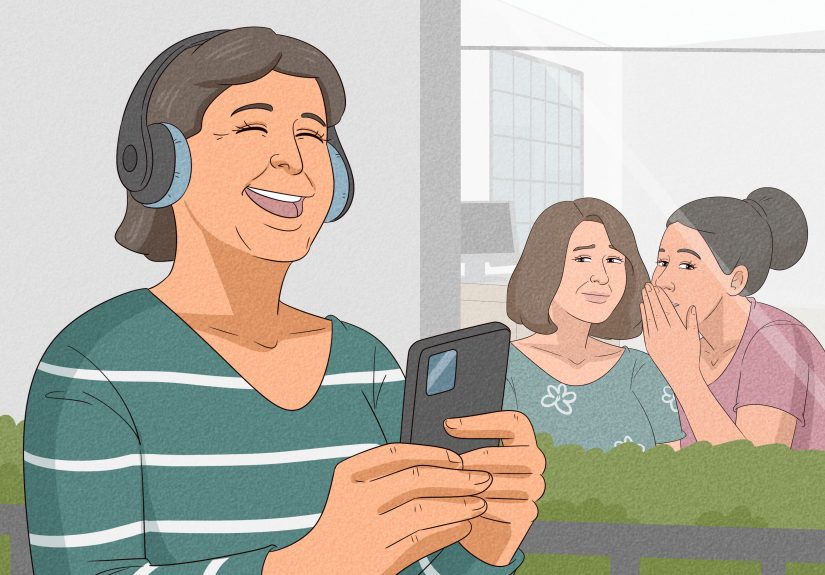
It’s hard to “live in the moment” when that moment is constantly interrupted by notifications. Your brain never gets quiet enough to wonder, “What do I actually feel like doing?” because your feeds are already telling you.
Try one or more of these digital tweaks:
- Silent walks: take a 10–20 minute walk with no phone, no headphones, no podcasts. Just you, your thoughts, and the sound of your footsteps.
- Notification naps: turn off nonessential notifications for a few hours each day.
- Phone-free pockets: choose one daily activitymeals, commuting, shower timeand make it screen-free.
When your brain isn’t constantly reacting to pings, it becomes easier to notice a sudden urge like, “I want to sit on that bench in the sun for five minutes,” and then actually do it.
5. Use Micro-Mindfulness to Drop Into the Present
Being spontaneous isn’t only about doing new things; it’s also about fully experiencing what you’re already doing. Micro-mindfulness techniques help your mind stop time-traveling and land in the here and now.
Quick ways to re-anchor yourself:
- One-minute breathing: close your eyes and focus on your breath for 60 seconds. Inhale, exhale, repeat. That’s it.
- Five senses reset: silently name three things you can see, hear, and feel.
- Single-tasking: when you drink coffee, just drink coffee. Feel the warmth, notice the flavor, pause between sips.
These tiny practices make ordinary moments richerand the richer the moment feels, the more naturally you’ll follow spontaneous impulses instead of rushing past them.
6. Play MoreEven as a Serious Adult
If your inner child has been on unpaid leave since college, it’s time to rehire them. Playfulness is a powerful way to loosen anxiety, spark creativity, and bring you back into the present. It’s hard to worry about tomorrow’s meeting while you’re trying to beat your friend at mini golf or teaching your dog a ridiculous new trick.
Some low-pressure ways to bring play back:
- Turn chores into a game: set a 10-minute timer and see how much you can tidy before the buzzer.
- Have a “backwards” evening: dessert first, then dinner, then a walk.
- Bring board games, sketchbooks, or cards to hangouts instead of just sitting around scrolling together.
Play doesn’t have to be elaborate or Instagram-worthy. The goal is simply to create moments where you’re engaged, amused, and not taking yourself so seriously.
7. Try Tiny Doses of Risk
One reason spontaneity feels scary is that it often comes with a side of uncertainty. You don’t know exactly how something will turn out, and your brain prefers guaranteed comfort over possible delight.
To retrain that reaction, start with tiny risks that feel safe but still a bit stretchy:
- Speak up once in a meeting instead of staying silent.
- Try a new hobby class where you don’t know anyone.
- Sit in a different spot at your usual café or gym.
Every time you flirt with the edge of your comfort zone and survive (or even enjoy it), your brain updates its settings: “Oh, we did something new and the world didn’t end. Maybe we can do that again.” That’s the quiet skill behind every spontaneous decision.
8. Follow Your Curiosity, Not Just Your Schedule
Spontaneity doesn’t have to be dramatic; it can be as simple as following a random thread of curiosity. The next time something catches your interest, instead of filing it away for “someday,” ask: What is the smallest action I can take on this right now?
Examples:
- You see a flyer for a local improv showbuy a ticket instead of just thinking “That looks fun.”
- You notice a new restaurantpeek at the menu and make a plan to go this week.
- You suddenly feel like bakingtry a quick, three-ingredient recipe instead of scrolling photos of other people’s cakes.
Following curiosity builds a life that feels less scripted and more like an adventure that unfolds as you walk it.
9. Use Nature as a Shortcut to Presence
Nature is the original “live in the moment” teacher. You can’t rush a sunset or pause the ocean; you can only experience it while it’s happening. Being outside also helps quiet the mental noise that keeps you stuck in your head.
Simple ways to bring more nature-fueled spontaneity into your week:
- Take a 15-minute “no agenda” walk at lunchno errands, no calls, just wandering.
- Have an impromptu picnic in your local park, even if it’s just takeout on a blanket.
- Watch the sky for five minutes at nightstars, clouds, city glow, whatever you’ve got.
You don’t need mountains or beaches. A tree-lined street or small patch of grass can still remind you that life is happening right now, not later.
10. End the Day With a “Present Moment Replay”
Spontaneity sticks when you reinforce it. At the end of the day, take two or three minutes to mentally replay the present-moment choices you made.
Ask yourself:
- When did I feel most alive or engaged today?
- What spontaneous decision did I make, even if it was tiny?
- How did those moments feel in my bodylighter, calmer, more energized?
Writing down one or two of these moments in a quick journal or note app turns them into proof: you can be spontaneous, you have lived in the moment, and you can absolutely do it again tomorrow.
Common Myths About Spontaneity (and Why They’re Wrong)
“Being Spontaneous Means Being Irresponsible”
Nope. Irresponsibility is ignoring your commitments. Spontaneity is choosing to bring more aliveness into the space around those commitments. You can pay your bills and still say yes to last-minute ice cream.
“I’m Just Not That Type of Person”
Spontaneity isn’t a personality trait reserved for extroverts and free spirits. It’s a skill you build, like learning to cook or drive. Introverts, planners, and anxious people can all learn to choose small, safe, meaningful moments of “why not?”
“I Need a Big Life Change to Live in the Moment”
Big life changes are optional. Living in the moment mostly happens in the small stuff: how you breathe, how you eat, how you walk, how often you look up from your screen. The present is already here; you just have to notice it.
of Real-Life Experiences & Experiments
Abstract tips are nice, but stories stick. Here’s what being more spontaneous and living in the moment can look like in actual, everyday lifeno movie montage required.
The Thirty-Minute Adventure Rule
One young professional, exhausted by Zoom meetings and meal prep, created a personal rule: once a week, she had to spend thirty minutes doing something she hadn’t planned the day before. The rule was small on purposeno pressure to have an epic adventure, just thirty minutes of “let’s see what happens.”
Some weeks, she wandered into a plant shop and came home with a tiny succulent. Other weeks, she tried a random fitness class or walked into a neighborhood she usually just drove past. Over time, she noticed two things: her anxiety about “breaking routine” went down, and her stories about her week got way more interesting. Instead of answering, “Oh, nothing much” when people asked how she was, she found herself saying, “Actually, I tried this new thing…”
The Silent Commute Experiment
A guy who loved podcasts realized he couldn’t remember the last time he’d heard his own thoughts without someone talking in his ears. He decided that three days a week, his commute would be silentno music, no shows, no news. At first, it felt uncomfortable, almost boring. His brain scrambled to fill the quiet with worries and mental to-do lists.
But after a few days, something shifted. By the time he arrived at work, he felt calmer and more grounded. He started noticing small thingsnew graffiti on a wall, a neighbor’s ridiculously cute dog, the way the light shifted on the buildings. Occasionally, he’d get a spontaneous idea: “What if I invite my friend to lunch?” or “What if I finally sign up for that class?” Those ideas had always been there; the silence just gave them room to surface.
The “Say Yes to People, No to Pressure” Pact
A couple with very different personalitiesone rigid planner, one chaotic improvisermade a pact. They would say “yes” to more experiences together, but with boundaries that kept both of them comfortable. No last-minute international trips, but yes to spontaneous detours on weekends. No blowing the budget on surprise purchases, but yes to unplanned coffee dates and movie nights.
On a random Saturday, they went out to run errands and passed a small street festival they hadn’t known about. Old them would have said, “We don’t have time; we have a list.” New them parked the car, wandered through the booths, shared a snack, and listened to live music. The errands still got donejust later. Months afterward, they barely remembered what they bought that day, but they still remembered that unexpected festival.
The “Three Moments” Bedtime Ritual
Someone who struggled with anxiety started ending each day by writing down three moments when they had been fully present. They didn’t have to be impressive. One night’s list: “1) Laughing at a dumb meme with my sister. 2) The first sip of iced coffee. 3) Watching the rain out the window for five minutes.”
At first, it felt like a simple gratitude practice. Over time, it became a quiet challenge: “What will today’s three moments be?” That question led them to take more tiny risksinviting a coworker to lunch, sitting outside instead of in front of the TV, dancing to one song while cooking. The present moment stopped being something abstract and started being something they could actually feel in their body: warm, alive, and surprisingly accessible.
You don’t need a major personality overhaul to live like this. You just need a series of small, curious choices. Say yes a little more often. Break your routine without burning your life down. Put your phone in time-out. Play. Breathe. Look up. The moment you’re looking for is already hereit’s just waiting for you to join it.