Table of Contents >> Show >> Hide
- Why A.S.L. Feels So “Paris” (Without the Costume Drama)
- The 7 Design-Forward Finds (And Exactly Why They’re Worth a Spot in Your Suitcase)
- 1) The Bookshelf Lamp: Small, Pleated, and Dangerously Charming
- 2) Places of Paris Print (Jardin du Luxembourg): A Frameable Love Letter to the City
- 3) The Bestiary Print (“Like Shooting Fish in a Barrel”): Whimsy with a Backbone
- 4) La Lampe Coupole (Limited Edition): A Soft Halo for Your Favorite Corner
- 5) The Box: A Movie-Set Crate That Graduated into Good Taste
- 6) The XXL Storage Tote: The “Pretty” Way to Admit You Own Stuff
- 7) The Atelier’s Table: A Workbench Disguised as a Dream Dining Table
- How to Shop A.S.L. Like a Designer (Even If You’re Not One)
- Wrap-Up: The Real Luxury Is Using What You Bought
- Extra Pages from the Diary (): What Shopping A.S.L. in Paris Taught Me
Paris has a talent for making you believe you’re a different personsomeone who wakes up early, loves bitter espresso,
and can identify a chair by its silhouette alone. Then reality taps you on the shoulder (usually in the form of a museum
line and a very judgmental pair of walking shoes). Still, every trip has that one moment when the city hands you a
little souvenir of its rhythmsomething you’ll actually use back home, not just dust.
This entry is about that moment, and that place: A.S.L. Paris. Think of it as the kind of design stop where objects
aren’t shouting for attention; they’re quietly competent, beautifully made, and somehow still funny in a “why is this
so perfect?” way. The result is a short list of seven findseach one practical enough to live with, and special enough
to feel like it came with a story attached.
Why A.S.L. Feels So “Paris” (Without the Costume Drama)
Some shops sell a look. A.S.L. sells a point of view: that daily life can be designed, not decoratedbuilt from objects
that earn their keep and age with dignity. The aesthetic is rooted in craft and restraint: honest materials, soft colors,
and silhouettes that look calm even when your to-do list is doing parkour.
What makes it design-forward isn’t novelty for novelty’s sake; it’s intention. A.S.L.’s pieces tend to land in that
sweet spot between “atelier utility” and “gallery-worthy.” Translation: it’s the stuff you can actually live withthen
stare at while doing the dishes because you’re proud of your choices.
And because this is a shopper’s diary, I’m grading each find on three real-world categories:
(1) does it solve a problem, (2) does it elevate the room, and (3) will it still
look good when you’re tired, busy, and absolutely not staging your life for social media?
The 7 Design-Forward Finds (And Exactly Why They’re Worth a Spot in Your Suitcase)
1) The Bookshelf Lamp: Small, Pleated, and Dangerously Charming
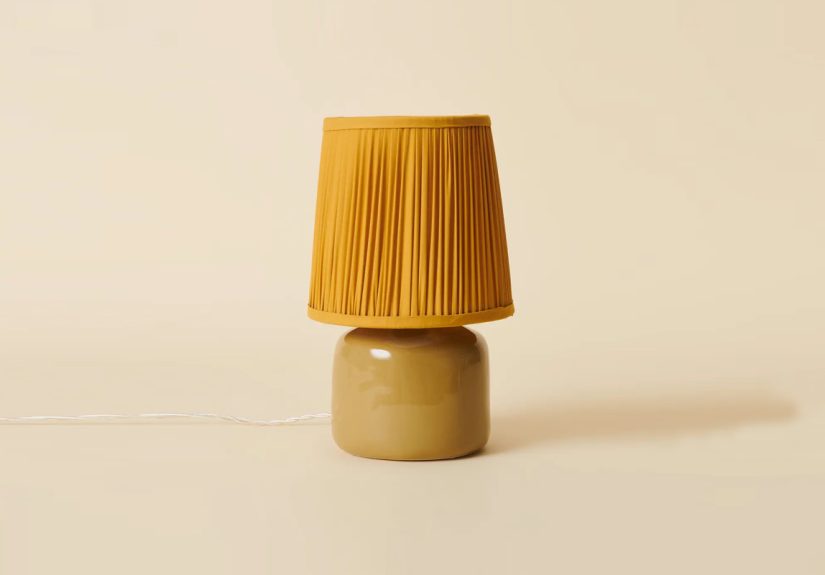
If Paris had a bedside manner, it would look like this lamp: a ceramic base with a pleated cotton shade, sized to
tuck between books or perch on a nightstand without hogging the entire scene. The pleats add texture (the design
equivalent of a good haircut), while the compact proportions keep it feeling light.
Why it’s design-forward: pleating reads as classic, but in a small format it feels modernlike a nod
to tradition without going full antique-lace-curtain. It’s also a rare lighting win: decorative even when it’s off.
How to style it at home: place it next to stacked paperbacks and a low tray for keys; or use it as a
“soft corner” trick on open shelvingone warm pool of light can make a room feel calmer instantly. Bonus: it’s the
perfect lamp for people who love “cozy” but hate “clutter.”
2) Places of Paris Print (Jardin du Luxembourg): A Frameable Love Letter to the City
A.S.L.’s “Places of Paris” prints are the opposite of touristy: typography and original drawings printed on vintage
paper, framed in oak with a floating mount. The Jardin du Luxembourg version is especially irresistiblequietly
graphic, architectural, and romantic without trying too hard (the most Parisian skill of all).
Why it’s design-forward: it’s “new art” with an “old soul.” That mixcontemporary graphics on
historic paperadds instant depth to a wall, even if your furniture is mostly “IKEA-with-confidence.”
How to style it at home: hang it where you transition between spaces: entryway, hallway, top of
stairs. It works especially well with neutral paint, warm wood, and a single accent color repeated once or twice
(a pillow, a book spine, a vase). The goal is collected, not chaotic.
3) The Bestiary Print (“Like Shooting Fish in a Barrel”): Whimsy with a Backbone
The Bestiary series is a hand-colored reproduction on vintage paper, sold framed, with a limited-edition vibe that
still feels playful. The “fish” drawing has that slightly ironic, storybook energylike it belongs in a serious room
that doesn’t take itself too seriously. (My favorite kind of room, and frankly, my favorite kind of person.)
Why it’s design-forward: it’s personality without clutter. One strong, slightly odd artwork can do the
job of ten small decorative objectsmeaning your shelves can finally breathe.
How to style it at home: use it to break up “too perfect” spaces: a pristine white kitchen, a minimal
office, a symmetrical living room. Put it near something utilitarian (a desk, a bar cart, a pantry door) so it feels
like a wink, not a performance.
4) La Lampe Coupole (Limited Edition): A Soft Halo for Your Favorite Corner
A dome lamp with a solid oak base and a cotton shade hand-mounted with floral biasassembled by hand, so every piece
has subtle variation. This is the kind of lamp that doesn’t just light a space; it frames it. It says, “This corner
matters,” whether that corner is your desk, your record shelf, or the one chair that everyone fights over.
Why it’s design-forward: it’s craft-forward, not trend-forward. The materials do the talking: oak for
warmth, cotton for softness, and that hand-finished detail that makes the light feel gentler.
How to style it at home: keep the surrounding area quiet: one or two objects max (a ceramic bowl,
a stack of magazines, a small plant). This lamp wants a little negative spacelike a good soloist.
5) The Box: A Movie-Set Crate That Graduated into Good Taste
Inspired by wooden crates used on movie sets, made in okoumé, and sized to function as a stool, footboard, coffee
table, or side tableespecially when stacked. It’s the kind of modular piece you buy once and then wonder why every
household item isn’t this flexible.
Why it’s design-forward: it’s “prop logic” applied to real life: lightweight, sturdy, and ready to
move wherever the day needs it. Design that adapts is always ahead of design that poses.
How to style it at home: pair it with softer textureslinen throws, a woven rug, a rounded lampto
keep the silhouette from feeling too industrial. Use one box for blankets in the living room, or stack two as a
nightstand with storage. The more you use it, the better it looks.
6) The XXL Storage Tote: The “Pretty” Way to Admit You Own Stuff
This is not a dainty tote for a baguette-and-flowers fantasy. This is an XXL cotton canvas storage totemade in
Massachusetts in collaboration with a heritage canvas makerbuilt to haul laundry, toys, spare blankets, beach gear,
or whatever else your home is currently pretending doesn’t exist.
Why it’s design-forward: it’s a storage solution that doesn’t look like a storage solution. When the
container is attractive, you stop playing the exhausting game of “hide everything before anyone sees we live here.”
How to style it at home: treat it like a piece of furniture. Park it near a bench, under a console,
or beside a bookshelf. Keep the contents cohesive (all throws, or all kid stuff, or all gym towels) so it looks
intentional. And if you personalize it, keep the typography simplemonogram energy, not team jersey energy.
7) The Atelier’s Table: A Workbench Disguised as a Dream Dining Table
A large, made-to-order table that can act as a workbench, desk, or dining table, with an okoumé wood top edged in
oak and solid oak trestles. It’s sturdy, architectural, and refreshingly honestno fussy apron, no weird angles, no
“statement” that can’t handle spaghetti night.
Why it’s design-forward: it respects how people actually live. The best modern furniture doesn’t
force you into a lifestyle; it supports the one you havemessy projects, big meals, laptop days, and all.
How to style it at home: mix chair styles for a collected feel: two simple wood chairs, two softer
upholstered ones, maybe a bench on one side. Add one grounded centerpiece (a low bowl, a pitcher, a stack of books)
and let the table do the heavy lifting visually.
How to Shop A.S.L. Like a Designer (Even If You’re Not One)
Here’s the trick: don’t shop for “things.” Shop for roles. The best A.S.L. pieces are quiet workhorseslighting
that softens a shelf, storage that looks intentional, art that adds depth, furniture that adapts. If you assign each
purchase a role, you’ll avoid the classic pitfall of buying a beautiful object that becomes a beautiful dust collector.
- Choose one “anchor” item (a lamp or table), then add one or two supporting pieces.
- Repeat materials (oak + linen + ceramic) so everything feels related, not random.
- Let imperfection live: handwork and vintage paper should look human, not factory-perfect.
- Buy the item you’ll touch daily (a tote, a lamp switch, a table edge). That’s where value shows up.
Wrap-Up: The Real Luxury Is Using What You Bought
The best design souvenirs don’t sit on a shelf waiting for you to “have company.” They become part of your daily
choreography: the light you turn on at dusk, the tote that catches the chaos, the print that makes you pause in the
hallway, the table that hosts both deadlines and dinner.
A.S.L. in Paris nails that sweet spot: objects that feel special, but never precious. They’re not trying to impress
your gueststhey’re trying to make your Tuesday better. And honestly? That’s the kind of romance I trust.
Extra Pages from the Diary (): What Shopping A.S.L. in Paris Taught Me
There’s a specific kind of confidence that appears in Paris around day two. It’s the delusional belief that you can
“just pop in” somewhere between museums, lunch, and walking across the entire city as if your legs are sponsored.
That’s how I ended up near Saint-Lazare, slightly over-caffeinated, pretending I wasn’t hungry, and absolutely certain
I needed “one small design thing.”
Walking into A.S.L. felt like stepping into a calmer version of my own brain. Everything looked considered: not too
much product, not too much signage, not too much anything. It reminded me that good retail design is basically good
interior design with a job to dospace, light, texture, and a clear point of view. No chaos, no “sale” screaming at you,
just objects sitting there like, “We’ll be useful when you’re ready.”
The first lesson hit fast: scale matters more than you think. The Bookshelf Lamp isn’t dramatic, but
it’s exactly the size that makes a shelf feel lived-in instead of staged. In the moment, I realized half of my home
“styling problems” could be solved by choosing smaller, better pieces rather than bigger, louder ones. Paris didn’t
give me a new personality, but it did give me a new respect for the power of compact objects.
Second lesson: materials are mood. Oak feels warm without being precious. Pleated cotton feels soft
without being fussy. Canvas feels honest. Ceramic feels human. Standing there, running my eyes over these textures,
I could basically predict how my future self would feel using them. That’s the kind of shopping superpower you don’t
get from scrolling: you can sense whether an object will calm you down or quietly annoy you forever.
Third lesson: buy fewer things, but buy “scene-setters.” A framed print on vintage paper can change
the emotional temperature of a room faster than swapping every pillow cover you own. A proper lamp can make a corner
feel like a destination. A sturdy tote can make your whole home look tidier without you actually becoming tidier (a
miracle I fully support).
The final lesson was the most practical: design-forward doesn’t have to mean fragile. The pieces I
loved most weren’t delicate; they were hardworking. The Box could be a stool. The Atelier’s Table could survive real
life. The tote could haul the truth. That’s the kind of “forward” I wantobjects that move your home ahead, not objects
that trap you into tiptoeing around them.
I left A.S.L. feeling equal parts inspired and slightly humbled, like I’d just watched someone quietly do something
very well. Paris didn’t just sell me a product; it sold me a better standard. And the best part is, that standard comes
home with youevery time you flip on the lamp, toss a blanket into the tote, or walk past the print and remember the
city for half a second longer.