Table of Contents >> Show >> Hide
- The Quick Backstory: What Canadians Noticed (and What Paramount Didn’t Say)
- Why This Episode Matters So Much
- “Banned” vs. “Missing”: The Important Difference
- Streaming Rights Chaos: How South Park Became a Moving Target
- The Usual Reasons South Park Episodes Get Pulled
- So Why Would Paramount+ Canada Be Missing “Big Gay Al” Specifically?
- What This Reveals About Streaming (and Why Fans Get So Mad)
- Bonus: of Fan Experiences From the Great Canadian Episode Hunt
- Conclusion
- SEO Tags
If you’ve ever tried to stream a long-running TV show, you already know the modern law of physics:
the bigger the library, the more likely one random episode will vanish like Kennymysteriously, repeatedly,
and with zero explanation.
That’s why a bunch of Canadian South Park fans did a double take when they went looking for
“Big Gay Al’s Big Gay Boat Ride” and… couldn’t find it. Not a “this title is currently unavailable”
warning with a helpful explanation. Just a hole in Season 1 where an iconic episode is supposed to be.
Naturally, people asked the most Canadian-sounding question possible: “Sorry, but… why?”
The controversy hit extra hard because the episode isn’t remembered as a “most shocking” entry in the series.
It’s remembered as one of the earliest episodes that bluntly (and, yes, comedically) landed on a message of
acceptanceyears before “representation” was a mainstream entertainment buzzword.
The Quick Backstory: What Canadians Noticed (and What Paramount Didn’t Say)
In 2023, reports circulated that some Paramount+ subscribers in Canada couldn’t stream “Big Gay Al’s Big Gay Boat Ride”
from the Season 1 lineup. The key detail: Paramount did not publicly give a clear, definitive reason for the episode’s
absence, which is exactly how you create a fandom mystery that grows legs, learns to run, and sprints straight onto social media.
Fans debated two possibilities: either the episode was effectively being “banned” (a deliberate content decision),
or it was missing for more boring reasonslike a catalog glitch, a rights snag, or a metadata mix-up. The problem is,
streaming platforms rarely hand you the truth in a neat little pop-up box. They hand you silence. And silence is the
internet’s favorite seasoning.
Why This Episode Matters So Much
It’s an early, influential Season 1 episode
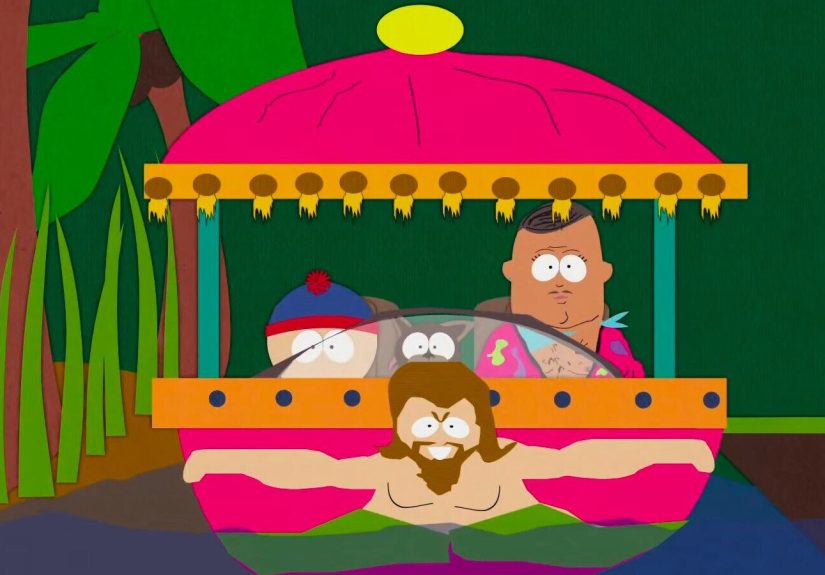
“Big Gay Al’s Big Gay Boat Ride” is Season 1, Episode 4, originally airing on September 3, 1997.
The premise is classic early South Park: Stan’s dog, Sparky, is revealed to be gay, and Stanunder pressure
from the kids and the townstruggles with what that means before learning a very simple lesson:
acceptance is better than fear dressed up as “normal.” (Also, yes, George Clooney shows up as Sparkybarking only.)
It wasn’t just “controversial”it was recognized
For an episode that arrived in the late 1990s, it drew unusual attention for openly addressing homosexuality on TV.
It also earned notable awards recognition: it was nominated for an Emmy (Outstanding Animated Program) and received a
GLAAD nomination (Outstanding Individual Episode). That’s a big deal for a show whose brand is “we will make fun of literally everything.”
It has a history of making TV executives sweat
Even back in 1997, the episode reportedly made network executives nervous, and it included jokes that Comedy Central
initially objected toespecially a sports-commentator line referencing Poland in the late 1930s. The episode’s title itself
was treated gingerly by some outlets; for example, TV Guide reportedly avoided printing the full name and called it “Big Al’s Boat Ride.”
In other words: the episode has a long résumé of making gatekeepers clutch their pearls.
“Banned” vs. “Missing”: The Important Difference
Let’s define terms, because the internet loves a spicy word.
When fans say an episode is “banned,” they usually mean there was a deliberate editorial choice:
someone decided viewers shouldn’t have access to it.
But streaming reality is often less dramatic and more bureaucratic:
someone forgot to include it, couldn’t clear a right, or uploaded the wrong package.
That distinction matters because South Park already has a known history of episodes being withheld from streaming for content reasons
(we’ll get to those). But “Big Gay Al” isn’t typically grouped with those episodes. So when Canadians couldn’t find it,
it raised eyebrows: was this a new kind of sensitivity moveor a weird, accidental omission?
Streaming Rights Chaos: How South Park Became a Moving Target
To understand why any single episode might disappear, you need the bigger context: South Park has spent years bouncing between
platforms and rights arrangements, especially as streaming deals became the entertainment industry’s version of Pokémon cardsexcept the cards are worth
hundreds of millions (or billions) of dollars and everyone is yelling.
Canada got the full catalog promise… on paper
Paramount+ announced in 2023 that it became the Canadian home for the complete South Park catalog (as of September 1, 2023),
positioning the service as the central hub for Canadians who wanted every season in one place.
That’s why missing-episode reports hit a nerve: “complete catalog” and “missing one of Season 1’s most famous episodes”
are not supposed to coexist in the same sentence.
Then the show vanished internationally (briefly) amid a dispute
In July 2025, South Park was pulled from Paramount+ outside the United States after the streamer’s international license window expired
amid a broader streaming-rights disputean example of how quickly availability can change by region, even for a flagship title.
When the rights window closes, the content doesn’t slowly fade out like a sad montage; it drops off the app like it stepped on a rake.
A massive deal reset the board
On July 23, 2025, Paramount announced a renewed five-year agreement tied to South Park, including
a large package of new episodes and the library streaming on Paramount+ globally.
Reuters reported the deal value as more than $1.25 billion and noted that it included making prior seasons available on Paramount+
after a period of disputes.
In the U.S., the post-deal landscape also shifted. Coverage in mid-2025 described the show leaving HBO Max in early August 2025
as it consolidated under Paramount+. Translation: where you watch South Park can change fastsometimes with a calendar date,
sometimes with a rights headline, sometimes with viewers discovering “wait, why is Season 1 missing Episode 4?”
The Usual Reasons South Park Episodes Get Pulled
If this were a detective show, this is the part where we pin photos on a corkboard and whisper, “We’re dealing with motives.”
In the real world, streaming motives tend to fall into a few buckets.
1) Content restrictions (the well-known “five episodes” situation)
There’s a documented set of South Park episodes that have been kept off major streaming platforms because they include depictions
of Islam’s Prophet Muhammad. Reporting around HBO Max’s South Park launch explained that five episodes were absent and tied that absence
to Muhammad depictions, including “Super Best Friends,” “200,” “201,” and the two-part “Cartoon Wars.”
Those episodes are frequently cited as the “missing five” across platforms.
This is an important benchmark for the “Big Gay Al” mystery: that episode doesn’t belong to this category.
So if Canadians couldn’t stream it, it suggests the cause may be different than the familiar “withheld for religious depiction” explanation.
2) Rights and licensing windows (especially international)
The 2025 international pull from Paramount+ outside the U.S. is a textbook example: availability doesn’t always hinge on controversy;
it can hinge on contract dates. If a deal expires, content can be removed across entire regions.
3) Music and clip clearances (the boring-but-real possibility)
“Big Gay Al’s Big Gay Boat Ride” includes a plot point involving the song “Lovin’ You,” with a halftime performance gag built around a specific note.
Music rights can be surprisingly complicated, and they can vary by territory or by distribution format.
To be clear: there’s no universally published, official statement saying “this episode is missing because of music rights.”
But music and clip licensing is one of the most common “why is this one episode missing?” explanations across streaming in general,
and this episode does involve a prominent song reference.
4) Metadata glitches and packaging mistakes (a.k.a. “the catalog ate it”)
The least exciting answer is often the most likely: streaming catalogs are huge, episode files travel through pipelines,
and one item can fail to publish correctly in one region.
Even the 2023 chatter around this issue included the possibility that it was a technical glitch rather than a moral panic.
So Why Would Paramount+ Canada Be Missing “Big Gay Al” Specifically?
If Paramount isn’t handing out an official explanation on a silver platter, the best we can do is evaluate what’s plausible
based on what’s known about streaming, the episode itself, and the franchise’s rights history.
Plausible explanation #1: A catalog hiccup during a bigger library move
Paramount+ in Canada positioned itself as the home of the complete catalog in 2023, which likely involved major content ingestion,
organization, and regional compliance processes. That kind of migration is exactly when “one episode goes missing” problems can happen
especially in older seasons with older metadata, older title variants, and older content notes.
Plausible explanation #2: Title/label sensitivity causing accidental suppression
The episode title has a documented history of being softened in listings (“Big Al’s Boat Ride”),
which hints that some systemswhether editorial or automatedmay treat it differently than other episodes.
If any part of the publishing workflow flags titles for review, this episode could be more likely to get stuck in a queue.
Plausible explanation #3: The episode’s “old-TV” rough edges
Part of what made the episode notable in 1997 is that it didn’t handle the topic with the kind of carefully sanded,
corporate-approved tone you’d see in a modern “very special episode.” It’s South Parkso it uses satire, stereotypes,
and blunt language to mock homophobia and hypocrisy.
That can create a modern-day paradox: the episode’s core message is acceptance, but the comedic texture can look “unsafe”
to a risk-averse gatekeeper skimming with a checklist rather than watching with context.
If the decision were editorial, fans would argue it’s a case of missing the point while trying to avoid backlash.
Plausible explanation #4: A rights or versioning wrinkle that only hits one region
Because streaming rights can differ by country, it’s always possible one episode has a clearance issue that doesn’t affect another region.
And because South Park has been shuffled between platforms and deals over the years, “one-off” exceptions are not unheard of.
Still, without a clear statement, the honest answer is: fans can make educated guesses, but only Paramount can confirm the “why.”
And Paramount hasn’t exactly been racing to the microphone to say, “Hello Canada, here is our detailed Season 1 Episode 4 situation.”
What This Reveals About Streaming (and Why Fans Get So Mad)
When a show is a cultural institution, people don’t treat it like a random playlist.
They treat it like a record of historywarts, outdated jokes, and all.
Pulling an episode (or seemingly pulling it) creates a trust problem:
viewers wonder whether they’re paying for “the whole show” or “the version the platform feels like offering today.”
It’s also why “Big Gay Al” hits a particular nerve. If a platform removes an episode remembered for an acceptance message,
the removal itself can feel like a step backwardeven if the reality is just a technical problem in the content pipeline.
Bonus: of Fan Experiences From the Great Canadian Episode Hunt
The most common “experience story” around this kind of streaming mystery starts innocently: a rewatch.
You’re not looking for controversyyou’re looking for comfort food TV, the animated equivalent of nachos.
Maybe you’re revisiting early South Park because modern seasons are more topical, and you miss the scrappy chaos
where the boys are still figuring out who they are and the town of South Park is basically a tiny laboratory for human stupidity.
You scroll to Season 1, expecting a straight line from Episode 1 onward, and then your brain does that little buffering wheel thing:
“Wait… where is it?” You check again. You refresh. You switch devices. You search by title.
Nothing. You start to feel like you’re in a very mild sci-fi movie where the government quietly removed one chapter of history,
except the “government” is an app with a mountain logo and the only thing at stake is your Thursday night.
The next phase is the group chat. Someone in your friend group swears they watched it “like two years ago.”
Someone else says, “Maybe it’s under a different name.” Now you’re trying every possible search term like you’re defusing a bomb:
“Big Gay Al.” “Boat Ride.” “Season 1 Episode 4.” “104.” “Sparky.” “Animal Sanctuary.”
You start to understand why conspiracy theories are so popular: people just want the world to make sense,
and a missing episode feels like the universe refusing to complete a sentence.
Then comes the comparison shopping phase. You check what Americans are seeing.
You read comments from people who say it’s available for them elsewhere, and you get that uniquely modern feeling of
“So the episode exists… just not for me.” It’s not exactly jealousy; it’s more like being politely excluded from a party
you didn’t realize had a border checkpoint.
After that, fans tend to split into two emotional camps. Camp A jokes about itbecause if you’re a South Park fan,
humor is part of the coping strategy. Camp B gets genuinely frustrated, because the episode’s message matters.
People don’t like the idea that something about acceptance and tolerance could be treated as too risky to host.
Even if the episode is rough around the edges (it’s a 1997 satirical cartoon, not a museum placard),
the idea of it being quietly removed can feel like the platform is “protecting” viewers in a way that’s more insulting than helpful.
Finally, there’s the “adulting” stage: contacting support, filing a ticket, and realizing the streaming era is filled with
problems you never imagined needing to troubleshoot. You didn’t sign up to be a digital librarian.
You signed up to press play. And yet, here you are, doing investigative work over a 22-minute episode you can practically quote from memory.
The weirdest part? The hunt becomes a shared experiencefans swapping tips, confirming what’s available where,
and turning a missing file into a mini-community event. It’s annoying, sure. But it’s also proof that people still care about TV history,
even when it shows up with crude jokes and a moral lesson riding shotgun.
Conclusion
Canadian fans asking “Why did Paramount ban ‘Big Gay Al’s Big Gay Boat Ride’?” are really asking a bigger question:
Is streaming giving us the full storyor an edited, inconsistent version that changes by region, contract, and corporate anxiety?
The episode has a well-documented history: it aired in 1997, made executives nervous, earned major nominations,
and became one of the early South Park episodes remembered for pushing a simple messageacceptancethrough the show’s chaotic humor.
When it’s missing, “banned” is an understandable assumption, even if the real cause could be as unglamorous as a catalog glitch.
Until a platform provides a clear explanation, viewers are left with the only tools available: context, patterns, and educated guesses.
And if there’s one thing South Park fans have never lacked, it’s opinions delivered at full volume.