Table of Contents >> Show >> Hide
- Carnage Was Always Marvel’s Most Obvious Horror Villain
- So Yes, Universal Really Built A Carnage Haunted House
- Why Marvel Reportedly Hated It
- Why The Haunted House Fit Carnage Better Than Almost Any Screen Adaptation
- The Lost Attraction Became Its Own Kind Of Legend
- What This Says About Marvel, Horror, And The Limits Of Brand Control
- The Experience Of Maximum Carnage: Why Fans Still Remember It
- Conclusion
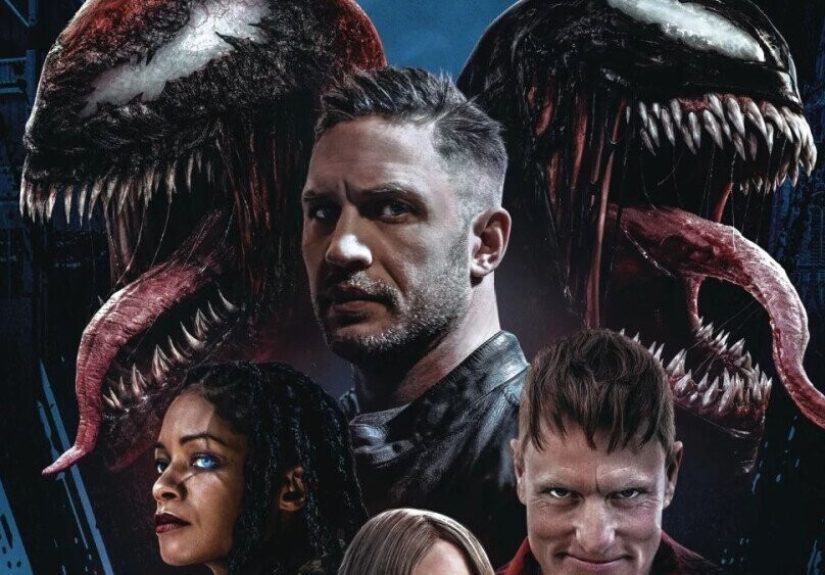
Before Venom: Let There Be Carnage put Woody Harrelson under a bright red symbiote and let him chew scenery like it owed him rent, Carnage had already done something even stranger: he headlined a haunted house at Universal Orlando. Yes, really. Not a rumor, not a fever dream, not one of those weird internet stories that turns out to be a blurry Photoshop from 2007. In 2002, Marvel’s most gleefully chaotic villain took over a Halloween Horror Nights attraction called Maximum Carnage, complete with a companion scare zone that imagined a world where the heroes had already lost.
That alone is wild enough. But the story gets better, and by “better,” I mean more delightfully awkward for everyone in a corporate conference room. Over the years, fans and theme-park historians have repeated the same basic claim: Marvel reportedly hated the whole thing. The reasons vary depending on who’s telling the story, but the common thread is that the attraction pushed Marvel’s characters into a darker, more defeated horror setting than the company was comfortable with. Since then, the haunted-house version of Carnage has become one of those perfect pop-culture footnotes: too bizarre to invent, too on-brand for Carnage to ignore, and too fascinating to stay buried in the fog machine.
And honestly, if any Marvel villain was built for a haunted house, it was always going to be Carnage. Doctor Doom is theatrical. Green Goblin is personal. Magneto has too much ideology for a maze queue. Carnage, meanwhile, is pure nightmare fuel with great posture. He is the comic-book equivalent of a warning label with teeth.
Carnage Was Always Marvel’s Most Obvious Horror Villain
To understand why the haunted-house idea made weird sense, you have to start with what Carnage was designed to be in the first place. When Marvel introduced the character in the early 1990s, the idea was not to make a more complicated Venom. It was to make a worse one. A much worse one. Venom already worked as a threatening antihero-villain hybrid, but Carnage was created as a darker answer to the question, “What happens when a symbiote bonds with someone who has absolutely no brakes?”
The answer, as Marvel readers quickly learned, was Cletus Kasady: a serial killer whose bond with the Carnage symbiote felt less like a partnership and more like a nightmare finding its perfect apartment. Where Venom often acted with some warped sense of rules, Carnage had no interest in rules at all. He was not trying to protect anyone, reform anyone, or even build an empire in the classic supervillain way. He wanted chaos. He wanted fear. He wanted mayhem with the enthusiasm of a guy who hears the phrase “public safety” and responds with interpretive screaming.
That is why Carnage stood out almost immediately. He was never just another Spider-Man villain in a crowded lineup. He was the villain who made Spider-Man’s moral code feel fragile. In many Carnage stories, the tension is not simply whether Spider-Man can win. It is whether Spider-Man can keep being Spider-Man while facing someone who seems to exist only to prove that restraint has limits.
The 1993 crossover Maximum Carnage helped cement that reputation. The storyline threw Carnage into a larger citywide nightmare, pulled in a wide bench of heroes and antiheroes, and treated his violence like a contagion. It was loud, excessive, very 1990s, and exactly the kind of thing that would someday make theme-park creatives say, “You know what this needs? Strobe lights.”
So Yes, Universal Really Built A Carnage Haunted House
In 2002, Halloween Horror Nights moved to Islands of Adventure for its “Islands of Fear” event. That location shift opened the door for themed scare zones and houses tied to the park’s lands, including Marvel Super Hero Island. Universal’s official event descriptions made the setup clear: one experience, called Island Under Siege, imagined that the superheroes had been defeated and the island had fallen under Carnage’s control. The house itself, Maximum Carnage, invited guests into Carnage’s secret hideout, a maze-like lair built around the villain’s brand of unhinged destruction.
That premise was already doing something more provocative than a typical comic-book overlay. It was not simply “Here comes a bad guy, watch out.” It was “The good guys are gone, the worst-case scenario already happened, and now you’re wandering through the leftovers.” That is a very different emotional pitch. It takes the colorful certainty of superhero storytelling and replaces it with horror logic: order has collapsed, help is not coming, and the monster is home.
For a Halloween event, that is a strong idea. For a family-facing superhero brand, it is also the kind of idea that can make licensors start rubbing their temples. Carnage was the perfect centerpiece because he already felt less like a rogue and more like an outbreak. Reports and surviving descriptions suggest the area featured Marvel-themed villains, generic henchmen, and environmental signs that the heroes had lost control. Some longtime fan accounts go much further, describing props tied to fallen heroes. Those more graphic details remain unconfirmed and are best treated as part of the attraction’s legend rather than clean fact.
That distinction matters. The true story is already fascinating without adding extra seasoning from internet folklore. We know the attraction existed. We know the premise centered on a Carnage victory. We know Marvel characters were used as part of a Halloween Horror Nights experience. And we know that, afterward, Marvel-themed HHN content in that space effectively disappeared. That is enough to make the whole thing feel like a corporate “what were we thinking?” moment frozen in amber.
Why Marvel Reportedly Hated It
Here is where the story turns from documented event history into informed, repeated reporting. No widely circulated public statement from Marvel lays out a neat, official list titled “Reasons We Regret Letting Carnage Borrow The Keys.” But multiple retrospectives over the years repeat the same broad explanation: Marvel allegedly objected to seeing its heroes presented as defeated, ruined, or dead-adjacent in a public theme-park horror environment.
And, honestly, you can see the problem. Superhero brands live and die on iconography. Captain America’s shield is not just a prop; it is a symbol. Spider-Man is not just a character; he is a promise that panic can be overcome by decency, quips, and improbable upper-body strength. When you place those symbols inside a haunted experience built on dread, helplessness, and villain triumph, you are not merely doing a spooky overlay. You are temporarily rewriting the emotional contract of the brand.
For horror fans, that sounds deliciously transgressive. For brand guardians, it sounds like the beginning of a legal memo.
The reported objection also makes sense in the context of the early 2000s. Marvel at that time was not yet the polished machine that would later dominate blockbuster cinema, but it was still deeply protective of its characters as commercial assets. A Halloween event where children or families might see Marvel iconography reframed as the aftermath of a villain takeover could easily feel off-message. Carnage was not being treated as a villain to be overcome. He was, for one fog-soaked season, the landlord.
That is the key difference. Brands can tolerate danger. They often get squeamish about defeat.
Why The Haunted House Fit Carnage Better Than Almost Any Screen Adaptation
One reason this strange chapter still fascinates fans is that a haunted house may have been a more natural medium for Carnage than film or television ever was. Carnage works best when he feels unstable, invasive, and too close for comfort. A comic panel can capture that with art. A haunted maze can capture it with physical space. You are not just watching the villain arrive; you are walking into his territory.
That is powerful. Superhero cinema often has to smooth characters down so they can fit a studio-friendly tone, rating, or franchise plan. Carnage, by contrast, thrives when the atmosphere gets meaner, more claustrophobic, and less orderly. The haunted-house concept lets him stop being “the next bad guy in a sequel” and become what he should be: a full environment. A contamination. A mood problem with teeth.
This may be why the story has survived in fan memory long after the actual attraction disappeared. It represents a moment when a giant licensed property briefly stopped being careful. Long before interconnected cinematic universes became expertly managed ecosystems, here was a major theme-park event willing to say, “What if the villain won and now you have to walk through it?” That is not just bold. That is wonderfully rude.
It also underlines something important about Carnage as a character. He is not memorable simply because he is violent. Plenty of villains are violent. Carnage is memorable because he turns violence into atmosphere. Wherever he goes, he changes the emotional temperature of the room. The room stops being about strategy and starts being about survival. That shift is what horror does best, which is why a Halloween attraction built around Carnage feels less like a gimmick and more like a character finally finding his natural habitat.
The Lost Attraction Became Its Own Kind Of Legend
Part of the appeal today is how incomplete the record feels. This was 2002, not the age of constant livestreams, 4K queue walkthroughs, and seventeen creators arguing about rope-drop strategy before breakfast. Surviving footage is limited. Photos exist, but not in the overwhelming, instantly searchable way modern fans take for granted. That gap has helped the attraction become part documented history, part theme-park ghost story.
And ghost stories, naturally, attract embellishment. That is why the rumored details about especially grim props have lingered so long. Once a thing disappears, people start writing fan fiction with their memory. But even after you separate what is solid from what is speculative, the truth remains odd and compelling enough. Carnage had a Marvel-branded horror playground in one of America’s most visible theme parks, and the whole experiment appears to have ended with everyone quietly agreeing never to do that again.
There is something poetic about that. Carnage is the Marvel villain least suited to polite containment. Of course the most memorable real-world Carnage story ends with a messy aftertaste and a tacit banishment. He did not just headline a haunted house. He apparently made the licensors regret having such a good Halloween idea in the first place.
What This Says About Marvel, Horror, And The Limits Of Brand Control
The deeper reason this story still matters is not merely that it is weird. It is that it reveals a tension that still exists in modern franchise storytelling: fans love it when familiar characters are pushed into unfamiliar tones, but corporations are often less enthusiastic when those experiments threaten the cleanest version of the brand.
Carnage in a haunted house is a perfect example. Fans look at that concept and think, “Finally, someone understood the assignment.” A corporate rights-holder may look at the same concept and think, “Why is our hero land suddenly a post-apocalyptic panic attack?” Neither reaction is irrational. One is driven by creativity. The other is driven by brand stewardship. The haunted house sits right at the collision point between the two.
That collision also explains why the story has aged so well. In a world now dominated by carefully calibrated superhero content, the idea that Universal once turned Marvel Super Hero Island into a villain-run horror zone feels gloriously unfiltered. It belongs to an era when licensors and operators were still discovering where the boundaries actually were. Apparently, one boundary was “Please do not imply our heroes got wrecked by Carnage in front of the churro stand.”
Fair enough. But from a fan perspective, the transgression is exactly what makes the memory sparkle. It was unauthorized in spirit, if not in paperwork. It was too much. It was probably a headache. It was, in other words, deeply Carnage.
The Experience Of Maximum Carnage: Why Fans Still Remember It
Even if you never walked through Maximum Carnage in 2002, it is not hard to understand why the idea stuck with people. A lot of haunted houses are built around fear as a sequence: room, scare, corner, noise, exit, gift shop, emotional recovery via overpriced soda. But the Carnage concept seems to have offered something more immersive than a standard parade of jump scares. It sold guests on the feeling that they had stepped into a version of Marvel where the safety rails had been removed.
That is a very specific kind of thrill. Superhero spaces usually promise empowerment, adventure, and eventual victory. Horror spaces promise the exact opposite. By fusing the two, Universal created a contradiction that would have been instantly exciting to guests. You enter a land associated with larger-than-life heroes, only to find that the emotional grammar has changed. Instead of triumph, there is panic. Instead of rescue, there is aftermath. Instead of “look, your favorite characters,” the pitch becomes “look what happened to the world when your favorite characters lost.”
That reversal matters because it changes how guests process every familiar detail around them. A comic-book environment usually feels energetic and colorful. Under a horror overlay, those same visual cues can become uncanny. Familiarity flips into unease. The bigger and brighter the original setting, the more disturbing it becomes when it is framed as broken or overrun. That is probably why longtime fans describe the Marvel scare zone as so memorable: it was not merely spooky, it was wrong in an intentionally fascinating way.
Carnage also gave the whole experience a central personality. Some haunted houses rely on a collection of monsters. This one had a ringmaster of chaos. Carnage is not subtle, and that is an advantage in live entertainment. He has a striking silhouette, a recognizable color scheme, and a theatrical energy that can dominate a room. Even people with only a basic knowledge of Spider-Man villains understand instantly that this is not a guy handing out neighborhood watch pamphlets. He reads as danger from across the walkway.
Then there is the fun of the “what if?” scenario. Fans love alternate timelines, dark mirrors, and villain-win stories because they let familiar worlds reveal a different face. Maximum Carnage turned that exact impulse into a physical attraction. It asked guests to stop thinking like readers and start thinking like survivors. That is a smart adaptation move, because it translates comic-book stakes into a bodily experience. You are not just told that Carnage took over. You navigate the consequences.
The scarcity of surviving media has only made the memory stronger. Modern attractions are documented to death before opening weekend is over. This one remains hazy around the edges, which gives it the quality of a half-lost urban legend. Fans trade recollections, historians compare descriptions, and the gaps in the archive keep the mystique alive. Ironically, the very fact that it was temporary, controversial, and never repeated may be the reason it still feels so alive. It did not last long enough to become routine. It lasted just long enough to become lore.
And maybe that is the most Carnage ending imaginable. He showed up, disrupted the space, made everybody uncomfortable, and vanished leaving stories behind. For a villain whose entire appeal lies in turning order into panic, that is not just fitting. That is excellent branding, even if the brand may not have loved it.
Conclusion
Carnage’s haunted-house detour remains one of the strangest and most revealing footnotes in Marvel-adjacent history. It was not a movie, not a limited series, not a prestige reinvention. It was a theme-park horror experiment that understood something essential about the character before a lot of larger adaptations did: Carnage works best when he is allowed to infect the whole atmosphere.
That is why the story still travels. It captures a rare moment when superhero branding, horror design, and early-2000s chaos briefly shook hands and immediately regretted it. Universal got a killer Halloween concept. Fans got a cult legend. Marvel, reportedly, got a cautionary tale. And Carnage? Carnage got exactly what he always wants: one glorious stretch of disorder where he was impossible to ignore.