Table of Contents >> Show >> Hide
- Introduction: Why This Big, Loud Family Still Gets People Talking
- How These Cheaper by the Dozen Rankings Were Decided
- Ranking the Cheaper by the Dozen Movies From Best to Weakest
- Where the Original Book Fits in the Ranking
- Best Characters Across the Cheaper by the Dozen Franchise
- Critics vs. Audiences: Why Fans Still Love These Movies
- My Final Cheaper by the Dozen Ranking
- Personal Experiences and Reflections on Cheaper by the Dozen Rankings And Opinions
- Conclusion: The Best Cheaper by the Dozen Version Depends on Your Mood
Note: This article ranks the major Cheaper by the Dozen movies and related adaptations based on story quality, family-comedy value, audience rewatchability, connection to the original source material, performances, and overall cultural staying power.
Introduction: Why This Big, Loud Family Still Gets People Talking
Cheaper by the Dozen is one of those titles that almost everyone recognizes, even if they remember different versions of it. Some people think first of the 1948 semi-autobiographical book by Frank Bunker Gilbreth Jr. and Ernestine Gilbreth Carey. Others picture Steve Martin trying to survive a house full of children, pets, spilled food, and emotional chaos. Younger viewers may know the 2022 Disney+ remake with Gabrielle Union and Zach Braff. In other words, this franchise is like a family reunion: several generations are present, everyone has opinions, and at least one person is probably yelling from another room.
The idea behind Cheaper by the Dozen is simple but surprisingly flexible: a large family tries to function in a world that was clearly not designed for large families. The original story was inspired by the real Gilbreth family, led by efficiency experts Frank and Lillian Gilbreth. Later movie versions took that foundation and reshaped it for different eras, adding modern parenting dilemmas, sports careers, blended families, sibling rivalries, teen drama, and enough household noise to make a dishwasher file for early retirement.
But which version is actually the best? Which one is the most fun? Which one holds up? And which one feels like it needed either a sharper script or a very stern family meeting? This ranking looks at the main Cheaper by the Dozen adaptations with honest opinions, specific examples, and a little affectionate teasing. Because when a franchise has twelve kids, multiple remakes, and several versions of family chaos, it deserves a proper roll call.
How These Cheaper by the Dozen Rankings Were Decided
Before ranking the films, it helps to set a fair standard. A great Cheaper by the Dozen story needs more than a crowded dinner table. It should have warmth, memorable characters, believable family tension, and comedy that comes from personality rather than just volume. A dozen children running through a hallway is not automatically a joke. It becomes funny when the scene tells us something about who these people are.
Ranking Criteria
The rankings below consider five main factors: connection to the original spirit of the story, quality of performances, balance between humor and heart, rewatch value, and how well the film uses its huge cast. Large-family comedies can easily become a blur of names, faces, backpacks, and unidentified sticky substances. The best versions make the family feel crowded but not confusing.
Audience reaction also matters. Critics and viewers have not always agreed on this franchise. The 2003 film, for example, received mixed-to-negative critical reviews, yet many families still remember it fondly as a holiday-era comfort watch. That gap between professional criticism and family nostalgia is part of what makes ranking Cheaper by the Dozen so interesting.
Ranking the Cheaper by the Dozen Movies From Best to Weakest
1. Cheaper by the Dozen (1950) The Best Overall Version
The 1950 version earns the top spot because it understands what made the original material special. It is not just a movie about having twelve children; it is a movie about an unusual family shaped by unusual parents. Starring Clifton Webb as Frank Gilbreth and Myrna Loy as Lillian Gilbreth, the film has a classic Hollywood polish that gives the story charm, structure, and a strong emotional center.
This version is also the closest in spirit to the book. The real-life inspiration matters because the Gilbreths were not merely “a big family.” Frank and Lillian were pioneers in efficiency and motion study, and the humor comes from Frank applying workplace logic to family life. That means the children are not just props for slapstick. They are part of a household experiment in organization, discipline, love, and controlled mayhem. Well, controlled-ish.
The 1950 film’s biggest strength is its tonal balance. It has broad comedy, old-fashioned sentiment, and moments of genuine sadness. The ending carries emotional weight because the story is not afraid to show that family life includes loss as well as laughter. While some modern viewers may find the pacing slower or the parenting style dated, the movie has a sturdy emotional backbone. It feels like a family memory polished by time rather than a sitcom episode stretched to feature length.
Best for: viewers who want the most classic, source-faithful, emotionally complete version.
Opinion: It may not be the funniest version for modern kids, but it is the richest version. If the franchise were a family dinner, the 1950 film would be the grandparent telling the best stories while everyone else pretends not to be listening.
2. Cheaper by the Dozen (2003) The Most Rewatchable Crowd-Pleaser
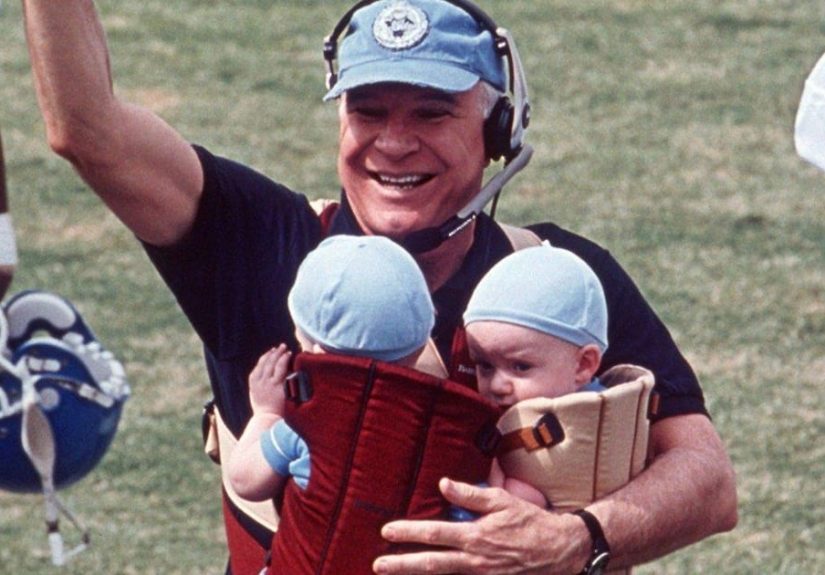
The 2003 Cheaper by the Dozen is probably the version most millennials and older Gen Z viewers remember first. Directed by Shawn Levy and starring Steve Martin and Bonnie Hunt as Tom and Kate Baker, this remake moves far away from the Gilbreth family and turns the concept into a modern suburban comedy. Instead of efficiency experts, we get a football coach, a writer, twelve kids, and a house that looks like it has been personally attacked by cereal.
Critically, the film has never been a darling. Many reviewers found it overly chaotic, predictable, and only loosely connected to the original story. Those criticisms are fair. The movie often chooses pratfalls over subtlety, and some children get far more personality than others. When you have twelve kids, character development becomes a mathematical emergency.
Still, the 2003 film works because Steve Martin and Bonnie Hunt bring real warmth to the chaos. Martin’s Tom Baker is frantic but loving, ambitious but flawed. Hunt’s Kate gives the movie emotional steadiness, especially when the story focuses on how one parent’s dream can disrupt an entire family system. The movie also benefits from a cast full of recognizable young performers, including Hilary Duff, Tom Welling, Piper Perabo, Alyson Stoner, and others who help give the household a lively early-2000s personality.
The best scenes are not always the loudest ones. The strongest moments come when the Baker children feel displaced, ignored, or overwhelmed by change. The comedy may be broad, but the emotional idea is relatable: families can love each other deeply and still make each other completely bananas before breakfast.
Best for: nostalgic family movie nights, early-2000s comedy fans, and viewers who want fast-paced chaos with a soft heart.
Opinion: It is not the most refined film in the franchise, but it is the easiest to rewatch. It has that cable-TV comfort factor: you find it halfway through, plan to watch five minutes, and suddenly you are emotionally invested in a frog, a football job, and a family crisis involving relocation.
3. Cheaper by the Dozen 2 (2005) The Fun but Overstuffed Vacation Sequel
Cheaper by the Dozen 2 brings back the Baker family and sends them into a vacation rivalry with another large family led by Jimmy Murtaugh, played by Eugene Levy. On paper, this is a smart sequel idea. If one giant family creates chaos, two giant families should create double the chaos, right? In practice, the movie proves that double chaos can also mean double crowd control.
The sequel has a lighter, sunnier feel than the 2003 movie. It leans into summer-camp energy, family competition, lake-house antics, and broad physical comedy. Steve Martin and Bonnie Hunt remain charming, and Eugene Levy is a strong addition because he knows exactly how to play an overconfident rival dad without pushing the performance into cartoon villain territory.
However, the film struggles with overcrowding. The first movie already had difficulty giving every Baker child a meaningful role. The sequel adds another family, more romantic subplots, more competitions, and more vacation hijinks. The result is pleasant but scattered. Some scenes are funny, especially when the adult rivalry becomes more childish than anything the kids are doing. But the emotional stakes feel thinner than in the first remake.
One of the sequel’s better ideas is showing parents who have trouble accepting that their children are growing up. Tom Baker’s anxiety about losing the family’s old closeness is relatable, and it gives Steve Martin something more human to play than simple panic. Unfortunately, the movie often rushes past that theme to get to another gag, another contest, or another scene of people falling into water.
Best for: fans of the 2003 film who want a breezy sequel with summer vacation energy.
Opinion: It is not essential, but it is likable. Think of it as leftover pizza from a family party: not exactly gourmet, slightly messy, but still enjoyable when you are in the right mood.
4. Cheaper by the Dozen (2022) The Most Modern but Least Memorable Version
The 2022 Disney+ remake had a promising setup. Starring Gabrielle Union and Zach Braff, the film reimagines the Baker family as a blended, multiracial household managing a busy home life and a family business. That update gives the story a fresh angle and creates opportunities to explore modern parenting, identity, privilege, racial dynamics, co-parenting, and work-life balance. On concept alone, this version had real potential.
The problem is execution. The 2022 film often feels like it wants to discuss meaningful topics but does not have enough time, depth, or sharpness to develop them fully. Some ideas are introduced, touched briefly, and then quickly softened so the movie can return to safe family-comedy territory. The result is pleasant in places but rarely surprising.
Gabrielle Union is one of the film’s strongest assets. She brings charisma and credibility even when the script gives her familiar material. Zach Braff also has experience playing anxious, likable characters, and he fits the overwhelmed-parent mold well. The issue is not the cast. The issue is that the movie has too many characters and too many themes competing for attention. Ironically, this version may have worked better as a streaming series, where each child and parent could get more room to breathe.
That said, the 2022 version deserves credit for trying to make the franchise relevant to contemporary families. It recognizes that the modern American household can be blended, complicated, entrepreneurial, diverse, and emotionally messy in ways older versions did not explore. Unfortunately, trying to update everything at once makes the movie feel more like a pilot presentation than a fully satisfying standalone film.
Best for: viewers interested in a modernized family-comedy approach and fans of Gabrielle Union or Zach Braff.
Opinion: It has good ingredients but an uneven recipe. Somewhere inside this movie is a stronger series waiting to be made, possibly with fewer rushed subplots and more time for the kids to become actual people rather than moving pieces in a very crowded living room.
Where the Original Book Fits in the Ranking
If the original Cheaper by the Dozen book is included in the conversation, it deserves a special position above the films. Published in 1948, the book has the advantage of authenticity. It is funny because it comes from remembered family life, not because a screenwriter needed someone to slip on something at minute forty-two.
The book’s humor comes from the Gilbreth household’s unusual mix of affection and efficiency. Frank Gilbreth Sr. approached family management like a professional system, which sounds terrifying until you realize it also created endless comic situations. The children were not merely living in a home; they were living inside a loving, noisy, constantly optimized machine. Imagine a family chore chart designed by someone who thinks brushing your teeth could be improved with industrial engineering. That is the kind of absurdity the book captures beautifully.
Compared with the later remakes, the book has more personality and a clearer identity. The 2003 and 2022 films borrow the title and the large-family concept, but they mostly abandon the specific Gilbreth context. That is not automatically bad, but it means the book remains the purest version of the idea.
Best Characters Across the Cheaper by the Dozen Franchise
Best Parent: Kate Baker in the 2003 Film
Bonnie Hunt’s Kate Baker is one of the most grounded characters in the modern films. She is warm without being bland and firm without becoming the standard movie “strict mom.” She often feels like the emotional glue holding the Baker family together, especially when Tom’s career choices create tension at home.
Funniest Parent: Tom Baker in the 2003 Film
Steve Martin’s gift for physical comedy makes Tom Baker memorable. His reactions are often funnier than the actual chaos. Whether he is dealing with parenting disasters, career pressure, or a house that seems seconds away from filing a lawsuit, Martin gives the movie its comic engine.
Best Rival: Jimmy Murtaugh in Cheaper by the Dozen 2
Eugene Levy’s Jimmy Murtaugh is exactly the kind of rival a family sequel needs. He is smug, competitive, and ridiculous, but not so cruel that he ruins the movie’s family-friendly tone. His rivalry with Tom Baker gives the sequel its clearest comic conflict.
Most Underrated Version: The 1950 Film
Many modern viewers skip the 1950 film because it looks older, sounds older, and does not have the frantic pacing of a contemporary comedy. That is a mistake. It is the most complete adaptation and the one that best understands why this story became famous in the first place.
Critics vs. Audiences: Why Fans Still Love These Movies
One of the most interesting things about Cheaper by the Dozen is the gap between critical opinion and audience affection. Critics often judge these films by structure, originality, pacing, and comedic precision. On those terms, the modern movies can be easy targets. They are sentimental, crowded, predictable, and sometimes louder than they are clever.
Families, however, often watch them differently. For many viewers, the appeal is not cinematic perfection. It is comfort. The 2003 movie in particular became a nostalgic favorite because it captures a very specific kind of family chaos: messy mornings, sibling arguments, parental exhaustion, and the feeling that love can survive even when everyone is talking at the same time.
That does not mean the films are beyond criticism. Nostalgia can make a movie feel better than it technically is. But family comedies are not always built to be masterpieces. Sometimes they are built to be watched on a couch with snacks, background noise, and at least one person saying, “Wait, which kid is that?”
My Final Cheaper by the Dozen Ranking
- Cheaper by the Dozen (1950): Best overall, most faithful in spirit, and emotionally strongest.
- Cheaper by the Dozen (2003): Most rewatchable, funniest modern version, and the biggest nostalgia winner.
- Cheaper by the Dozen 2 (2005): Enjoyable but overcrowded, with a fun family-rivalry setup.
- Cheaper by the Dozen (2022): Modern and well-intentioned, but too rushed and underdeveloped.
Personal Experiences and Reflections on Cheaper by the Dozen Rankings And Opinions
Watching and ranking Cheaper by the Dozen is a funny experience because these movies do not behave like traditional “best film wins” rankings. If you judge only by craft, the 1950 film has the strongest case. If you judge by childhood memory, the 2003 movie may sprint into first place wearing mismatched socks and carrying a frog. If you judge by modern relevance, the 2022 version has the most updated concept, even if it does not fully deliver. That is what makes the topic more interesting than a simple list.
For many people, the 2003 version is not just a movie; it is a memory of family movie nights, school vacations, cable television, and an era when Steve Martin could make parental panic look like an Olympic event. The movie’s flaws are obvious when you revisit it as an adult. Some jokes are too broad. Some characters barely get enough screen time to register. The plot moves exactly where you expect it to move. And yet, there is still something comforting about it. It understands that a family can be loving and dysfunctional at the same time. It also understands that a house with twelve kids would not look like a minimalist design magazine unless the magazine were called Emergency Cleanup Monthly.
The 1950 movie creates a different experience. It feels less like modern chaos and more like opening an old family album. The humor is gentler, the performances are more theatrical, and the emotional turns land with an old-Hollywood sincerity. It may not make younger viewers laugh as quickly as the 2003 remake, but it gives the story a sense of history. You can feel the connection to the original Gilbreth family, and that connection matters. The best parts are not just about having many children; they are about a father whose obsession with efficiency becomes both hilarious and deeply human.
The 2005 sequel is the kind of movie that works best when expectations are friendly. It is not trying to reinvent family comedy. It wants to give fans more of the Bakers, add a rival family, toss everyone near a lake, and see what happens. Sometimes that is enough. The problem is that the sequel has so many characters that it occasionally feels like the casting director invited an entire school district. Still, it has warmth, and Eugene Levy adds a welcome spark.
The 2022 remake is the most complicated to judge. I like the idea of updating the family for a more diverse and blended modern America. That direction makes sense. The franchise needed a reason to exist again beyond name recognition. But the film tries to cover so much that its emotional moments do not always have time to settle. My biggest opinion is that the 2022 concept would have worked better as an eight-episode series. Give each child an episode. Give the parents room to argue, grow, fail, and recover. Let the family business breathe. Let the comedy come from character instead of compression.
In the end, Cheaper by the Dozen rankings depend on what you want from the franchise. Want the best adaptation? Choose 1950. Want the most fun? Choose 2003. Want harmless sequel comfort? Choose 2005. Want a modern version with unrealized potential? Choose 2022. The beautiful thing about this franchise is that every version says something about the era that made it. The family changes, the jokes change, the parenting problems change, but the central idea remains the same: family life is expensive, exhausting, ridiculous, and somehow still worth showing up for. Even when twelve people need the bathroom at once.
Conclusion: The Best Cheaper by the Dozen Version Depends on Your Mood
The best Cheaper by the Dozen ranking is not only about scores, reviews, or box-office numbers. It is about what kind of family story you want. The 1950 film is the strongest and most faithful adaptation. The 2003 remake is the most entertaining and rewatchable for many modern audiences. The 2005 sequel is a pleasant bonus chapter, while the 2022 version is a thoughtful but uneven attempt to refresh the formula.
Overall, the franchise works because large families are naturally cinematic. There is always movement, conflict, comedy, and emotion. Someone is growing up, someone is melting down, someone is hiding something, and someone probably forgot where they put the car keys. At its best, Cheaper by the Dozen reminds viewers that family chaos can be frustrating, funny, and deeply meaningful all at once.