Table of Contents >> Show >> Hide
- What Are Florentine Cookies?
- Why This Classic Florentine Cookie Recipe Works
- Classic Florentine Cookie Recipe
- How Florentine Cookies Should Look and Taste
- Common Florentine Cookie Problems and How to Fix Them
- Flavor Variations That Still Respect the Classic
- How to Store Florentine Cookies
- Serving Ideas for Florentine Cookies
- Experience: What Baking a Classic Florentine Cookie Recipe Is Really Like
- Conclusion
There are cookies you eat by the handful, and then there are Florentines: the elegant little overachievers of the cookie tin. Thin, lacy, buttery, nutty, and usually finished with a glossy swipe of chocolate, Florentine cookies somehow manage to look fancy without demanding pastry-school drama. That is part of their charm. The other part is the sound they make when you bite into one: a crisp little snap that says, “Yes, I was worth turning on the oven for.”
If you have been hunting for a classic Florentine cookie recipe that delivers real caramel flavor, delicate crunch, and bakery-style looks, this is the one to keep. This version sticks to the traditional spirit of almond Florentines, with butter, sugar, honey, cream, sliced almonds, orange zest, and semisweet chocolate. The result is a batch of Italian lace cookies that tastes rich and festive without being fussy. They are perfect for holiday cookie trays, afternoon coffee, edible gifts, or those moments when you want dessert to look like it has its life together.
What Are Florentine Cookies?
Florentine cookies are ultra-thin, crisp cookies made from a caramel-like base mixed with nuts, usually almonds, and sometimes accented with citrus peel, candied fruit, or chocolate. In the United States, they are often grouped with lace cookies because of their airy, web-like appearance once the batter spreads in the oven. Unlike a chewy chocolate chip cookie or a soft sugar cookie, a Florentine is more delicate, more brittle, and a lot more dramatic. It is basically the cookie equivalent of wearing sequins to brunch.
The best Florentines balance a few key things at once: deep buttery sweetness, toasted nut flavor, a whisper of orange, and a clean crisp finish. Chocolate is not mandatory, but it is very common for good reason. A thin layer on the bottom adds bitterness and structure, and it makes the cookie feel extra polished with almost no extra effort.
Why This Classic Florentine Cookie Recipe Works
This recipe works because it respects what Florentines actually are: caramel-nut cookies, not regular drop cookies pretending to be delicate. The base is cooked briefly on the stove so the sugar, butter, honey, and cream start working together before the cookies ever hit the oven. A small amount of flour stabilizes the mixture, while sliced almonds provide texture and that signature lacy look.
Orange zest gives the cookies a subtle classic flavor without making them taste like potpourri. The batter is scooped in tiny portions and spaced generously because Florentines spread with enthusiasm. Once baked until deeply golden, they cool into that signature crisp texture. Finally, a thin chocolate layer on the flat side keeps them from tasting one-note sweet and makes them feel straight out of a fancy bakery box.
Classic Florentine Cookie Recipe
Ingredients
- 1 3/4 cups sliced almonds, lightly chopped
- 1/2 cup unsalted butter
- 2/3 cup granulated sugar
- 2 tablespoons light brown sugar
- 2 tablespoons honey
- 1/3 cup heavy cream
- 3 tablespoons all-purpose flour
- 1/2 teaspoon fine salt
- 1 teaspoon finely grated orange zest
- 1/2 teaspoon vanilla extract
- 6 ounces semisweet chocolate, chopped or chips
Equipment
- 2 large baking sheets
- Parchment paper
- Medium saucepan
- Mixing bowl and spatula
- Small cookie scoop or measuring spoon
- Wire rack
- Offset spatula or butter knife for the chocolate
Instructions
- Toast the almonds. Preheat your oven to 350°F. Spread the sliced almonds on a baking sheet and toast for 5 to 7 minutes, just until fragrant and lightly golden. Cool completely. This step is small but mighty; it brings out the nutty flavor that makes a classic Florentine cookie recipe taste like the real deal.
- Prepare the pans. Line two baking sheets with parchment paper. Do not skip the parchment. Florentine cookies are sticky while hot and dramatically less charming when welded to the pan.
- Make the caramel base. In a medium saucepan over medium heat, combine the butter, granulated sugar, brown sugar, honey, and heavy cream. Stir until the butter melts and the mixture looks smooth. Bring it to a gentle simmer for about 1 minute.
- Add the dry ingredients. Remove the saucepan from the heat. Whisk in the flour, salt, orange zest, and vanilla until smooth. Fold in the toasted almonds until everything is evenly coated. Let the mixture cool for about 5 minutes so it thickens slightly.
- Scoop carefully. Drop level teaspoons of batter onto the prepared baking sheets, spacing them at least 3 inches apart. Yes, that sounds excessive. No, it is not. These cookies spread like they have urgent plans.
- Bake. Bake one sheet at a time for 8 to 10 minutes, or until the cookies are bubbling and a rich golden brown around the edges and through the center. If they are pale, they will likely cool soft instead of crisp.
- Cool before moving. Let the cookies cool on the baking sheet for 5 minutes, then transfer them to a wire rack. They will firm up as they cool, so resist the urge to poke them like a tiny caramel science experiment.
- Add the chocolate. Melt the semisweet chocolate in a microwave-safe bowl in 20-second bursts, stirring between each, or melt gently over a double boiler. Spread a thin layer on the flat side of each cooled cookie, or drizzle over the tops if you prefer a more rustic look.
- Set and serve. Let the chocolate set completely before stacking or serving. Once finished, your almond Florentines should be glossy, crisp, and just dramatic enough to make every other cookie on the platter feel underdressed.
How Florentine Cookies Should Look and Taste
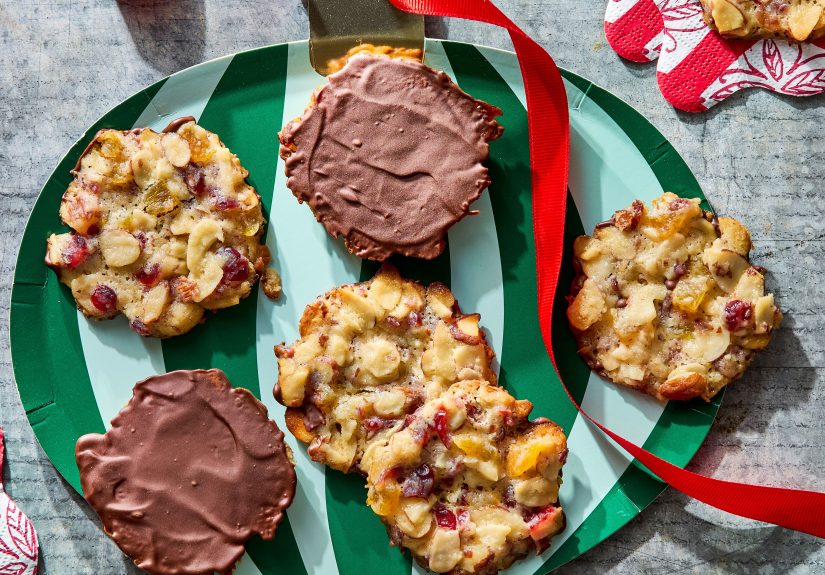
A properly baked Florentine cookie should be thin enough to see tiny holes through the center, with a golden amber color and crisp edges. The texture should be brittle and delicate, not cakey, not soft, and definitely not thick. Flavor-wise, you want toasted almond, buttery caramel, and a gentle citrus brightness. The chocolate should support the cookie, not overpower it. Think elegant, not chocolate-bar ambush.
If your first batch comes out a little wonky, welcome to the club. Florentines are simple, but they are precise. Once you understand the spread, the portion size, and the baking color, they become much more predictable.
Common Florentine Cookie Problems and How to Fix Them
The Cookies Spread Into One Giant Cookie Continent
This usually means the portions were too large or too close together. Use only a teaspoon of batter per cookie, and leave plenty of room between each one. Bake one pan at a time if your oven tends to run unevenly.
The Cookies Stayed Soft
They probably needed another minute or two in the oven. Florentine cookies need a deep golden finish to crisp as they cool. Pale equals floppy. Golden equals glorious.
The Cookies Tasted Too Sweet
Use dark or semisweet chocolate, not milk chocolate. Keep the salt in the dough. The little savory notes matter more than you think.
The Cookies Broke When You Moved Them
Let them cool slightly on the sheet before lifting. Moving Florentines while they are still molten is like trying to relocate stained glass before it hardens.
The Chocolate Would Not Set
Spread it thinly and let the cookies rest in a cool room. If your kitchen feels tropical, chill the finished cookies briefly until the chocolate firms up.
Flavor Variations That Still Respect the Classic
A classic Florentine cookie recipe is already lovely, but it also gives you room to play without losing the plot. Try swapping part of the almonds for hazelnuts or pistachios if you want a richer nut profile. Add a tablespoon of finely chopped candied orange peel for a more old-world bakery flavor. A pinch of cinnamon can make them feel extra holiday-ready, while a tiny bit of ginger adds warmth without turning the cookie into a spice cabinet accident.
You can also sandwich two Florentines together with chocolate if you want a more indulgent dessert. That said, the classic single-cookie format remains the most elegant. It is delicate, crisp, and easier to nibble while pretending you only planned to have one.
How to Store Florentine Cookies
Store cooled cookies in an airtight container with parchment between layers. They are best within 3 to 5 days, when the texture is still crisp and the chocolate still looks polished. If your kitchen is humid, keep them in a cooler spot so they stay snappy instead of soft.
Because Florentines are so thin and delicate, they are not the best candidate for long freezer storage after baking. The texture can suffer, and that lovely crispness is the whole point. These are the kind of cookies that reward short-term planning and immediate eating, which is frankly a lifestyle I can support.
Serving Ideas for Florentine Cookies
Florentine cookies are at home on a Christmas cookie tray, beside espresso after dinner, or wrapped in a bakery box with tissue paper for gifting. They also look beautiful next to vanilla ice cream, panna cotta, or a simple bowl of berries. If you are hosting, stack them on a plate with shortbread and truffles for contrast. The lacey shape makes everything else around them look thoughtfully curated, even if your actual party plan was just “put snacks on plates and hope for the best.”
Experience: What Baking a Classic Florentine Cookie Recipe Is Really Like
There is something unforgettable about the first time you make Florentines. Most home bakers are used to cookies that behave like cookies: scoop, bake, cool, eat, repeat. Florentines are a little more theatrical. The batter looks too loose. The spacing looks too wide. The cookies in the oven look like they are melting into abstract art. Then, almost magically, they settle into thin amber rounds with lacy edges and that distinctive glassy shine. It feels a bit like a baking trust exercise.
The experience is especially fun during the holidays, when everyone seems to expect cookies that are either frosted, spiced, or wearing enough sprinkles to qualify as craft supplies. Florentines walk in with an entirely different energy. They are not loud. They are not pillow-soft. They do not need a mountain of icing to make an impression. They just sit there looking elegant and suspiciously expensive, which is deeply satisfying when you know they came from your own kitchen and a saucepan.
They are also a great reminder that texture can be just as exciting as flavor. A classic chocolate chip cookie delivers comfort. A brownie delivers richness. But a Florentine delivers contrast. First comes the delicate snap, then the buttery caramel, then the toasted almond flavor, and finally that little finish of chocolate that ties it all together. It is a cookie you notice. People rarely eat one absentmindedly. They take a bite, pause, and usually say something along the lines of, “Wait, what is in this?” That is always a good sign.
Another interesting part of the Florentine experience is how quickly you learn restraint. With many cookie recipes, a larger scoop just means a larger cookie. With Florentines, a larger scoop can mean you accidentally invent a nutty stained-glass pizza. These cookies teach precision in a gentle but memorable way. You learn to portion carefully, trust the parchment, and let color guide you. Once you get the hang of that, the process becomes oddly relaxing.
They are also excellent conversation cookies. Bring them to a cookie exchange, and someone will ask whether they came from a bakery. Pack them in a gift tin, and the recipient will probably save one for later because they look too pretty to eat right away. Serve them with coffee after dinner, and suddenly the whole evening feels more polished. Florentines have that effect. They make ordinary moments seem slightly more glamorous without requiring gold leaf, a culinary torch, or a nervous breakdown.
For many bakers, the best part is the balance between rustic and refined. No two Florentines are exactly identical, and that is part of their charm. They are handmade, lacy, a little unpredictable, and still beautiful. In a world full of desserts that beg for perfection, Florentines prove that elegance can come from a little spreading, a little bubbling, and a very good layer of chocolate.
Conclusion
If you want a cookie that feels festive, looks impressive, and tastes like a perfect collision of caramel, almonds, citrus, and chocolate, this classic Florentine cookie recipe deserves a permanent place in your baking rotation. It is simple enough for a confident home baker, special enough for gifting, and dramatic enough to make even a modest cookie tray look like it got a makeover. Bake them deeply golden, give them room to spread, and do not skimp on the chocolate. Florentine cookies may be delicate, but their flavor absolutely is not.