Table of Contents >> Show >> Hide
- What “Clock Of Clocks Expands, Goes Digital” Really Means
- From Kinetic Art Experiment to Serious Design Category
- Why the New Expansion Is a Big Deal
- How Analog Hands Learned Digital Manners
- The Tech Behind the Magic
- Why People Love This Genre So Much
- What Expansion and Digitization Mean for Design
- Living With a Clock of Clocks: The Experience Is Half the Point
- Conclusion
Every once in a while, a clock comes along that makes ordinary wall clocks look like they gave up halfway through the assignment. That is exactly the charm of the modern “clock of clocks” idea: dozens of tiny analog faces work together to create one larger digital display, turning timekeeping into choreography. It is part sculpture, part engineering flex, part “wait, how is that even working?” moment.
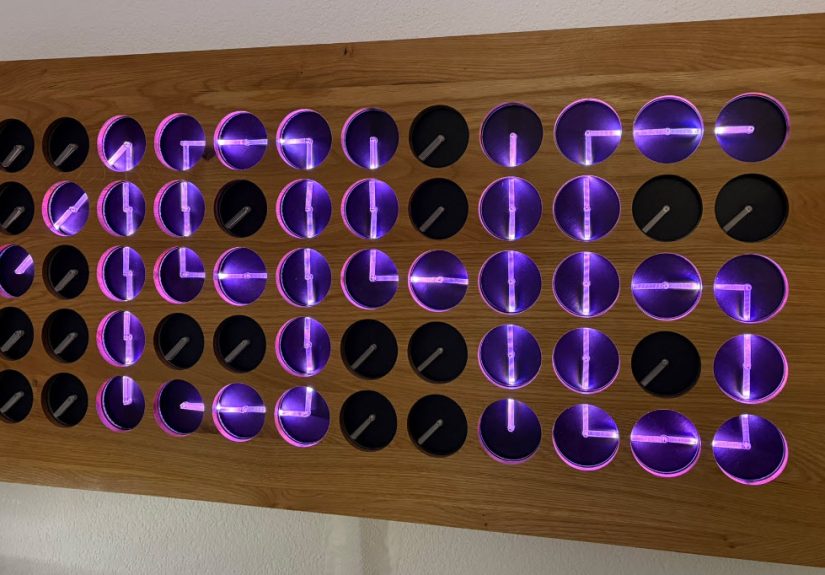
The latest wave of attention around the concept comes from an expanded build that pushes the format beyond novelty and deeper into programmable design. In its newest form, the clock-of-clocks idea is not just larger. It is smarter, more modular, more networked, and much more obviously digital in the way it is controlled, updated, and experienced. In other words, this is not a retro object pretending the 21st century never happened. It is a mechanical artwork that has fully accepted its software era.
What “Clock Of Clocks Expands, Goes Digital” Really Means
At first glance, the phrase sounds a little contradictory. A clock made of analog clocks goes digital? Yes, and that is exactly the fun of it. The newest generation of clock-of-clocks builds uses physical clock hands and circular faces, but it behaves like a digital display. The hands line up to form readable numerals, symbols, and even short text. Instead of each small clock telling time by itself, the whole array acts like one giant segmented screen with a mechanical soul.
That shift matters because the latest expansion is not just about adding more mini dials for bragging rights. It is about improving resolution, flexibility, and control. A bigger matrix means the display can show clearer forms, more interesting patterns, and more expressive transitions. Think of it as the difference between an early chunky pixel screen and a sharper modern display, except this one whirs, spins, and refuses to be boring.
Calling it “digital” also reflects the way the new build is controlled behind the scenes. Modern clock-of-clocks systems rely on microcontrollers, buses for communication, programmable LEDs, embedded firmware, and wireless control. The face may be analog, but the brain is absolutely digital. It is the horological equivalent of wearing a tailored suit with a smartwatch hidden under the cuff.
From Kinetic Art Experiment to Serious Design Category
The clock-of-clocks idea did not appear out of thin air. Over the last decade and a half, it has evolved from a fascinating concept piece into a recognized design language. Early public fascination centered on Humans since 1982 and its original Clock Clock concept, where 24 analog clocks combined into a single large digital readout. That was the hook: something deeply familiar, the humble clock face, suddenly acting in a way your brain did not expect.
Then the concept grew up. Larger installations such as A Million Times took the same logic and scaled it into immersive kinetic art. Commercial editions like ClockClock 24 brought the idea into homes and design collections, proving that this was not just gallery bait for people who enjoy saying “provocative” at openings. It was an actual product category: a functioning wall clock that also happened to look like time itself was directing a tiny ballet.
That history matters because the new expanded clock-of-clocks build lands in a world that already understands the appeal. People now recognize the format immediately. Analog circles. Spinning hands. Digital numerals emerging from apparent chaos. The newest version builds on that visual grammar, but adds a more open, maker-driven, engineering-first attitude. It is less “limited-edition collectible” and more “let’s see how far we can push this machine.”
Why the New Expansion Is a Big Deal
More clocks means more expressive power
One of the most important developments in the latest version is scale. Moving from smaller arrangements toward a much larger matrix changes what the device can do. With more clock faces in play, the system can create larger digits, cleaner character shapes, richer animations, and more readable effects from a distance. A clock-of-clocks stops being just a time display and starts becoming a true motion graphics surface built from physical parts.
That extra expressive power has a practical payoff. The piece can communicate more than just hours and minutes. With enough faces and proper control, it can display messages, status information, decorative motion sequences, or ambient visuals. It becomes a hybrid object: part clock, part art installation, part low-resolution robotic signboard. That is a wonderfully nerdy sentence, and I mean it as a compliment.
Modularity makes the concept more mature
The expanded build also shows real engineering maturity. Instead of treating each mini clock as a totally isolated widget, the system groups hardware into more efficient modules. That reduces parts count, simplifies manufacturing, and makes the overall architecture more scalable. If earlier clock-of-clocks pieces were proof of concept, this generation looks much more like a platform.
That is the difference between a cool one-off and a reproducible design approach. Once the electronics, firmware, and mechanics become modular, the object can evolve faster. You can build different sizes, different face counts, different enclosures, different lighting schemes, and different interaction modes without reinventing everything from scratch every time.
How Analog Hands Learned Digital Manners
The genius of the clock-of-clocks format is that it does not reject analog design. It repurposes it. Each small dial still has hands. Each hand still rotates. Each circle still looks like a clock face. But taken together, they stop behaving like individual timekeepers and start functioning like coordinated pixels or segmented display elements.
That is where the digital leap becomes most obvious. Traditional analog clocks ask you to interpret position. Digital clocks hand you the answer. A clock of clocks does both. It preserves the physical grace of rotating hands while delivering the legibility of numeric time. You get motion, texture, and surprise without sacrificing readability.
And because the hands are controlled by software, the object can choreograph transitions instead of simply jumping from one minute to the next. That matters more than it sounds. The transition is the show. The clock can swirl, scatter, synchronize, pulse, and then snap into meaning. A normal digital clock changes time. A clock of clocks performs time.
The Tech Behind the Magic
Behind the elegant front panel, the newest expanded build is unapologetically modern. Multiple dual-shaft stepper motors drive the hands. Microcontrollers coordinate motion across grouped circuit boards. Communication happens over an RS-485 bus. Programmable LED rings illuminate the hands and faces. Wireless control adds convenience. And the whole thing is supported by firmware sophisticated enough to manage interaction, timing, commands, and coordinated movement.
This is where “goes digital” stops being metaphorical. The object may look artisanal from across the room, especially when housed in a warm wood enclosure, but it is effectively a distributed computing system with a theatrical front end. Every dial is a physical actuator node. Every lighting effect is software-defined. Every movement path is intentional. That combination is precisely why the format is so compelling: it feels mechanical, but behaves computationally.
There is also something wonderfully honest about the engineering. Unlike a flat screen pretending to be magical, a clock-of-clocks lets you feel the machine-ness of the system. You can sense the motors, the timing, the coordination, the tiny differences in motion. It does not hide its complexity; it turns complexity into character.
Why People Love This Genre So Much
The appeal of clock-of-clocks pieces comes from tension. They are easy to understand and hard to explain at the same time. You know what a clock is. You know what a digital display is. But seeing one become the other through synchronized motion triggers that rare and delightful reaction: your brain understands the result before it fully understands the process.
That makes these clocks unusually sticky in a visual culture full of disposable novelty. They invite repeat viewing. The minute changes are not interruptions; they are events. The delay before the hands settle is not a flaw; it is suspense. A standard bedside clock tells you that it is 8:42. A clock of clocks tells you that it is 8:42 and that you should maybe appreciate the drama of getting there.
There is also a deeper cultural reason these pieces resonate. We live in a world dominated by frictionless screens, invisible computation, and silent background automation. A clock-of-clocks reverses that trend. It makes computing visible. It makes time physical again. It gives software a body. That is catnip for anyone who misses the days when machines looked like they were doing something.
What Expansion and Digitization Mean for Design
The latest build suggests a broader future for physical information displays. Instead of choosing between cold digital efficiency and warm analog craftsmanship, designers can combine them. The result is not compromise. It is a new category of object: programmable, expressive, repairable, and memorable.
Imagine the same logic applied beyond clocks. Weather displays made of moving elements. Notification systems built from light and motion instead of flat panels. Ambient dashboards that communicate through kinetic behavior rather than app overload. The expanded clock-of-clocks model hints at a future where information is embodied rather than merely shown.
That is why this story matters beyond maker culture. It shows that “digital” no longer has to mean anonymous glass rectangles. Digital can also mean orchestrated motion, distributed hardware, visible mechanics, and emotional presence. The software age is maturing, and one sign of that maturity is the return of physical delight.
Living With a Clock of Clocks: The Experience Is Half the Point
Now for the part that product specs cannot fully capture: what it actually feels like to live with, watch, or even just stand near a clock of clocks. And yes, this deserves extra space, because a device like this is not consumed in a glance. It is experienced in layers.
The first experience is confusion, but the good kind. You look up, see a grid of tiny clocks, and your brain does a little skid on the mental pavement. Each dial looks familiar, but together they are behaving like a rebellious marching band. Then the pattern clicks, and suddenly the room feels a little smarter, a little stranger, and a lot more fun. That split second of recognition is one of the format’s superpowers.
The second experience is anticipation. A regular clock is static until you need it. A clock of clocks makes you curious about the next minute. You start waiting for the changeover. Will the hands spin wildly? Will they drift into place with quiet confidence? Will the lighting add an extra layer of drama? It turns timekeeping into a micro-event, which is a neat trick in a world where most notifications already demand too much attention. This one earns it.
Then there is the social experience. Put a clock of clocks in a living room, studio, lobby, or office, and people will ask about it. Not eventually. Immediately. It is a conversation magnet because it occupies that rare sweet spot between art and mechanism. Design people appreciate the composition. Engineers want to know how the motors are controlled. Regular guests just say, “Whoa.” Frankly, “whoa” is a perfectly respectable design review.
There is also something oddly calming about the motion. Because the hands move with purpose, but not in the hyperactive way of a normal screen, the object feels alive without feeling noisy. It creates visual rhythm. In the best versions, especially the ones with carefully choreographed transitions and thoughtful lighting, the clock becomes ambient theater. You do not stare at it every second, but you are glad it is there every time you notice it.
And unlike many digital gadgets, this kind of object ages well in the imagination. A cheap digital clock tends to disappear into the background because it is all function and no ceremony. A clock of clocks does the opposite. It gives function a ritual. You remember where it hung. You remember the way guests reacted. You remember the minute changes. That kind of memory is design value, even if it never shows up on a spec sheet.
For makers and builders, the experience is even richer. A project like this is not just about assembling parts; it is about tuning behavior. You are choosing how the object moves, how it communicates, how bright it glows, how much mechanical drama you want in everyday life. That makes the build deeply personal. Two clocks of clocks can tell the same time and still feel like completely different personalities.
In that sense, the newest expanded digital version gets something exactly right. It does not abandon the humanity of analog motion. It amplifies it with better control, better resolution, and better interaction. The result is a clock that feels less like a gadget and more like a companion piece for a room. Not a needy companion, thankfully. More like the quiet eccentric friend who always dresses well and somehow makes every dinner party more interesting.
That is the real lesson of the clock-of-clocks movement. People do not just want accurate time. Our phones already do that, ruthlessly and with zero charisma. People want objects that make accuracy memorable. They want tools with personality. They want technology that does not flatten experience into pure utility. A clock of clocks answers that desire with spinning hands, programmable light, and a wonderfully overqualified sense of drama.
Conclusion
The phrase “Clock Of Clocks Expands, Goes Digital” sounds like a small story about a quirky timepiece. It is actually a bigger story about where design and technology are heading. The newest clock-of-clocks builds show that expansion is not merely physical and digitization is not merely electronic. Together, they turn a clever concept into a mature design system: scalable, expressive, programmable, and emotionally engaging.
What started as a mind-bending way to display time has become something more important. It is proof that digital design does not have to be flat, cold, or forgettable. It can spin, glow, click into formation, and make people smile for the simple reason that it transformed a familiar object into a fresh experience. That is good design in any era, even one packed with screens trying very hard to impress us. The humble clock face, it turns out, still has a few tricks left.