Table of Contents >> Show >> Hide
- The first step: hope at record speed
- Why the dance turned tragic
- Variants, waning immunity, and booster fatigue
- The side effects conversation could not be skipped
- Trust did not collapse overnight
- Inequity was part of the choreography
- The deeper lesson: public health is also a storytelling job
- So were the vaccines the tragedy?
- Experiences from the long middle of the pandemic
- Conclusion
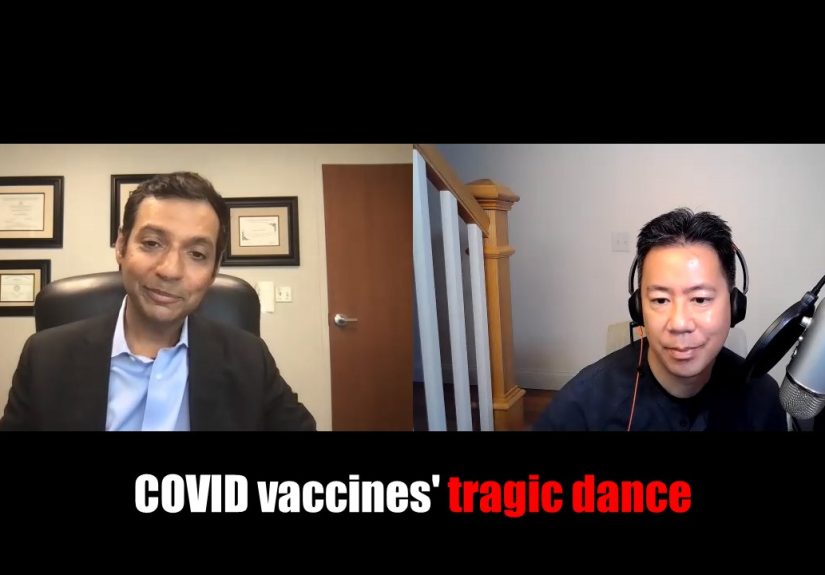
COVID vaccines arrived like a drumroll in the darkest ballroom on earth. Hospitals were overloaded, families were exhausted, and the public was stuck between dread and hope, like people slow-dancing on a floor that was still on fire. Then came the shots: fast, brilliant, imperfect, lifesaving, controversial, politicized, and endlessly argued over. That is why the phrase COVID vaccines’ tragic dance works so well. It captures the strange rhythm of the pandemic era: science moved quickly, the virus moved quicker than anyone wanted, and public trust kept stepping on its own shoelaces.
This is not a story about a miracle that fixed everything. It is also not a story about failure disguised in a lab coat. It is a story about a remarkable medical achievement that met real-world fear, misinformation, rare but serious side effects, unequal access, shifting guidance, and a public that wanted certainty from a virus that specialized in chaos. In other words, the vaccines did not enter a calm theater. They entered a mosh pit.
The first step: hope at record speed
When the first COVID vaccines became available, they represented one of the fastest and most ambitious scientific efforts in modern history. For many Americans, the shots were not just medicine. They were a passport back to grandparents, classrooms, weddings, paychecks, and ordinary boredom. And yes, boredom had never looked hotter.
The early public mood was shaped by two truths that existed at the same time. First, the vaccines offered real protection, especially against severe illness, hospitalization, and death. Second, no vaccine could fully erase the fact that SARS-CoV-2 was a moving target. That tension mattered from the beginning. People often wanted a product that would make risk disappear. What science actually delivered was something more realistic and more valuable: a way to cut the worst outcomes dramatically, even as the virus continued to evolve.
That distinction should have been easy to explain. It was not. Public communication often struggled to separate “this works” from “this is perfect,” and that confusion created trouble later. Once breakthrough infections happened, many people took that as proof the vaccines had failed. In reality, the vaccines had been strongest where it mattered most: reducing the odds that an infection would become catastrophic. But pandemic messaging rarely survives first contact with social media, cable news, and the cousin who suddenly thinks he is an epidemiologist because he watched three short videos and bought a ring light.
Why the dance turned tragic
The tragedy was never simply that COVID vaccines had limits. All medical tools have limits. The tragedy was that the vaccines became tangled in a wider drama involving politics, fear, identity, and exhaustion. Instead of being understood mainly as a public-health intervention, they became symbols. For some people, getting vaccinated meant solidarity and responsibility. For others, refusing it became a statement about freedom, distrust, or resistance. Once medicine becomes theater, facts start losing auditions.
This was made worse by the way the pandemic kept changing the choreography. Variants emerged. Recommendations evolved. Booster schedules shifted. Scientists updated their advice as evidence improved, which is exactly what science is supposed to do. But many members of the public experienced those updates not as honesty, but as inconsistency. They heard changing guidance and assumed someone had been lying. In truth, the virus kept rewriting the script in the middle of the performance.
The protection was real, but it was not magic
One of the biggest mistakes in public debate was pretending people had only two choices: either believe the vaccines were flawless or believe they were worthless. Neither position matched reality. COVID vaccination reduced the risk of severe outcomes. That mattered immensely, especially for older adults, immunocompromised people, and those with other risk factors. But the protection against infection and mild illness was always more vulnerable to time and viral evolution.
That is where the dance became frustrating. A person might get vaccinated, avoid severe disease, and still test positive months later. To a scientist, that still counted as meaningful success. To a tired, angry, over-Googled public, it sometimes felt like betrayal. The lesson was not that the vaccines had no value. The lesson was that success in public health is often less cinematic than people want. Nobody gets confetti for not ending up on a ventilator.
Variants, waning immunity, and booster fatigue
As the pandemic stretched on, the virus changed and immunity against infection naturally declined over time. That did not erase the value of vaccination, but it did complicate the pitch. Public-health officials had to explain why updated vaccines and booster doses still mattered, particularly for people at higher risk, even though many Americans felt emotionally done with the entire subject. By then, “COVID fatigue” had become a national hobby.
Booster fatigue was partly practical and partly psychological. Some people genuinely did not know whether they were considered up to date. Others felt that if they had already had COVID, already had earlier shots, and were no longer seeing daily emergency headlines, then another dose sounded optional at best. That made vaccine messaging harder. It is easier to motivate people during a blazing crisis than during a long, gray period of collective shrugging.
Yet this phase revealed an important truth: vaccines can still matter even when enthusiasm disappears. Updated formulations were designed to better match circulating strains, and the central purpose remained the same: keep more infections from turning into severe disease. That mission is less flashy than the early “back to normal” dream, but it is still vital. Public health often wins in quiet ways, and quiet victories are terrible at going viral.
The side effects conversation could not be skipped
No honest article about COVID vaccines can pretend safety concerns were invented out of thin air. Most side effects were mild and temporary, such as soreness, fatigue, fever, and a day of feeling like you lost a fight with your couch. But some rare adverse events were real and deserved transparent discussion.
Myocarditis and pericarditis after mRNA COVID vaccination became a major point of concern, especially in younger males. That risk was rare, but it was not imaginary, and health authorities eventually updated warnings to reflect it. At the same time, public-health experts emphasized context: the overall benefits of vaccination remained substantial, and COVID infection itself could also affect the heart and lead to serious complications. The correct response was neither panic nor denial. It was honest risk comparison.
The Johnson & Johnson vaccine created another chapter in this tragic dance. It was initially welcomed for its simpler one-dose format, especially in hard-to-reach settings. Then came reports of rare clotting events associated with thrombosis with thrombocytopenia syndrome. U.S. regulators paused its use, reviewed the evidence, then later narrowed and ultimately saw it exit the U.S. market. That episode fed both trust and distrust at the same time. Trust, because safety systems were visibly working. Distrust, because many people saw the pause and concluded the whole enterprise was suspect.
That is one of the hardest realities in vaccine communication: transparency is necessary, but it can still be weaponized. If agencies say nothing, they are accused of hiding data. If they say too much, incomplete or misunderstood information gets turned into panic content. In the internet age, every safety update competes with a thousand hot takes, most of them delivered with the confidence of a man explaining chess after losing in four moves.
Trust did not collapse overnight
Trust eroded through accumulation. It was weakened by inconsistent messaging, partisan polarization, real historical reasons for distrust in medicine, and the online spread of misinformation that rewarded outrage over accuracy. The result was not a single national opinion but a fragmented map of beliefs. Age, politics, geography, race, education, access to care, and prior pandemic experience all shaped how people heard vaccine information.
This matters because vaccine decisions are rarely made in a vacuum. People do not weigh data like robots in cardigans. They listen to relatives, pastors, pharmacists, favorite podcasters, local doctors, neighborhood rumors, and the emotional memory of what the last few years felt like. Some remembered fear and rushed to vaccinate. Others remembered pressure and dug in harder. Public health had to communicate inside that emotional weather, and often it did not have the right umbrella.
Johns Hopkins and other public-health voices have long emphasized empathy in vaccine communication, and that is not a soft extra. It is essential infrastructure. People who are hesitant are not all the same. Some are ideologically opposed. Some are confused. Some are worried because they or someone they know had a scary medical experience. Some are simply overwhelmed. Talking to all of them as if they are identical was never going to work.
Inequity was part of the choreography
The phrase “tragic dance” also fits because access was uneven from the beginning. Wealthier communities often had better information, more flexible work schedules, easier transportation, stronger health-system ties, and fewer obstacles to getting vaccinated. Meanwhile, many underserved communities faced language barriers, limited clinic access, digital scheduling hurdles, transportation problems, and justified mistrust rooted in long histories of neglect or discrimination.
That meant the same vaccine could symbolize relief in one ZIP code and frustration in another. A dose is not equally available just because it technically exists. Public-health campaigns tried mobile clinics, community partnerships, faith-based outreach, pharmacy expansion, and multilingual messaging. Some efforts worked well. Others arrived too late or never fully closed the gap.
Equity is not a decorative word in vaccine policy. It determines who gets protected first, who gets left behind, and who ends up hearing “the vaccine is available” as if that solves everything. In the real world, availability is only step one. Access, trust, convenience, paid time off, transportation, and culturally competent care are the rest of the dance steps, and ignoring them is how you trip over the truth.
The deeper lesson: public health is also a storytelling job
COVID vaccines taught us that scientific success is not enough by itself. A vaccine can be effective, carefully monitored, and widely recommended, yet still underused if the story around it collapses. Public health is not just about manufacturing doses. It is about explaining uncertainty without sounding lost, acknowledging risks without fueling hysteria, and building trust before the crisis hits rather than begging for it afterward.
The best vaccine message was never “nothing can go wrong.” That was too fragile. A stronger message is this: medicine works in a messy world. Benefits can be large even when perfection is impossible. Safety monitoring can uncover rare problems without invalidating the whole project. Guidance can change because evidence changes. And a tool does not become worthless just because it does not solve every problem in one glorious montage.
If there is a moral here, it is not that people should blindly trust institutions. Institutions have to earn trust. But the opposite mistake is just as dangerous: assuming every revision, warning, or disagreement proves corruption. Science is a process, not a vibe. It updates, corrects, tests, and argues. That can look clumsy in real time. It is still better than making medical decisions by meme.
So were the vaccines the tragedy?
No. The tragedy was larger and sadder than that. The tragedy was that a powerful tool arrived in a country already fractured by inequality, political rage, misinformation, and institutional distrust. The tragedy was that some people expected a force field, some expected a conspiracy, and too few were prepared for the ordinary but difficult truth in between. The tragedy was that rare harms, which needed openness and care, were often folded into sweeping narratives that erased the far greater burden of the disease itself. The tragedy was also that millions benefited quietly while the loudest voices often belonged to the least careful interpreters.
COVID vaccines did what important medical tools often do: they reduced danger, saved lives, and still left humanity arguing in the parking lot. That is not a failure of immunology. It is a portrait of us. The dance was tragic not because science had nothing to offer, but because science had something valuable to offer and we still struggled to meet it with clarity, fairness, and trust.
If we want a better ending next time, we will need more than faster vaccines. We will need stronger safety communication, better local outreach, less performative certainty, more humility, more transparency, and a health system that remembers people are not just bodies to be dosed. They are citizens, patients, parents, workers, skeptics, survivors, and storytellers. Ignore that, and the next dance will look painfully familiar.
Experiences from the long middle of the pandemic
To understand COVID vaccines, it helps to move away from press conferences and look at the texture of everyday life. For one hospital nurse, the first vaccine clinic felt like stepping into sunlight after months underground. She had watched patients say goodbye on tablets, watched coworkers age in fast-forward, and watched fear become the wallpaper of the job. Getting vaccinated did not make her feel invincible. It made her feel less doomed. That difference matters.
For an older couple, the vaccine experience was measured in hugs. Before the shots, they had skipped birthdays, waved through windows, and mastered the awkward art of loving people from the driveway. After vaccination, they still stayed careful, but the emotional weather changed. Their life did not snap back to 2019. It simply became more livable. Public-health graphs do not always capture that kind of relief, but families do.
For some parents, though, the experience was not relief first. It was hesitation first. They read headlines about rare heart inflammation, listened to relatives debate online rumors, and felt the special pressure that comes with making health decisions for children. Their questions were not always irrational. Sometimes they were poorly answered. Sometimes they were answered with a scolding tone that made everything worse. Trust is hard to build when people feel talked at instead of talked with.
Pharmacists occupied one of the strangest roles in this entire era. They became part clinician, part counselor, part myth-buster, part neighborhood translator of scientific uncertainty. One person came in eager for the latest dose. The next came in suspicious but curious. The next wanted to know whether the shot would interfere with work tomorrow. The next wanted to argue about a video they saw at 2 a.m. on a platform that believes every sentence should sound like a revelation. Community health workers and pharmacists often carried the human side of vaccine policy on their backs.
Immunocompromised people often experienced vaccination differently too. For them, the public’s casual attitude could feel jarring. While others were tired of hearing about boosters, they were still calculating risk before weddings, flights, and holiday dinners. Their experience reminds us that “moving on” is not a universal timeline. A society can declare the emergency emotionally over while vulnerable people are still making careful decisions every day.
There were also the people who delayed vaccination, not out of ideology but because life was messy. They lacked transportation, could not miss work, did not have a regular doctor, or simply got lost in the fog of changing recommendations. Public-health debates often treated vaccine status as a pure expression of belief. In reality, it was sometimes a reflection of logistics, fatigue, or being one more person crushed under the administrative obstacle course of American healthcare.
And then there were the people who changed their minds. That part is easy to overlook because it is less dramatic than firm certainty. But many Americans moved gradually: suspicious at first, then persuaded by a doctor, a family illness, a trusted friend, or the simple passage of time. Change rarely trends on social media because it lacks fireworks. Still, it is one of the most human parts of the story.
These experiences do not point in one ideological direction. They point toward complexity. COVID vaccines were never just a product. They were an experience filtered through fear, duty, grief, hope, class, politics, health status, and memory. That is why the story still feels unfinished. The shots entered people’s arms, but they also entered family arguments, workplace policies, church conversations, and private calculations about what level of risk felt bearable. The science was crucial. The human experience was the stage on which everything actually happened.
Conclusion
COVID vaccines did not produce a tidy ending, and perhaps that is the most honest conclusion of all. They reduced severe disease, saved lives, and offered millions of people a safer path through a brutal pandemic. At the same time, they became entangled in rare safety concerns, shifting recommendations, social distrust, unequal access, and a level of misinformation that could make a compass spin. That is the tragic dance: a profound scientific achievement moving through a society that was frightened, polarized, and exhausted.
The answer is not to flatten this history into propaganda or cynicism. It is to learn from it. Future vaccine efforts will require faster science, yes, but also clearer communication, more humility, stronger local trust, and policies designed for real people with real constraints. If we remember that, this painful choreography may still teach us how to move better the next time the music starts.