Table of Contents >> Show >> Hide
- Why the Front Door Path Matters More Than You Think
- Start With a Realistic Walk-Through
- Trim Back Anything That Crowds the Walkway
- Redefine the Edges So the Path Looks Intentional
- Fix the Surface Under Your Feet
- Deal With Drainage Before It Becomes a Drama Series
- Light the Path Like You Actually Want People to Find the Door
- Make the Entry Welcoming, Not Overdecorated
- Plan for Year-Round Maintenance
- What We Learned From Actually Clearing the Path
- Conclusion
Every house has a first impression, and most of them start with one humble feature: the path to the front door. Not the fancy wreath. Not the paint color. Not the decorative lantern that makes your porch look like it has its life together. The path. If that walkway is cracked, crowded by shrubs, slick with moss, or hidden behind a jungle of “low-maintenance” plants that clearly took that as a dare, the whole entry feels harder to use and less welcoming.
Clearing a path to your front door is not just about curb appeal, though it certainly helps with that. It is about safety, visibility, comfort, and creating an entry that says, “Come on in,” instead of, “Good luck finding the handle through the hydrangea.” A well-planned front walkway makes daily life easier for your family, delivery drivers, guests, and anyone hauling groceries, umbrellas, backpacks, or a toddler who has suddenly forgotten how legs work.
The good news is that this kind of improvement does not always require a full landscape overhaul. In many cases, the biggest transformation comes from a few practical changes: trimming back overgrown plants, widening the usable walking space, fixing drainage, refreshing edges, improving lighting, and making the front entry look intentional instead of accidental.
Why the Front Door Path Matters More Than You Think
A front walkway does several jobs at once. It directs traffic, protects your lawn from random footpaths, frames the house visually, and supports safer movement in daylight and after dark. When it is clear and defined, the house feels cared for. When it is cluttered or uneven, the entire exterior feels a little stressed out, like it missed three deadlines and forgot where it put the hedge trimmers.
Functionally, a good path should feel obvious, stable, and easy to use. You should be able to walk it without brushing past wet branches, stepping over exposed roots, or wondering whether the pavers are planning a surprise ankle test. Visually, it should guide the eye from the street or driveway to the front door in a clean, welcoming line. Even a simple concrete path can look polished when the edges are maintained and the surrounding plants are scaled correctly.
Start With a Realistic Walk-Through
Before you start cutting, digging, or buying three carts of mulch because it was “on sale,” walk the route slowly and take notes. Look at your entry the way a first-time visitor would. Better yet, carry something bulky while you do it, like a laundry basket or grocery bags. Suddenly, that cute but aggressive shrub near the steps will reveal its true villain energy.
Ask these basic questions
Is the path easy to see from the curb or driveway? Do plants lean into the walking space? Is the surface level and stable? Does water collect near the entry after rain? Are there dark spots at night? Does the front door feel framed and inviting, or hidden behind a wall of greenery?
This quick audit helps you spot whether your main problem is overgrowth, poor layout, bad drainage, worn hardscape, weak lighting, or a little bit of all five. Most front door path problems are not dramatic on their own. They pile up slowly. One shrub gets bigger. One edge disappears. One crack widens. One path light dies. Before long, your front entry looks like it has been abandoned to the raccoons.
Trim Back Anything That Crowds the Walkway
The fastest way to clear a path is often the most obvious: cut back what is taking over it. Shrubs planted too close to the house or walkway almost always outgrow their welcome. The fix is not just random haircutting. It is strategic pruning.
Focus on clearance first
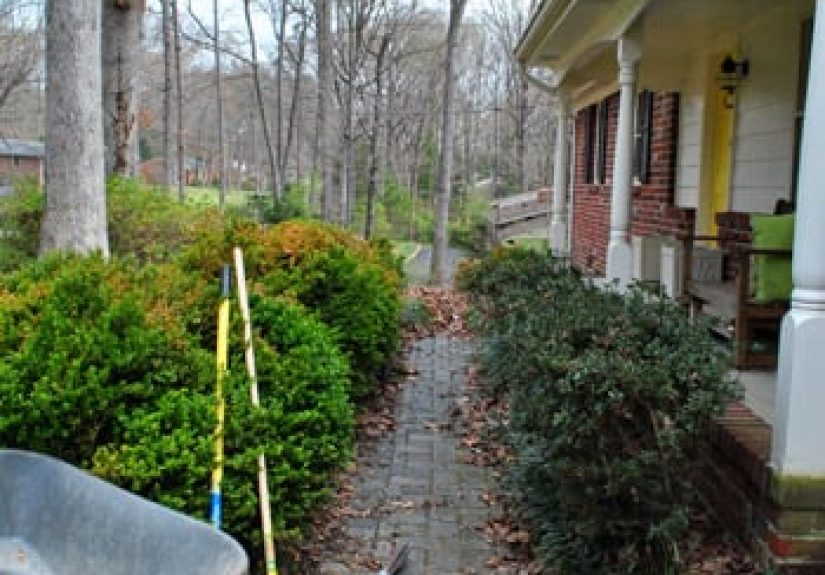
Start by removing branches, stems, or perennial growth that intrude into the walking area. Create comfortable shoulder room, especially near bends, steps, and the front door itself. If you have foundation shrubs that keep ballooning into the path, thin them selectively rather than shearing the outside into stiff green cubes. Selective pruning usually looks more natural and helps the plant recover better.
Think about mature size, not wishful thinking
If a plant is simply too large for the space, pruning will only delay the inevitable. That is when replacement makes more sense. A front walkway usually looks better with lower, slower-growing plants near the edges and larger shrubs set farther back. This creates a cleaner line of travel and keeps the entry from feeling boxed in.
Good candidates near a front walk are compact evergreens, mounding perennials, ornamental grasses with tidy habits, or seasonal containers. Bad candidates are anything thorny, floppy, aggressively spreading, or determined to become six feet wide in a space designed for two.
Redefine the Edges So the Path Looks Intentional
Once the overgrowth is under control, the next win comes from defining the border between the path and the planting beds. A clear edge makes the entire entry look neater, even if you do not change a single paver.
Use edging to create order
Brick, stone, steel, or simple trench edging can separate lawn from beds and keep mulch where it belongs. This matters more than people think. When mulch spills across the walk or turf creeps into the bed, the whole front entry starts looking fuzzy around the edges, literally and emotionally.
Mulch with restraint, not enthusiasm
A fresh mulch layer can instantly tidy a front entry, suppress weeds, and help the soil hold moisture. But too much mulch is a classic landscaping mistake. Piling it high against tree trunks or shrub stems traps moisture, encourages decay, and can create long-term plant stress. Keep mulch pulled back from bark and stems, and aim for a neat, even layer instead of a mulch volcano that looks like the yard is preparing for eruption.
If your entry feels dull, choose mulch that contrasts nicely with the walkway and house color. Dark mulch can make plantings look sharper. Natural wood tones can soften a more formal path. Either way, neatness does half the design work.
Fix the Surface Under Your Feet
No amount of pretty planting can distract from a walkway that feels like a tripping hazard with opinions. If the path itself is broken, sunken, slippery, or too narrow to use comfortably, address the surface before buying decorative extras.
Repair what you can
Loose pavers, minor cracks, and uneven edges may be repairable without a full rebuild. Sweep joints clean, reset shifted units, patch where appropriate, and remove moss or algae that make the surface slick. If the path is beyond a simple fix, replacement may be worth it, especially near the front door where every visitor experiences it.
Match the material to the house
Concrete offers a clean, simple look. Brick adds warmth and character. Stone feels classic and textured. Gravel can work beautifully in some settings, but it is not always ideal for high-traffic entries where rolling luggage, strollers, or mobility aids need a firmer surface. When in doubt, choose a walkway material that is stable, easy to maintain, and visually consistent with the home’s style.
Give people enough room
A narrow path can make the whole entry feel cramped. If you are rebuilding, a wider route often improves both usability and appearance. Even when you are not changing the hardscape, clearing the sides so the walkway feels open can create the same effect.
Deal With Drainage Before It Becomes a Drama Series
If water pools near the front steps or runs across the walkway every time it rains, your path will never feel fully solved. Drainage issues create slippery surfaces, splash dirt onto the entry, stain hardscape, and shorten the life of surrounding plants.
Look for the real cause
Sometimes the problem is a clogged gutter or downspout dumping water too close to the front walk. Sometimes the grade slopes toward the house. Sometimes compacted soil keeps water from soaking in. And sometimes the yard has simply decided your front door is the region’s official collection basin.
Use practical water-management fixes
Direct downspouts away from the entry. Regrade small areas if runoff moves toward the house. Add a drain where needed. In planting beds near the walkway, consider low-impact solutions such as a rain garden, swale, or other water-managing feature if your site allows it. These can reduce puddling while making the landscape work harder in a good way.
Drainage is one of those invisible upgrades that may not get compliments from guests, but it earns silent respect from everyone who does not slip on the porch after a storm.
Light the Path Like You Actually Want People to Find the Door
Outdoor lighting is one of the best upgrades for a front entry because it improves both safety and curb appeal. And yet many homes still rely on a single lonely porch fixture that does its best, bless its heart.
Use layered lighting
Path lights can define the route. Step lights improve visibility at changes in elevation. Wall sconces or overhead fixtures brighten the landing. Accent lighting can highlight a specimen plant, house numbers, or architectural details near the entry.
Avoid the airport runway effect
More lights do not always mean better lighting. You want enough illumination to guide movement without creating glare or that intense “landing strip for anxious moths” vibe. Space fixtures thoughtfully and aim for a balanced glow rather than bright spots surrounded by darkness.
Solar lights can be convenient for quick upgrades, while low-voltage systems often provide more consistent performance. Either way, outdoor lighting should feel intentional, not like a handful of stakes got tossed into the flower bed during a thunderstorm.
Make the Entry Welcoming, Not Overdecorated
Once the path is clear and functional, it is time for the part everyone enjoys: making the front door area look warm and inviting. The secret is restraint. You are creating a landing space, not opening a seasonal gift shop.
Use symmetry when it suits the house
If your front entry is centered and balanced, matching planters or lanterns can reinforce that structure beautifully. Symmetry tends to make traditional homes look polished and calm. On more casual or modern homes, an asymmetrical arrangement can still work well, as long as it feels deliberate.
Add containers with purpose
Containers are excellent for adding color near the front door without crowding the walkway. They let you refresh the look seasonally, raise greenery closer to eye level, and avoid committing to permanent plantings in awkward spaces. Just make sure they do not block the swing of the door or squeeze the entry landing.
Keep decor secondary to access
Doormats, house numbers, planters, and seasonal touches should support the path, not compete with it. If guests have to sidestep pumpkins, wreath stands, or decorative crates to reach your doorbell, your entry has become a puzzle. Cute puzzle, maybe. Still a puzzle.
Plan for Year-Round Maintenance
A clear path is not a one-weekend project if you want it to stay looking good. The best front entries are maintained lightly and consistently rather than ignored until the shrubs start applying for citizenship.
Spring and summer
Trim new growth, edge beds, refresh mulch as needed, weed regularly, clean the walkway surface, and check that lighting still works.
Fall
Clear leaves before they turn slick, cut back anything flopping into the path, and make sure the drainage route is open before winter storms arrive.
Winter
Remove snow promptly, use deicers carefully, and protect nearby plants from salt exposure when possible. Repeated winter salt use can damage turf, shrubs, and soil near walkways, so use only what you need and consider less aggressive options where appropriate.
What We Learned From Actually Clearing the Path
Clearing the path to our front door sounded simple when we first said it out loud. In theory, it was one of those satisfying home tasks you imagine taking half a Saturday, followed by lemonade and admiring glances from the sidewalk. In reality, it started with one clipped branch and ended with us standing in the yard, covered in leaves, debating whether a shrub had “character” or was simply staging a slow-motion hostile takeover.
The first surprise was how much bigger the house looked once the overgrown plants were cut back. We had gotten so used to squeezing past them that we forgot the walkway was ever wider. The front steps suddenly appeared. The doormat re-entered society. Even the front door looked brighter, as if it had been waiting patiently behind greenery for someone to remember it existed.
The second lesson was that clutter near the entry builds up quietly. A pot here, a solar light there, one decorative sign, two volunteer plants, and suddenly the walkway starts feeling like a hallway in a crowded antique store. Nothing looked terrible on its own, but together it made the path feel busy and narrow. Once we edited the extras and left only what truly improved the entry, the whole space felt calmer.
We also learned that edging matters more than expected. Before, the bed lines had blurred into the lawn and mulch had wandered onto the walk like it paid rent there. After redefining the edges, the path looked straighter and more polished, even though the hardscape itself had not changed much. It was one of those annoyingly effective improvements that makes you wonder why you did not do it sooner.
Lighting turned out to be another game changer. We had been relying on the porch light alone, which technically illuminated the area but mostly created dramatic shadows and suspense. Adding a few simple path lights made the entry feel safer right away. It also made the house look more welcoming at night, like it was ready to greet guests rather than audition for a mystery series.
And then there was the emotional side of it, which no one talks about enough. A clear front path changes how you come home. It feels easier. Less cluttered. Less nagging. You stop noticing the problems because the problems stop interrupting you. Walking to the front door with groceries becomes straightforward. Bringing in guests feels pleasant. Even taking out the trash somehow becomes 3 percent less annoying, which is about as close to magic as yard work usually gets.
Most of all, we learned that this project was never really about a path alone. It was about removing little frictions from daily life. A better route to the front door made the whole house feel more open, more cared for, and more lived in. Not perfect. Not showy. Just easier. And honestly, in a world full of overly complicated home projects, “easier” is a pretty beautiful design goal.
Conclusion
Clearing a path to your front door is one of the smartest upgrades you can make because it improves how your home looks and how it works at the same time. By trimming back overgrowth, defining bed edges, repairing the walkway surface, fixing drainage, adding thoughtful lighting, and keeping the entry uncluttered, you create a front approach that feels safe, inviting, and polished year-round.
You do not need a massive budget or a landscape architect on speed dial to make real progress. Start with the biggest obstacle, whether that is overgrown shrubs, cracked pavers, poor lighting, or puddles near the steps. Once the route is clear, every other improvement has more impact. The front door becomes easier to reach, the house looks more welcoming, and your entry starts doing what it was always supposed to do: welcome people home.