Table of Contents >> Show >> Hide
- What Is Polenta, Exactly?
- Ingredients for Ultra-Creamy Polenta
- How to Make Creamy Polenta (Step-by-Step)
- Flavor Variations and Serving Ideas
- How to Store Leftover Polenta
- How to Reheat Polenta Without Ruining It
- Common Polenta Mistakes (and How to Fix Them)
- Conclusion: Your Creamiest Polenta Ever
- Extra Tips and Real-World Experiences with Polenta
Creamy polenta is one of those dishes that looks fancy but is secretly easy.
It’s cozy, naturally gluten-free, and works with everything from braised short ribs
to a pile of roasted veggies. The catch? If you’ve ever ended up with a lumpy, bland,
wallpaper-paste situation, you know polenta can be unforgiving. Add the mystery of
how to reheat polenta the next day, and it’s enough to send anyone back to boxed pasta.
The good news: once you understand the creamy polenta recipe basics
and a few smart reheating tips, this Italian comfort food becomes one
of the most forgiving, flexible side dishes in your repertoire. Let’s walk through
what polenta actually is, the ideal cooking ratios, how to flavor it like a pro, and
the best ways to store and reheat it without losing that silky texture.
What Is Polenta, Exactly?
Polenta is essentially a porridge made from ground corn. In Italy, it’s traditionally
made from coarsely ground yellow cornmeal cooked slowly in water or broth until soft
and creamy. In U.S. grocery stores you’ll see bags labeled “polenta,” “cornmeal,” and
sometimes “grits,” which can be confusing.
- Polenta vs. cornmeal: Most creamy polenta recipes use medium or coarse-ground yellow cornmeal. Very fine cornmeal or corn flour can turn gluey instead of creamy.
- Polenta vs. grits: Grits are usually made from white hominy, while polenta is yellow cornmeal. The texture and flavor are slightly different, but they’re close cousins.
- Instant polenta: Pre-cooked and ground to cook in just a few minutes. It’s convenient, but traditional slow-cooked polenta often has deeper flavor and a better texture.
For home cooks, the easiest rule is: choose a medium or coarse yellow cornmeal
(often labeled “polenta”) and avoid anything labeled “corn flour” or very fine meal for
this particular creamy style.
Ingredients for Ultra-Creamy Polenta
This creamy polenta recipe serves about 4 as a side dish. You can scale it up or down
using the same ratio.
Base Ingredients
- 1 cup medium or coarse yellow polenta (cornmeal)
- 4 cups liquid total:
- 2 1/2 cups water or low-sodium chicken/vegetable broth
- 1 1/2 cups whole milk (or half-and-half for richer polenta)
- 1 to 1 1/2 teaspoons kosher salt, divided
Finishing Ingredients
- 3 tablespoons unsalted butter (or good olive oil)
- 1/2 to 3/4 cup freshly grated Parmesan or Pecorino Romano
- Freshly ground black pepper
- Optional: a splash of cream, mascarpone, or extra olive oil for extra richness
The 4:1 liquid-to-polenta ratio is the classic starting point for a
soft, spoonable texture. If you want very thick polenta you can let it reduce further
or use a bit less liquid; for ultra-silky polenta, stir in more hot liquid at the end.
How to Make Creamy Polenta (Step-by-Step)
1. Start with cold liquid to avoid lumps
Add the water, milk, and 1 teaspoon of salt to a medium saucepan while they’re still cold.
Slowly whisk in the dry polenta in a thin stream. Starting with cold liquid helps
prevent clumping, so your polenta stays smooth instead of lumpy.
2. Bring to a gentle simmer
Place the pot over medium heat and keep whisking until the mixture begins to thicken
and comes to a gentle simmer. Once it starts to bubble, switch from a whisk to a
sturdy wooden spoon or heatproof spatula.
3. Stir, then stir some more
Reduce the heat to low. Polenta should blip lazily, not boil aggressively.
Stir every few minutes, scraping the bottom and sides of the pot to keep it from
sticking or scorching. If it’s spitting hot bubbles, the heat is too high.
Cooking time will vary depending on your cornmeal, but expect about 30 to 40 minutes
for traditional polenta. Instant polenta may be ready in 5–10 minutes; just follow
the package time while using the same basic technique.
4. Adjust the texture
As the polenta cooks, taste and check the texture. It should be soft, smooth, and
creamy, with no hard grain in the center. If it feels too thick or starts to seize up,
whisk in a splash of hot water, broth, or milk and keep stirring until it loosens.
5. Finish with butter and cheese
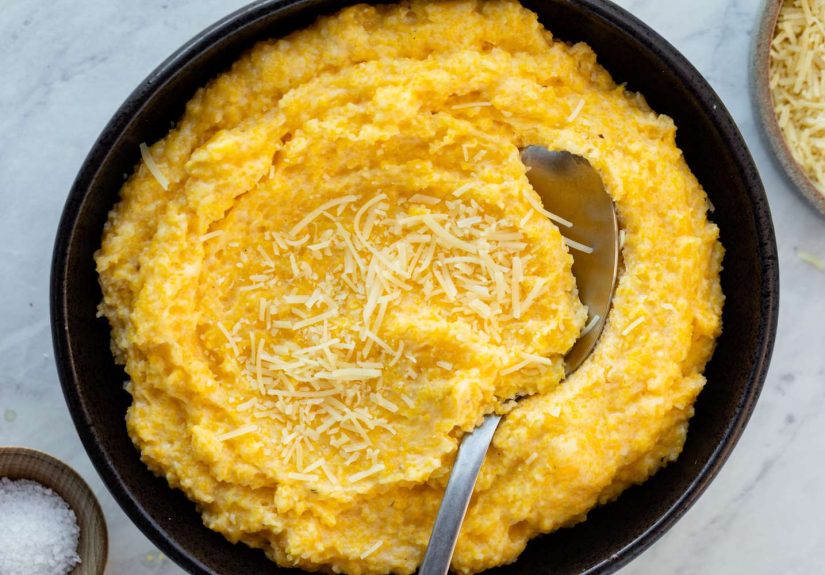
Once the polenta tastes tender and feels creamy on your tongue, turn off the heat.
Stir in the butter and grated Parmesan until melted and glossy. Taste and adjust the
salt, then grind in black pepper to finish.
Serve immediately while it’s still soft and spoonable, or transfer it to a warmed
serving bowl and cover to hold for up to 20–30 minutes.
Flavor Variations and Serving Ideas
Polenta is a blank (delicious) canvas. You can keep it simple or dress it up depending
on what you’re serving.
Easy Flavor Swaps
- Garlic and herb polenta: Simmer a smashed garlic clove and a sprig of thyme or rosemary in the liquid, then remove before serving.
- Extra-cheesy polenta: Combine Parmesan with shredded Fontina, Gruyère, or Sharp Cheddar.
- Olive oil & herbs: Skip the butter and finish with good extra-virgin olive oil, chopped parsley, and lemon zest.
- Smoky polenta: Add a pinch of smoked paprika or chipotle powder and pair with roasted vegetables or grilled meats.
What to Serve with Creamy Polenta
- Slow-braised short ribs or pot roast
- Roasted mushrooms with garlic and herbs
- Italian sausages and peppers
- Ratatouille or any tomato-based vegetable stew
- Crispy chicken thighs with pan juices
Think of creamy polenta as a substitute for mashed potatoes or pasta. If it would be
good over noodles, it will probably be amazing over polenta.
How to Store Leftover Polenta
Creamy polenta thickens as it cools, and leftover polenta will usually set into a
firm block. That’s not a bad thingit just means you now have options for reheating
it creamy again or using it as a sliceable base for grilling or frying.
Fridge Storage
- Transfer warm polenta to a shallow dish.
- Press a piece of plastic wrap directly on the surface to prevent a dry skin from forming.
- Cool to room temperature, then refrigerate for up to 3 days.
Freezer Storage
- For best texture, freeze firm polenta, not very loose polenta.
- Chill completely, then cut into squares or slices, wrap tightly, and freeze for up to 2–3 months.
- Reheat from frozen by baking or pan-frying; it may not return to a creamy state as easily but is great for crunchy polenta cakes.
How to Reheat Polenta Without Ruining It
The main challenge with reheating polenta is dryness. As it cools, starches firm up
and the mixture loses moisture. To bring polenta back to life, you need two things:
gentle heat and extra liquid.
1. Stovetop Method (Best for Creamy Polenta)
- Place leftover polenta in a saucepan over low heat.
- Add a splash of water, milk, broth, or creamstart with 1/4 cup per cup of polenta.
- Break up the polenta with a spoon and stir frequently as it warms.
- Add more liquid as needed until it becomes smooth and creamy again.
- Finish with a bit of butter and cheese if you like, then taste for salt.
This method gives you the most control over texture; you can decide whether you want
it thick enough to mound on a plate or loose and silky.
2. Microwave Method (Fast and Easy)
- Spoon polenta into a microwave-safe bowl.
- Add a small splash of water, milk, or broth and stir lightly.
- Cover the bowl with a microwave-safe lid or damp paper towel to keep moisture in.
- Microwave in 30–45 second bursts, stirring after each, until hot and creamy.
- Add extra liquid and a little butter or cheese if needed.
This is perfect for a quick lunch: leftover polenta plus a fried egg and some sautéed
greens is an instant “I totally planned this” meal.
3. Oven Method (Great for Make-Ahead)
- Spread leftover polenta into a baking dish.
- Loosen it slightly with a splash of milk, cream, or broth and stir if you want it creamy again.
- Cover tightly with foil to trap steam.
- Bake at 350°F (175°C) for about 20 minutes, or until heated through.
This method works especially well if you made polenta ahead, refrigerated it in a
casserole dish, and want to reheat a big batch for guests.
4. Reheating Firm Polenta for Slicing, Grilling, or Frying
If you like the idea of crispy-edged polenta squares, don’t add extra liquid at all.
Instead:
- Chill the polenta in a flat pan until firm.
- Cut into squares, rectangles, or rounds.
- Brush with olive oil and grill, sear in a hot skillet, or bake on an oiled sheet pan until golden and crisp on the outside.
Serve these polenta “fries” or cakes with marinara, pesto, sautéed mushrooms, or
melted cheese. It’s a totally different personality from creamy polenta, but just as good.
Common Polenta Mistakes (and How to Fix Them)
Mistake 1: Lumpy Polenta
Lumps usually happen when you dump the cornmeal into hot liquid all at once. To fix
it, whisk vigorously, adding a bit more hot liquid as needed. A sturdy whisk is your
best friend here.
Mistake 2: Polenta Too Thick or Stiff
If polenta sets up like wet cement, don’t panic. Stir in hot water, broth, or milk a
little at a time over low heat until it loosens to your desired consistency. It’s very
forgiving as long as you’re patient.
Mistake 3: Bland Polenta
Cornmeal on its own is mild. Generous seasoning (salt), flavorful broth, good butter,
and aged cheeses like Parmesan or Pecorino make a huge difference. Taste and adjust
before you serve.
Conclusion: Your Creamiest Polenta Ever
Mastering creamy polenta is really about three things: using the
right grind of cornmeal, maintaining a generous liquid ratio, and treating leftovers
kindly with the right reheating method. With those in place, you can turn a humble bag
of cornmeal into an elegant, restaurant-worthy sideand enjoy it again the next day
without sacrificing texture or flavor.
the best stovetop, microwave, and oven reheating tips for perfect leftovers.
sapo: Creamy polenta looks luxurious, but it’s surprisingly simple
when you know a few key tricks. This in-depth guide walks you through the best
creamy polenta recipe step-by-step, including the ideal liquid-to-cornmeal ratio,
how to pick the right cornmeal, and the easiest ways to avoid lumps. You’ll also
learn how to store leftovers safely and reheat polenta on the stovetop, in the
microwave, or in the oven without turning it dry or grainy. Whether you love it
soft and spoonable under braised meats or sliced and crisped on the grill, these
polenta and reheating tips will keep this Italian comfort food in regular rotation
in your kitchen.
Extra Tips and Real-World Experiences with Polenta
Once you start making polenta regularly, a few “insider” lessons tend to show up
again and again. Think of this as the wisdom you’d pick up after a couple of
dinner parties, a few late-night fridge raids, and one slightly chaotic holiday
meal where the polenta had to wait longer than planned.
Polenta Is a Lifesaver for Timing Issues
One of the biggest stresses when cooking for guests is timing. Meat takes longer
in the oven, vegetables roast at a different temperature, and everyone decides to
show up 20 minutes late. Polenta is surprisingly flexible in this scenario. Once
it’s cooked and finished with butter and cheese, you can keep it warm over very
low heat with a lid on, stirring in a splash of hot liquid every so often to keep
it smooth. If it gets too thick, you already know the fix: stir in more hot water,
broth, or milk.
Many home cooks find that polenta actually makes entertaining easier. Instead of
juggling boiling pasta water and draining pots at the last second, you have a
creamy base you can hold and adjust as needed. When the main dish is ready, the
polenta can be brought right back to the perfect consistency in a couple of minutes.
“Next-Day Polenta” Might Be Your Favorite Version
Another pleasant surprise: leftover polenta doesn’t have to be a downgrade. For
some people, day-two polenta is even better. When chilled and sliced, it transforms
into a sturdy canvas for crisp edges and melty toppings. Pan-frying slices in a bit
of olive oil or butter gives you a golden crust and a tender interiorsomewhere
between a potato cake and a thick-cut fry.
A popular strategy is to enjoy polenta creamy on the first night under something
saucy, like braised short ribs or mushroom ragu. Then, on day two, slice the firm
polenta, crisp it in a pan, and serve it with eggs and sautéed greens for brunch,
or with marinara and cheese for a quick, almost pizza-like dinner.
People Tend to Under-Season Polenta (At First)
The most common feedback from new polenta makers is, “It was fine, but it needed
something.” That “something” is usually more salt, more cheese, or both. Because
polenta is mild, it needs confident seasoning. Tasting at the end is crucial.
What seems like enough salt at the beginning often feels underwhelming once you’ve
added butter, cheese, and a rich topping.
Think about the full plate, too. If you’re serving polenta under something salty
(like pancetta or a very salty cheese), you can keep it a bit milder. If your main
is gentle or vegetable-forward, let the polenta bring more of the savory punch.
Reheating Polenta Is Mostly About Patience
When people are unhappy with reheated polenta, it’s usually because they tried to
rush it. High heat plus no added liquid equals a rubbery, scorched mess. Low heat
and gradual additions of water, milk, or broth do require a few extra minutes, but
the payoff is huge. The texture softens, the starch relaxes again, and you get a
second round of creamy comfort instead of leftovers that feel like punishment.
If you’re reheating polenta for a crowd, it’s worth planning this into your timing.
Give yourself 10–15 minutes to warm it gently on the stove, stir in extra liquid,
adjust the seasoning, and bring it back to its glossy best.
Polenta Plays Well with Dietary Needs
Another reason creamy polenta has become a go-to side dish is its flexibility for
different diets. It’s naturally gluten-free, and you can easily adapt it for
vegetarian or even vegan meals. Use vegetable broth instead of chicken broth, swap
butter for olive oil or a dairy-free butter substitute, and choose a vegan cheese
alternative or simply lean on herbs, garlic, and good olive oil for flavor.
For those who tolerate dairy, polenta is an easy way to add richness and satisfaction
without relying on huge portions of meat. A bowl of buttery polenta with roasted
vegetables and a sprinkle of cheese feels indulgent but balanced.
Once You Learn the Ratio, You Can Cook from Memory
The nicest “experience” with polenta is what happens after you’ve made it a few times:
you rarely need to look at a recipe. The 4:1 ratio (four parts liquid to one part cornmeal)
is easy to remember. From there, you can decide on the fly whether you want a mix of
water and milk, how much butter and cheese you’re in the mood for, and what flavors
make sense with the rest of the meal.
When a recipe becomes that familiar, it turns from a “special project” into a weeknight
staple. With the right creamy polenta recipe and reheating tips in your back pocket,
a cozy, restaurant-level side dish is always just a few pantry ingredients away.