Table of Contents >> Show >> Hide
- What Is a Currency War?
- Why Do Currency Wars Start?
- The Main Weapons in a Currency War
- How Currency Wars Affect You (Yes, You)
- Examples of Currency Wars (and Currency War-ish Moments)
- The early 1930s: Competitive devaluations after the gold standard cracked
- The 1985 Plaza Accord: When countries tried cooperation instead of combat
- 2010–2013: “Currency war” goes mainstream again
- February 2013: The G-20 tries to draw a line in the sand
- Switzerland 2011–2015: A defensive currency cap (and a dramatic exit)
- China and exchange-rate debates: Management, competitiveness, and scrutiny
- Are Currency Wars Always Bad?
- How to Protect Yourself: Practical Moves (Not Doomsday Prep)
- Conclusion
- Extra: of “Experience” (What Currency Wars Feel Like in Real Life)
Currency wars sound like something that should involve tanks made of gold bars and spy movies set in Swiss vaults. In reality, they’re usually fought with spreadsheets, press conferences, and central bankers politely insisting they’re definitely not doing the thing everyone can see them doing.
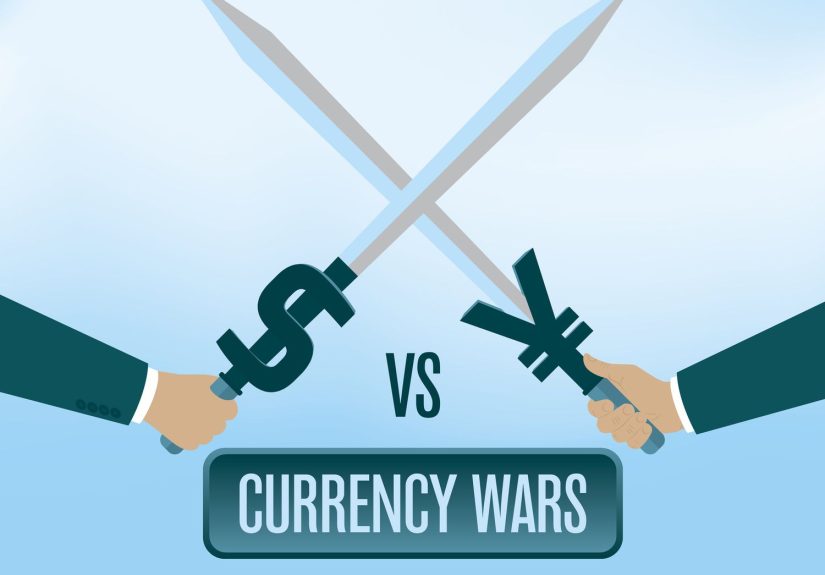
At the core, a currency war is when countries try to make their own currency cheaper (or keep it from getting too expensive) to gain an edgeoften to boost exports, protect jobs, or dodge deflation. The “war” part happens when other countries respond in kind, and suddenly you’ve got a global tug-of-war where nobody wants to be the strongest currency in the room.
What Is a Currency War?
Definition (minus the drama)
A currency war is a pattern of competitive actions by countries to weaken their currencies (or prevent them from strengthening) to improve trade competitiveness, support economic growth, or manage financial stress. Think of it as “competitive devaluation,” but with better branding and worse vibes.
How it works in plain English
When a country’s currency is weaker:
- Exports look cheaper to foreign buyers, which can boost sales abroad.
- Imports cost more at home, which can nudge consumers and businesses toward domestic alternatives.
- Tourism gets a boost because visiting becomes “a bargain” for outsiders.
But this isn’t a free lunch. A weaker currency can also raise inflation by making imported goodslike electronics, medicine ingredients, or energymore expensive. And if multiple countries push down their currencies at once, the “advantage” can vanish, leaving everyone with more volatility and more political heat.
Devaluation vs. depreciation (a small but useful distinction)
You’ll hear two similar terms:
- Devaluation usually means an intentional official move under a fixed or managed exchange-rate system.
- Depreciation is a currency falling in value under a floating system because markets (and moods) changed.
In modern currency wars, many moves are indirectcountries don’t always announce “We devalued!” They might cut interest rates, launch asset purchases, or signal “we’re fine with a weaker currency.” Translation: we didn’t touch the thermostat; the room just happened to warm up.
Why Do Currency Wars Start?
1) Growth and jobs (the headline motivation)
Export-heavy industries love a weaker currency. It can improve profit margins, preserve jobs, and increase sales abroad. Politically, “we protected manufacturing” plays better than “we watched the factory move away.”
2) Fighting deflation (the quiet motivation)
Deflation (falling prices) can sound niceuntil it encourages people to delay spending, raises the real burden of debt, and slows the economy. Currency weakness can import a bit of inflation through higher import prices, which some central banks see as a feature, not a bug.
3) Managing capital flows (the “hot money” problem)
When global investors rush into a country’s assets, its currency may soar. That can crush exporters and create asset bubbles. Policymakers may try to cool the inflows or offset the currency’s rise through intervention or looser monetary policy.
4) “If we don’t do it, someone else will”
Exchange rates are relative. One currency’s weakness is another’s strength. When a big economy pushes policy in a way that weakens its currencyeven unintentionallyothers can feel forced to respond. This is how a “defensive” move becomes a global chain reaction.
The Main Weapons in a Currency War
Interest rate cuts
Lower rates can reduce foreign demand for a country’s assets, which can weaken its currency. It also stimulates domestic borrowing and spendingtwo birds, one monetary stone.
Quantitative easing (QE) and large-scale asset purchases
Buying government bonds (and sometimes other assets) can push down yields, encourage risk-taking, and in some cases weaken the currency through portfolio shifts and expectations.
Direct foreign exchange intervention
This is the “classic” version: a central bank sells its own currency and buys foreign currency to push its exchange rate lower (or stop it from rising). It’s like leaning on a door… except the door is a multi-trillion-dollar market that occasionally leans back.
Capital controls and macroprudential policies
Countries may tax inflows, restrict certain transactions, or tighten banking rules to manage destabilizing capital movements. This is less about “cheap currency” and more about “please stop sending tsunami waves through our financial system.”
Verbal intervention
Sometimes officials don’t need to act; they just need to talk. A well-timed comment like “we’re watching the exchange rate closely” can move markets. Words are cheaper than reserves.
How Currency Wars Affect You (Yes, You)
1) Prices at the store
If your country’s currency weakens, imported goods tend to get more expensive. That can show up in:
- Electronics, appliances, and cars with globally sourced components
- Food items that rely on imported inputs (fertilizer, packaging, machinery)
- Energy and commodities priced in global markets
On the flip side, domestic alternatives may become more competitive, which can shift what businesses produce and what consumers buy.
2) Your paycheck and job market
If you work in an export-oriented industry (manufacturing, agriculture, tech services sold abroad), a weaker currency can help your employer compete. If you work in a business that relies on imported materials, margins can get squeezed unless prices rise.
3) Travel and “vacation math”
Currency swings can make the same trip feel like either a luxury splurge or an accidental financial crisis. A stronger home currency = cheaper overseas spending. A weaker home currency = you suddenly care deeply about hotel breakfast being included.
4) Investing and retirement accounts
Currency moves can change returns on international investmentssometimes dramatically. A U.S. investor holding foreign stocks might gain from local market growth but lose if the foreign currency falls against the dollar. Or vice versa.
Currency wars can also increase global volatility, pushing investors toward “safe haven” assets and changing interest-rate expectations worldwide.
5) Interest rates and borrowing costs
In a currency conflict, central banks may keep rates lower for longer (to support growth and discourage currency strength). That can influence mortgage rates, auto loans, corporate borrowing, and the overall pace of economic activity.
Examples of Currency Wars (and Currency War-ish Moments)
The early 1930s: Competitive devaluations after the gold standard cracked
The Great Depression era is often cited as the canonical currency war. As countries abandoned the gold standard at different times, their currencies moved sharply, and many pursued devaluation-like adjustments to regain competitiveness. The result: jolting exchange-rate shifts, policy conflict, and a rough environment for global trade and finance.
The 1985 Plaza Accord: When countries tried cooperation instead of combat
Not every exchange-rate showdown becomes a brawl. In 1985, major economies coordinated to address an unusually strong U.S. dollar. The Plaza Accord is often referenced as a high-water mark for international policy coordinationan attempt to manage imbalances without spiraling into tit-for-tat devaluations.
2010–2013: “Currency war” goes mainstream again
After the global financial crisis, low interest rates and unconventional monetary policy in major economies triggered tension. In 2010, Brazil’s finance minister famously warned the world was in a “currency war,” reflecting concerns that easy money in advanced economies would push capital into emerging markets, strengthen their currencies, and hurt their competitiveness.
February 2013: The G-20 tries to draw a line in the sand
As tensions rose, leaders emphasized they would avoid targeting exchange rates for competitive purposes and would “refrain from competitive devaluation.” In other words: “We promise we’re not starting a currency war,” said everyone while keeping their hands suspiciously close to the policy buttons.
Switzerland 2011–2015: A defensive currency cap (and a dramatic exit)
Small, stable countries can get dragged into currency battles just by being… stable. During the euro-area crisis, demand for the Swiss franc surged. Switzerland’s central bank set a minimum exchange rate versus the euro (a cap on franc strength) and defended it for yearsuntil it abruptly ended the policy in January 2015, triggering a sharp franc move and reminding markets that “currency stability” is sometimes a temporary subscription.
China and exchange-rate debates: Management, competitiveness, and scrutiny
China’s exchange rate has been at the center of global debate for decades, involving questions about intervention, trade competitiveness, reserve accumulation, and the line between normal policy choices and unfair advantage. The U.S. Treasury regularly evaluates major trading partners’ foreign exchange practices, reflecting how currency policy can become a geopolitical and economic flashpoint.
Are Currency Wars Always Bad?
They’re rarely good for global trust, but the details matter. Sometimes, what looks like a “currency war” is actually domestic policy aimed at a domestic problemlike recession or deflationwith international spillovers. The tricky part is that spillovers can be huge, and other countries may respond defensively, which can make the whole system less stable.
That’s why international coordination matters. When countries communicate clearly, avoid explicitly targeting exchange rates, and focus on domestic stability, it’s easier to prevent policy from turning into a messy global contest.
How to Protect Yourself: Practical Moves (Not Doomsday Prep)
For everyday consumers
- Expect price swings on heavily imported goods when your currency is volatile.
- Shop smart on timing for big purchases (electronics, cars) if exchange rates are moving fast.
- Watch foreign transaction fees and exchange spreads when traveling or shopping internationally.
For investors
- Diversify internationally, but understand currency exposurehedged vs. unhedged funds matter.
- Don’t chase headlines: currency moves can reverse quickly when policy expectations change.
- Look at business fundamentals: companies with global revenues may benefit or suffer depending on currency direction.
For small businesses
- Price in a stable currency where feasible and renegotiate contracts with FX volatility in mind.
- Consider hedging if you import inputs or export products regularly.
- Build flexibility into supply chains so currency shocks don’t become operational shocks.
Conclusion
A currency war isn’t a Hollywood spectacleit’s a policy chess match that can spill into your real life through prices, travel costs, job conditions, and investment returns. The pattern is familiar: one country tries to protect growth and competitiveness, others respond, and the world ends up with more volatility and more pressure for trade retaliation.
The good news: you don’t need a PhD in foreign exchange to navigate it. Pay attention to big policy shifts, diversify intelligently, and remember that exchange rates are like weathersometimes you plan your day around them, but you don’t yell at the sky (unless it makes you feel better).
Extra: of “Experience” (What Currency Wars Feel Like in Real Life)
Experience #1: The “same” online cart suddenly costs more. You add a laptop, a camera lens, or even a pack of specialty vitamins to your cartnothing fancy, just life in 2026. Then the exchange rate moves, and the price quietly creeps up. No one sends you a notification that your currency got weaker; the universe simply charges you extra for existing. In currency-war periods, that “why is everything more expensive?” feeling often starts with imported goods and spreads outward through supply chains.
Experience #2: Travel becomes a game show called “Guess That Conversion Rate.” When currencies swing, your vacation budget can feel like it’s on a trampoline. One month you’re booking a trip thinking you’re financially responsible; the next month you’re doing mental math in a coffee shop like you’re defusing a bomb. Currency conflict can amplify this, because policy announcementsrate cuts, interventions, surprise pivotscan move exchange rates fast enough to turn “treat yourself” into “maybe we’ll just walk around and look at free architecture.”
Experience #3: Your favorite brand “shrinks” without admitting it shrank. A weaker currency raises import costs. Businesses respond the way businesses always respond: by adjusting prices, tweaking product sizes, or “repositioning” items. That might mean smaller packaging, fewer features, or a new “premium” line that looks suspiciously like the old normal line. Currency wars don’t only show up in forex charts; they show up in subtle changes to what you get for your money.
Experience #4: Investing feels like you’re being graded on a subject you didn’t enroll in. You bought a foreign stock fund for diversification, and the companies are doing fineyet your returns wobble because the currency moved against you. This is the emotional core of currency exposure: you can be “right” on the business and still lose on the exchange rate. During currency-war tension, these moves can be sharper, because markets are constantly repricing what central banks will do next.
Experience #5: Small businesses learn the word “hedge” and don’t mean bushes. If you import materials, a weaker currency can hit margins immediately. If you export, it can help you win customersuntil a competitor’s country responds and narrows your advantage. Many businesses end up adjusting contracts, asking suppliers for different terms, or exploring basic hedging tools just to keep pricing predictable. Currency wars teach businesses a blunt lesson: stable planning requires planning for instability.
Experience #6: The news gets loud, but the signals you need are simple. Currency war coverage can sound like global chess commentary (“hawkish,” “dovish,” “intervention risk,” “safe haven flows”). But the practical signals are straightforward: Is inflation rising because imports are pricier? Are central banks cutting or hiking? Are governments talking about trade retaliation? In real life, currency wars are less about drama and more about second-order effects that seep into daily decisionswhat you buy, where you travel, how you invest, and how cautious everyone feels.