Table of Contents >> Show >> Hide
- 1) Start With How You Live (Not What You Pinned at 2 a.m.)
- 2) Find Your “North Star” Style (So You Stop Buying Random Cute Things)
- 3) Measure First. Then Measure Again (Future You Will Send a Thank-You Note)
- 4) Build a Color Plan That Doesn’t Make You Panic-Paint
- 5) Lighting Is the Cheat Code (Yes, Even Before You Buy New Furniture)
- 6) Texture and Pattern: The Difference Between “Nice” and “Ooh”
- 7) Curtains and Art: Hang Them Higher Than You Think
- 8) Rugs: The Ground Rules (Literally)
- 9) Styling That Looks Collected, Not Cluttered
- 10) Small-Space Decorating: Make It Feel Bigger Without Living in a White Box
- 11) The Most Common Decorating Mistakes (And the Quick Fixes)
- 12) Decorating on a Budget: Spend Where It Matters, Save Where It Doesn’t
- Conclusion: A Room That Works Always Wins
- Real-World Decorating Experiences (The Kind You Only Learn by Doing)
Decorating is basically the art of making your home look like a real adult lives therewithout removing all evidence of joy, snacks, pets, or personality.
The good news: you don’t need a design degree (or a trust fund, or the ability to pronounce “Eames” with confidence). You need a plan, a tape measure,
and the willingness to accept one universal truth: the first thing you buy will be the one thing you change later.
This guide pulls together the most useful, repeatable decorating principlesso your rooms look intentional, feel comfortable, and function in real life.
You’ll get practical rules (the kind you can actually use), specific examples, and a few gentle reality checks delivered with love.
1) Start With How You Live (Not What You Pinned at 2 a.m.)
Before you pick a paint color or fall in love with a sofa named something like “Cloud Nine Linen,” answer three questions:
Who uses this room? What do they do here? What annoys you right now?
A quick “real life” checklist
- Traffic flow: Can you walk through the room without doing a side-shuffle?
- Comfort: Is there a place to set a drink within arm’s reach of most seats?
- Storage: Where does the stuff landkeys, bags, chargers, blankets, toys?
- Maintenance: Do you need wipeable surfaces, performance fabrics, or “please don’t stain” materials?
Decorating that ignores your routines will always feel slightly “off,” like a gorgeous hotel lobby that makes you whisper even when you’re just looking for the bathroom.
2) Find Your “North Star” Style (So You Stop Buying Random Cute Things)
Most decorating frustration isn’t about bad taste. It’s about mixed signals. One minute you want calm and minimal; the next, you’re impulse-buying a neon sign
that says “It’s Fine.” To avoid a home that looks like five separate people decorated it (all of them you), pick a style direction.
Try this simple style formula
Choose two adjectives and one design vibe:
- Adjectives: warm, airy, moody, playful, tailored, cozy, relaxed, bold
- Vibe: modern, traditional, transitional, coastal, farmhouse, industrial, boho, Scandinavian
Example: “warm + tailored + transitional” might mean classic shapes, soft neutrals, and a few modern light fixtures. “airy + playful + coastal” might mean
lighter woods, breezy textiles, and color in small, cheerful hits. Your goal isn’t to label your homeit’s to give your decisions a filter.
3) Measure First. Then Measure Again (Future You Will Send a Thank-You Note)
Scale and proportion are the difference between “designer” and “why does this room feel like a dollhouse (or an airport lounge)?” The fix is simple:
measure your space and plan the layout before you buy anything big.
Layout moves that instantly improve a room
- Float furniture when possible: Pull seating off the walls to create conversation zones.
- Protect pathways: Keep main walkways clear and avoid forcing people to squeeze behind chairs.
- Choose one primary focal point: Fireplace, window, art wallthen support it instead of competing with it.
If your living room layout feels awkward, it’s usually because furniture is either too big, too small, or arranged without a plan. A quick sketch (even on notebook paper)
beats guessing and hoping your sofa “somehow works.”
4) Build a Color Plan That Doesn’t Make You Panic-Paint
Color is emotional. It’s also sneaky: the same shade can look warm at noon and weirdly green at night. The best approach is to start with a foundation,
then layer in color gradually.
The no-drama color method
- Start with a neutral base: warm white, soft beige, greige, taupe, or gentle gray (choose based on your light).
- Add a core shade: a color you love that appears in larger doses (rug, sofa, curtains, big art).
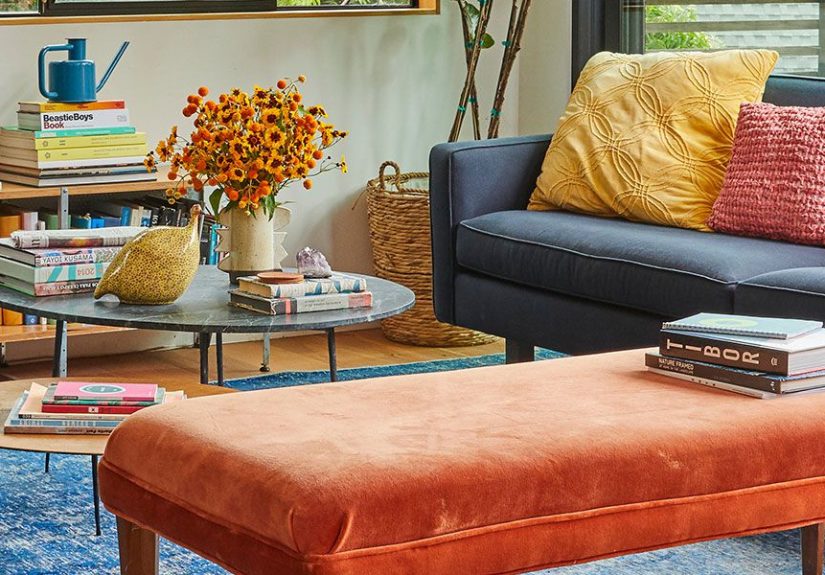
- Finish with accents: smaller hits of contrastpillows, throws, pottery, lampshades, books.
For small or low-light rooms, super-dark paint can feel cozy or cave-like depending on the spaceso test samples and view them throughout the day.
Also, stark white isn’t always the “safe” choice; it can make a room feel flat or clinical if the light is cool.
5) Lighting Is the Cheat Code (Yes, Even Before You Buy New Furniture)
If your room looks sad at night, it’s probably because you’re relying on one overhead lightthe infamous “big light.”
The fix is layered lighting: combine ambient, task, and accent light sources so the room has depth and warmth.
A simple layered lighting recipe
- Ambient: ceiling fixture, semi-flush, recessed lights
- Task: reading lamp, desk lamp, under-cabinet lights
- Accent: sconces, picture lights, LED strips, small lamps on consoles
Example: In a living room, pair a ceiling fixture with two table lamps on opposite sides of the room, then add a floor lamp near a chair.
Suddenly, everything looks more expensivebecause it looks more intentional.
6) Texture and Pattern: The Difference Between “Nice” and “Ooh”
Texture is what makes neutral rooms feel cozy instead of bland. Pattern is what makes safe rooms feel alive instead of showroom-still.
The trick is mixing without turning your space into a wrestling match of prints.
How to mix patterns without chaos
- Repeat 2–3 colors across different patterns so they feel related.
- Vary scale: one large pattern, one medium, one small (instead of all “busy”).
- Use solids as breathing room: let at least one major piece be calm (sofa, rug, curtains).
Try this combo: a large-scale rug (pattern), solid sofa (calm), and pillows that mix a stripe with a small geometric. Add a nubby throw and a woven basket.
Now the room has layerslike a really good outfit.
7) Curtains and Art: Hang Them Higher Than You Think
Two of the most common decorating mistakes are hanging curtains too low and art too high. The fix is easy and wildly effective.
Curtains should emphasize height; art should feel connected to the furniture and to the people living in the room (you know, the ones with eyeballs).
Curtain guidelines that make rooms look taller
- Hang high: place the rod well above the window frame, or close to the ceiling when it makes sense.
- Hang wide: extend the rod past the window so curtains can stack on the wall, not block the glass.
- Choose the right length: panels that “kiss” the floor look tailored; puddling can look dramatic but isn’t for every home.
Art placement that looks instantly “right”
- Eye-level rule: aim for the center of the art around 57–60 inches from the floor.
- Over furniture: keep art roughly 6–12 inches above a sofa or console so it feels anchored.
- Gallery walls: treat the whole group like one big piece and center that “mass” at eye level.
When in doubt: tape paper templates on the wall first. It’s the cheapest way to avoid “why does this look weird?” energy.
8) Rugs: The Ground Rules (Literally)
A too-small rug makes a room feel unfinishedlike you stopped decorating halfway through because you got hungry.
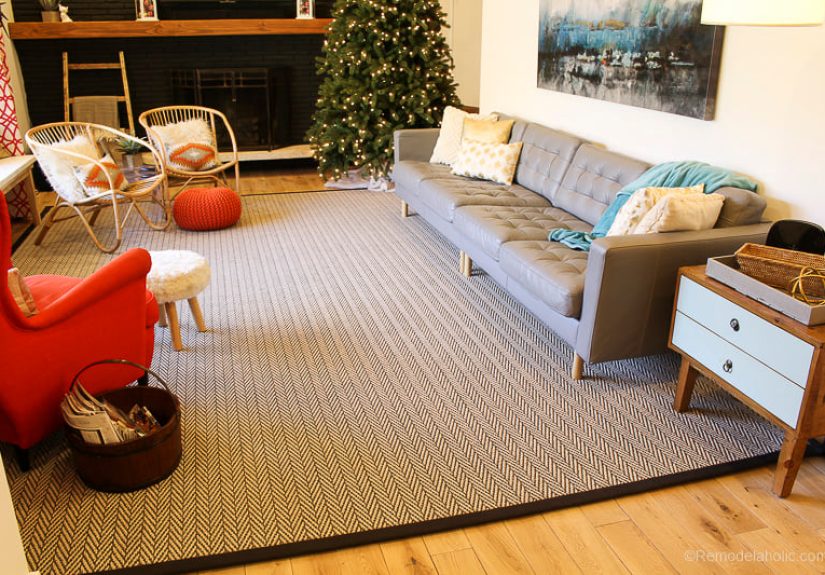
In most spaces, you want the rug to be large enough that furniture sits on it in a meaningful way.
Living room rug examples
- Best-looking: all front legs of sofas/chairs on the rug (or fully on, if space allows).
- Common mistake: a tiny rug floating in the middle like an island no one can visit.
- Quick fix: if you can’t size up, layer a smaller rug over a larger natural-fiber rug to fake the footprint.
In bedrooms, a larger rug under the bed helps the room feel grounded. In dining rooms, choose a rug that still fits when chairs slide outbecause nobody wants a chair leg
catching the rug mid-dinner like it’s trying to start a fight.
9) Styling That Looks Collected, Not Cluttered
Styling is where a home becomes yours. It’s also where things can go sideways fast (hello, 47 tiny candles).
The goal is edit + repeat + balance.
Easy styling principles
- Use the “rule of three”: group decor in odd numbers for a natural, balanced look.
- Mix heights: pair something tall (vase), medium (frame), and low (bowl) to create movement.
- Repeat a finish: echo a metal or wood tone a few times so it feels intentional.
- Leave negative space: empty space is not a failure; it’s a design choice.
How to style shelves without making them look like a store display
- Start with books (vertical and horizontal stacks) as structure.
- Add functional pieces (baskets, boxes) to hide the less-cute necessities.
- Finish with personal items (art, framed photos, travel finds) so it feels lived-in.
If you love mixed metals, treat it like seasoning: pick a dominant metal, a supporting metal, and use the third sparingly.
A little contrast feels layered; too many finishes can feel accidental.
10) Small-Space Decorating: Make It Feel Bigger Without Living in a White Box
Small spaces don’t need less stylethey need smarter choices. The best small-space rooms feel edited, flexible, and bright in the right places.
Small-space tricks that actually work
- Edit relentlessly: keep what you use and love, and store the rest out of sight.
- Use mirrors strategically: place them to reflect light, a view, or something pretty (not the laundry pile).
- Go vertical: tall curtains, higher-mounted shelves, and art that draws the eye upward help with perceived height.
- Choose multi-task pieces: storage ottomans, nesting tables, wall-mounted nightstands.
One underrated upgrade: swapping heavy-looking furniture for pieces with legs. Seeing more floor can make a room feel airiereven if the square footage didn’t magically expand overnight.
11) The Most Common Decorating Mistakes (And the Quick Fixes)
Mistake: Too many focal points
If your room has a TV, a fireplace, a giant gallery wall, and a statement wallpaper, your eyes don’t know where to land.
Pick one star, then let the supporting elements play their roles.
Mistake: Furniture shoved against the walls
This often makes a room feel like a waiting area. Pull furniture in, even a few inches, and add a rug to define the zone.
Mistake: Buying before planning
It’s tempting to shop first and “figure it out later,” but that’s how you end up with a loveseat that blocks a doorway and a lamp that lights nothing.
Start with a simple plan: measurements, layout, and the must-haves for how you live.
12) Decorating on a Budget: Spend Where It Matters, Save Where It Doesn’t
A stylish home isn’t about the most expensive piecesit’s about strong basics and smart layering.
If you’re prioritizing, invest in items you touch daily and save on things you can easily swap.
Worth spending more on
- Sofa or mattress (comfort and longevity)
- Rug size (bigger often looks better)
- Lighting (it changes everything)
- Quality paint (coverage and finish)
Great places to save
- Throw pillows and decor (easy to refresh)
- Artwork frames (thrift + DIY mats)
- Side tables (vintage, marketplace finds)
- Hardware (switching knobs/pulls can fake a full renovation)
Budget decorating secret: a “slow decorate” approachmaking decisions over timeoften leads to fewer expensive mistakes and a more personal home.
Conclusion: A Room That Works Always Wins
The best decorating advice is surprisingly simple: make a plan, honor your real life, and build layers over time.
Start with layout and lighting. Choose a color direction you can live with. Hang curtains and art the right way. Buy the rug that actually fits.
Then finish with the personal touches that make the space feel like yoursnot like you copied a catalog page and forgot to add your personality.
If you only remember one thing, remember this: you’re not trying to create a perfect room. You’re trying to create a room you want to be in.
That’s the whole point of home.
Real-World Decorating Experiences (The Kind You Only Learn by Doing)
Decorating advice is helpfuluntil it meets your actual life. These are the kinds of real-world “aha” moments people tend to have once they start moving things around,
living with choices for a week, and realizing the room has opinions of its own.
1) The Rug That Was Too Polite
A common first rug purchase is the “cute but small” option. It fits the budget, it looks fine online, and then it arrives and… it’s basically a coaster for your coffee table.
The room instantly feels disconnected because the seating area has no visual boundary. The fix is almost always sizing up, or cheating the footprint by layering a smaller patterned rug
over a larger natural-fiber rug. It’s one of those lessons that turns you into a measuring person forever.
2) The Great Curtain Awakening
Hanging curtains right above the window frame feels logicaluntil you see how much taller the room looks when the rod goes higher and wider.
People often describe this as their “I can’t believe that worked” moment. The window seems bigger, the ceiling feels higher, and the room looks more finished
without buying a single piece of furniture. It’s the decorating equivalent of standing up straight in a photo.
3) The Big Light Betrayal
Plenty of rooms look okay in daylight and then turn into a sad cave at night because the overhead light is doing all the work. Adding two lamps can feel almost too simple,
which is exactly why it works. Once you experience a room with layered lightingwarm pools of light, cozy corners, and art that looks intentionalyou stop relying on the big light
like it personally owes you money.
4) The “Matchy-Matchy” Phase (We’ve All Been There)
Buying a full matching furniture set seems like the safe route. The surprise is that it can make a room feel flat, like a staged display. A more collected look usually comes from mixing
pieces: different woods, different silhouettes, and at least one item with history (a vintage chair, a thrifted side table, a hand-me-down that you upgraded with new hardware).
Once people see that contrast can look intentional, the whole home starts feeling more personal.
5) The Paint Color That Changed After Sunset
Paint is notorious for looking different in different lighting. A shade that seems calm at noon can turn swampy by evening if the bulb temperature is warm, or icy if the light is cool.
The real-life win is testing samples in multiple spots and checking them throughout the day. This is also how people discover that “plain white” has undertones and a strong personality.
Decorating becomes easier once you treat paint like a decision that deserves a little patience.
6) The Shelf Styling Spiral
It often starts innocently: “I’ll just add a few cute items.” Then suddenly the shelf is packed, nothing stands out, and you’re wondering why it looks messy instead of styled.
The breakthrough is learning to leave space and to create simple structure: books for height, a basket for hidden storage, a few personal objects, and then stopping before it becomes
a museum gift shop. People who master this tend to rotate decor seasonally, which keeps the home feeling fresh without constant shopping.
7) The Mirror That Reflected the Wrong Thing
Mirrors can be magical, but they’re also brutally honest. If a mirror is aimed at clutter, it doubles the problem. The moment people realize mirrors should reflect light, art,
or a pleasant viewnot a chaotic cornermirror placement becomes strategic instead of random. Done well, it brightens a room and makes it feel bigger; done poorly, it’s a spotlight
on whatever you hoped guests wouldn’t notice.
8) The Confidence Zone Experiment
Many people hesitate to go bold in a main living area, but feel surprisingly brave in small spaces like a powder room, entryway, or laundry room. Trying wallpaper, a saturated paint color,
or a dramatic light fixture in a “low-pressure” spot often becomes the gateway to more confident decorating. It’s easier to commit when the space is smalland once it looks great,
it’s hard not to get ideas for the rest of the house.
The overall pattern in these experiences is simple: the best homes aren’t decorated in one weekend. They’re built through small upgrades, a few mistakes, and a growing understanding of what
makes a space feel good. When you learn the basicsscale, lighting, color, and layoutyou can break the “rules” intentionally. That’s when decorating stops feeling stressful and starts feeling
like a creative skill you actually own.