Table of Contents >> Show >> Hide
- The Print Everyone Is Talking About in 2026: Cowhide
- Why Cowhide Is Coming Back Right Now
- Why This Print Is Still Controversial
- How Designers Are Styling Cowhide in 2026
- Cowhide vs. Leopard vs. Zebra: Why Cowhide Wins the 2026 Headline
- How to Keep the Trend Chic, Not Cheesy
- The Best Rooms for Cowhide in 2026
- The Real Reason This Trend Has Legs
- What It Actually Feels Like to Live With This Trend
- Conclusion
- SEO Tags
If you had told a lot of homeowners five years ago that cowhide home decor would be one of the most talked-about looks of 2026, they probably would have laughed, adjusted their plain beige throw pillow, and gone right back to shopping for another safe cream rug. And yet, here we are. The print that once lived in the mental category of “Western lodge,” “rustic bachelor pad,” or “possibly your uncle’s vacation cabin” is suddenly looking polished, tailored, andbrace yourselfelegant.
That shift did not happen by accident. Designers have been moving away from sterile, over-edited rooms and leaning into spaces with more personality, more texture, and more stories to tell. In 2026, the vibe is less “showroom perfection” and more “collected, expressive, and confident.” That makes room for patterns that feel natural, grounded, and just a little bit cheeky. Enter cowhide: a print with earthy tones, organic shape, and enough built-in contrast to wake up a room without blowing the whole design budget on drama.
What makes this especially interesting is that cowhide is not returning as a novelty. It is coming back as a new neutral. That is the magic phrase. Designers are using it the way fashion people use leopard flats or tortoiseshell sunglasses: not as a costume, but as a finishing layer that makes everything look more intentional. In other words, cowhide is not trying to be the star of the room. It is the surprisingly charismatic supporting actor who steals every scene anyway.
The Print Everyone Is Talking About in 2026: Cowhide
Let’s get right to the point. The controversial print at the center of the 2026 conversation is cowhide. Not loud novelty cow spots splashed across every surface. Not cartoon ranch-core. Not a theme room that looks like it serves artisanal jerky. The 2026 version is more refined than that. Designers are gravitating toward caramel, tan, brown, ivory, and black-on-brown versions that read warm, organic, and sophisticated.
What makes cowhide different from many other trendy prints is that it comes preloaded with texture. Even when used as a print rather than a literal hide, it brings softness, movement, and visual depth. That means it can do more work than a standard geometric or stripe. A cowhide rug can warm up a modern living room. A lumbar pillow in a subtle caramel pattern can loosen up a too-serious bedroom. A framed faux cowhide panel can make a hallway feel styled without screaming for attention.
Designers also like that cowhide has a natural irregularity. It does not feel machine-made in the way some repetitive prints do. Those asymmetrical shapes and tonal variations keep a room from feeling flat. In a time when 2026 home decor trends are increasingly about individuality, that slightly unpredictable quality is a huge advantage.
Why Cowhide Is Coming Back Right Now
1. Homes Are Getting More Personal
One of the biggest shifts in interior design right now is the move toward rooms that reflect memory, taste, travel, and personality instead of rigid rules. That is why maximalism is evolving into something more curated and narrative-driven. A room no longer has to match like a hotel suite to feel beautiful. It just has to feel believable.
Cowhide fits that mood perfectly. It has history. It has texture. It feels collected rather than mass-produced. When used well, it gives a space that “this room has a point of view” quality that so many homeowners are chasing in 2026.
2. Patterns Are Acting Like Neutrals
This is the part that makes skeptics blink twice. Designers are increasingly treating certain patterns like neutrals, especially when the palette is restrained. That includes subtle florals, low-contrast stripes, classic leopard, and now cowhide. Because cowhide naturally lives in shades like camel, cream, espresso, chestnut, and black, it can blend with wood, linen, leather, brass, plaster, and stone without picking a fight.
That matters because people are tired of rooms that rely on solid colors alone. A print like cowhide adds movement and depth while still behaving politely. It is basically texture with a little swagger.
3. Heritage Style Is BackBut Cleaner
Another reason cowhide decor is having a moment is the rise of heritage-inspired interiors. Equestrian accents, rich wood, brass details, tobacco leather, tailored plaids, and old-world references are all gaining momentum again. Cowhide slips neatly into that world. It nods to tradition, but it can still feel modern when paired with cleaner silhouettes and edited styling.
That is the key difference between old cowhide and 2026 cowhide. The old version sometimes leaned costume-y. The new version is sharper, warmer, and more controlled. Think less “rodeo souvenir shop,” more “a designer remembered the room needed one wild card.”
Why This Print Is Still Controversial
Cowhide is not controversial because it is ugly. In fact, that is almost the opposite of the problem. It is controversial because it comes with baggage, and not the chic weekender kind.
For some people, the first issue is ethical. Traditional cowhide involves animal skin, and many shoppers are not comfortable with that. That discomfort is real and worth acknowledging. The good news is that faux cowhide has improved dramatically, so it is possible to get the look without using real hide. In many homes, faux is the smarter choice anyway because it is often easier to maintain and style.
The second issue is aesthetic. Cowhide can go wrong very quickly. If the pattern is overly shiny, aggressively black-and-white, or used in every possible spot at once, the room can slide from stylish to themed in record time. There is a fine line between “designer-approved animal print decor” and “airport steakhouse with a chandelier budget.” The 2026 approach works because it respects that line.
How Designers Are Styling Cowhide in 2026
Start With a Rug
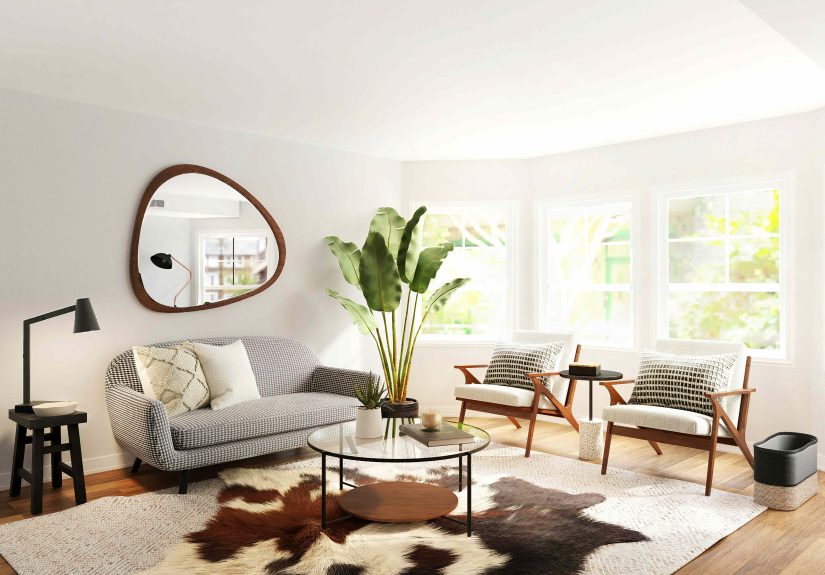
The easiest entry point is still a rug. A large cowhide rug, or a faux version with the same irregular silhouette, can soften a room full of straight lines and polished finishes. In a living room, it layers beautifully over wood floors and under sculptural furniture. In a bedroom, it can add contrast at the foot of the bed. In an entryway, it makes the space feel collected in about three seconds flat.
The smartest versions for 2026 are not the loud, high-contrast ones. Designers are favoring warm, tonal versions in brown, tan, cream, and soft black. These feel more elevated and less gimmicky. They also play nicely with the rich browns, muted reds, olive greens, and warm neutrals currently showing up across interior design trends 2026.
Use It in Small Doses
Not ready to commit to a rug? That is fair. Cowhide also works beautifully in smaller accents. A caramel lumbar pillow on a linen sofa. A bench seat upholstered in a faux hide print. A box, tray, or framed textile panel. These pieces let the pattern act like a little pinch of salt in a recipe: not the whole meal, but the thing that makes everything taste better.
This is also the best strategy if your home leans minimalist. A single cowhide accent can add warmth and texture without disrupting a calm room. It keeps the space from feeling too precious or too flat.
Layer It With Softer Patterns
One reason cowhide feels so current is that it layers well. Designers are pairing it with stripes, block-print florals, plaid, botanical motifs, and even other animal prints in carefully controlled palettes. That sounds risky, and it can be, but the trick is to vary the scale and keep the colors connected.
For example, a camel-toned cowhide pillow can sit comfortably next to a striped throw and a floral wallpaper if all three share a similar warm undertone. A subtle cowhide rug can also ground a room with patterned drapes because the organic shape breaks up the formality. It is a smart counterbalance to all the print layering that is gaining traction in 2026.
Pair It With Tailored Materials
If you want cowhide to look sophisticated, give it grown-up company. Think walnut, oak, travertine, unlacquered brass, boucle, linen, mohair, aged leather, and hand-thrown ceramics. These materials pull the print away from novelty and into the realm of intentional design.
That is especially true in rooms inspired by heritage decor or quiet luxury. Cowhide can add a dash of tension to polished spaces, which is exactly what keeps them from looking too safe.
Cowhide vs. Leopard vs. Zebra: Why Cowhide Wins the 2026 Headline
To be clear, animal print decor in general is having a big moment. Leopard, zebra, tiger, and illustrated animal motifs are all back in the conversation. Designers increasingly describe animal prints as timeless, versatile, and surprisingly neutral when the colors are right. So why is cowhide getting the headline treatment?
Because cowhide sits in a sweet spot. Leopard is glamorous. Zebra is graphic. Tiger is bold. Cowhide is softer. It has the wildness of an animal print, but it is easier to integrate into everyday rooms. It feels less dressy than leopard and less theatrical than zebra. That makes it incredibly flexible.
It also crosses style boundaries more easily. Cowhide can work in modern homes, transitional homes, rustic homes, heritage-inspired homes, and even minimalist spaces that just need a pulse. That versatility is exactly what pushes a trend from “interesting” to “everywhere.”
How to Keep the Trend Chic, Not Cheesy
The first rule is simple: do not overdo it. If you already have a cowhide rug, you probably do not also need cowhide curtains, four cowhide pillows, and a cowhide lampshade. Unless your design goal is “fashion cowboy fever dream,” one statement is usually enough.
The second rule is to avoid overly fake-looking finishes. Metallic flecks, candy colors, and very harsh black-and-white contrast can make the pattern feel dated fast. The most stylish versions are tonal, earthy, and tactile.
The third rule is to let the room breathe. Cowhide looks best when it is balanced by calm materials and negative space. Give it crisp walls, tailored furniture, natural light, and a few strong supporting textures. It should feel like a wink, not a costume change.
The Best Rooms for Cowhide in 2026
Living rooms are the obvious winner because cowhide adds warmth without making the space feel heavy. It is especially effective in rooms with clean-lined sofas, plaster walls, and wood furniture that need a little pattern.
Bedrooms also benefit from a subtle cowhide accent. A bench, rug, or throw pillow can keep soft neutral bedding from looking sleepy. It adds shape and interest without disturbing a calm palette.
Entryways are another great fit. Because the pattern makes an impact quickly, it works well in small transition spaces. One runner or statement hide-style rug can turn a forgettable foyer into a memorable one.
Home offices may be the most underrated place of all. A cowhide chair, rug, or framed wall piece can make a practical room feel layered and confident. If your desk setup currently looks like a tax form in physical form, this might help.
The Real Reason This Trend Has Legs
At its core, the return of cowhide says something bigger about where home design is going. People are not just decorating for approval anymore. They are decorating for mood, memory, and character. They want rooms that feel a little warmer, a little bolder, and a lot less generic.
Cowhide fits because it is not perfect. It is organic. It is irregular. It has edge, but it also has warmth. In a sea of predictable solids and safe patterns, that makes it feel fresh. The controversial part is real, and so is the risk of doing it badly. But when designers talk about the print that will be all over home decor in 2026, cowhide keeps showing up because it solves a problem modern rooms often have: they are polished, but they are starving for personality.
And if 2026 has a decorating motto, it might just be this: stop making every room behave so nicely. Cowhide is what happens when good taste loosens its collar a little.
What It Actually Feels Like to Live With This Trend
Here is the part trend reports often skip: what this look is like once it leaves the mood board and lands in a real house with real sunlight, real shoes by the door, and real people who occasionally put a coffee mug down without using a coaster. The experience of living with cowhide, especially in its softer 2026 form, is less dramatic than the word “controversial” suggests and more atmospheric than most people expect.
In the morning, a cowhide rug in a living room does something a flat woven rug often cannot. It catches light unevenly, which gives the floor a little movement before anything else in the room has woken up. That sounds poetic, and yes, a little annoyingly designer-ish, but it is true. The room feels less static. A cream sofa, oak coffee table, and plaster walls can suddenly look intentional instead of merely beige-adjacent. The print gives the eye somewhere to land.
There is also a psychological effect to the pattern. Because cowhide has an irregular shape and natural tonal shifts, it relaxes a room. Geometrics can energize a space. Stripes can organize it. Florals can sweeten it. Cowhide, on the other hand, roughs up the edges just enough to make a room feel lived in. It says, “This house has taste, but it also knows how to exhale.”
In bedrooms, the experience is quieter. A cowhide bench or pillow does not shout for attention, but it keeps the room from slipping into hotel territory. That is especially useful in neutral spaces, where everything can start looking a little too coordinated, like the room got dressed using only one note in the musical scale. Cowhide adds a bass line. It deepens the room.
Then there is the social experience. Guests notice it. Not always immediately, but eventually. Somebody sits down, looks around, and says, “Wait, what is that?” If the piece is styled well, the reaction is usually positive because the print reads as confident rather than gimmicky. It becomes a conversation starter without becoming the entire conversation. That is design gold. Nobody wants a room where the rug has a louder personality than the homeowner.
There is also something satisfying about how adaptable it feels over time. In fall, it looks rich with rust, tobacco, and olive. In spring, it still works with cream, sage, and pale blue. Around brass and walnut, it looks heritage-inspired. Around lacquer and sculptural lighting, it looks modern. That flexibility is part of the lived appeal. You are not trapped by it.
Of course, the experience depends on restraint. A single well-chosen cowhide piece feels elevated. Five of them feel like you are one wagon wheel away from a themed restaurant. The people who end up loving this trend long-term are usually the ones who use it like a signature, not a costume. They let it punctuate the room instead of dominate it.
That may be the best way to understand why designers are so interested in it for 2026. Cowhide does not just photograph well. It lives well. It softens polished spaces, sharpens bland ones, and gives personality to rooms that would otherwise play everything too safe. For a print with a reputation for being divisive, that is a pretty impressive houseguest.
Conclusion
So yes, designers agree: the controversial print poised to take over home decor in 2026 is cowhide. But its comeback is not really about ranch nostalgia or trend-chasing. It is about the growing appetite for interiors that feel warmer, wilder, and more personal. Styled with restraint, grounded in earthy colors, and balanced with refined materials, cowhide becomes exactly what the best trends always become: not a gimmick, but a useful design tool.
If you have been craving a room that feels more layered and less predictable, this may be the moment to stop fearing the print and start using it strategically. Just remember the golden rule: let cowhide flirt with the room, not marry every surface in it.