Table of Contents >> Show >> Hide
- The real job of fertilizer (and what it can’t do)
- Quick answer: when fertilizing is worth it vs. when it’s just a hobby
- Step one: stop guessing and test your soil
- A practical fertilizer decision checklist
- Different outdoor plants have very different fertilizer needs
- Choosing a fertilizer: organic, synthetic, slow-release, compost… help
- How to fertilize without harming your plants (or your weekend)
- Common fertilizing myths worth retiring
- So… do you really need to fertilize your outdoor plants?
- Experiences gardeners often share: lessons learned the funny way (about )
Fertilizer has a glamorous reputation in the garden world. It’s sold in bright bags with big numbers, it promises
“more blooms,” and it makes us feel like responsible plant parents. But here’s the awkward truth: fertilizing outdoor
plants is a little like giving vitamins to a person you’ve never met. Sometimes it’s helpful. Sometimes it’s pointless.
And sometimes it’s the reason everyone ends up cranky.
So do you really need to fertilize your outdoor plants? The honest, plant-nerd answer is: it depends.
The good news is you don’t need a botany degree to figure it out. You just need a plan that’s based on soil, plant type,
and what you’re actually trying to grow (a thriving garden… or a jungle that scares the neighbors).
The real job of fertilizer (and what it can’t do)
Fertilizer isn’t plant food in the way tacos are food. Plants make their “food” (sugars) from sunlight, water, and carbon
dioxide. Fertilizer is more like a nutrient supplement that helps plants build leaves, roots, flowers, and fruit.
The big three nutrients you’ll see on most bags are:
- N (nitrogen): supports leafy growth and overall vigor
- P (phosphorus): supports roots, flowering, and fruiting (and is also the one most likely to cause water-quality issues when overused)
- K (potassium): supports general plant function, stress tolerance, and quality
Fertilizer cannot fix shade where sun is needed, rescue a plant planted in the wrong zone, or undo chronic overwatering.
If a plant is struggling, nutrients might be part of the storybut they’re rarely the whole plot twist.
Quick answer: when fertilizing is worth it vs. when it’s just a hobby
You might actually need fertilizer if…
- You’re growing annual vegetables or heavy-feeding crops (tomatoes, broccoli, corn, etc.).
- Your plants are in containers where nutrients wash out faster.
- You have new plantings and your soil test shows low nutrients.
- You see persistent poor growth after confirming water, light, pests, and soil pH are reasonable.
You might not need fertilizer (or need much less) if…
- Your shrubs and perennials are growing well, leaf color looks normal, and flowering is typical for the plant.
- You regularly top-dress with compost or mulch and your soil is building organic matter over time.
- Your plants are native or low-input landscape plants that are already happy where they live.
- Your soil test shows adequate nutrient levels (especially phosphorus).
A useful mindset: fertilizer is a tool, not a ritual. If you’re applying it because “it’s spring and I always do,”
you’re basically guessing with extra steps.
Step one: stop guessing and test your soil
If there’s one move that saves money, prevents over-fertilizing, and improves results, it’s a soil test.
A quality lab test gives you the “before” picture: nutrient levels, soil pH, and recommendations tailored to what you’re growing.
It also protects you from the classic homeowner mistake: adding phosphorus “for blooms” when the soil already has plenty.
When should you test?
Many extension services suggest testing every few years (and more often when you’re changing how you use an area, like turning lawn into beds).
Spring before planting or fall after harvest are common, practical windows.
How to do it without overthinking it
- Pick a representative area (front bed, vegetable patch, lawn section, etc.).
- Take multiple small samples from around the area (not just the “best-looking spot”).
- Mix them in a clean bucket, let it air-dry if instructed, and submit per the lab’s directions.
- Follow the recommendations for your crop type (vegetables, ornamentals, lawn, trees/shrubs).
Soil pH matters because it affects how available nutrients are to plants. A plant can look “hungry” even when nutrients exist
if pH is off, the roots may not be able to take them up efficiently.
A practical fertilizer decision checklist
Before you buy the biggest bag with the most confident font, run through this:
- What am I growing? Vegetables and annual flowers usually need more support than established shrubs.
- In-ground or containers? Containers leach nutrients and often need a steady, lighter feed plan.
- What does the soil test say? If you don’t know, you’re guessing.
- Is pH reasonable for the plant? Especially important for acid-lovers like blueberries and azaleas.
- Am I already adding organic matter? Compost and mulches can reduce the need for extra fertilizer over time.
- Is the plant actually healthy? Nutrients won’t fix bad drainage, wrong light, or pest pressure.
Different outdoor plants have very different fertilizer needs
1) Vegetables and annual flowers: the “high metabolism” group
Many vegetable gardens benefit from added nutrients because you’re asking plants to do a lot: grow fast, produce fruit, and keep producing.
“Heavy feeders” (like tomatoes and broccoli) often need more nitrogen than lighter feeders. Many extension recommendations describe nitrogen needs
in pounds per 1,000 square feet, which is helpful because it keeps you from blindly copying your neighbor’s schedule.
Example: if a recommendation calls for 0.20 lb of actual nitrogen per 100 sq. ft. and your fertilizer is 10-10-10 (10% nitrogen),
you’d apply:
- 0.20 ÷ 0.10 = 2.0 pounds of product per 100 sq. ft.
(Yes, math is now part of gardening. Nobody is thrilled. But your plants will be.)
2) Trees and shrubs: often less is more
With trees and shrubs, fertilizing is commonly recommended based on need: growth rate, leaf color, and (again) soil testing.
Many large, established trees don’t need routine fertilizerespecially if they’re growing near areas that already get fertilized.
Young trees may benefit more than mature ones because they’re building structure and canopy.
Timing matters. Fertilizer applied when plants are actively growing (often spring to early summer, and sometimes late summer to early fall depending
on the plant and region) is more likely to be used effectively. Late-season fertilizing can be a bad idea in some climates if it encourages tender growth
right before cold weather.
3) Perennials: aim for steady soil, not a sugar rush
Many perennials perform best with a focus on soil quality: compost, mulch, and appropriate moisture. Over-fertilizing can push leafy growth at the expense
of flowers. If your perennial bed is lush but stingy with blooms, too much nitrogen may be part of the issue.
4) Containers: the “leaky bucket” problem
Containers are tough because water moves through quickly and carries nutrients out with it. That’s why container plants often do better with
consistent, lighter feeding instead of occasional heavy applications.
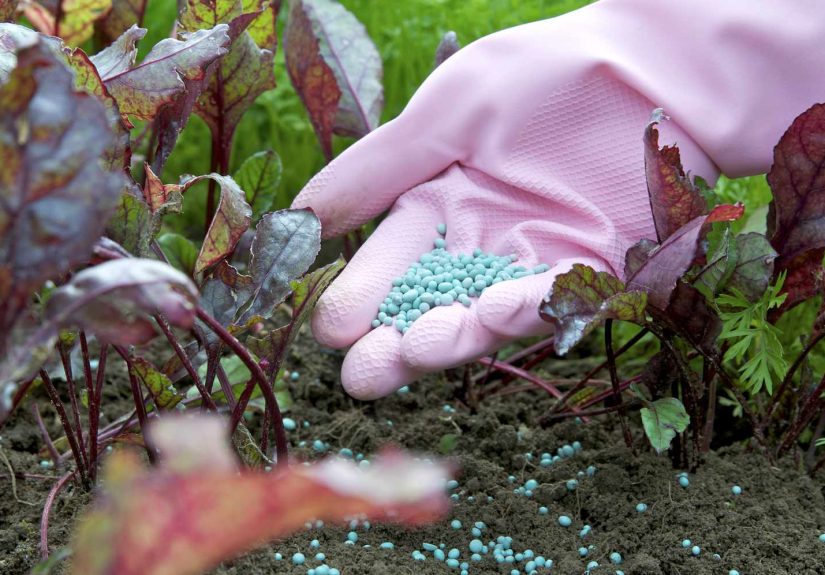
Controlled-release fertilizers can help because they release nutrients more slowly and can reduce nutrient losses compared to frequent water-soluble applications.
But they still need correct ratesmore pellets do not equal more happiness.
5) Lawns: fertilize carefully and don’t treat phosphorus like confetti
Lawn fertilization is where “helpful” can quickly become “polluting.” When fertilizer ends up on sidewalks, driveways, or frozen ground,
it’s more likely to move into storm drains and waterways. Many best-practice guides emphasize avoiding applications before heavy rain and being especially
cautious about phosphorus unless a soil test shows deficiency.
If you fertilize a lawn, do it with intention: sweep stray granules back onto the grass, follow recommended timing, and don’t apply right before a downpour.
Your yard doesn’t need to be responsible for a lake’s algae bloom.
Choosing a fertilizer: organic, synthetic, slow-release, compost… help
Fertilizer choices feel overwhelming because the garden center is basically a snack aisle for plants: so many packages, so few clear explanations.
Here’s a simple way to think about it.
Compost and organic matter: the long-game strategy
Compost improves soil structure and supports soil life. It can add nutrients, but it’s often best viewed as a soil builder first.
Many extension resources note that nutrients from compost and manure are released slowly over time, and compost alone may not supply enough nitrogen for
highly productive crops unless used in large amounts.
For garden beds, a common approach is adding a thin layer of compost annually (top-dressing), then using a soil test to decide whether additional nutrients
are needed. Also: don’t fill raised beds with compost aloneplants like a balanced growing mix, not an all-compost lifestyle experiment.
Organic fertilizers: slower, steadier, and still not “free”
Organic fertilizers (like composted manure, blood meal, or bone meal) can support long-term soil health, but they can still be overapplied.
“Organic” does not mean “can’t burn plants” or “can’t cause runoff.” It simply means the nutrient sources are derived from living or once-living materials.
Synthetic fertilizers: fast results, higher risk of mistakes
Synthetic fertilizers are concentrated and predictable, which is great for precision and terrible for people who eyeball measurements.
Used correctly, they’re effective. Used casually, they’re the reason gardeners learn new words like “salt buildup” and “fertilizer burn.”
What about “balanced” fertilizers?
Many general-purpose products are labeled something like 10-10-10 or 12-12-12. They can be fine when a soil test indicates a broad need.
But they can also be wasteful if your soil already has plenty of phosphorus. A soil test often helps you choose something more targeted
(for example, nitrogen-heavy for leafy growth, or low/no phosphorus for many lawns and landscapes).
How to fertilize without harming your plants (or your weekend)
Use the “right rate, right time, right place” rule
- Right rate: follow the soil test or label instructions; more is not “bonus.”
- Right time: apply when plants can use it; avoid applying before heavy rain.
- Right place: keep fertilizer off pavement and out of waterways; target root zones.
Watch for fertilizer burn
Over-fertilization can cause leaf tip browning, yellowing, wilting, and crusty residue on the soil surface. In severe cases, roots can be damaged.
If you suspect fertilizer burn, stop fertilizing and focus on consistent watering (without waterlogging) to help dilute excess salts, especially in containers.
Don’t confuse “pale leaves” with “needs fertilizer”
Yellow leaves can come from nutrient issuesbut also from overwatering, compacted soil, root damage, pests, disease, heat stress, and pH problems.
If fertilizing is your first response to every symptom, your garden is basically getting random prescriptions.
Common fertilizing myths worth retiring
Myth: “Bloom booster means more flowers for everything.”
Flowering depends on light, plant genetics, pruning timing, weather, and overall plant maturitynot just nutrients. Phosphorus-heavy fertilizers aren’t
a magic bloom spell, and excess phosphorus can create environmental problems.
Myth: “If some is good, more is better.”
Over-application can push weak, floppy growth, reduce flowering, attract pests, burn roots, or wash into waterways. Fertilizer is not glitter.
You don’t get to keep sprinkling until you “feel it in your heart.”
Myth: “Healthy soil means you never fertilize.”
Healthy soil can reduce the need for fertilizer, but high-demand crops (like many vegetables) may still require supplemental nutrients.
Think of soil health as a strong foundationnot a promise that you’ll never need to do any maintenance.
So… do you really need to fertilize your outdoor plants?
If your plants are thriving, your soil is reasonably healthy, and you’re adding organic matter over time, you may need little to no fertilizer for many
landscape plants. On the other hand, vegetables, annuals, and container gardens often benefit from intentional feeding because they’re working overtime.
The smartest approach isn’t “always fertilize” or “never fertilize.” It’s:
test your soil, match nutrients to plant needs, and apply carefully.
Your plants grow better, you waste less money, and your garden stops living in a constant state of surprise.
Experiences gardeners often share: lessons learned the funny way (about )
If you hang around gardeners long enoughcommunity gardens, neighborhood groups, extension workshopsyou’ll hear the same fertilizing stories repeat like
a beloved sitcom. Different characters, same plot twist: the bag label was not a suggestion.
One common experience is the “more is more” moment. A gardener notices slow growth, tosses on an extra handful of granular fertilizer,
and feels instantly productive. Then a few days later the plant looks worse: browned edges, droopy leaves, that unmistakable “I regret everything” vibe.
The gardener learns that fertilizers are salts, and too much can pull water away from roots. The recovery plan becomes a quiet season of gentle watering,
no more feeding, and a promise to measure next time (a promise that may or may not survive until spring).
Another classic: the “I fertilized but nothing improved” mystery. This often happens when the real issue is soil pH or drainage.
Gardeners report spending money on multiple productsslow-release spikes, liquid feeds, bloom boostersonly to learn later that the soil is too alkaline
for an acid-loving plant, or that the bed stays wet after every rain. The plant wasn’t starving; it was stuck in the wrong conditions. The “fix” ends up
being a soil amendment plan, improved drainage, or simply moving the plant to a spot it actually likes. Fertilizer, in that story, was basically a
motivational poster taped to a broken engine.
Container gardeners often describe the “roller coaster” pattern: big flush of growth after feeding, then a crash a couple of weeks later.
It’s not that containers are badit’s that they’re small ecosystems with limited nutrient storage. Many gardeners find that consistent, lighter feeding
(often via controlled-release products or diluted liquid fertilizer) creates steadier growth than occasional heavy applications. The emotional benefit is real:
fewer “Why are you yellowing again?” conversations with a basil plant.
Raised beds create their own learning curve. A surprisingly common experience is the “all-compost bed” experiment. Compost is wonderful,
so it seems logical to fill a bed with it. But gardeners report that pure compost can shrink as it decomposes, hold water differently than expected, and
sometimes create nutrient imbalances. Many end up rebuilding the bed with a better soil mix and using compost as a top-dressing instead of the whole
foundation. The lesson: compost is powerful, but it’s not meant to be the entire personality of your garden.
Finally, there’s the “my lawn fed the lake” cautionary tale. Homeowners often don’t realize how easily fertilizer can move off-site
especially when applied before heavy rain, on compacted soil, or where granules land on pavement. Gardeners who switch to soil-test-based fertilizing,
sweep granules off sidewalks, and reduce unnecessary phosphorus often report feeling like they leveled up from “random yard care” to “responsible land steward.”
It’s not dramatic, but it’s satisfyinglike finally reading the instructions before assembling the patio set.
The shared takeaway from these real-world stories is simple: the best gardens aren’t the ones that get the most fertilizer. They’re the ones that get the
right inputs at the right time, based on evidence (soil tests) and observationnot seasonal panic.