Table of Contents >> Show >> Hide
- Why a Paper Bridge Can Actually Work
- What You Need
- Step 1: Set the Rules Before You Start
- Step 2: Test a Flat Sheet First
- Step 3: Fold the Paper Into a Stronger Shape
- Step 4: Add Smart Support Features
- Step 5: Test the Bridge and Record What Happens
- Step 6: Redesign and Build a Better Version
- Best Paper Bridge Designs to Try
- Common Mistakes When Building a Paper Bridge
- Paper Bridge FAQ
- Extra Experience: What Building a Paper Bridge Actually Teaches You
- Conclusion
- SEO Tags
If you have ever looked at a single sheet of paper and thought, “This thing can barely survive a light breeze, let alone become a bridge,” welcome to the club. Paper does not exactly scream structural engineering legend. And yet, with the right folds, shape, and testing method, a paper bridge can hold an impressive amount of weight. That is the fun of this challenge: it looks simple, but it teaches real lessons about design, load distribution, tension, compression, and why shape matters just as much as material.
A paper bridge project is one of the easiest STEM activities to do at home, in a classroom, or during a rainy afternoon when your brain wants a snack. You do not need fancy tools. You do not need a hard hat. You just need paper, supports, a few coins or small weights, and a willingness to fail gloriously before succeeding brilliantly. In this guide, you will learn exactly how to build a paper bridge in six easy steps, why some designs flop like overcooked noodles, and how to make yours stronger without turning it into an arts-and-crafts crime scene.
Why a Paper Bridge Can Actually Work
The magic is not really magic. It is geometry doing a victory dance. A flat sheet of paper sags quickly because it bends easily. But when you fold that same sheet into a new shape, such as a beam with walls, an arch-inspired form, or an accordion-like structure, you increase its stiffness and help it resist bending. In other words, the paper did not suddenly become steel. It just got smarter.
Real bridges work the same way. Engineers do not rely on material alone. They also rely on form. Loads move through a bridge in predictable ways, and different designs manage those forces differently. A simple beam bridge deals with tension and compression as it bends under weight. An arch redirects forces through compression. A truss uses triangular shapes to improve stability. Your paper bridge is a tiny version of those big ideas, minus the traffic jam.
What You Need
- 1 to 3 sheets of standard printer paper or construction paper
- Two supports, such as books, boxes, or containers
- Pennies, coins, washers, or other small weights
- Tape, if your challenge allows it
- A ruler
- A pencil for sketching and recording results
For a classic paper bridge challenge, place your supports about 8 to 10 inches apart. That span is wide enough to make the task interesting but not so wide that your bridge gives up on life immediately.
Step 1: Set the Rules Before You Start
The easiest way to build a good paper bridge is to act like an engineer before you act like a builder. Set clear rules. How many sheets of paper can you use? Can you cut the paper? Can you tape it? How far apart are the supports? What counts as success?
For example, a great beginner challenge is this: use one sheet of paper to span two books placed 9 inches apart, then see how many pennies the bridge can hold before collapsing. That tiny sentence gives you a goal, a material limit, and a test method. Without those rules, every bridge contest turns into chaos, and chaos rarely produces excellent infrastructure.
This step matters because constraints shape design. If you can only use one sheet, you have to think harder about folding and load path. If the gap is long, you may need an arch or a stronger beam shape. If the weight must sit in the center, you need a design that resists sagging at the midpoint. Start with the challenge, then design for the challenge.
Step 2: Test a Flat Sheet First
Before you make anything clever, test something dumb. Lay a flat sheet of paper across the supports and place one penny in the middle. Then add more weight, one piece at a time. This first test is important because it gives you a baseline. It also provides a humbling life lesson: flat paper is brave, but not especially strong.
Why do this? Because comparison is the whole point of engineering. If your folded design later holds twenty, forty, or sixty pennies, you will know the improvement came from the shape, not from wishful thinking. This also helps you notice where failure happens. Does the bridge dip in the center? Do the edges curl? Does the load slide off? Those clues tell you what to fix next.
Think of this first version as your control sample. It is the awkward school photo of bridge prototypes. You keep it around so the glow-up looks dramatic.
Step 3: Fold the Paper Into a Stronger Shape
Now the fun begins. Instead of leaving the paper flat, fold it into a shape that resists bending. The easiest strong design is a folded beam. Take the long edges of the paper and fold them upward to create vertical walls, leaving a flat section in the middle like a tray or a shallow channel. This simple change can make the bridge dramatically stronger because the walls help the bridge resist flexing.
You can also try:
- A rolled tube
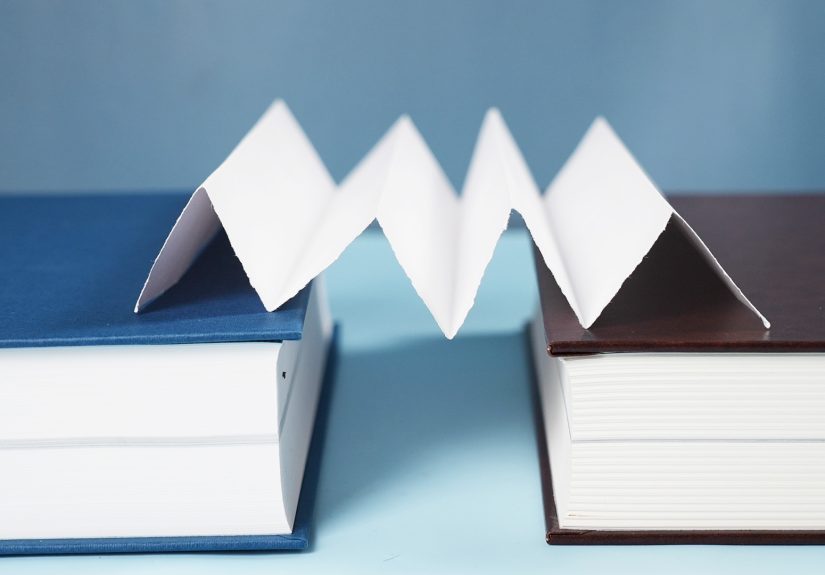
- A “W” or accordion fold
- A triangular prism
- A shallow arch shape with a flatter top surface
The key idea is that height usually helps. A bridge with depth is harder to bend than a thin, flat sheet. That is why real bridges use beams, trusses, and arches instead of giant flat slabs of “good luck, everybody.”
One smart beginner design is the folded channel bridge. Fold up both long sides about an inch, keep the center flat, and place the bridge so the folded sides stay vertical. Another strong option is the accordion design, where the repeated folds create ridges that stiffen the paper. If you are feeling adventurous, build a paper arch under a flat deck. Arches can redirect forces well, especially for short spans.
Step 4: Add Smart Support Features
Once you have a basic shape, improve it with structural thinking. Ask yourself: where is the bridge weakest? Usually the center. So that is where design matters most.
Here are some easy ways to strengthen a paper bridge without overcomplicating it:
Use Vertical Walls
Folding the sides upward adds stiffness and helps the bridge resist sagging. It is simple, fast, and surprisingly effective.
Try a Truss-Inspired Fold
You may not build a full truss bridge from one sheet of paper, but you can borrow the idea by making triangular folds. Triangles are great at holding shape, which is why engineers love them so much.
Shorten the Span When Allowed
If your challenge lets you move the supports, a shorter span usually performs better. Less distance means less bending and less drama.
Spread the Load
If you are placing pennies or weights on the bridge, do not pile everything in one tiny spot unless that is part of the test. A more evenly distributed load can help the structure perform better and gives you a more realistic test of how the design behaves.
Keep It Symmetrical
A bridge that is lopsided tends to twist, and twisting is not your friend. Try to keep folds even and balanced from left to right.
This is also the stage where restraint matters. More folds are not always better. Too many folds can weaken the paper, create sloppy joints, or make the bridge unstable. You are aiming for structure, not origami confusion.
Step 5: Test the Bridge and Record What Happens
Place the bridge on the supports and load it slowly. Add pennies one at a time. Count carefully. Watch what happens. Does the center sag first? Do the sides buckle? Does the whole thing slide off the books in a dramatic act of protest?
Write down the result. Good bridge building is not just making stuff; it is measuring stuff. Record the design, the number of pennies it held, where it failed, and what you think caused that failure. This turns a simple craft into a real engineering activity.
You can make a basic chart like this:
- Design A: Flat sheet held 2 pennies
- Design B: Folded channel held 24 pennies
- Design C: Accordion fold held 31 pennies
- Design D: Arch plus deck held 18 pennies
If you want to go one step further, compare strength to weight. A bridge that holds a lot while using very little material is usually a better design than one that is bulky and inefficient. That idea mirrors real engineering, where strength, cost, and material use all matter.
Step 6: Redesign and Build a Better Version
This is the step that separates random crafting from real design thinking. Do not stop after one test. Redesign.
Maybe your first bridge collapsed because the center was too flat. Add more depth. Maybe the walls bent outward. Make them taller or fold them more tightly. Maybe the load slipped off. Create a broader top surface. Maybe the arch worked, but the deck was unstable. Combine the best parts of two different designs.
The best paper bridge usually does not appear on the first try. It shows up after you test, observe, and improve. That cycle of plan, build, test, and redesign is the heart of engineering. It is also the reason failed bridges are not embarrassing. They are useful. They tell you what the paper is trying to say, and usually it is saying, “Please stop placing coins in the weakest possible spot.”
Best Paper Bridge Designs to Try
1. The Folded Beam
This is the easiest design for beginners. Fold up the edges to make a channel shape. It is quick, neat, and often much stronger than expected.
2. The Accordion Bridge
Fold the paper back and forth into ridges. This increases stiffness and can handle weight surprisingly well, especially over short spans.
3. The Tube Bridge
Roll the paper into one or more tubes. Tubes can resist bending well, though they may need careful placement to keep the load stable.
4. The Arch-and-Deck Combo
Create a paper arch underneath and place a flatter deck on top if your rules allow more than one piece. This design introduces real bridge concepts and often performs well when centered carefully.
5. The Triangular Fold Design
Use angled folds to create triangular support forms. This design is great for learning how geometry improves stability.
Common Mistakes When Building a Paper Bridge
- Using a flat sheet and expecting miracles
- Making uneven folds that cause twisting
- Testing too quickly and dropping all the weight at once
- Ignoring where the bridge failed
- Adding random tape instead of improving the shape
- Choosing a design that looks cool but has no load path
Yes, a cool-looking bridge is fun. But a cool-looking bridge that immediately folds like a sad taco is a different kind of lesson.
Paper Bridge FAQ
What is the strongest shape for a paper bridge?
There is no single perfect answer because it depends on the rules, span, and material. That said, folded beam shapes, ridged designs, and triangular or arch-inspired forms often outperform a flat sheet by a wide margin.
Can one sheet of paper really hold weight?
Yes. A flat sheet may hold very little, but once folded into a smarter shape, one sheet can support many coins or small weights.
Is this a good STEM project?
Absolutely. A paper bridge challenge teaches design, testing, force, geometry, problem-solving, and data recording in a hands-on way.
What kind of paper works best?
Standard printer paper is a great starting point because it folds neatly and is easy to compare across tests. Cardstock may be stronger, but it also changes the challenge.
Extra Experience: What Building a Paper Bridge Actually Teaches You
The first time I built a paper bridge, I thought I had cracked the code in under two minutes. I laid a sheet of paper across two books, dropped a few coins on top, and waited for greatness. What I got instead was a quick collapse and a very rude reminder that confidence is not a structural support. The paper sagged instantly. The coins slid. The bridge failed with the kind of efficiency most people reserve for professional sabotage. That first attempt was terrible, but it taught me the most important lesson right away: materials matter, but design matters more.
On the second try, I folded the paper in half. That version did better. Not amazing, not award-winning, not exactly ready for a ribbon-cutting ceremony, but better. Suddenly the bridge could hold a few more coins, and that tiny improvement changed everything. I stopped treating the activity like a craft and started treating it like an experiment. I tested one design after another, changing just one detail each time. Wider base. Taller sides. Sharper folds. More symmetry. Better load placement. Each failure became useful information instead of a reason to quit.
What surprised me most was how quickly the project turned into a lesson about patience. You cannot rush a good paper bridge. If your folds are crooked, the bridge twists. If you place the weight too fast, you miss the moment when the structure begins to fail. If you do not write down what happened, you end up repeating the same bad idea with more enthusiasm and no better result. The project rewards observation. You start noticing tiny changes: one extra fold can increase stiffness, a shorter span can make a weak design look strong, and a more centered load can completely change performance.
It also teaches humility in a fun way. Sometimes the design you are most proud of turns out to be weak. Sometimes the ugly little folded beam you almost ignored becomes the champion. That happens because good engineering is not about guessing what seems impressive. It is about testing what actually works. A paper bridge challenge makes that lesson visible in minutes. You can literally watch the difference between style and structure.
Another thing I learned is that this activity works well with almost any age group because it has layers. Younger kids can focus on building and testing. Older students can discuss compression, tension, span, and strength-to-weight ratio. Adults can pretend they are helping while secretly getting competitive about how many pennies their bridge can hold. It is one of those rare projects that feels playful and serious at the same time.
By the end of the experience, the bridge itself almost becomes secondary. Yes, you want the strongest design. Yes, it is satisfying when your final version holds a ridiculous number of coins and refuses to quit. But the real value is in the thinking process. You learn to define a problem, test a baseline, improve a design, and use evidence instead of hunches. That is why building a paper bridge is more than a quick activity. It is a compact lesson in engineering, resilience, and the fine art of learning from things that collapse in front of you.
Conclusion
Building a paper bridge is one of the easiest ways to explore real engineering ideas without spending much money or needing special equipment. In six simple steps, you can go from a flat sheet that barely survives a penny to a thoughtful design that carries a surprising load. Along the way, you learn how bridge design works, why folds matter, how weight placement affects performance, and why redesign is often where the smartest progress happens.
So grab some paper, set up two books, and start testing. Your first bridge may collapse. Your second one might wobble. Your third one could become a tiny masterpiece of folded genius. That is the beauty of the challenge. Every version teaches you something, and every improvement brings you one step closer to building a paper bridge that punches far above its weight.