Table of Contents >> Show >> Hide
- The Geographic Face: A Sea With a Complicated Personality
- The Island Face: Archipelagos, Silence, and Sea Wind
- The Historical Face: Amber, Trade, and Medieval Ambition
- The Coastal Face: Beaches That Refuse to Be Boring
- The Ecological Face: A Beautiful Sea Under Pressure
- The Cultural Face: Nine Shorelines, Many Voices
- The Culinary Face: Herring, Rye, Smoke, and Sea Air
- The Maritime Face: Ferries, Ports, and Working Water
- The Artistic Face: Light, Weather, and Mood
- The Future Face: Can the Baltic Sea Heal?
- Personal Experiences and Reflections: Meeting the Many Faces of the Baltic Sea
- Conclusion: The Baltic Sea Is a Mirror With Many Reflections
The Baltic Sea is not the kind of place that announces itself with tropical swagger. It does not strut in wearing palm trees, neon cocktails, and water so warm it feels like soup. Instead, it arrives quietly: a silver horizon, a wind-carved beach, a ferry horn in the distance, a gull with the confidence of a tax auditor, and a coastline that seems to change personality every few miles.
That is the real beauty behind Faces Of The Baltic Sea. This northern European sea is not one landscape but many. It is a brackish sea with a soft, complex character; a historic highway of merchants and sailors; a fragile ecosystem under pressure; a chain of islands, ports, forests, dunes, lighthouses, medieval towns, and modern capitals. It borders Denmark, Sweden, Finland, Estonia, Latvia, Lithuania, Poland, Germany, and Russia, making it one of Europe’s most culturally layered marine regions.
Look at the Baltic Sea once and you may see a gray-blue sheet of water. Look longer and faces begin to appear: the fisherman, the merchant, the amber hunter, the islander, the scientist, the traveler, the conservationist, the historian, and the child building a sandcastle while pretending the wind is not actively attacking everyone’s snacks.
The Geographic Face: A Sea With a Complicated Personality
The Baltic Sea is often described as a semi-enclosed arm of the Atlantic Ocean, connected to the North Sea through the Danish straits. That geography matters. Because the Baltic is partly enclosed and receives a great deal of freshwater from rivers and surrounding lands, it has lower salinity than most seas. In plain English: it is not quite ocean, not quite lake, and absolutely not interested in being put into a simple category.
This brackish nature shapes almost everything about the Baltic Sea ecosystem. Species that thrive in fully salty oceans may struggle here, while freshwater species can survive in certain bays and gulfs. The water changes character from south to north, from the more open Baltic Proper to the Gulf of Bothnia and the Gulf of Finland. The result is a marine world filled with gradients: saltier here, fresher there, deeper in one basin, shallow and reed-lined in another.
Its coastlines are equally varied. Sweden and Finland bring archipelagos, granite islands, pine forests, and summer cottages painted red and white. Poland and Germany offer long sandy beaches, resort towns, dunes, and historic ports. Latvia and Lithuania add wild shorelines, quiet forests, and the extraordinary Curonian Spit. Estonia contributes islands, medieval harbors, boggy backcountry, and a coastline that feels both ancient and newly discovered.
The Island Face: Archipelagos, Silence, and Sea Wind
One of the most memorable faces of the Baltic Sea is its island world. The Baltic is dotted with major islands such as Gotland, Öland, Bornholm, Saaremaa, Hiiumaa, and the Åland Islands, plus thousands of smaller islets that look as if someone shook a bag of stones over a blue map.
These islands are not decorative extras. They have shaped trade, defense, folklore, fishing, and travel for centuries. Gotland, for example, sits in a strategically important part of the sea and is known for its medieval heritage, limestone landscapes, and the walled town of Visby. Bornholm, Danish but geographically closer to Sweden and Poland, has fishing villages, round churches, smokehouses, rocky cliffs, and a surprisingly sunny personality for a northern island.
The Åland Islands between Sweden and Finland have their own identity, Swedish-speaking culture, maritime traditions, and peaceful rhythm. Saaremaa in Estonia is famous for windmills, spas, juniper landscapes, and legends that seem to rise naturally from the mist. These islands remind travelers that the Baltic Sea is not only a body of water. It is a neighborhood, and each island is a house with its own smell of coffee, smoked fish, wet wool, and old stories.
The Historical Face: Amber, Trade, and Medieval Ambition
Long before the Baltic became a vacation map full of ferry routes and cozy hotels, it was a working sea. Merchants, shipbuilders, sailors, and city leaders understood that water could connect wealth faster than roads ever could. During the Middle Ages, the Hanseatic League helped turn Baltic and North Sea trade into a powerful commercial network linking cities such as Lübeck, Tallinn, Riga, Gdańsk, and Visby.
The Hanseatic world was practical, ambitious, and not exactly shy about protecting its interests. Merchants moved timber, grain, wax, furs, fish, salt, cloth, and other goods through Baltic ports. In the process, they helped create a shared architectural and commercial culture that is still visible today in brick warehouses, church towers, guild halls, and old town squares.
Then there is amber, the Baltic’s golden memory. Baltic amber has been prized for thousands of years, traveling through ancient trade routes far beyond northern Europe. It is fossilized resin, but that description feels unfairly dull for something that can glow like captured sunlight. People have turned it into beads, amulets, jewelry, religious objects, and luxury ornaments. Sometimes amber even preserves insects or plant fragments inside it, like nature’s tiniest museum display.
The Coastal Face: Beaches That Refuse to Be Boring
The Baltic Sea coast does not offer one single beach style. It has broad resort beaches where families rent umbrellas and eat ice cream before noon. It has empty stretches of sand backed by pine forests. It has rocky Swedish shores where the water slaps against granite. It has dunes that move, lagoons that shimmer, and fishing villages where boats look like they were painted by someone with excellent taste and limited patience for subtle colors.
Germany’s Baltic coast, especially around places like Rügen, Usedom, Wismar, and Rostock, blends seaside tourism with maritime history. Poland’s coast includes Gdańsk, Sopot, Gdynia, and long beaches that become lively during summer. Latvia’s coastline offers white sand, forests, and places like Jūrmala, Liepāja, and Cape Kolka, where the sea feels open, windy, and beautifully untamed.
Lithuania’s coast is shorter but unforgettable, especially where the Curonian Spit separates the Baltic Sea from the Curonian Lagoon. This narrow sand-dune landscape, shared by Lithuania and Russia’s Kaliningrad region, is recognized by UNESCO as a cultural landscape shaped by sea, wind, and human effort. It is a place where dunes rise like sleeping animals and villages seem to understand that the horizon is the main attraction.
The Ecological Face: A Beautiful Sea Under Pressure
The Baltic Sea is gorgeous, but it is also vulnerable. Its semi-enclosed shape and slow water exchange make it sensitive to pollution, nutrient runoff, and oxygen depletion. When excess nitrogen and phosphorus enter the sea from agriculture, wastewater, and other human activities, they can feed algal blooms. When algae die and decompose, oxygen levels can drop, creating hypoxic zones where many aquatic organisms cannot survive.
Scientists often discuss the Baltic Sea as a warning system for coastal oceans. It already experiences warming, acidification, nutrient pollution, and deoxygenation at levels that other marine regions may face more intensely in the future. That makes the Baltic not only a regional concern but a living laboratory for understanding how seas respond when human pressure and climate change meet in shallow, enclosed waters.
Summer satellite images sometimes show vast green swirls of cyanobacteria and phytoplankton across the Baltic. From space, these blooms can look like abstract art. On the water, they are more complicated: part natural process, part symptom of nutrient overload, part reminder that beauty and imbalance can wear the same colors.
Wildlife in a Brackish World
The Baltic Sea supports fish, seabirds, seals, porpoises, plants, plankton, and benthic life adapted to its unusual conditions. Herring and sprat remain important species in the food web and regional fisheries. Cod, once a major commercial species, has suffered from a combination of overfishing, low oxygen, changing food availability, and environmental stress.
The Baltic also has marine mammals such as gray seals, ringed seals, harbor seals, and the critically endangered Baltic population of harbor porpoise. Coastal wetlands, islands, and shallow waters provide crucial habitats for birds during breeding and migration. This is a sea where tiny organisms and top predators are connected by delicate threads, and when one thread weakens, the entire pattern can shift.
The Cultural Face: Nine Shorelines, Many Voices
Because the Baltic Sea touches so many countries, it has no single cultural voice. It speaks Swedish, Finnish, Danish, German, Polish, Estonian, Latvian, Lithuanian, Russian, and several regional dialects and minority languages. It sings sea shanties, Lutheran hymns, folk songs, ferry announcements, and the universal language of someone yelling “Don’t feed the gulls!” approximately three seconds too late.
In coastal cities, the Baltic’s cultural face becomes especially vivid. Stockholm spreads across islands and waterways with royal elegance and practical Scandinavian confidence. Helsinki faces the Gulf of Finland with neoclassical squares, design culture, saunas, and ferries. Tallinn’s old town feels like a medieval postcard that somehow got Wi-Fi. Riga combines art nouveau architecture, markets, riverfront life, and a strong sense of Baltic identity.
Gdańsk in Poland is one of the great Baltic port cities, shaped by trade, conflict, reconstruction, shipyards, and civic courage. Lübeck in Germany still reflects its Hanseatic heritage. Klaipėda in Lithuania connects the country to the sea and the Curonian Spit. Each city shows a different face of the Baltic: elegant, practical, weathered, resilient, festive, scholarly, stubborn, and sometimes all of those before lunch.
The Culinary Face: Herring, Rye, Smoke, and Sea Air
The Baltic Sea also has a flavor profile. It tastes like smoked fish, pickled herring, rye bread, dill, potatoes, mushrooms, berries, sour cream, dark beer, coffee, and pastry eaten while wearing a jacket in July because the breeze has opinions.
Herring is one of the region’s signature ingredients. It can be pickled, fried, smoked, marinated, or served with potatoes and onions. Salmon, sprat, cod, flounder, and perch appear in different coastal traditions. In Sweden and Finland, seafood meets Nordic simplicity: clean flavors, seasonal produce, and a deep respect for preservation. In Poland and the Baltic states, coastal cooking often blends fish with hearty inland ingredients such as rye, cabbage, root vegetables, and forest mushrooms.
Food around the Baltic Sea is rarely flashy. It is honest, practical, and deeply tied to climate. Preservation methods such as smoking, salting, pickling, and fermenting evolved because northern winters were not interested in anyone’s dinner plans. Today, those old methods have become culinary identity, giving the Baltic table its unmistakable balance of salt, smoke, sourness, sweetness, and comfort.
The Maritime Face: Ferries, Ports, and Working Water
The Baltic Sea is not only scenic. It is busy. Ferries cross between capitals and islands, cargo ships move through major ports, fishing vessels work coastal waters, and naval activity reflects the sea’s strategic importance. For travelers, ferries are part of the Baltic experience. A night crossing between Stockholm and Helsinki, Tallinn and Helsinki, or other regional routes can feel like a floating hotel, a moving viewpoint, and a mild test of how much buffet one person should responsibly attempt.
For economies, the sea is a corridor. Ports such as Gdańsk, Gdynia, Rostock, Lübeck, Tallinn, Riga, Helsinki, Stockholm, and Klaipėda link regional industries to wider markets. For security planners, the Baltic Sea is also a strategic space, especially in an era when energy infrastructure, underwater cables, shipping routes, and regional defense have become major concerns.
This working face of the Baltic sometimes hides behind postcards, but it is always there: cranes, docks, shipyards, pilot boats, container terminals, naval patrols, and lighthouses keeping watch. The sea is romantic, yes, but it also clocks in early.
The Artistic Face: Light, Weather, and Mood
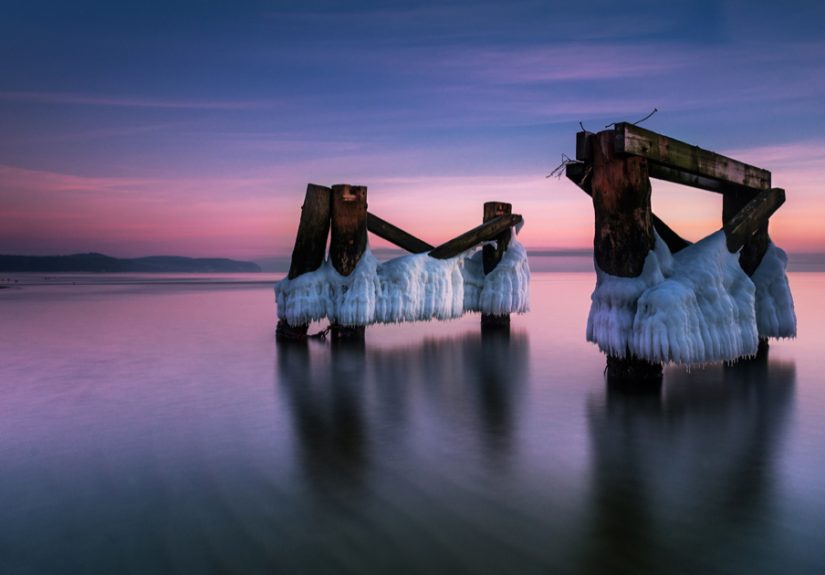
The Baltic Sea is a master of mood lighting. Its colors shift from pewter to steel blue, green, lavender, pale gold, and winter black. In summer, late sunsets can stretch the evening into something almost theatrical. In winter, the light becomes low and sharp, turning harbors into scenes of quiet endurance.
Artists, photographers, writers, and filmmakers are drawn to this atmosphere because it does not over-explain itself. The Baltic can feel peaceful without being soft, beautiful without being decorative, lonely without being empty. A single lighthouse on a dune may say more than a crowded skyline. A row of boats under gray clouds can become a whole philosophy, especially if you have had enough coffee.
The sea’s visual identity is built from contrasts: old brick towns and modern design, pine forests and open water, white sand and dark waves, summer cottages and industrial docks, medieval towers and satellite-monitored algal blooms. These contrasts give the Baltic Sea its many faces and make it a rich subject for photography, essays, travel writing, and environmental storytelling.
The Future Face: Can the Baltic Sea Heal?
The Baltic Sea’s future depends on cooperation. No single country can protect it alone because rivers, currents, ships, fish, pollution, and weather do not politely stop at borders. Environmental agreements, marine protection, better wastewater treatment, reduced agricultural runoff, sustainable fisheries, habitat restoration, and climate action all matter.
There has been progress in some areas, but the challenges remain serious. Nutrient pollution, oxygen depletion, fish stock decline, hazardous substances, coastal development, invasive species, and warming temperatures continue to stress the ecosystem. Restoration projects targeting wetlands, seagrass, reefs, coastal habitats, and fish migration routes can help rebuild resilience, but recovery requires patience. Seas do not heal on a weekend schedule.
Still, the Baltic Sea has one advantage: people care about it. Scientists monitor it, local communities defend it, conservation groups restore habitats, and travelers increasingly seek slower, more responsible ways to experience its coasts. The future face of the Baltic Sea does not have to be a sad one. It can be a face of repair, responsibility, and renewed wonder.
Personal Experiences and Reflections: Meeting the Many Faces of the Baltic Sea
To experience the Baltic Sea properly, you have to slow down. This is not a sea that rewards the traveler who rushes from landmark to landmark with a checklist and a phone battery at 4 percent. The Baltic asks for lingering. It wants you to stand on a pier longer than necessary, listen to rope tapping against a mast, and notice that the water is not simply blue or gray but some mysterious northern color that probably has a very specific name in Swedish.
One of the most memorable Baltic experiences is walking along a beach when the weather cannot decide what it wants to be. The wind comes in cool, the clouds move like stage scenery, and the sun breaks through just long enough to turn the water silver. You may start the walk thinking about photographs, but eventually the rhythm of the shore takes over. Sand crunches underfoot. Beach grass bends. A gull complains. Somewhere behind the dunes, pine trees release that clean resin smell that makes the whole coastline feel like an enormous outdoor sauna, minus the part where someone insists you jump into freezing water afterward.
Another unforgettable experience is arriving in a Baltic port by ferry. Cities look different from the water. Tallinn’s towers, Helsinki’s harbor islands, Stockholm’s waterways, and Gdańsk’s maritime edges all gain drama when approached by sea. The ferry deck becomes a small theater of travelers: families taking photos, commuters pretending not to enjoy the view, backpackers guarding coffee like treasure, and at least one person underdressed for the wind because optimism is not the same as preparation.
The Baltic also teaches you to appreciate small details. A smoked fish stall near a harbor can be more memorable than a formal restaurant. A wooden bench facing the water can become the best seat in town. A lighthouse may seem ordinary on a map, then become unforgettable when you see it standing alone against a restless sky. Even a cold swim, if you are brave or temporarily unreasonable, becomes a story. The first shock of Baltic water has a way of making every life decision flash before your eyes, including the decision to enter the water in the first place.
There is also a deeper emotional experience in the Baltic region. Many coastal towns carry visible layers of history: medieval trade, imperial ambition, war, occupation, independence, reconstruction, and modern European life. You feel that history in old warehouses, cobbled streets, shipyards, memorials, and market halls. The sea has witnessed prosperity and pain, departures and returns, ordinary work and extraordinary upheaval. That weight does not make the Baltic gloomy. It makes it human.
The best way to understand Faces Of The Baltic Sea is to let those faces appear one at a time. Spend a morning in a harbor. Walk through a forest to a beach. Eat herring even if you are suspicious of herring. Visit a maritime museum. Watch a ferry leave at dusk. Read about algal blooms and remember that beauty needs protection. Pick up a piece of amber-colored glass and pretend for half a second it is ancient treasure, then put it back because responsible travel is attractive.
By the end, the Baltic Sea becomes less of a destination and more of a character. It is calm but not simple, cold but not unfriendly, historic but not frozen in time. It has the face of a fisherman repairing a net, a child chasing waves, a scientist studying oxygen levels, a cook smoking herring, a sailor watching the weather, and a traveler standing quietly at the edge of the water. That is the Baltic’s gift: it does not show you one face. It shows you many, and somehow each one feels true.
Conclusion: The Baltic Sea Is a Mirror With Many Reflections
The Baltic Sea is more than a northern European waterway. It is a living archive of geography, culture, ecology, commerce, conflict, food, art, and memory. Its brackish waters connect nine coastal nations and countless communities. Its islands preserve silence and tradition. Its ports tell stories of trade and transformation. Its beaches offer beauty without pretending the weather is always on your side.
At the same time, the Baltic Sea is fragile. Its environmental struggles are real, from nutrient pollution and algal blooms to oxygen depletion and stressed fish stocks. To admire the Baltic honestly, we must see both its charm and its challenges. The many faces of the Baltic Sea include wonder, warning, resilience, and hope.
For travelers, writers, photographers, and curious readers, the Baltic Sea offers something rare: a destination that becomes more interesting the more closely you look. It is not just a sea to cross or a coast to visit. It is a story still being written by wind, water, people, and time.