Table of Contents >> Show >> Hide
- What the Flint Outdoors Roll Top Actually Is
- Why Roll-Top Closures Still Win Friends (and Keep Their Stuff Dry-ish)
- The Materials: Waxed Canvas, Veg-Tan Leather, and the Art of Getting Better with Age
- Organization and Carry: How It Works Day-to-Day
- How to Pack a Roll-Top So It Doesn’t Turn Into a Bottomless Pit
- Flint Outdoors Roll Top vs. Modern Roll-Top Packs
- Care & Maintenance: Keep It Rugged, Not Ragged
- Who This Bag Is Perfect For (and Who Should Keep Shopping)
- Conclusion
- Field Notes: of Real-Life Flint Outdoors Roll Top Moments
Some backpacks scream for attention. Others quietly earn itone scuff, one rain shower, one overstuffed grocery run at a time.
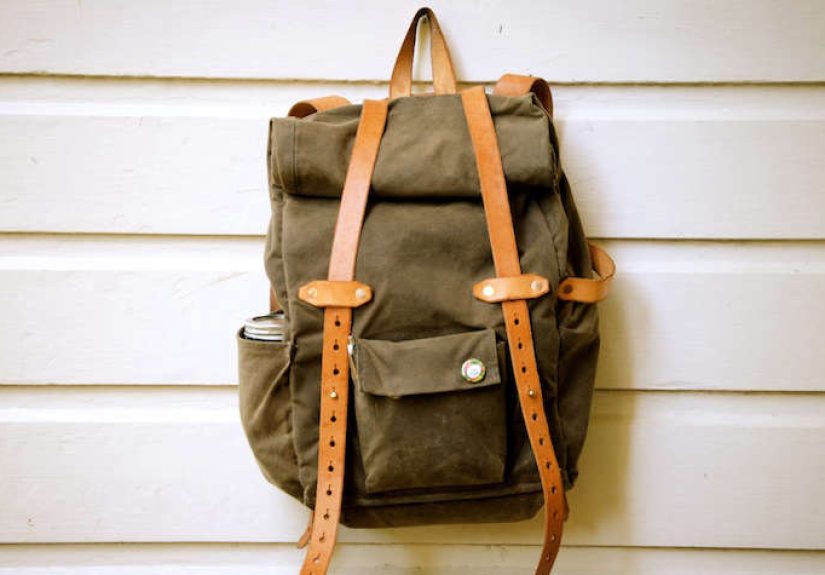
The Flint Outdoors Roll Top sits firmly in the second camp: an understated, heritage-leaning roll-top backpack
built around classic materials and simple, purposeful layout.
If you’re the kind of person who appreciates gear that looks better after it’s been used (instead of looking like it needs therapy),
this bag has a lot going for it: waxed canvas, vegetable-tanned leather, copper rivets, and solid brass hardware. In other words:
it’s not here to win an ultralight contestit’s here to become your “I’ve had this forever” bag.
What the Flint Outdoors Roll Top Actually Is
The Flint Outdoors Roll Top is a handmade, roll-top backpack designed to be adaptable: compact when you roll it down, and roomy when
you let it unroll and carry a bigger load. The published build details emphasize durable, traditional componentsparticularly
U.S.-made waxed canvas, vegetable-tanned leather, copper rivets, and
solid brass hardware.
Feature-wise, it’s refreshingly straightforward. The commonly listed layout includes:
- Roll-top main compartment (expandable height depending on how you roll it)
- Front accordion pocket for quick-grab items
- Side bottle pocket (the “hydration matters” nod)
- Rear sleeve often described as a “newspaper sleeve” (today: mail, a magazine, or a slim notebook)
- Internal laptop sleeve sized for a 15″ MacBook Pro (classic 15″, not the “is-this-a-TV” 16″)
Dimensions are typically listed around 15.5″ tall rolled / 25.5″ tall unrolled, with an approximately
11.5″ width and 7″ depth. Translation: it’s sized like a practical daypack with a roll-top’s
“sometimes I’m a little bigger” magic trick.
Why Roll-Top Closures Still Win Friends (and Keep Their Stuff Dry-ish)
Roll-tops have a reputation for being both rugged and forgiving. The basic idea is simple: extra material at the top lets you
roll down the opening until it’s snug, then buckle it. This does three things well:
1) Volume that adapts to real life
A roll-top can slim down for light carry (lunch, jacket, notebook) or expand for bulkier days (gym shoes, a grocery haul, a camera,
or the “I swear I’m packing light” sweater you absolutely didn’t need but bought anyway).
2) Fewer failure points than zipper-heavy designs
Zippers are convenient, but they’re also the part that loves to fail when you’re a mile from the car, in the rain,
with a granola bar that has somehow fused to your glove. Roll-tops reduce reliance on long zippers for the main opening.
3) Better weather resistance by design
Roll-top closures are widely used in dry bags and weatherproof packs because a properly folded/rolled closure blocks a lot of
water entryespecially compared with a big exposed zipper. (Important nuance: “more weather resistant” is not the same as
“submersible,” and the exact performance depends on fabric, seams, and how you close it.)
| Roll-Top Pros | Roll-Top Cons |
|---|---|
| Expandable capacity without looking like a suitcase on your back | Slower access to deep items (your keys will audition for hide-and-seek) |
| Typically more weather resistant than a big zip opening | Less built-in organization than clamshell travel bags |
| Simple closure = fewer parts to break | Top-loading can feel like a “cavern” if you don’t pack intentionally |
| Compresses your load and reduces “bag wobble” when rolled down | Quick “one-handed” access is rarely the roll-top’s superpower |
The Materials: Waxed Canvas, Veg-Tan Leather, and the Art of Getting Better with Age
The Flint Outdoors Roll Top leans hard into heritage materialsand that’s the point. It’s designed to be used, scuffed, and
gradually personalized by real life.
Waxed canvas: the quiet workhorse
Waxed canvas is typically cotton canvas treated with wax to increase water repellency and resistance to abrasion. It’s known for
“beading” water when the wax is healthy and for developing visible wear patterns over time (creases, highlights, darkened high-contact
areas). That worn-in look is not damageit’s the bag doing its job.
The tradeoff is that waxed canvas behaves differently than modern technical nylons. It can feel stiffer, it can show marks,
and it requires occasional maintenance if you want peak water resistance. But that maintenance is usually straightforward:
clean gently, re-wax when needed, warm the wax in, and let it cure.
Vegetable-tanned leather: patina is the feature
“Veg-tan” leather is prized because it ages visibly and uniquely. Oils from hands, sun exposure, small scratches, and friction
gradually deepen the color and sheenwhat people call patina. If you want a bag that stays looking exactly the same forever,
veg-tan is… not that. If you want a bag that tells a story without you having to narrate it, you’re in the right aisle.
Copper rivets and solid brass hardware: old-school for a reason
Copper rivets are a classic reinforcement choice for leather-and-canvas builds because they hold well and suit one-sided
applications where you want a clean finish. Solid brass hardware is a common pick in heritage goods for durability and
corrosion resistance, plus it develops a softer, warmer look over time. (Yes, your hardware can “patina” too. Your bag is basically
a slow-burn makeover montage.)
Organization and Carry: How It Works Day-to-Day
This bag isn’t trying to be a pocket labyrinth. Instead, it gives you a few purposeful zones and expects you to be a functioning adult
who can group items. (Or at least someone who can pretend long enough to find their sunglasses.)
The front accordion pocket
This is where the bag earns commuter points: a place for quick-access items like a small pouch, snack, compact camera,
or a light pair of gloves. Accordion pockets can expand a bit without turning the bag into a lumpy science project.
The side bottle pocket
A dedicated bottle pocket sounds boring until you don’t have one. Then it becomes a whole personality.
This also doubles as an umbrella slot, which is the adult version of being prepared.
The rear sleeve (“newspaper sleeve”)
This is a very specific feature name from a very specific era, and it’s charming. Modern use cases: mail, a folded jacket,
a slim notebook, a magazine, or the documents you absolutely meant to file last week.
The internal laptop sleeve
A laptop sleeve inside the main compartment is protective, but not “instant access.” If you go through airport security a lot,
that means you’ll want to pack smartly: keep the laptop closest to the opening and avoid stacking a bowling ball on top of it
(even if you really love bowling).
How to Pack a Roll-Top So It Doesn’t Turn Into a Bottomless Pit
Roll-tops reward a little strategy. Here’s a simple system that makes the Flint Outdoors Roll Top feel organized without needing
a dozen internal dividers:
- Use a small pouch for “tiny chaos” (keys, chargers, lip balm, earbuds).
- Put heavy items vertical and close to your back (water bottle, camera lens, book) to reduce swing.
- Soft items fill the corners (hoodie, hat, scarf) so the bag keeps a clean shape.
- Leave a little roll room so you can close it properlyoverstuffing defeats the closure design.
Flint Outdoors Roll Top vs. Modern Roll-Top Packs
It helps to understand what this bag is not. It’s not a laminated, seam-taped, fully waterproof technical pack built to be
dragged up an alpine route. It’s also not a hyper-organized travel clamshell with a zipper for every conceivable emotion.
Think of the Flint Outdoors Roll Top as a “heritage daily driver” with genuine outdoor capability:
tough materials, weather resistance, and flexible capacitypaired with a handcrafted aesthetic.
If you want maximum weatherproofing
Technical roll-tops sold as waterproof often lean on coated fabrics, sealed seams, and specific protection ratings.
The Flint’s waxed canvas is water repellent, but it’s not the same category as a purpose-built, seam-taped waterproof pack.
For heavy rain commutes, some people pair heritage packs with an internal dry bag or laptop sleeve as an extra layer of protection.
If you want the most convenient tech access
Many modern commuter roll-tops include external laptop zips and quick access pockets.
The Flint’s simplicity looks great and wears wellbut it expects you to pack thoughtfully.
If you want something that ages like a favorite jacket
This is where the Flint shines. Waxed canvas and veg-tan leather are materials that gain character, not just mileage.
If you love the idea of your backpack looking a little more “yours” every year, this design philosophy makes sense.
Care & Maintenance: Keep It Rugged, Not Ragged
Heritage materials are low drama, not no drama. The good news: care is simple, and you don’t need a laboratoryjust a few sensible habits.
Waxed canvas care
- Spot clean gently with a damp cloth and soft brush. Avoid harsh detergents.
- Skip the washing machine for waxed canvas items; it strips wax and can change the fabric’s character.
- Re-wax when water stops beading or when high-wear zones look dry. Apply wax evenly, warm it in, and let it cure fully.
Leather care
- Condition lightly if it looks dryespecially the strap areas and high-flex points.
- Expect color change (that’s the patina doing its thing).
- Avoid soakingif it gets wet, let it dry naturally away from direct heat.
Hardware check
- Inspect rivets and buckles once in a while, especially if you routinely overload the bag.
- Wipe down brass hardware if it gets gritty; it’ll age nicely, but sand shouldn’t become a permanent roommate.
Who This Bag Is Perfect For (and Who Should Keep Shopping)
Perfect for you if…
- You like heritage materials that develop patina instead of staying pristine.
- You want a roll-top that can expand for daily life without looking bulky.
- You prefer simple organization and you don’t need a pocket for every paperclip.
- You want something that feels handmade and intentional, not mass-produced.
Maybe not your best match if…
- You need fast, external laptop access multiple times a day.
- You want fully waterproof, seam-taped, submersion-resistant performance.
- You hate the idea of visible wear marks (waxed canvas is going to have opinions).
Conclusion
The Flint Outdoors Roll Top is the kind of backpack you buy because you want it to lastand you want it to look
increasingly like it’s been places. It’s not a high-tech “spec sheet flex.” It’s a classic roll-top executed with serious materials
and a layout that makes sense for commuting, errands, and weekend wandering.
If your ideal bag is equal parts practical and handsomebuilt for real use, not just photosthe Flint Outdoors Roll Top is a
compelling, character-rich option. It’s the backpack equivalent of a well-made pair of boots: it won’t do the walking for you,
but it’ll be ready every time you do.
Field Notes: of Real-Life Flint Outdoors Roll Top Moments
Let’s talk about what the Flint Outdoors Roll Top feels like in actual usebecause “waxed canvas” is a vibe, but it’s also a lifestyle.
The first thing most people notice is the structure: waxed canvas has a satisfying stiffness that helps the bag keep its shape.
When you set it down, it doesn’t immediately collapse like a sleepy nylon sack. It stands there like it has plans.
On a weekday commute, the roll-top becomes a small ritual. You drop in a laptop, a notebook, maybe a lunch container that always
smells faintly like yesterday’s garlic (no judgment). You roll the top down and buckle it, and suddenly the bag looks tidy and compact,
even if your schedule is neither. The front accordion pocket is where your “I need this fast” stuff lives: keys, earbuds, lip balm,
a tiny flashlight you bought after convincing yourself you are an “EDC person” now. It expands just enough that you can actually use it,
which is more than we can say for some fashion-forward pockets that appear to be decorative lies.
Then the weekend hits. You unroll the top, and the bag becomes noticeably more generouslike it drank an espresso and remembered its purpose.
Toss in a light jacket, a thermos, a paperback, a small camera, and a couple snacks. If you’re walking a trail or spending the day out,
you’ll appreciate that roll-top compression: once you’ve eaten the snacks (RIP snacks), you can roll it down tighter so the remaining load
doesn’t slosh around. That “less wobble” feeling is subtle, but it makes the carry feel more controlled.
Rainy-day behavior is where waxed canvas gets to show off. When the wax is healthy, water tends to bead and run off rather than soaking in.
You’ll still want common senseelectronics deserve a sleevebut there’s something satisfying about wiping the bag down at home and watching it
look ready for tomorrow. Over time, you’ll also notice the bag starting to tell a story: the edges get slightly burnished, high-contact areas
darken, and the leather slowly warms in color. It’s not “wearing out” so much as “settling in.”
The only consistent roll-top complaint is access. If you’re constantly grabbing a charger at the bottom of the bag, you’ll learn to pack smarter
or develop the arm-length of a cartoon character. But if you embrace the roll-top rhythmpouch for small items, heavier gear close to your back,
softer items around the edgesit becomes second nature. The Flint Outdoors Roll Top ends up feeling less like a gadget and more like a companion:
dependable, good-looking, and quietly getting better as you do the fun part (actually going outside).