Table of Contents >> Show >> Hide
- Why Japanese Camp Furniture Has a Moment
- What Makes Peregrine Camp Furniture Different?
- Standout Peregrine Pieces Worth Knowing
- How Peregrine Compares with Typical Camping Furniture
- Best Uses for Peregrine Camp Furniture
- Care Tips for Wooden Camp Furniture
- Buying Considerations Before You Choose Peregrine
- Why Peregrine Appeals to the Modern Outdoor Enthusiast
- Field Notes: Living with Peregrine-Style Camp Furniture
- Conclusion: Outdoor Furniture with a Soul
Some outdoor furniture looks like it was designed during a coffee break in a warehouse. It folds, technically. It holds a cup, usually. It survives a weekend, maybe. Then there is Peregrine camp furniture from Japan: quietly clever, beautifully made, and so charmingly practical that it makes your old wobbly camp table look like it needs a career change.
Peregrine Furniture, often associated with Peregrine Design, is a Japanese outdoor goods brand known for furniture and accessories that blend woodcraft, portability, and a warm, home-like aesthetic. Instead of treating the campsite as a place where comfort must be sacrificed, Peregrine treats it as a smaller, windier living roomone with trees, stars, and occasionally a squirrel judging your snack choices.
The brand’s appeal sits right in the sweet spot between form and function. Its tables, benches, stools, pot stands, and outdoor accessories are designed to pack down, set up with minimal fuss, and still look good enough for a balcony, garden, tiny cabin, or design-conscious apartment. For campers who care about atmosphere as much as gear specs, Peregrine offers something rare: outdoor furniture that feels intentional, not temporary.
Why Japanese Camp Furniture Has a Moment
Japanese outdoor design has earned a loyal following in the United States because it approaches camping differently. The usual American camping story often centers on ruggedness: big coolers, heavy chairs, and enough gear to make your SUV sigh. Japanese camping culture, by contrast, often highlights slower living, compact organization, adaptable systems, and the idea that outdoor time should feel restorative rather than chaotic.
Peregrine fits beautifully into that world. Its pieces are not ultralight backpacking gear for shaving grams on a thru-hike. They are better understood as refined car-camping furniture, patio-friendly outdoor pieces, and compact lifestyle objects for people who want camp to feel calm, organized, and a little poetic. Think low tables, natural wood grain, fold-flat profiles, roll-top construction, and subtle details that reward repeat use.
This is where “form meets function” stops being a slogan and becomes a design philosophy. A table should be stable, yes. But it can also have rhythm in the slats. A bench should support two adults, yes. But it can also have armrests that feel like actual furniture instead of plumbing hardware with fabric attached. A stool should fold flat, yes. But it can also look good leaning against a wall at home.
What Makes Peregrine Camp Furniture Different?
1. Natural Materials with Character
One of Peregrine’s strongest signatures is its use of wood. Products such as the Donkey Table use woods like walnut and tamo, and the brand often emphasizes the individuality of natural grain. That matters because camp furniture usually leans heavily on aluminum, plastic, and synthetic fabric. Those materials are practical, but they rarely make you pause and say, “Wow, this table has personality.”
Wood brings warmth. It softens the campsite. It makes a meal of instant noodles and grilled vegetables feel less like survival practice and more like dinner. Peregrine’s wooden surfaces also age in a way that tells stories. Small marks, color changes, and grain differences are not necessarily flaws; they are part of the appeal. Of course, wood requires more care than a metal utility table, but for many design-minded campers, that trade-off is exactly the point.
2. Portability Without the Plastic Look
Good camp furniture must move. If it cannot fit into a car, storage closet, balcony corner, or gear shelf, it becomes a beautiful problem. Peregrine solves this through folding, rolling, and flat-pack concepts. The Donkey Table, for example, is a roll-top table designed to curl into a compact cylindrical shape for storage and transport. It uses simple assembly methods and traditional joinery-inspired construction to balance convenience with strength.
The result is furniture that feels portable but not disposable. That distinction is important. Many folding tables are easy to carry because they are built as cheaply as possible. Peregrine pieces feel more like furniture that happens to travel. They are the kind of objects you can imagine using at a campsite on Saturday, then on a balcony for coffee on Monday morning.
3. Low, Relaxed Camp Living
A lot of Japanese camp furniture embraces a lower seating and table height. Peregrine’s Donkey Table has a relaxed coffee-table-like height, which suits low chairs, floor cushions, and casual lounging. That lower posture changes the mood of camp. Instead of standing around a tall prep table like you are working a shift at an outdoor cafeteria, you sit closer to the ground, closer to the fire, and closer to the people around you.
Low furniture is also practical on uneven ground, where a lower center of gravity can feel more stable. It creates an intimate dining and lounging setup, especially for small groups. For families, couples, or friends who enjoy slow mornings and long fireside evenings, this style can make camp feel less like a temporary setup and more like a small outdoor room.
Standout Peregrine Pieces Worth Knowing
Donkey Table: The Friendly Workhorse
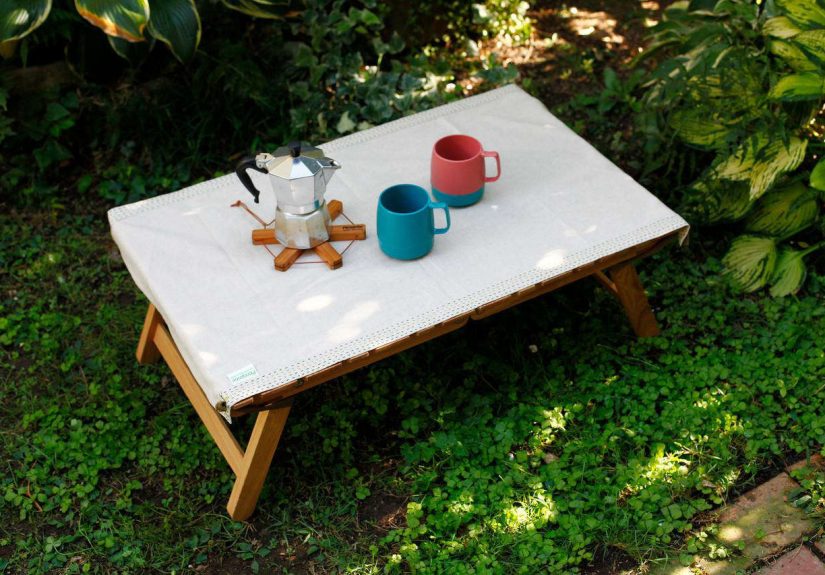
The Donkey Table may be one of Peregrine’s most representative pieces. It is a roll-top wooden table designed for two to three people, with a top around 78 centimeters wide and 58 centimeters deep. It packs into a compact cylinder and is assembled with straightforward hardware, including Velcro and bolts. Peregrine notes that the connection uses a traditional half-lap-style approach to help provide strength and rigidity.
What makes the Donkey Table special is not just that it folds. Plenty of tables fold. The charm is in the balance. It has enough surface area for dinner, coffee, a lantern, a board game, or the sacred campground snack spread. At the same time, its slatted top gives it visual rhythm, while the open space underneath keeps the design from feeling bulky. It is simple without being boring, which is a surprisingly difficult trick.
It also reflects the brand’s honest relationship with natural materials. Peregrine notes that natural wood can vary in grain and may experience slight twisting, warping, or size differences. That kind of disclaimer is not glamorous, but it is refreshingly real. Wood is not plastic. It moves, changes, and reacts to moisture and time. In return, it gives you warmth and character that mass-produced gear usually cannot match.
Grand Ecdysis Bench: A Two-Person Seat with Indoor-Outdoor Energy
The Grand Ecdysis Bench is a folding two-person bench designed for outdoor use, semi-outdoor spaces such as balconies and rooftops, and even indoor lounging. Current versions include painted-frame and plain-frame options, with polyester seating and wooden armrests. Peregrine describes it as large enough for two adults to sit comfortably, with a folded shape that includes a handle-like opening for easier carrying.
This bench shows why Peregrine attracts people who care about both camping and interiors. It does not scream “gear closet.” It looks more like a piece from a small design studio that wandered into the woods and decided to stay for dinner. The cup-holder armrests add convenience, while the folding structure keeps it practical for car camping and compact storage.
At roughly six kilograms depending on the version, this is not something you would carry deep into the backcountry. But for car camping, backyard fire pits, music weekends, beachside setups, or van-life lounging, it makes sense. It is furniture for people who want a real seat, not a fabric sling that slowly turns them into a human taco.
Tick Tuck Stool: Small, Adjustable, and Clever
The Tick Tuck Stool is another example of Peregrine’s compact thinking. Earlier product descriptions highlight adjustable height, folding storage, wooden legs, and a removable washable seat. A small stool like this can do a lot of jobs at camp: extra seating, ottoman, side table, gear perch, or the place where someone sets down a coffee and immediately forgets it.
Small furniture matters because campsites are full of little needs. You need somewhere to lace boots, chop herbs, rest a lantern, hold a book, or sit while poking the fire responsibly like a civilized marshmallow engineer. A compact stool is rarely the star of the setup, but you miss it when it is not there.
Star Pot Stand and Small Accessories: The Details That Make Camp Feel Designed
Peregrine’s smaller accessories, such as wooden pot stands and leather-accented goods, show the brand’s design personality at a more accessible scale. The Star Pot Stand, for example, has been described as a compact wooden trivet-like piece made with compressed cedar, brass fittings, and leather straps. It is a tiny object, but it captures the same mood as the larger furniture: natural, useful, compact, and quietly decorative.
These accessories matter because outdoor comfort is built through small details. A well-placed pot stand protects a table. A good apron holds tools. A tidy gear case prevents the classic campsite activity known as “Where did I put the lighter?” When all those small objects work together, camp becomes smoother, calmer, and far more enjoyable.
How Peregrine Compares with Typical Camping Furniture
Most mainstream camping furniture is judged by a few practical categories: weight, packed size, setup speed, comfort, durability, and price. Those criteria are still important when evaluating Peregrine. A table that looks beautiful but takes forever to assemble will test your patience before the water boils. A chair that folds flat but feels like punishment will not become a favorite.
Where Peregrine differs is in emotional value. Standard camp furniture often aims to disappear into the background. Peregrine furniture becomes part of the experience. The wood grain, low height, soft colors, folding mechanics, and hand-finished feeling all contribute to the mood of the campsite. This does not make it better for everyone. It makes it better for a specific camper: the person who sees camp as a place to live well, not merely sleep outside.
If you prioritize ultralight backpacking, Peregrine is probably not your first stop. If you prioritize bargain pricing, you can find cheaper chairs and tables almost anywhere. But if you want outdoor furniture that can move between campsite, porch, garden, cabin, and home, Peregrine becomes much more compelling.
Best Uses for Peregrine Camp Furniture
Car Camping
Peregrine furniture shines brightest in car camping. You can bring pieces that are slightly heavier than ultralight gear because your vehicle handles the hauling. A Donkey Table paired with low chairs or a Grand Ecdysis Bench creates a relaxed, elegant base camp for meals, coffee, reading, and late-night conversations.
Balconies and Small Patios
Because many Peregrine pieces fold or store compactly, they suit urban outdoor spaces. A small balcony can become a micro-campsite with the right table, stool, lantern, and mug. No tent required. Bonus: your neighbors may wonder why your coffee corner suddenly looks like a lifestyle magazine spread.
Cabins, Tiny Homes, and Garden Rooms
The indoor-outdoor look also works beautifully in cabins and compact homes. Folding wooden furniture is especially useful where every square foot matters. You can set it up when guests arrive, fold it away when space is needed, and avoid the visual clutter of bulky plastic furniture.
Design-Focused Outdoor Gatherings
For picnics, backyard dinners, small events, and outdoor photo shoots, Peregrine’s aesthetic can elevate the scene. It gives a table setting a natural foundation and pairs well with enamelware, linen napkins, cast-iron cookware, canvas bags, and warm lantern light.
Care Tips for Wooden Camp Furniture
Wooden camp furniture deserves a little more attention than all-metal gear. Keep it as dry as reasonably possible, wipe spills quickly, and avoid leaving it exposed to heavy rain for long periods. Use trivets or pot stands under hot cookware, especially if the tabletop has a natural oil or protective finish. When storing, let the furniture dry fully first so moisture does not get trapped in a bag or folded section.
Expect natural change. Wood may darken, lighten, develop small marks, or shift slightly with humidity. That is part of living with natural materials. If you want every surface to remain factory-perfect forever, wood may make you nervous. If you enjoy objects that develop patina, Peregrine’s materials become more beautiful with use.
Buying Considerations Before You Choose Peregrine
Before investing in Peregrine camp furniture, think about your real camping style. Do you mostly drive to established campsites? Do you have room in your vehicle? Do you prefer low seating? Will you use the furniture at home as well as outdoors? These questions matter because Peregrine is not generic gear. It is more specialized, more design-forward, and often more expensive than basic camp furniture.
Also consider availability. Peregrine is a Japanese brand, and some official shop notes indicate domestic shipping limitations or the need for international customers to contact the company directly. Stock can also change, and certain models or collaborations may sell out. If you are shopping from the United States, expect to do more research than you would when buying a standard chair from a big-box retailer.
Finally, check dimensions carefully. Low tables and benches create a wonderful lounge atmosphere, but they need compatible seating. A table that is perfect with a low chair may feel awkward with a tall dining chair. In camp furniture, height relationships are everything. Your back, knees, and dinner plate will all have opinions.
Why Peregrine Appeals to the Modern Outdoor Enthusiast
Outdoor culture is changing. Many campers still want performance, durability, and reliability, but they also want beauty, comfort, and a stronger connection between outdoor life and home life. The rise of car camping, van travel, backyard fire pits, and design-conscious gear has created space for brands like Peregrine.
Peregrine camp furniture speaks to people who do not see style and practicality as enemies. It says a campsite can be functional without looking like a garage sale after a windstorm. It says a table can pack down and still have soul. It says a bench can be useful outdoors and still look welcome indoors. Most importantly, it understands that good design makes everyday rituals better, whether that ritual is morning coffee, campfire cooking, or sitting quietly while pretending you are not checking if the s’mores chocolate melted.
Field Notes: Living with Peregrine-Style Camp Furniture
The real magic of Peregrine-style camp furniture shows up after the gear is unpacked and the campsite begins to settle into a rhythm. Imagine arriving at a wooded campground in late afternoon. The first hour is always a little chaotic: tent poles appear, someone misplaces the mallet, and the cooler somehow becomes both a refrigerator and a chair. Then the low wooden table comes out, the bench unfolds, and the whole scene changes. Suddenly there is a center. The campsite has a heart.
A wooden roll-top table makes small outdoor routines feel better. Breakfast is not just a granola bar eaten over the trunk of a car; it becomes coffee, fruit, a small cutting board, and a quiet place to watch steam rise from a mug. At lunch, the table becomes a prep station for sandwiches and a landing pad for maps, sunscreen, and sunglasses. By evening, it turns into the social hub: lantern in the middle, bowls around the edges, cards shuffled badly by someone who insists they know the rules.
The lower height encourages a slower pace. People sit closer together. Conversations feel more relaxed. Instead of towering over the food, you gather around it. That may sound like a tiny difference, but outdoors, tiny differences shape the whole mood. A comfortable bench or low stool can turn a quick meal into a long evening. Add a blanket, a warm drink, and a fire nearby, and suddenly nobody is in a hurry to zip themselves into a sleeping bag.
There is also a practical pleasure in gear that looks good outside the campsite. Many campers know the awkward post-trip routine: unload the car, dump the furniture in a garage corner, and avoid eye contact with it until next month. Peregrine-style furniture avoids that sad little retirement ceremony. A table can be used on a balcony. A bench can sit in a mudroom. A stool can become a plant stand or reading nook companion. The gear keeps working after the trip ends.
Of course, beautiful gear does not magically fix camping. Mosquitoes remain undefeated. Rain still has a flair for drama. Someone will always forget the can opener. But good furniture reduces friction. It gives you a dependable place to cook, sit, talk, and organize the day. It makes the outdoors feel less like an endurance test and more like an invitation.
That is the experience Peregrine seems to understand so well. Camping is not only about escaping home. Sometimes it is about bringing the best parts of homecomfort, craft, beauty, and shared mealsinto a wilder setting. When furniture helps you do that without becoming bulky, ugly, or fussy, it earns its place in the car. And if it happens to make your campsite look quietly spectacular, well, nobody needs to know you planned that part.
Conclusion: Outdoor Furniture with a Soul
Peregrine camp furniture from Japan is not for every camper, and that is exactly why it is interesting. It is not trying to be the cheapest, lightest, or loudest option in the outdoor aisle. Instead, it offers a considered blend of craft, portability, natural materials, and everyday usefulness. Its tables, benches, stools, and accessories invite campers to think of outdoor living as something graceful, not merely rugged.
For those who love Japanese camping gear, compact furniture, wood design, and cozy car-camping setups, Peregrine is worth knowing. It brings warmth to the campsite, order to small spaces, and beauty to objects that are too often treated as afterthoughts. In a world full of folding chairs that squeak like haunted accordions, that feels like a small outdoor miracle.