Table of Contents >> Show >> Hide
- What Exactly Is the Rubyglow Pineapple?
- Why Is Rubyglow So Expensive?
- Launch Timeline and Market Buzz
- What Rubyglow Says About the Future of Fruit Marketing
- Is It Actually Better, or Just Better Branded?
- Practical Buyer Guide: Should You Spend on Rubyglow?
- Extended Experience Section: Real-World Moments Around Rubyglow (Approx. )
- Conclusion
A pineapple used to be the fruit you grabbed when you wanted to look responsible in the produce aisle.
You’d toss it in the cart, feel vaguely tropical, and maybe remember to cut it three days later. Then
Fresh Del Monte introduced Rubyglow, and suddenly pineapple entered its luxury erabox, branding, scarcity,
and a price tag that made people do a double take: “Wait… for one fruit?”
Rubyglow is not trying to be your weeknight smoothie pineapple. It’s a premium, limited-run, conversation-starting
product designed to sit closer to “special occasion gift” than “daily grocery staple.” And whether you see it as
brilliant innovation or peak produce theater, one thing is clear: this launch says a lot about where modern food
marketing is headed.
In this deep dive, we’ll break down what Rubyglow is, why it costs so much, who buys it, and what this launch means
for the future of luxury fruit in the U.S. market. We’ll also explore practical consumer takeawaysbecause curiosity
is fun, but your grocery budget still deserves respect.
What Exactly Is the Rubyglow Pineapple?
A New Look for a Familiar Fruit
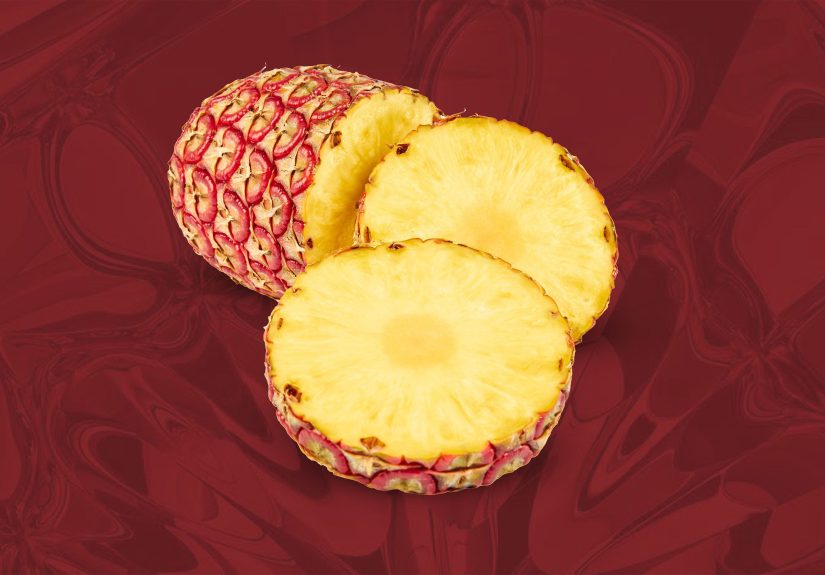
Rubyglow is a red-shelled pineapple with yellow flesh. That visual contrast is the hook: it looks dramatically
different on the outside while still offering a recognizable pineapple interior. Fresh Del Monte positions it as
an ultra-premium “designer” fruit and part of a broader strategy to segment pineapple offerings by taste, size,
color, and use case.
If you’ve noticed more specialty pineapples lately, that’s not your imagination. The company has been building
a portfolio: Del Monte Gold, Honeyglow, Pinkglow, Del Monte Zero, and now Rubyglow. In other words, pineapple
has gone from a single commodity lane to a multi-tiered branded lineup.
How It Was Developed
Rubyglow was developed over more than 15 years in Costa Rica. It is described as a traditional cross between a
standard pineapple and the Morada variety, and the fruit is naturally ripened on the plant before shipping.
Each fruit reportedly needs about two years to reach maturity, which instantly limits available volume compared
with faster-cycle produce.
And yes, presentation matters here: the fruit is sold crownless in premium packaging, signaling that the product
is meant to be “unboxed,” photographed, shared, and giftednot just sliced and forgotten in a storage container.
Why Is Rubyglow So Expensive?
1) Scarcity Is Real
Luxury pricing almost always starts with constrained supply, and Rubyglow follows that script. Limited production,
lengthy growth cycles, and selective distribution reduce availability. Public reporting around the launch cycle
highlighted extremely small volumes relative to mainstream produce standards.
Scarcity is not just a number on a spreadsheetit changes consumer psychology. When shoppers believe supply is
fixed and demand is rising, price becomes part of the product story. The fruit is no longer bought only for taste;
it’s purchased for rarity, novelty, and social currency.
2) Product Positioning, Not Commodity Pricing
Commodity produce is priced by competition and volume. Branded luxury produce is priced by narrative and perceived
uniqueness. Rubyglow is firmly in the second category. A nearly $400 tag in some U.S. retail channels is less about
“cost-plus” math and more about strategic positioning: this is a flagship halo product.
Think of it like the concept car at an auto show. Most people won’t buy that exact model, but everyone suddenly
remembers the brand. In produce, a premium flagship can elevate interest in the rest of the lineup, including
more accessible options.
3) Packaging and Experience Add Value
Traditional produce usually sells with minimal ceremony. Rubyglow does the opposite. Premium packaging, curated
distribution, and “special purchase” framing transform the fruit from ingredient to experience. Whether you agree
with the price or not, the strategy is coherent: charge for delight, presentation, and exclusivitynot just edible mass.
Launch Timeline and Market Buzz
Rubyglow first launched in China in early 2024 and then entered the U.S. market shortly after, following strong
interest and waitlist momentum. As soon as mainstream and lifestyle media picked it up, the conversation escalated:
some consumers were fascinated, others skeptical, and plenty of people made jokes that sounded like, “I love pineapple,
but I also love paying rent.”
That split reaction is exactly what high-visibility premium products often generate. For one audience, Rubyglow is an
exciting culinary luxury. For another, it symbolizes the widening gap between novelty spending and everyday affordability.
Both reactions can be true at once, and both can fuel attention.
In fact, media coverage around quick sell-through periods reinforced the scarcity narrative, which further strengthened
the product’s premium image. In luxury categories, visible demand can be as influential as taste itself.
What Rubyglow Says About the Future of Fruit Marketing
From “Produce” to “Portfolio”
The old model: one pineapple, one shelf, one expected price range.
The new model: a layered portfolio for different shoppers and occasions.
Rubyglow reflects this shift. Brands are no longer treating produce as a single undifferentiated category. They’re
creating sub-brands by flavor profile, appearance, sustainability angle, serving size, and emotional use case
(gift, event, social posting, entertaining, etc.).
Social Visibility Is Now a Product Feature
In the age of short-form video and “unboxing culture,” visual distinction matters. A red-shelled pineapple in elegant
packaging doesn’t just live in a fruit bowlit lives on camera. For marketers, this extends shelf life into feed life.
A normal pineapple gets eaten; Rubyglow gets discussed.
Premium Fruit as a Margin Engine
Produce traditionally runs on tight margins. Premium niches can help fund R&D, supply chain upgrades, and broader
innovation. Industry voices connected to the Rubyglow story have framed this as a way to support long-term crop
development, including resilience and operational efficiency.
Whether consumers embrace that framing depends on trust and transparency, but from a business standpoint, the logic
is clear: high-margin outliers can subsidize improvements in mainstream categories.
Is It Actually Better, or Just Better Branded?
The honest answer: for most consumers, both factors matter. Flavor is part of value, but so are story and occasion.
A bottle of sparkling water and a bottle of celebratory champagne both hydrate you. Yet nobody confuses their role
at a party.
Rubyglow buyers are typically not optimizing for cheapest calories. They’re buying for momentshosting, gifting,
curiosity, culinary theater, or social storytelling. In that context, “worth it” becomes personal.
If your metric is strict nutritional utility per dollar, the value proposition is weak compared with standard pineapple.
If your metric is rarity plus experience, the proposition looks very different.
Practical Buyer Guide: Should You Spend on Rubyglow?
Buy It If…
- You love unique food experiences and treat this as a special-event purchase.
- You need a high-impact edible gift that feels memorable and unusual.
- You host dinner parties or branded events where presentation matters as much as flavor.
- You enjoy trying limited products and understand scarcity-driven pricing.
Skip It If…
- You want everyday value fruit for smoothies, snacks, and meal prep.
- You prioritize price-per-serving over novelty.
- You’d rather explore multiple premium fruits for the same budget.
Middle Ground Strategy
Curious but cautious? Split one among several people for a tasting event. Build a comparison board with standard
pineapple, a sweeter specialty variety, and Rubyglow. You’ll get the experience, better value per person, and a
fun sensory test that turns “expensive fruit” into a shared activity.
Extended Experience Section: Real-World Moments Around Rubyglow (Approx. )
The most interesting part of the Rubyglow story isn’t only the priceit’s the kinds of experiences people attach to it.
In conversations around premium food, people rarely talk in spreadsheets. They talk in moments: birthdays, milestones,
dinner parties, gifts, and that one friend who says “I’m not paying that” but still asks for a taste.
Imagine a Saturday evening tasting at home. Four friends, one Rubyglow, one regular ripe pineapple, and one notebook
that starts as a joke but turns into real tasting notes. The first surprise is visual: Rubyglow arrives like a luxury
gift, and that packaging instantly shapes expectations. Before anyone takes a bite, the room already feels like this
is an “event food,” not a “snack food.” That emotional framing changes perception in ways most shoppers underestimate.
Then comes the practical debate. Someone asks: “Couldn’t we buy ten regular pineapples for this?” Yes, absolutely.
Another person counters: “But we don’t remember ten regular pineapples.” Also true. That tensionvalue versus memory
is exactly where luxury produce lives.
In gifting scenarios, Rubyglow has a different kind of strength. It can work for people who are hard to shop for:
clients who already have everything, food-obsessed relatives, or hosts who appreciate unusual centerpieces. A premium
fruit can feel less generic than flowers and less predictable than wine. It says, “I wanted this gift to be conversation-worthy.”
The catch is obvious: it only works if the recipient enjoys culinary novelty. If they prefer practicality, a grocery gift card
may still win by a mile.
For chefs and content creators, the experience is partly creative. The fruit’s look invites plating experiments:
tropical carpaccio, grilled pineapple desserts, savory-acidic pairings, and dessert courses that lean into color contrast.
Even if the flavor differences are subtle to some palates, the visual identity can carry a dish’s storytelling value.
In social content terms, Rubyglow behaves like a “high-engagement ingredient.”
There’s also a cultural layer that makes the product fascinating. Pineapple has long carried symbolic weighthospitality,
abundance, celebrationand Rubyglow updates that symbolism for a digital, premium-first era. It turns a historically
status-linked fruit into a modern object of aspiration and debate. One side sees innovation and brand artistry. The other
sees excess in a period when many households are managing tighter budgets. Both perspectives can coexist without canceling
each other out.
The strongest consumer takeaway from these experiences is simple: buy Rubyglow for a story, not for routine consumption.
If you treat it like an occasional experienceshared tasting, memorable gift, special-occasion centerpiecethe purchase
can make sense for the right buyer. If you treat it like ordinary produce, it will almost certainly feel overpriced.
In the end, Rubyglow works best when expectations are set correctly. It is not trying to replace your everyday pineapple.
It is trying to create a moment. And whether that moment is “worth it” depends less on the fruit itself and more on what
kind of food life you enjoy: practical, experiential, or somewhere delightfully in between.
Conclusion
Fresh Del Monte’s Rubyglow pineapple is one of the clearest examples of how produce is being rebranded for the premium
experience economy. It combines limited supply, long development timelines, visual differentiation, and high-end packaging
into a product designed to spark conversation as much as consumption.
For budget-minded shoppers, it’s easy to dismiss. For curiosity-driven buyers, hosts, gift-givers, and food creatives,
it can be a memorable splurge. Either way, Rubyglow marks a broader shift: fruit is no longer just sold by weight and
sweetnessit’s increasingly sold by identity, occasion, and story.
If this strategy continues to expand, expect more tiered produce launches in the coming years: everyday staples on one shelf,
premium limited editions on another, and a lot more debate in between. The pineapple aisle may never be boring again.