Table of Contents >> Show >> Hide
- What counts as a “garden pest”?
- The IPM mindset: calm, curious, and slightly nosy
- Garden pest “crime scene” clues (how to read the damage)
- The usual suspects: common garden pests and what to do
- Slugs and snails: the quiet, slimy chaos crew
- Furry garden pests: rabbits, deer, and voles
- Prevention: the least dramatic (and most effective) pest control
- Garden-friendly control options (when prevention isn’t enough)
- If you use pesticides, use them like a responsible adult
- When to get backup
- Field Notes: of Real-World Garden Pest Experiences
Garden pests are basically nature’s reminder that you’re not the only one who thinks your tomatoes look delicious.
The trick isn’t “winning” a zero-bug war (good luck with that). It’s keeping damage low enough that you still get
blooms, harvests, and a yard that doesn’t look like a tiny Godzilla hosted a buffet.
This guide breaks down the most common garden pests in U.S. home landscapeswhat they are, what the damage looks
like, and how to manage them using an Integrated Pest Management (IPM) approach: smarter prevention first, targeted
action second, and chemicals only when you truly need them.
What counts as a “garden pest”?
A pest is any organism (insect, mite, slug, animal, or even a “helpful” bug in the wrong place) that causes
unacceptable damage. Notice the word unacceptable. A few chewed leaves can be cosmetic. A seedling
sliced off at the soil line is a tragedy. IPM starts by deciding what level of damage you can live withbecause
your garden is not a museum exhibit, and your time is not unlimited.
The IPM mindset: calm, curious, and slightly nosy
1) Scout early (and yes, look under the leaves)
Most pests don’t announce themselves with a trumpet. Aphids hide in soft new growth, spider mites hang out on leaf
undersides, and slugs often work the night shift. A quick “walk-through” a few times a weekespecially during warm
spellscatches problems while they’re still manageable.
2) Identify before you treat
“Something is eating my plant” is not a diagnosis. Chewed leaf edges point you one way; yellow stippling points
you another. Management works best when it matches the culprit. Spraying randomly is expensive, often ineffective,
and can knock out the beneficial insects that were about to solve your problem for free.
3) Choose the least intense tool that gets the job done
IPM is a ladder. Start with prevention and physical controls, then move to low-impact options, then consider
pesticides if the damage is heading toward “there goes my harvest.” The goal is control, not total elimination.
Garden pest “crime scene” clues (how to read the damage)
- Holes in leaves: caterpillars, beetles, earwigs, or slugs (slugs often leave shiny slime trails).
- Ragged edges or skeletonized leaves: Japanese beetles and other chewing beetles are common suspects.
- Leaf curling, puckering, sticky residue: aphids or other sap-suckers; sticky “honeydew” can lead to sooty mold.
- Yellow stippling or bronzing: spider mites or other mites; look for fine webbing in heavy infestations.
- Sudden seedling collapse, stem cut at soil line: cutworms (they’re basically tiny lumberjacks).
- Wilting vines with damage near the stem base: squash vine borer can cause fast collapse once larvae tunnel inside.
- Distorted flowers or silvery streaks on leaves: thrips can be involved, especially on ornamentals and vegetables.
The usual suspects: common garden pests and what to do
Aphids
Aphids are soft-bodied sap-suckers that cluster on tender growth. You’ll often see curled leaves, stunted tips, or
sticky honeydew that attracts ants. The good news: aphids are snack-sized for beneficial insects like lady beetles
and lacewings.
- Fast fix: blast them off with a firm stream of water. Repeat as needed.
- Low-impact sprays: insecticidal soap works only on contact, so coverage mattersespecially the undersides.
- Play the long game: avoid over-fertilizing with nitrogen; lush, soft growth is basically aphid luxury housing.
Caterpillars (cabbage worms, tomato hornworms, loopers, and friends)
Caterpillars can chew holes, strip leaves, and leave behind little pellets of frass (caterpillar poopyes, that’s a
technical term gardeners lovingly accept). Tomato hornworms can look terrifying, but in small gardens they’re often
best handled with… your hands.
- Best for small gardens: handpick at dusk or early morning. Drop into soapy water if you’re not into “relocation.”
- Targeted option: Bacillus thuringiensis (Bt-k) works best on small caterpillars and must be eaten to work.
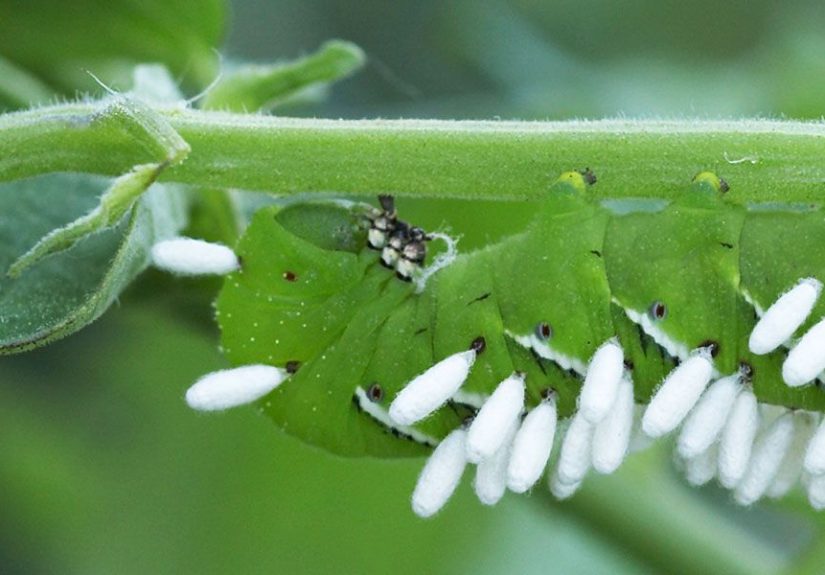
- Bonus tip: if you see hornworms covered in white “rice grains,” those are parasitoid wasp cocoons. Leave that hornwormit’s already booked for an appointment with karma.
Cutworms
Cutworms are moth larvae that hide in soil and plant debris and feed at night. The classic sign is a seedling cut
cleanly at the base. It feels personal. It’s not. They do this to everyone.
- Physical barrier: use collars (cardboard, foil, or plastic) around transplantspush a couple inches into soil and extend above the surface.
- Night patrol: check with a flashlight and pick them off near damaged plants.
- Prevention: clean up weeds and debris where moths lay eggs; disturb soil before planting to expose hiding larvae.
Spider mites
Spider mites love hot, dry conditions and feed mostly on the undersides of leaves. Damage starts as tiny pale
speckles (stippling), then turns into yellowing, bronzing, and leaf drop. They’re hard to seeshake a leaf over
white paper and look for moving “dust.”
- First response: rinse plants with water, especially undersides, and repeat every few days.
- Culture tweak: reduce stressmulch and consistent watering help plants tolerate feeding.
- Spray smart: soaps and horticultural oils can work, but coverage is everything; many general insecticides don’t control mites well.
Whiteflies and thrips
Whiteflies flutter up like tiny bits of paper when you disturb plants; thrips are smaller and can cause silvery
streaks or distorted growth. Both feed by sucking plant juices and can build up fast in warm weather.
- Mechanical help: remove heavily infested leaves and avoid crowding plants so air can move.
- Monitoring: yellow sticky cards can help you notice population spikes (they’re a dashboard, not a cure).
- Low-impact control: insecticidal soap or oils can reduce numbers when applied thoroughly and repeatedly.
Japanese beetles
Japanese beetles are shiny, hungry, and weirdly social. They often “skeletonize” leaves and can devastate roses,
grapes, basil, and many ornamentals in a short window.
- Do this: handpick early in the morning when they’re sluggish and drop into soapy water.
- Don’t do this: hang Japanese beetle traps near your gardentraps can attract more beetles into the area than they remove.
- Plant strategy: protect high-value plants with lightweight row covers during peak flight (remove when pollination is needed).
Squash bugs and squash vine borers
If you grow zucchini, pumpkins, or squash, you’ve probably met these two. Squash bugs feed on plant sap and can
cause wilting and plant stress; squash vine borer larvae tunnel inside stems and can collapse a vine quickly once
they’re inside.
- Prevention that works: floating row covers can block adult pests early in the season; remove covers during flowering for pollination.
- Egg patrol: check leaf undersides for clusters of bronze squash bug eggs and scrape them off.
- Timing matters: sprays are most effective against young stages; once vine borer larvae are inside the stem, surface sprays won’t reach them.
- Garden hygiene: remove crop debris at season’s end; don’t let old vines become next year’s nursery.
Slugs and snails: the quiet, slimy chaos crew
Slugs thrive in cool, moist hiding placesmulch, boards, dense groundcovers, and shady beds. They chew irregular
holes and can mow down seedlings overnight. They’re also oddly fond of beer, which is a fun fact until you’re
setting out tiny slug happy hours.
- Make the habitat less cozy: water early so soil surface dries by evening; thin dense cover; remove hiding boards and debris.
- Traps: beer traps and shelter traps (like damp newspaper) can reduce numbers, especially in small spaces.
- Baits: iron phosphate baits are commonly recommended as a lower-risk option compared with older formulations, but still store and use them responsibly.
Furry garden pests: rabbits, deer, and voles
Rabbits
Rabbits typically feed close to the ground and can clip plants with clean, angled cuts. They love tender greens,
seedlings, and anything you just planted yesterday.
- Best defense: fencing (chicken wire or hardware cloth). Bury the bottom portion so rabbits can’t scoot underneath.
- Small-space option: individual cages or cloches over vulnerable plants until they’re established.
Deer
Deer browse higher, can strip leaves and buds, and can turn a “flower border” into a “sad stick exhibit.” For
larger areas, height matters.
- Most reliable: tall fencingmany extension sources recommend around 8 feet for consistent exclusion in larger spaces.
- Design hacks: small enclosed areas and privacy-style fences can sometimes deter jumping because deer don’t like landing where they can’t see.
Voles
Voles are small rodents that can damage roots and gnaw bark, especially in winter when cover is thick and snacks
are scarce. Their runways look like narrow paths through grass or mulch.
- Habitat control: reduce heavy ground cover near trunks; keep mulch pulled back from tree bases.
- Trapping: snap traps placed along runways can help with small populations; cover traps to reduce risk to non-target animals.
- Protection: hardware cloth guards around young trees help prevent bark damage.
Prevention: the least dramatic (and most effective) pest control
Grow plants that aren’t already struggling
Stressed plants send out a “free buffet” vibe. Match plants to your light, water, and soil. Give them space for
airflow. Water consistently. Mulch to reduce stress swings. A healthy plant can take a little nibbling and still
perform like a champ.
Use physical barriers early
Row covers, collars, and fencing work best when pests show up like clockwork every year. Covers are especially
useful for young plantsjust remember that pollinators need access once plants bloom (hello, squash).
Keep the garden “uninviting” to pests
Clean up old plant debris, pull weeds that host pests, rotate crops when you can, and don’t leave dying plants in
place as a pest apartment complex. Many pests overwinter in residue, soil, or nearby weeds.
Garden-friendly control options (when prevention isn’t enough)
Handpicking and blasting with water
It’s not glamorous. It is effective. Handpick caterpillars and beetles. Knock aphids off with water. Remove egg
clusters. This is the “do the simple thing first” tier of IPM, and it’s oddly satisfying once you get over the
initial “ew.”
Insecticidal soap
Insecticidal soap can work well on soft-bodied pests like aphids, whiteflies, and young mites, but it is a contact
toolnot a magic aura. You must thoroughly wet the pest for it to work, which is why undersides of leaves matter.
Also, don’t spray when plants are heat-stressed or baking in strong sun; follow the label so you don’t turn pest
control into plant injury.
Horticultural oils
Oils can suppress certain insects and mites by smothering them or disrupting feeding. They’re useful, but timing,
temperature, and plant sensitivity matter. Use products labeled for your plant and pest, and follow mixing and
application directions carefully.
Bt and other targeted products
Bt-k is a classic for caterpillars because it’s targeted and works when eaten by the right larvae. Spinosad is
used against a range of chewing pests in some situations, but it’s still a pesticide and should be used thoughtfully
to minimize impacts on beneficial insects. For slugs and snails, iron phosphate bait is often suggested as a
comparatively lower-risk optionstill, it belongs in the “use responsibly” category, not the “sprinkle everywhere
forever” category.
Traps and lures (use the right ones)
Traps can be great for monitoring and sometimes for controllike shelter traps for slugs. But some traps can backfire.
Japanese beetle traps are a famous example: they can pull more beetles into your yard than they remove. If you use
them at all, place them far from the plants you care about (and be ready to catch… a lot).
If you use pesticides, use them like a responsible adult
Sometimes you need a pesticide. Maybe your seedlings are getting cut nightly, your squash is collapsing, or your
roses are being auditioned for a “before” photo. If you go there, go carefully:
- Read the labelevery time. The label tells you where the product can be used, what it controls, how to apply it, and how to protect people, pets, and the environment.
- Match product to pest. “Insect killer” is not a plan. Mites aren’t insects. Slugs aren’t insects. Your problem may require a different approach.
- Time it right. Many products work best on young stages; once pests are protected inside stems or curled leaves, sprays may miss them.
- Protect pollinators. Avoid spraying open flowers, and don’t spray when bees are active. Evening applications can reduce contact risk in many situations.
- Prevent drift. Don’t spray on windy days, and keep products off waterways and non-target plants.
When to get backup
If you can’t identify the pest, the damage keeps spreading, or you suspect a regulated invasive species,
contact your local Cooperative Extension office or a state diagnostic lab. A correct ID saves time, money, and
your patienceplus it prevents you from spraying something that never had a chance of working.
Field Notes: of Real-World Garden Pest Experiences
Garden pest problems rarely arrive as a neat checklist. They show up as vibes. Like the morning you step outside,
coffee in hand, ready to admire your basil, and instead you find it looking like lacebecause Japanese beetles threw
a party and forgot to invite you. A lot of gardeners describe that first beetle sighting as “one beetle… then five…
then suddenly it’s a reunion tour.” The most practical habit they learn is early-morning patrol: when beetles are
sluggish, a quick handpick into soapy water can keep damage from snowballing.
Aphids tend to be more subtle at first. You notice leaves curling, then a sticky sheen on stems, then ants acting
like tiny dairy farmers because they’re harvesting honeydew. Gardeners often report that the fastest emotional win
is a firm spray of watersuddenly the plant looks less stressed and the aphids are no longer hosting a rooftop
lounge on the new growth. A few days later, if lady beetles or lacewings show up, you get the rare pleasure of
watching nature do the tedious work.
Then there are the pests that cause instant drama. Cutworms are infamous because they don’t “damage” seedlingsthey
execute them. People often describe finding a row of transplants neatly toppled like someone came through with
tiny scissors. The experience that changes behavior is adding collars at planting time. It’s such a low-tech move
(cardboard, foil, even a cut plastic cup), but it turns cutworms from a season-ruiner into a minor annoyance.
Squash vine borers are a different kind of heartbreak: your zucchini looks fine, then one hot afternoon it wilts
like it got dumped via text message. Gardeners who’ve been burned once often become row-cover believers. They’ll
cover young vines early, then remove covers when flowers open so pollinators can do their job. That “cover early,
uncover at bloom” rhythm becomes a routinelike putting a seatbelt on your squash.
Slugs are the most likely pest to make gardeners say, “I swear they weren’t there yesterday.” That’s because slugs
love cool, damp hiding spots and often feed at night. A common experience is discovering slime trails across
seedlings after a rainy spell. People try beer traps (because apparently gardening includes bartending), but the
more lasting lesson is habitat control: water earlier, thin groundcover, remove hiding boards, and keep the soil
surface from staying wet all night. The combination of fewer hiding spots plus a targeted bait, used carefully, is
often what finally brings peace to a lettuce bed.
And yessometimes the “pest” has hooves. Deer damage stories usually start with optimism and end with someone
Googling “8-foot fence” at 2 a.m. Gardeners who find a workable solution often mix physical barriers (fencing or
small exclosures) with plant choices (deer-resistant plantings near the edges) and a willingness to accept that
some plants are basically deer candy. The shared takeaway across all these experiences is surprisingly hopeful:
the more you observe, the less personal it feelsand the faster you get to solutions that actually work.