Table of Contents >> Show >> Hide
- How This Review Was Built
- Quick Verdict
- Design, Comfort, and Display: Sporty Precision vs Sleek Smartwatch Energy
- Battery Life: This Is Where the Forerunner 265 Flexes Hard
- Running and Training Features: Garmin’s Home Turf
- Smart Features: Apple Watch Is Still the Daily-Life Champion
- Compatibility and Platform Lock-In
- Price and Value: Not Cheap, but Strategic
- The Biggest Trade-Offs You Should Know Before Buying
- Final Answer: Is the Garmin Forerunner 265 Better Than Apple Watch?
- Extended Real-World Experience Notes (Approx. )
If your wrist has been stuck in a custody battle between a Garmin and an Apple Watch, welcome to the club. One side says, “I want elite training metrics, GPS confidence, and battery life that doesn’t induce charger anxiety.” The other side says, “I want my watch to be a tiny, brilliant iPhone sidekick that also nags me to stand up.”
The Garmin Forerunner 265 sits right in the middle of that debateand it’s one of the most compelling watches Garmin has made for runners who want serious performance data without jumping to ultra-premium price territory. Meanwhile, Apple’s lineup (Series 10/11 and Ultra models) keeps getting better on fitness and still dominates everyday smartwatch polish.
So… is the Forerunner 265 actually better than Apple Watch? Short answer: for dedicated runners and endurance athletes, often yes. For app-heavy everyday smartwatch users, usually no. Long answer: you’re about to get it.
How This Review Was Built
This review synthesizes real-world testing insights, spec sheets, and hands-on comparisons from major U.S.-oriented tech/fitness publishers and official manufacturer documentation. The goal is simple: practical buying clarity, not fan-club propaganda.
We focus on what matters most in the real world: battery reliability, running tools, training guidance, smart features, phone compatibility, long-term value, and which watch actually fits your lifestyle when motivation is high and when motivation is hiding under a blanket.
Quick Verdict
Buy the Garmin Forerunner 265 if you:
- Run regularly and want advanced training metrics without subscription drama.
- Care about battery life measured in days, not “before dinner.”
- Need dual-band/multiband GPS confidence for tricky routes.
- Use Android or iPhone and don’t want platform lock-in.
Buy an Apple Watch (Series 10/11 or Ultra) if you:
- Want the best smartwatch ecosystem, apps, messaging, and iPhone integration.
- Use your watch as a mini communication hub all day.
- Prefer polished lifestyle features over deep endurance analytics.
If your main question is “Which one helps me train smarter for races?” the Forerunner 265 usually wins.
If your main question is “Which one makes daily life easier on my wrist?” Apple Watch usually wins.
Design, Comfort, and Display: Sporty Precision vs Sleek Smartwatch Energy
Garmin Forerunner 265
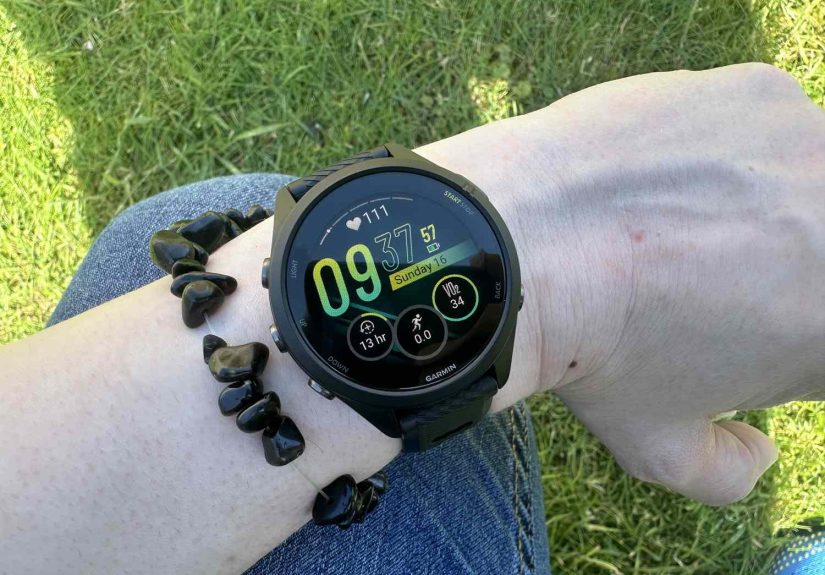
The Forerunner 265 comes in two sizes (265 and 265S), with a bright AMOLED screen and Garmin’s trusted five-button setup plus touchscreen. That hybrid control scheme matters more than it sounds: sweaty fingers, rain, and winter gloves are all less annoying when buttons exist for start/stop/lap.
A lot of runners love the round watch form because it feels like sports equipment, not a mini smartphone strapped to your arm. The watch looks modern, but it still screams “I have a Sunday long run and an opinion about cadence.”
Apple Watch (Series 10/11 and Ultra line)
Apple still owns mainstream wearable aesthetics. The square display is excellent for glanceable widgets and app interfaces, and the UI is more fluid for general use. Series models are thinner and more lifestyle-friendly, while Ultra models lean into ruggedness and longer battery.
In plain English: Apple Watch looks and feels like premium consumer tech first; Forerunner 265 feels like a performance instrument first.
Battery Life: This Is Where the Forerunner 265 Flexes Hard
Let’s cut through the noise: battery is one of the biggest reasons athletes switch from Apple Watch to Garmin.
Garmin Forerunner 265 battery profile
- Smartwatch mode: up to 13 days (265) or 15 days (265S)
- GPS-only workout mode: up to 20 hours (265) or 24 hours (265S)
- All + multiband GPS: up to 14–15 hours depending on size
- With GPS + music: roughly 6–7.5 hours depending on mode/size
Translation: for many runners, charging becomes a weekly ritual instead of a daily panic.
Apple Watch battery profile
- Series 10: up to 18 hours normal use (up to 36 in Low Power Mode)
- Series 11: up to 24 hours normal use (up to 38 in Low Power Mode)
- Ultra 3: up to 42 hours normal use (up to 72 in Low Power Mode)
Apple has improved battery over generations, especially with Ultra models, but Forerunner 265 still leads in the “I forgot my charger and still trained all weekend” category.
Running and Training Features: Garmin’s Home Turf
Training Readiness and Recovery Intelligence
Garmin’s Training Readiness remains one of the biggest differentiators. Instead of just giving you a score and vibes, it combines sleep score, recovery time, HRV status, acute load, sleep history, and stress history to help you judge whether today should be intervals, easy mileage, or strategic couch time.
It’s not magic, and it shouldn’t replace common sense, but it’s a practical decision layer for athletes trying to train consistently without overcooking themselves.
GPS and Data Depth
The Forerunner 265 supports multiband GNSS and Garmin’s adaptive GPS behavior (often presented as AutoSelect/SatIQ-style behavior in ecosystem discussions), which helps balance accuracy and battery. In dense cities and tricky routes, that matters.
You also get the kind of running detail nerds adore: cadence, stride metrics, race-focused tools, workout structure, multisport support, and broad activity profiles beyond running.
What Apple has improved
Apple isn’t standing still. watchOS introduced Training Load views that compare recent 7-day effort against a 28-day baseline, giving athletes a clearer view of relative strain. That’s a real step forward and genuinely useful.
But for athletes who live in structured training plans, Garmin’s overall training ecosystem still feels more purpose-built and less “fitness feature added to a smartwatch.”
Smart Features: Apple Watch Is Still the Daily-Life Champion
This is the part where Garmin fans sigh and Apple fans grin.
Where Apple Watch wins
- Third-party app ecosystem depth
- Smoother notifications and replies
- Better voice assistant experience
- More complete “phone extension on your wrist” behavior
If your watch is mainly for communication, convenience, and app workflows, Apple Watch remains hard to beat.
Where Garmin is good enough (and sometimes great)
- Smart notifications (with limits)
- Garmin Pay support
- On-watch music options, including third-party provider support
- No required subscription for core advanced training tools
Garmin is not trying to out-Apple Apple. It’s trying to keep you focused on performance while being just smart enough for daily convenience.
Compatibility and Platform Lock-In
This one is simple:
- Apple Watch: requires compatible iPhone models and iOS versions.
- Garmin Forerunner 265: works with both iPhone and Android through Garmin Connect/Bluetooth compatibility frameworks.
If you switch phone ecosystems often or use Android now, the Forerunner 265 is the easier long-term choice.
Price and Value: Not Cheap, but Strategic
The Forerunner 265 launched around the $449.99 tier, which places it in upper-midrange running watch territory. It’s not budget, but it undercuts a lot of premium multisport options while preserving advanced training depth.
Apple Watch pricing varies by model and configuration. Standard Series options may start lower than the Forerunner 265, but costs can rise quickly with cellular or premium materials. Ultra models are much higher.
Value comes down to your primary use case:
- Training-first value: Forerunner 265 is excellent.
- Smartwatch-first value: Apple Watch Series line is often better.
The Biggest Trade-Offs You Should Know Before Buying
Forerunner 265 trade-offs
- No full onboard cartographic mapping experience like Garmin’s higher-tier models.
- Smartwatch functionality is intentionally narrower than Apple’s.
- UI is functional and training-focused, not app-centric luxury.
Apple Watch trade-offs
- Battery life can still feel short for serious training blocks (unless you go Ultra).
- Deep endurance metrics and planning workflows are improving, but not as cohesive as Garmin’s training ecosystem.
- Tightly tied to iPhone compatibility requirements.
Final Answer: Is the Garmin Forerunner 265 Better Than Apple Watch?
For runners and endurance athletes: Yes, often.
The Forerunner 265 is a smarter buy if you care most about training readiness, recovery guidance, button-first workout control, robust GPS behavior, and battery life that supports consistent training.
For general smartwatch users: Usually no.
Apple Watch is still more complete as a lifestyle smartwatch with superior communication features, richer apps, and tighter iPhone integration.
Think of it this way:
Apple Watch is the best tiny computer on your wrist.
Forerunner 265 is the better coach on your wrist.
Extended Real-World Experience Notes (Approx. )
Here’s what day-to-day ownership typically feels like when people compare the Forerunner 265 and Apple Watch over a month of mixed training, work, and normal life chaos.
Week 1 usually starts with setup surprise. The Apple Watch feels instantly familiar to iPhone usersmessages, quick replies, calendar nudges, and app syncing all behave like expected Apple magic. The Forerunner 265 setup feels more “athlete onboarding”: you care about heart-rate zones, data screens, race widgets, sleep trends, and whether your watch is quietly judging your recovery choices. It kind of is.
By Week 2, battery behavior starts changing habits. Apple users often build charging into their daily rhythm, especially if they track sleep and workouts consistently. Forerunner users start forgetting where their charger isand oddly feel proud about that. On busy days, this matters more than spec sheets suggest. If you commute, train, and occasionally forget what day it is, fewer charging interruptions can be a quality-of-life upgrade.
Week 3 is where fitness intent separates buyers. Casual exercisers may discover they don’t need Garmin’s deeper dashboards every day. But runners training toward a goal (first 10K, half marathon, marathon) often find the Forerunner’s training readiness, recovery context, and workout structure unusually sticky. The watch doesn’t just record effort; it helps shape tomorrow’s decision. Many users report this changes consistency more than they expected.
Smartwatch friction appears around the same time. People who rely on watch-based texting, voice controls, and richer app interactions often miss Apple’s polish when wearing Garmin full-time. Notifications on Garmin are usable, but if your wrist is mission control for communication, Apple’s ecosystem still feels several steps ahead.
On the other hand, many users feel mentally calmer with Garmin during training blocks. The watch experience is less noisy and less app-distracting, which can be a featurenot a bugwhen you’re trying to keep workouts intentional. In this sense, the Forerunner 265 behaves like a specialized tool with just enough smart extras, while Apple Watch behaves like a general-purpose device that also does fitness very well.
Comfort feedback is split by preference: some love the round Forerunner profile and physical buttons; others prefer Apple’s touch-first navigation and ecosystem continuity. Interestingly, runners doing intervals or track repeats often appreciate Garmin’s tactile controls because they’re quicker under effort than touchscreen taps.
By the end of a month, the most common conclusion is not “one watch is objectively best.” It’s this: the best watch is the one aligned with your identity and routine. If you primarily identify as an athlete-in-training, Forerunner 265 feels more aligned. If you identify as a connected, productivity-focused user who also exercises regularly, Apple Watch feels more aligned.
In other words, your wristwear choice is less about brand loyalty and more about what you want your watch to do when life gets messy: coach you harder, or connect you faster. The Forerunner 265 is exceptional at the first. Apple Watch remains elite at the second. Pick the friction you can live withand the benefits you’ll actually use.