Table of Contents >> Show >> Hide
- The Story: When Erasing Art Became the Art
- Who Is Combo Culture Kidnapper?
- Why This Paris Street Art Moment Went Viral
- Street Art vs. Graffiti Removal: A Complicated Relationship
- The Art of Turning Interruption Into Material
- Why Humor Works So Well in Street Art
- Paris: A City Where Walls Talk Back
- Is It Fair to Turn a Worker Into Street Art?
- What Brands, Creators, and Cities Can Learn From This
- Experiences Related to the Topic: What This Story Feels Like on the Street
- Conclusion
Paris has always known how to make a sidewalk feel like a stage. A bakery window becomes a still life. A café table becomes a tiny parliament. A wall, if left alone for more than five minutes, may become a battleground between public order, creative mischief, and someone with a roller brush who really just wants to finish his shift.
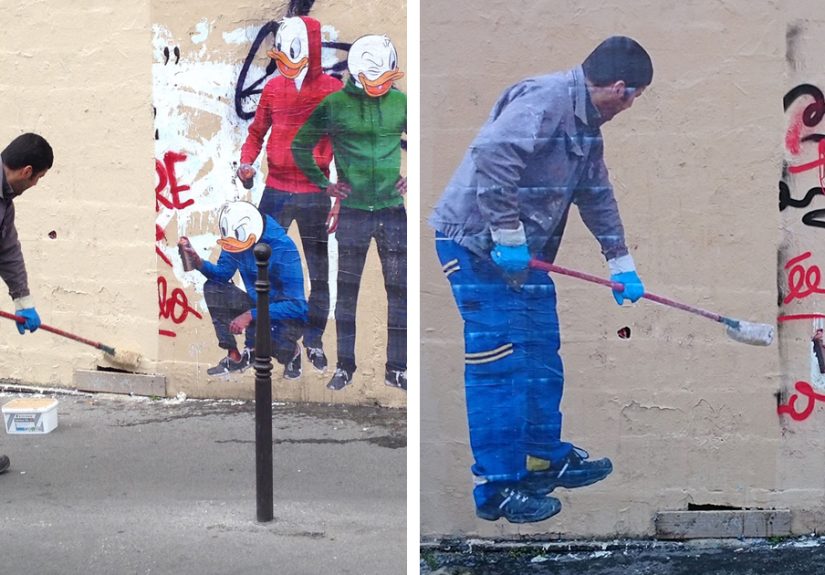
That is why the story behind “Graffiti Removal Guy Gets Turned Into Street Art In Paris” still feels so delightfully Parisian. According to widely circulated art reports, French street artist Combo Culture Kidnapper created a playful street piece in Paris. Then a worker arrived to paint over part of it. Instead of treating the moment as defeat, Combo reportedly photographed the scene, came back later, and added the graffiti removal guy into the artwork itself. The cleaner, in other words, became part of the mural he had been erasing.
It is the kind of visual joke that lands instantly. No long museum label required. No art-school decoder ring. Just one wall, one cleaner, one artist, and a punchline made of paint.
The Story: When Erasing Art Became the Art
The basic scene is simple enough to fit on a postcard: a street artist paints a work, a graffiti removal worker partially covers it, and the artist responds by painting the worker into the same wall. The result is not just a restored artwork. It is a conversation. The original piece reportedly featured cartoon-inspired figures, a signature element in Combo’s world of pop culture mashups, while the later addition transformed the act of removal into a character-driven gag.
What makes the story so memorable is not only the humor. It is the timing. Street art often lives a short, unpredictable life. A mural can last for years, or it can disappear before lunch. Many street artists understand this. The wall is not a safe deposit box; it is more like a group chat with weather, property owners, city crews, tourists, and rival taggers all typing at once.
Combo’s response worked because it accepted that reality instead of pretending the wall belonged to him forever. He did not simply repaint what was lost. He folded the interruption into the story. The cleaner became the twist. The erasure became the evidence. The city’s maintenance routine became a collaborator, whether it meant to or not.
Who Is Combo Culture Kidnapper?
Combo Culture Kidnapper, often known simply as Combo, is a French street artist associated with graffiti, wheat-paste work, pop culture remixing, and social commentary. His nickname fits his method: he “kidnaps” familiar images from comics, advertising, video games, and mass culture, then places them in new contexts to change what they mean.
That approach is part satire, part visual DJing. Instead of sampling a drumbeat, Combo samples icons. A cartoon character can become political. A cheerful image can suddenly carry an uncomfortable message. A joke can sneak a serious idea through the front door while everyone is still laughing at the doormat.
Combo’s work has also been linked to bigger conversations about tolerance, identity, consumer culture, and public space. He gained international attention for pieces that used familiar symbols to comment on religion and coexistence. In one widely reported incident in 2015, he was attacked after creating a “Coexist” artwork in Paris using religious symbols. That episode showed how street art, even when simple in appearance, can stir strong reactions when it touches public identity.
The graffiti removal guy piece sits on the lighter end of that spectrum, but it still carries Combo’s usual fingerprints: humor, appropriation, surprise, and a taste for turning the city into a living comic strip.
Why This Paris Street Art Moment Went Viral
Some street art becomes famous because it is enormous. Some goes viral because it is mysterious. This one spread because it feels like a perfect little loop. The artwork is created, removed, and then reborn as a joke about removal. That is narrative efficiency. Hollywood spends millions trying to build character arcs this clean.
1. The irony is instantly understandable
Viewers do not need to know the artist’s full biography to get the joke. A man erases street art. The artist paints him erasing street art. Suddenly, the cleaner is trapped forever in the very visual language he was sent to erase. It is irony with a roller brush.
2. It humanizes a boring urban routine
Graffiti removal is usually treated as municipal housekeeping. It is practical, repetitive, and mostly invisible unless it fails. Combo’s response made that work visible. The cleaner became a figure in the story of the wall, not just a background task. That shift is funny, but also oddly generous.
3. It captures the life cycle of street art
Street art is temporary by nature. It is exposed to sunlight, rain, policies, cleaning crews, and other artists. The Paris piece turned that temporary quality into the subject. It did not fight the clock; it drew the clock into the picture.
4. It feels very Paris
Paris is famous for museums, monuments, fashion, and café culture, but it is also one of Europe’s great street art cities. Neighborhoods such as Belleville, the 13th arrondissement, Canal Saint-Martin, and parts of the Right Bank have long hosted murals, tags, stencils, paste-ups, and politically charged wall art. The city’s elegant stone facades and narrow streets create a dramatic contrast with bright, unauthorized images. Paris may polish its brass door handles, but its walls have opinions.
Street Art vs. Graffiti Removal: A Complicated Relationship
The phrase graffiti removal guy sounds comic in this story, but the real issue is complicated. City governments remove graffiti for many reasons: property protection, public cleanliness, historic preservation, safety concerns, and complaints from residents or business owners. In a dense, heavily visited city like Paris, those pressures are constant.
At the same time, street art can become a cultural attraction. Tourists photograph it. Galleries exhibit it. Brands borrow its look. Cities that once rushed to erase murals may later organize guided street art walks. The same spray-painted wall can be called vandalism on Monday and “urban culture” by the weekend, depending on who painted it, where it appears, and whether someone can sell tickets to see it.
This tension is not unique to Paris. New York, Los Angeles, Philadelphia, London, Berlin, and Melbourne have all wrestled with similar questions. When is a public mark a crime? When is it art? Who decides? The property owner? The city? The neighborhood? The internet? The person taking a selfie in front of it while blocking the bike lane?
Combo’s Paris piece does not solve the debate. Instead, it makes the debate visible. The wall becomes a tiny theater where two forces meet: the artist’s desire to leave a mark and the city’s desire to manage its surfaces.
The Art of Turning Interruption Into Material
One reason this story has staying power is that it demonstrates a useful creative principle: interruptions can become material. Many artists hate interference, and understandably so. Nobody wants to spend hours creating something only to see it covered by beige paint with the emotional range of a filing cabinet.
But public art has always had to deal with interruption. Weather interrupts. Politics interrupts. Construction interrupts. Other artists interrupt. In this case, Combo turned the interruption into the next layer of the piece. That is not just clever; it is strategic.
Street art often rewards speed, adaptability, and observation. You work with what the city gives you. A crack in the wall becomes a branch. A street sign becomes a halo. A missing patch of paint becomes a portal. A man covering your artwork becomes, naturally, the main character.
Why Humor Works So Well in Street Art
Humor is one of street art’s most powerful tools because public space is noisy. People are walking, texting, dodging scooters, eating pastries, and trying not to look like tourists while absolutely looking like tourists. A street artwork has only a few seconds to catch the eye.
A joke can do that faster than a manifesto. It lowers the viewer’s guard. First comes the laugh, then the thought. In the Paris graffiti removal piece, the joke is visual and immediate. But after the smile comes the question: who owns the city’s walls, and what happens when the act of cleaning becomes part of the artwork?
This is why many street artists use satire, parody, and pop culture references. Familiar images create quick recognition. When the artist twists them, the viewer gets a tiny shock of meaning. Combo’s work often plays in that zone, using accessible imagery to invite a broader audience into conversations that might otherwise feel heavy or abstract.
Paris: A City Where Walls Talk Back
Paris has a long history of visual expression in public space. Posters, political slogans, stencils, murals, and tags have all appeared across the city’s walls. The French capital is not just a place where art hangs behind velvet ropes; it is a place where art leaks into the street, sometimes with permission and sometimes with a guilty little grin.
Modern Paris street art owes something to global graffiti culture, including the influence of New York’s subway and hip-hop scenes in the late 20th century. But Paris developed its own flavor. Stencil artists, paste-up artists, muralists, and graffiti writers all helped create a layered visual culture. Some pieces are raw and illegal. Others are commissioned, celebrated, and carefully preserved. Many live somewhere in the messy middle.
That middle zone is where the graffiti removal guy story becomes so interesting. The piece is not simply about art defeating authority. It is about art noticing authority, borrowing its gesture, and turning it into a punchline. The cleaner did his job. The artist did his. The wall, lucky thing, got promoted to internet fame.
Is It Fair to Turn a Worker Into Street Art?
There is also an ethical question here. The graffiti removal worker was likely doing assigned labor, not making a grand philosophical statement about aesthetics. He may not have had any personal opinion about the piece. He might have been thinking about lunch, the next wall, or whether the paint roller was going to drip on his shoes.
Turning him into street art is funny, but it also reminds us that real people are involved in urban culture. Street artists, cleaners, residents, shop owners, city officials, and passersby all participate in the life of a wall. Some have more power than others. Some get celebrated. Some get blamed. Some get painted into murals without applying for the role.
The best reading of Combo’s response is not that the worker was the villain. The stronger interpretation is that the worker became a symbol of the system that constantly edits the city. In that sense, the piece is less a personal jab and more a playful portrait of urban process.
What Brands, Creators, and Cities Can Learn From This
The viral Paris street art moment offers lessons beyond graffiti culture. For creators, it is a reminder that a setback can become the next idea. For cities, it shows that public space is not only managed through rules; it is also interpreted through stories. For brands, it proves that authenticity beats overproduced cleverness. A quick, witty response to a real event can travel farther than a polished campaign with twelve approval meetings and a slogan no human would ever say out loud.
It also shows the power of context. The same image in a gallery would be amusing. On the wall where the removal happened, it becomes brilliant. Street art depends on place. Remove the place, and you remove part of the meaning.
Experiences Related to the Topic: What This Story Feels Like on the Street
Anyone who has spent time walking through a city with active street art knows the strange thrill of discovering something before it disappears. You turn a corner and there it is: a stencil under a bridge, a paste-up beside a bakery, a painted character peeking from a doorway. It feels like the city winked at you. Unlike a museum visit, there is no ticket, no opening hour, and no guard reminding you not to stand too close. The gallery is the sidewalk, and the lighting is whatever the weather is doing.
The Paris graffiti removal guy story captures that feeling perfectly. It reminds me of the way street art changes from day to day. A wall you photographed yesterday may be half-covered today. A new tag may appear over a mural. A cleaning crew may leave a pale rectangle where an image used to be, like the ghost of an argument. At first, that can feel frustrating. But after a while, you realize this constant change is part of the medium. Street art is not frozen. It is alive, and like anything alive, it occasionally gets paint rolled over its face.
There is also a special experience in watching people react to a clever street piece. Some people walk past without noticing. Some stop, smile, and pull out a phone. Others tilt their heads as if the wall just asked them a riddle. The best street art creates a small public gathering without announcing one. A stranger laughs, another stranger asks what is funny, and suddenly a blank wall has produced a social moment. That is not a bad day’s work for a few layers of paint.
The story also says something about urban workers, whose presence often goes unnoticed. Graffiti removal crews, sanitation workers, maintenance teams, and repair crews keep cities functioning. Their labor changes what we see every day, even if we rarely think about it. By painting the removal guy back into the scene, Combo accidentally or intentionally made that labor visible. The worker became part of the city’s visual memory. That is the joke, but it is also the charm.
For travelers, the lesson is simple: look closely. Paris is not only in the Louvre, Notre-Dame, the Seine, or the postcard view of the Eiffel Tower. It is also in the small visual arguments happening on side streets. It is in a sticker layered over an old poster, a stencil near a café, or a mural that may be gone by next week. If you are lucky, you might catch a moment where the city talks back to itself.
For artists, the lesson is even better: do not waste a good interruption. If someone changes your work, maybe the change is not the end. Maybe it is the setup. Maybe the beige patch, the accidental drip, the awkward repair, or the person sent to erase you can become the next chapter. Creativity is not only about making perfect things. Sometimes it is about noticing the joke before everyone else does.
That is why the graffiti removal guy in Paris remains such a satisfying story. It is funny without being cruel, clever without being complicated, and meaningful without wearing a very serious scarf indoors. It turns a routine act of erasure into a reminder that art in public space is never finished. The wall keeps changing. The city keeps editing. And every now and then, the person holding the roller becomes the masterpiece.
Conclusion
The story of “Graffiti Removal Guy Gets Turned Into Street Art In Paris” works because it is more than a prank. It is a compact lesson in street art, public space, humor, and creative resilience. Combo Culture Kidnapper did not simply respond to a covered artwork by repainting the old image. He turned the act of removal into the subject itself, giving viewers a witty reminder that city walls are never neutral. They are cleaned, claimed, contested, photographed, shared, and reimagined.
In a city as visually rich as Paris, that kind of response feels right at home. The piece shows how street art can transform ordinary urban maintenance into a cultural moment. It also proves that the best public art does not always shout. Sometimes it just taps you on the shoulder, points at a wall, and says, “Look again.”
Note: This article is written in original language for web publication and is based on publicly reported information about Combo Culture Kidnapper, Paris street art, graffiti removal, and urban art culture.