Table of Contents >> Show >> Hide
- Quick clotting refresher: platelets vs. clotting factors
- Hemophilia: the clotting-factor “missing ingredient” problem
- Thrombocytopenia: the “low platelet count” problem
- Similarities: why hemophilia and thrombocytopenia can be confused
- Differences: the clues that usually point you in the right direction
- Lab tests that help tell the story (with a simple example)
- Important “look-alikes” to keep in mind
- When bleeding becomes an emergency
- Living well: practical tips people actually use
- FAQs
- Experiences related to hemophilia vs. thrombocytopenia (500+ words, composite stories)
Hemophilia and thrombocytopenia can look like twins at first glance: bruises that show up uninvited, nosebleeds with dramatic timing,
and bleeding that seems to ignore your body’s “Okay, that’s enough” memo. But under the hood, they’re very different problems.
One is usually a clotting factor issue (hemophilia). The other is a platelet issue (thrombocytopenia).
Think of blood clotting like fixing a pothole. Platelets are the first crew on scenethey rush in and form a quick plug.
Clotting factors are the heavy machinery and cement that stabilizes the repair so it actually holds. If you’re short on platelets,
you may not form the plug well. If you’re missing a clotting factor, the plug forms but can’t “set” into a durable clot.
Quick clotting refresher: platelets vs. clotting factors
- Platelets (tiny blood cell fragments): start the clot and help seal small vessel injuriesespecially in skin and mucous membranes.
- Clotting factors (proteins floating in blood): build a strong fibrin “mesh” to reinforce the platelet plug.
- Result: Normal clotting depends on both. Trouble in either area can cause bleedingbut the pattern often differs.
Hemophilia: the clotting-factor “missing ingredient” problem
What it is (and why it happens)
Hemophilia is a bleeding disorder most commonly caused by an inherited deficiency of a specific clotting factor:
hemophilia A (factor VIII) or hemophilia B (factor IX). It’s often inherited in an X-linked pattern, which is why it’s
more common in malesthough females can have symptoms too.
Common signs and symptoms
Bleeding in hemophilia is often described as deep bleeding:
- Joint bleeding (hemarthroses): swelling, warmth, pain, and reduced movementcommonly knees, ankles, elbows.
- Muscle bleeds: deep pain, tightness, swelling, or weakness.
- Prolonged bleeding after injuries or procedures (including dental work).
- Easy bruising can happen, but the “headline” symptom in more severe cases is often joint/muscle bleeding.
Severity matters (a lot)
Hemophilia is often categorized as mild, moderate, or severe based on factor activity level. Severe cases tend to have spontaneous bleeding
(including joint bleeds) even without obvious injury, while mild cases may only show up after surgery, dental work, or trauma.
How it’s diagnosed
Diagnosis usually involves blood tests that look at clotting function and factor levels. A classic clue is a prolonged aPTT
(activated partial thromboplastin time) with a normal platelet count, followed by specific factor VIII or IX assays.
Family history can help, but it’s not requirednew mutations can occur.
Treatment basics (modern hemophilia care has options)
Treatment often focuses on replacing the missing factor and/or preventing bleeds (prophylaxis):
- Factor replacement therapy (factor VIII or IX concentrates), used “on demand” or on a schedule to prevent bleeding.
- Non-factor therapy for some people (for example, therapies that help rebalance clotting rather than replacing a factor).
- Desmopressin (DDAVP) for certain cases of mild hemophilia A (it can raise factor VIII temporarily in responsive individuals).
- Antifibrinolytics (like tranexamic acid) to help stabilize clots, especially for nose/mouth bleeding or dental procedures.
- Gene therapy is now FDA-approved for select adults with hemophilia A or B, aiming to enable the body to make more of the missing factor.
A key complication in hemophilia is developing inhibitorsantibodies that neutralize infused factor, making standard replacement less effective.
When inhibitors appear, treatment strategy may shift to specialized products and inhibitor management plans.
Thrombocytopenia: the “low platelet count” problem
What it is (and why it happens)
Thrombocytopenia means not enough platelets in the blood. Importantly, it’s often a finding (a lab result)
rather than one single disease. The big question becomes: Why are platelets low?
Causes are often grouped into three buckets:
- Decreased production (bone marrow isn’t making enough platelets)
- Increased destruction/consumption (platelets are being destroyed or used up)
- Sequestration (platelets are “trapped” in an enlarged spleen)
Common causes you’ll actually hear about
- Immune thrombocytopenia (ITP): the immune system targets platelets.
- Medications: some drugs can lower platelets (either immune-mediated or marrow-suppressing).
- Infections: certain viral illnesses can temporarily drop platelet counts.
- Liver disease and splenomegaly: can lead to platelet sequestration.
- Bone marrow disorders: conditions that impair platelet production.
- Pregnancy-related thrombocytopenia can occur, depending on the situation and timing.
Symptoms: often “surface-level” bleeding
Bleeding from thrombocytopenia often shows up as mucocutaneous bleedingmeaning skin and mucous membranes:
- Easy bruising
- Petechiae (tiny red/purple spots from pinpoint bleeding under the skin)
- Nosebleeds and gum bleeding
- Heavy menstrual bleeding
- Prolonged bleeding from cuts, especially if counts are very low
How it’s diagnosed (and why a smear matters)
The starting point is usually a complete blood count (CBC) showing a low platelet number.
From there, clinicians commonly review a peripheral blood smear to confirm the finding, look at platelet appearance,
and check for other red flags (like fragmented red blood cells suggesting a different emergency process).
Another early step can be ruling out pseudothrombocytopeniaa lab artifact where platelets clump in the test tube and the machine “undercounts” them.
Treatment depends on the cause (and the bleeding risk)
Treatment ranges from “watch and wait” to urgent intervention, depending on how low platelets are, whether someone is bleeding, and the underlying cause:
- Observation for mild cases without significant bleeding.
- ITP treatments may include corticosteroids, IVIG, and other immune-modulating or platelet-boosting therapies.
- Platelet transfusions may be used in severe cases or active serious bleeding (especially when rapid support is needed).
- Treat the underlying problem: stopping an offending medication, addressing infection, managing liver/spleen issues, etc.
Similarities: why hemophilia and thrombocytopenia can be confused
Both can cause:
- Bruising more easily than expected
- Nosebleeds or bleeding gums
- Longer bleeding after cuts or dental work
- Heavy menstrual bleeding
- Anxiety around injuries (because “normal bleeding rules” don’t always apply)
And both can lead to serious bleeding in some situations, especially if the condition is severe, untreated, or combined with other risk factors
(like certain medications).
Differences: the clues that usually point you in the right direction
| Feature | Hemophilia | Thrombocytopenia |
|---|---|---|
| Primary problem | Low/absent clotting factor (VIII or IX most commonly) | Low platelet count |
| Classic bleeding pattern | Deep bleeding (joints, muscles); prolonged bleeding after trauma/procedures | Skin/mucosal bleeding (petechiae, bruising, nose/gum bleeding) |
| Joint bleeds | Common in moderate–severe cases | Not typical (unless there’s another bleeding disorder too) |
| Platelet count | Usually normal | Low |
| aPTT | Often prolonged (especially in classic factor deficiencies) | Often normal (unless another clotting issue is present) |
| Typical “origin story” | Often inherited (can be acquired rarely) | Many possible causes (immune, medication, infection, marrow, spleen, etc.) |
| Main long-term risk | Joint damage from repeated bleeds; inhibitor development in some patients | Bleeding risk varies by platelet level and cause; may be temporary or chronic |
Lab tests that help tell the story (with a simple example)
If hemophilia and thrombocytopenia are two different “mechanical failures,” lab testing is the diagnostic dashboard.
Here are common tests and what they often suggest:
1) CBC (complete blood count)
- Thrombocytopenia: platelet number is low.
- Hemophilia: platelet number is typically normal.
2) PT/INR and aPTT
- Hemophilia A/B: aPTT may be prolonged; PT often normal.
- Thrombocytopenia: PT/aPTT often normal unless there’s a separate clotting factor issue.
3) Peripheral smear
This is the “look at the cells” step. It can help confirm true low platelets, identify platelet clumping (fake low count),
and spot patterns that suggest other urgent conditions.
4) Factor assays and specialized studies
If hemophilia is suspected, specific factor testing (VIII, IX) and additional studies may be used to clarify the diagnosis and guide therapy.
Hypothetical example:
- Case A: Platelets 22,000/µL, lots of petechiae and gum bleeding, normal PT/aPTT → points toward thrombocytopenia (often ITP or another cause).
- Case B: Platelets 250,000/µL, repeated swollen painful knees after minor bumps, prolonged aPTT, low factor VIII → points toward hemophilia A.
Important “look-alikes” to keep in mind
Not every bleeding symptom is hemophilia or thrombocytopenia. A few common look-alikes:
- Von Willebrand disease: can cause mucosal bleeding and heavy periods and may affect factor VIII levels.
- Medication effects: aspirin/NSAIDs can impair platelet function even when the platelet count is normal.
- Liver disease: can affect multiple clotting factors and platelet counts.
- Disseminated intravascular coagulation (DIC) and other critical illnesses: can involve both low platelets and clotting factor consumption.
When bleeding becomes an emergency
Any bleeding disorder can turn urgent fast in the right (wrong) circumstances. Seek urgent medical care for:
- Bleeding that won’t stop with direct pressure
- Signs of internal bleeding (severe headache, confusion, weakness, severe abdominal pain, vomiting blood, black/tarry stools)
- Head injuryespecially if you have a known bleeding disorder
- Sudden severe joint swelling/pain in someone with known hemophilia
- Very heavy menstrual bleeding causing dizziness, fainting, or shortness of breath
Living well: practical tips people actually use
For hemophilia
- Prevent bleeds when possible: prophylaxis and individualized treatment plans can reduce joint damage over time.
- Joint health matters: physical therapy and safe activity choices can protect mobility.
- Plan ahead: surgeries, dental work, and even some sports need a strategy (and often coordination with a hemophilia treatment center).
For thrombocytopenia
- Know your number: bleeding risk depends partly on how low platelets are and what’s causing it.
- Medication check: avoid or review meds that can worsen bleeding risk (your clinician can guide this).
- Watch for patterns: new petechiae, frequent nosebleeds, or unusual bruising are worth prompt evaluation.
FAQs
Can you have both hemophilia and thrombocytopenia?
Yes, it’s possible (though not common). Someone with hemophilia could also develop low platelets from an unrelated issue (infection, medication, immune causes).
That’s one reason clinicians rely on labs and bleeding patterns rather than guessing from symptoms alone.
Which one is “more serious”?
Either can be mild or severe. Severe hemophilia can cause recurrent joint bleeds and long-term joint damage without prevention.
Severe thrombocytopenia can raise the risk of dangerous bleeding, depending on the cause and platelet level. The real answer is:
seriousness depends on severity, cause, and how quickly it’s treated.
Is thrombocytopenia always chronic?
Not at all. Some cases are temporary (for example, after certain infections or medication exposures).
Others can be chronic (such as persistent ITP or underlying medical conditions).
Is hemophilia always inherited?
Most hemophilia is inherited, but rare acquired forms can occur when the immune system develops antibodies against a clotting factor.
Either way, diagnosis relies on testing rather than assumptions.
Experiences related to hemophilia vs. thrombocytopenia (500+ words, composite stories)
Medical descriptions can feel a little too tidylike every symptom arrives on schedule and politely labels itself. Real life is messier.
Below are composite experiences (blended from common patient and family reports) that show how these conditions can overlap on the surface
but diverge in day-to-day reality.
1) “The bruise that started the family detective work”
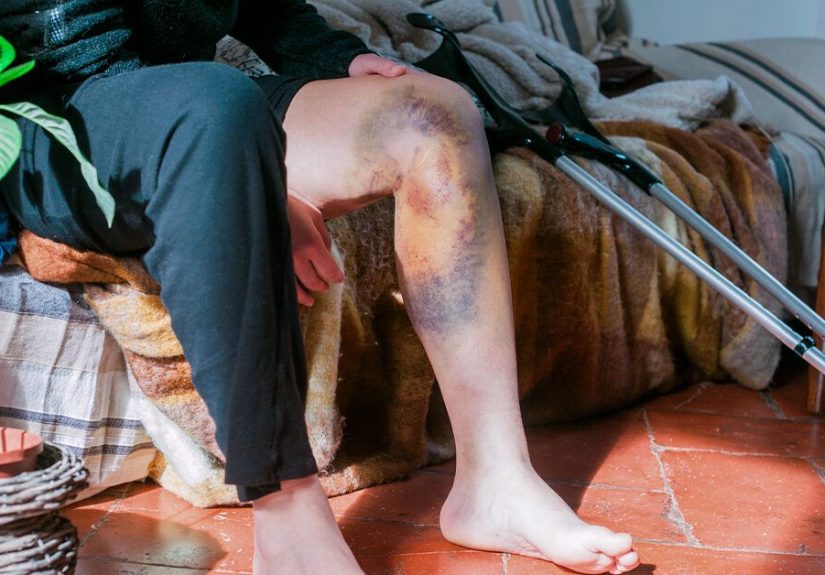
A parent notices their child seems to collect bruises the way some people collect souvenir magnetsone from the coffee table, another from the playground,
and somehow one on the shin with no known origin. At first, it’s easy to chalk it up to normal childhood chaos. But then the bruises get bigger,
and a small cut bleeds longer than expected. In many families, this is where the question becomes less “Are they clumsy?” and more “Is something different about clotting?”
If the child also develops swollen, painful joints after minor bumps, that often pushes the conversation toward hemophiliabecause joint bleeding is such a signature feature.
Families describe learning a whole new language: factor levels, infusion routines, and what a “target joint” means in everyday life.
2) “The sudden rash of tiny dots”
Someone wakes up, looks at their legs, and sees scattered tiny red-purple spots that don’t blanchpetechiae. It can be alarming because it looks like a rash,
but it behaves differently: it doesn’t itch, it doesn’t fade when pressed, and it shows up alongside easy bruising or gum bleeding.
In many thrombocytopenia stories (especially ITP), the onset feels abrupt: “I was fine last week, then suddenly I wasn’t.”
People often report getting a CBC and being stunned by how low the platelet count is. The emotional whiplash is realone day you’re making weekend plans,
the next you’re learning why contact sports are a bad idea for now and why certain over-the-counter pain relievers might be off the table.
3) “Same symptom, different explanation: the nosebleed saga”
Nosebleeds are the great equalizercommon in people with no bleeding disorder at all. But when they become frequent, prolonged, or hard to stop, they can hint at a bigger issue.
Families dealing with thrombocytopenia often describe nosebleeds paired with gum bleeding or widespread bruising, which fits the mucosal/skin pattern of low platelets.
Families managing hemophilia sometimes talk about nosebleeds too, but the most disruptive episodes often involve deeper bleedinglike a muscle bleed that limits movement,
or a joint bleed that turns stairs into a negotiation.
4) “Learning the routine: confidence through a plan”
A common thread across both conditions is that life improves when there’s a clear plan. People with hemophilia often describe a turning point when prophylaxis becomes routine:
fewer surprise bleeds, fewer ER visits, and less fear around normal activities. People living with thrombocytopenia describe a different kind of stability:
once the cause is identifiedwhether it’s a temporary drop after illness, an immune pattern like ITP, or a medication effectdecisions become less mysterious.
They learn what symptoms to watch, when to call, and how to balance safety with living a normal life.
If there’s a takeaway from these experiences, it’s this: hemophilia and thrombocytopenia can look similar from across the room,
but the detailsbleeding pattern, lab tests, and response to treatmenttell the real story. Getting the right diagnosis doesn’t just change medication choices;
it changes how people plan school, work, travel, sports, procedures, and even peace of mind.