Table of Contents >> Show >> Hide
- The Morning Everything Went Sideways
- Why the Original Forecast Sounded So Bleak
- The Decision That Changed Everything
- How Philadelphia Pulled Off the 12-Day Reopen
- 1. Emergency powers cut through the bureaucracy
- 2. The plan favored speed without pretending permanence
- 3. Lightweight recycled glass made the workaround possible
- 4. Crews worked 24/7
- 5. Logistics were treated like part of the construction job
- 6. Transit stepped in to reduce pressure
- 7. Public communication stayed visible
- What “Rebuilt in 12 Days” Really Means
- Why This Rebuild Became a National Lesson
- The Bigger Human Story Behind the Asphalt
- Experience and Lessons: What This Story Feels Like From the Ground
- Conclusion
Most infrastructure stories in America come with a familiar plot twist: everyone says the fix is urgent, then the calendar starts doing Olympic-level gymnastics. But Philadelphia’s I-95 collapse in June 2023 broke that script. After a gasoline tanker rolled over on the Cottman Avenue exit ramp, caught fire, and triggered the collapse of a key section of one of the East Coast’s busiest highways, the first public expectation was grim. Officials warned the work could take months. Commuters groaned. Truckers rerouted. Economists braced for a nasty transportation headache. And then Philadelphia, somehow, did the most Philadelphia thing possible: it got stubborn.
In just 12 days, traffic was moving again.
That headline sounds almost too neat, like the setup to an infrastructure fairy tale written by a civil engineer who drinks three espressos before sunrise. But the real story is even better. Philadelphia did not simply wave a magic asphalt wand. The city, the state, federal agencies, contractors, labor crews, transit planners, and local suppliers turned a transportation disaster into a case study in speed, coordination, and practical problem-solving. The 12-day achievement was not the permanent final bridge; it was a temporary six-lane roadway that restored the corridor while the full rebuild continued. Still, that distinction does not make the accomplishment less impressive. If anything, it makes it smarter.
The Morning Everything Went Sideways
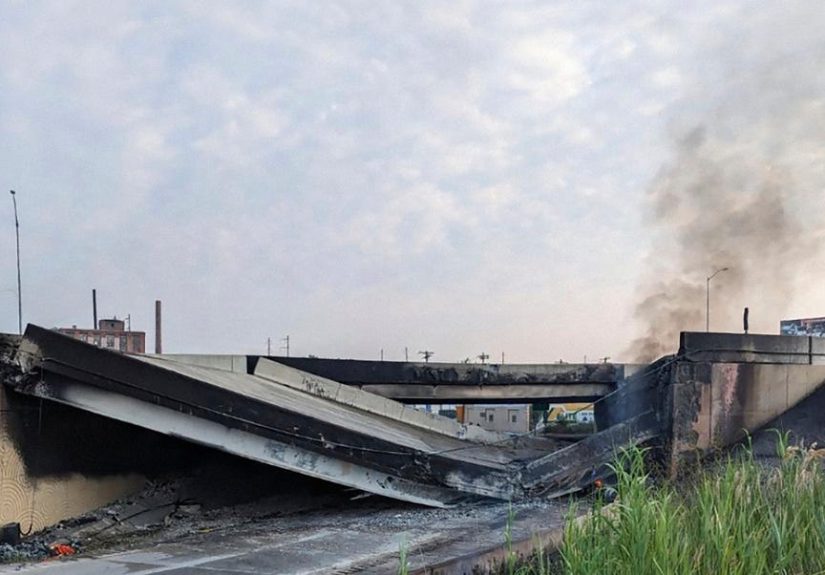
On June 11, 2023, a tanker truck hauling gasoline crashed on the northbound Cottman Avenue exit ramp beneath I-95 in Northeast Philadelphia. The truck rolled, the fuel ignited, and the intense heat damaged the steel supporting the highway above. The northbound lanes collapsed, and the southbound side was compromised badly enough that it had to be demolished too. In one terrifying morning, a major artery that normally carried roughly 160,000 vehicles a day became a giant, smoking reminder that modern life depends on a lot of concrete, steel, and people who know what to do when both fail at once.
The location made the collapse especially serious. I-95 is not some sleepy side road with a handful of sedans and one guy hauling lawn chairs. It is one of the most important north-south corridors in the United States, linking cities, ports, warehouses, and supply chains up and down the East Coast. Closing it in Philadelphia was a big deal for local drivers, but it was also a regional economic problem. The pressure to reopen it was immediate.
Why the Original Forecast Sounded So Bleak
At first, “months” sounded realistic. Bridge failures caused by fire are not tidy problems. Engineers needed to understand what had survived, what had not, how to clear the wreckage safely, and how to restore traffic without making the situation worse. Rebuilding a normal overpass through standard procurement, standard design review, standard mobilization, and standard public-sector pacing can take a very long time. Nobody who has ever waited for a pothole repair was betting on a two-week comeback.
There was also the obvious challenge of logistics. Demolition had to happen fast. Materials had to appear almost instantly. Crews had to work around the clock. Detours had to be managed. Transit needed backup capacity. The public needed information. And every decision had to balance speed with safety, because “we reopened fast” becomes a very bad slogan if the road is not truly ready.
The Decision That Changed Everything
The breakthrough came when officials stopped treating the problem like a conventional bridge replacement and started treating it like an emergency mobility mission. Instead of waiting for a full permanent bridge to be designed and completed before reopening traffic, PennDOT and its partners pursued an interim solution: backfill the damaged area, pave over it, and create a temporary six-lane roadway that would carry traffic while the permanent structure was rebuilt.
That single move changed the timeline from “maybe months” to “let’s see how fast we can safely pull this off.” It was not flashy. It was not glamorous. It was just smart. In infrastructure, smart often beats dramatic.
The state brought in Philadelphia-based Buckley & Company to construct the temporary roadway, while C. Abbonizio Contractors handled demolition. Federal engineers consulted on the plan. PennDOT moved with unusual speed. And suddenly the rebuild became less about waiting for the perfect long-term configuration and more about restoring function immediately, then finishing the full job in phases.
How Philadelphia Pulled Off the 12-Day Reopen
1. Emergency powers cut through the bureaucracy
One day after the collapse, Governor Josh Shapiro signed a disaster emergency proclamation. That mattered because it did more than create a dramatic press-conference backdrop. It released state funds quickly, opened the door to federal support, and waived normal bidding and contracting procedures that would have slowed the response. In plain English, the government stopped acting like it had all summer and started acting like the road mattered.
That kind of procedural flexibility is not always appropriate for ordinary projects, but for a major highway collapse, it was exactly the point. The state could mobilize contractors, secure materials, and authorize rapid work without drowning the project in paperwork while commuters sat in gridlock.
2. The plan favored speed without pretending permanence
The interim road was clever because it was honest. Officials were not pretending they could build a permanent replacement bridge in under two weeks. They were creating a safe, usable, temporary transportation fix so the region could breathe again. That kind of clarity matters in crisis response. Bad projects often fail because leaders confuse “temporary” with “inferior” or “permanent” with “necessary right now.” Philadelphia understood the assignment.
3. Lightweight recycled glass made the workaround possible
One of the most fascinating details of the rebuild was the use of lightweight foamed glass aggregate made from recycled glass. Instead of relying on heavier traditional fill, crews used specially engineered glass aggregate to backfill the damaged section and bring the road up to grade quickly. About 2,000 tons of the material were used.
This was not just a quirky eco-friendly subplot for the sustainability crowd. The material was practical. It was lighter, easier to move quickly, and well suited to building the temporary roadway fast. Even better, it came from a local supplier in the region, which meant fewer supply-chain delays and a shorter path from idea to execution. Nothing says “infrastructure efficiency” quite like turning old bottles into a highway comeback.
4. Crews worked 24/7
There is no secret here: nonstop labor changes schedules. PennDOT employees, contractors, and union trades worked around the clock. Demolition wrapped up ahead of schedule. Construction began immediately. The job site became a constant machine of excavation, hauling, grading, paving, striping, and problem-solving. If ordinary public works sometimes feel like they happen only when Mercury is in the right mood, this one looked more like a mission control center with hard hats.
5. Logistics were treated like part of the construction job
Philadelphia did not just build fast. It fed the build fast. State Police escorted trucks carrying the glass aggregate to the site so critical material would not lose precious hours in traffic. A truck-mounted NASCAR jet dryer from Pocono Raceway was brought in when rain threatened to slow paving and striping. Yes, really. When your emergency road repair starts borrowing race-day equipment, you know people are done fooling around.
That detail may sound amusing, but it captures the mindset perfectly: use whatever works. Not whatever is traditional. Not whatever looks elegant in a five-year capital memo. Whatever works safely and now.
6. Transit stepped in to reduce pressure
SEPTA also played a supporting but important role. The transit agency increased capacity on key Regional Rail lines and adjusted service to help absorb the shock of the closure. That did not “solve” the collapse, of course, but it helped keep the regional transportation network from turning into total chaos while the highway remained closed. Fast recovery is rarely just about one construction site; it is about everything around it too.
7. Public communication stayed visible
The rebuild was livestreamed 24/7, which turned the project into a strange sort of regional spectator sport. Thousands of people watched dump trucks, paving crews, and giant machines move through the site in real time. That transparency helped in two ways. First, it reassured the public that progress was actually happening. Second, it created a civic energy around the work. People were not just hearing promises; they were seeing results by the hour.
What “Rebuilt in 12 Days” Really Means
To be precise, Philadelphia restored traffic in 12 days by creating a temporary six-lane roadway over the damaged area. That roadway reopened on June 23, 2023. The permanent reconstruction took longer, as it should have, and the full bridge restoration was completed less than a year later, with final traffic restoration in May 2024.
That nuance matters because accuracy matters. But it does not shrink the achievement. The hard part in a transportation crisis is restoring mobility safely and quickly. Philadelphia did that with a solution tailored to the emergency instead of forcing the emergency to wait for a textbook answer.
Why This Rebuild Became a National Lesson
Philadelphia’s I-95 comeback became a national talking point because it challenged a comfortable assumption: that American infrastructure simply has to move slowly. The 12-day reopen suggested something more uncomfortable and more useful. A lot of delay is not physics. It is process, fragmentation, caution layered on caution, and systems that are not built for urgent coordination.
The I-95 response showed what happens when government at different levels aligns around one goal, contractors are empowered early, labor is fully mobilized, materials are sourced creatively, and everyone agrees that the mission is to restore service first and perfect the long term second. In other words, Philadelphia did not discover magic. It discovered focus.
That does not mean every bridge project should run like an emergency. It does mean policymakers should study why an emergency temporarily made the system better. Faster decisions. Clear accountability. Real-time problem solving. Less bureaucratic drift. Strong public communication. Local know-how. Those are not miracle ingredients. They are management choices.
The Bigger Human Story Behind the Asphalt
There was also a human dimension that made the project resonate far beyond engineering circles. The collapse killed the tanker driver, and the response unfolded under the shadow of that loss. Local residents lived with detours, noise, and uncertainty. Workers operated on a punishing schedule. Public officials were under national scrutiny. And yet the project became, oddly enough, a morale booster.
When the temporary lanes opened, the ceremony featured first responders and Philadelphia sports mascots crossing the rebuilt stretch. It was a little goofy, a little proud, and extremely Philadelphia. But it fit. People did not just want the road back. They wanted proof that a public institution could still respond with urgency and competence when the stakes were obvious. For a lot of Americans, that felt almost as surprising as the speed of the rebuild itself.
Experience and Lessons: What This Story Feels Like From the Ground
To understand why the I-95 rebuild captured so much attention, it helps to think about the experience around it, not just the engineering. For commuters, the collapse was the kind of event that instantly rearranges daily life. The drive to work changes. Backup routes get ugly. Every errand becomes a strategy game. The road you never think about suddenly becomes the only thing you think about. Anyone who has lived near a major traffic choke point knows that a few extra minutes can feel annoying, but the loss of a major interstate corridor feels like the region’s entire rhythm has gone off beat.
Then came the strange emotional pivot. Instead of settling into months of dread, people began watching a livestream of construction equipment like it was prestige television for infrastructure nerds. Families checked updates. Workers on lunch breaks pulled up the feed. Local news stations ran timelapses. Social media filled with variations of the same thought: wait, are they actually doing this? The project became bigger than the road because it gave people a visible scoreboard. Progress was not hidden behind vague statements. You could literally watch trucks arrive, material pile up, and pavement take shape.
For the workers, the experience was different. There is nothing romantic about emergency construction in heat, dust, noise, and fatigue. It is demanding, repetitive, exacting work. But there was also a sense that this was one of those rare jobs where the whole city understood what the crew was doing and why it mattered. Construction labor is often invisible until something goes wrong. Here, the labor itself became the story. Every dump truck load, every overnight shift, every stripe painted on wet pavement felt like a public answer to a public problem.
For local businesses and truckers, the 12-day timeline mattered in a brutally practical way. Time is inventory. Time is payroll. Time is fuel. Time is whether a delivery route still works or whether customers decide the hassle is not worth it. Reopening even a temporary version of I-95 meant restoring predictability, and predictability is gold in commerce. That is one reason the response received so much praise from people who are usually not handing out love letters to government agencies.
The lasting experience of this story, though, is psychological. The rebuild reminded people that competence is contagious. Once agencies, contractors, transit officials, police, and labor crews started moving in sync, the public mood shifted from cynicism to belief. Not blind belief. Not “everything is fixed forever” belief. More like, “Oh, right, we can still do difficult things if the incentives and leadership line up.” That may be the most valuable part of the whole episode. The asphalt mattered. The mobility mattered. But the restored confidence in what coordinated public action can look like may be the part that sticks longest.
Conclusion
So how did Philadelphia rebuild I-95 in 12 days after the tanker blast? By refusing to chase the slowest possible version of the answer. Officials declared an emergency, cut red tape, brought in the right contractors, chose a temporary roadway over a wait-for-perfection approach, sourced smart local materials, worked nonstop, supported the effort with transit and logistics, and kept the whole thing visible to the public. It was fast, but it was not reckless. It was improvised, but not sloppy. Most of all, it was a reminder that infrastructure success is usually not about miracles. It is about decisions.
Philadelphia did not rewrite the laws of construction. It just proved that when urgency, leadership, engineering, and labor stop pulling in different directions, a supposedly impossible timeline can start to look very real.