Table of Contents >> Show >> Hide
- The Myth: A Censorship War Over a Navel
- What Actually Happened: A Joke Becomes “A Cause Célèbre”
- The Real Context: 1960s TV Standards Were Broad (and Sometimes Silly)
- How Media Turns a Wardrobe Detail into a “Story”
- What the “Fake Controversy” Really Was
- Why the Myth Never Dies (Even When Everyone Knows Better)
- How to Spot a Manufactured “Classic TV Scandal”
- Conclusion: The Belly Button That Launched a Thousand Clicks
- Experiences: Living Through the Great Jeannie Navel Myth (500+ Words)
If you’ve ever fallen down the classic-TV rabbit hole, you’ve probably heard this one: in the 1960s,
America was so scandalized by a woman’s belly button that NBC allegedly launched a full-scale censorship
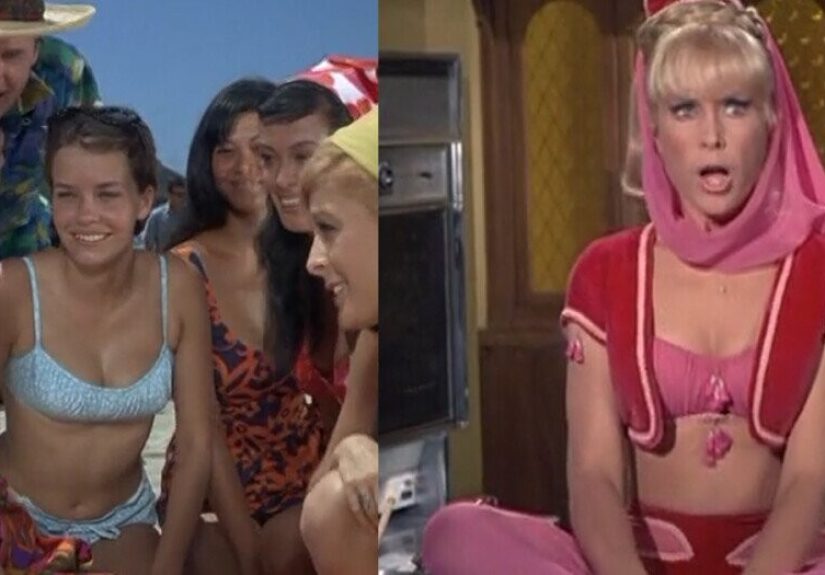
operation to keep Barbara Eden’s navel hidden on I Dream of Jeannie.
It’s an irresistible storytiny patch of skin, giant cultural meltdown. The only problem? Like a lot of pop-culture
“scandals,” it’s been inflated, simplified, and repackaged until it barely resembles what actually happened.
What started as a wardrobe choice (and a running joke) turned into a headline-friendly myth: “Network BANS belly button!”
Cue the dramatic music. Cue the outrage. Cue the modern-day listicles.
This article breaks down how the “Jeannie belly button controversy” became a thing, why it keeps getting retold like it was a major moral battle,
and what the whole episode teaches us about nostalgia media, clickbait economics, and the way “controversy” can be manufactured out of thin airsometimes literally out of chiffon.
The Myth: A Censorship War Over a Navel
The popular version goes something like this: NBC censors were horrified by Jeannie’s midriff-baring costume, so they demanded her belly button be covered.
Producers complied with a flesh-toned patch, makeup tricks, higher waistlines, and camera angles designed to protect America from the terrifying power of… an innie.
And to be fair, the 1960s did have plenty of broadcast-era prudishness. Networks had Standards and Practices departments that weighed in on everything
from language to sexuality to what was “appropriate for the home.” The culture was more conservative, and TV was treated like a guest in your living room
one who shouldn’t put their feet on the coffee table, and definitely shouldn’t show you anyone’s abdomen.
But here’s where the myth takes a hard left into legend: it frames the belly button as a singular, high-stakes censorship battle that defined the show.
In reality, the “controversy” grew because it was repeatable, funny, and easy to sellnot because it was some massive network crisis from day one.
What Actually Happened: A Joke Becomes “A Cause Célèbre”
Barbara Eden herself has described the navel obsession as something that snowballedless a grand censorship plot and more a media-fed snow globe that wouldn’t stop shaking.
According to her recounting, a Hollywood columnist (Mike Connolly) teased her on set about whether she even had a belly button, and the gag ended up in print.
Once it was published, other writers picked it up, and suddenly the topic had a life of its own.
That’s the key ingredient: the story wasn’t born from a national scandal. It was born from a press-ready hook.
Editors love hooks. Readers love hooks. And nothing says “harmless, slightly spicy, nostalgia-friendly hook” like:
“America once panicked over a belly button.”
Eden’s version also includes a perfect “suits in a room” image that modern writers can’t resist.
When producer George Schlatter wanted to “premiere” her navel on Rowan & Martin’s Laugh-In, she says NBC executives held a serious meeting about it.
The punchline writes itself: the network that could broadcast moon launches had to convene a summit on an inch of stomach.
So yesthere were rules. Yesthere were discussions. But the “controversy” wasn’t some organic public uprising
where the nation collectively clutched its pearls and demanded a crackdown on navels.
It was a media loop: a joke became a column item, became a conversation, became a headline, became a myth that future headlines could quote.
Why This Matters
Because when you call something a “controversy,” you’re implying it was a big deal at the time, with clear sides, high emotion, and meaningful consequences.
What happened with Jeannie’s belly button was closer to a modern viral moment: it got attention because it was weirdly specific, mildly taboo, and easy to repeat.
That’s not nothingbut it’s not the cultural showdown the myth advertises, either.
The Real Context: 1960s TV Standards Were Broad (and Sometimes Silly)
To understand how the myth could grow, you have to understand the ecosystem that let it grow.
Mid-century broadcasting ran on a mix of formal policy, industry self-regulation, sponsor sensitivity,
and the ever-present fear of angry letters from viewers who had never forgiven Elvis for moving his hips.
The industry’s self-regulatory guidanceoften discussed under the umbrella of “television codes” and “good practice” standardsleaned heavily on
vague language about “propriety” and avoiding “embarrassing” exposure. In other words: it gave networks and stations wide discretion to say “no”
without having to say exactly why.
That vagueness is important. A rule doesn’t have to say “no belly buttons” in big block letters to produce “no belly buttons” outcomes.
If the standard is “don’t offend the home viewer,” then anything can become a “problem” if someone influential decides it might offend someone somewhere.
And those Standards and Practices decisions weren’t limited to skin.
Eden has also recalled other constraints from the eralike the idea that Jeannie’s bottle (yes, her literal genie bottle home) couldn’t be placed in a bedroom.
That’s the same mindset: avoid implications, avoid innuendo, avoid giving anyone a reason to complain.
How Media Turns a Wardrobe Detail into a “Story”
Here’s the patternand once you see it, you’ll see it everywhere:
- Start with a quirky detail (Jeannie’s costume hides the navel).
- Add an authority figure (network executives / censors / “Standards and Practices”).
- Frame it as conflict (“they wouldn’t allow it,” “they debated it,” “it nearly got her fired”).
- Make it symbolic (proof of how uptight the 1960s were).
- Repeat it forever because it’s clickable, quotable, and doesn’t require anyone to rewatch the show.
The Jeannie belly button story is basically an algorithm before algorithms:
it’s short, visual, slightly scandalous, and invites the reader to feel superior to the past.
(“Look how ridiculous they were! Anyway, please ignore the fact that my social media app just flagged a photo of a shoulder as ‘sensitive content.’”)
Why the Headline Writes Itself
“Belly button banned” is a perfect headline because it’s a neat little morality play:
innocent star vs. uptight suits, with the viewer as the wise modern observer.
It lets you tell a bigger story about censorship and culture without having to do much heavy lifting.
The problem is that the headline is often treated as the whole truth.
Over time, nuance gets shaved off:
“costume choice + era standards + a columnist’s joke + the network being the network” becomes
“NBC censored her navel and America freaked out.”
What the “Fake Controversy” Really Was
Calling it a “fake controversy” doesn’t mean nothing happened.
It means the story has been exaggerated into something cleaner and louder than reality:
- Real: TV standards in the era were cautious about sex and “anatomical emphasis.”
- Real: Jeannie’s costume design typically placed the waistline above the navel.
- Real: Media attention helped turn the navel into a recurring topic.
- Overblown: The idea of a huge, singular censorship “battle” that dominated production from day one.
- Overblown: The myth that this was a uniquely Jeannie-driven moral panic, rather than one example of broader standards-era oddness.
In other words, the “controversy” mostly lived in the same place many modern controversies live:
in the retelling.
Why the Myth Never Dies (Even When Everyone Knows Better)
The Jeannie belly button saga survives because it’s a multi-tool:
- Nostalgia content: Perfect for “Remember when TV was innocent?” slideshows.
- Censorship think-pieces: Easy example of old-school prudishness.
- Comedy: The image of executives debating a navel is inherently funny.
- Social media: It’s a bite-sized “did you know?” factoid that farms engagement.
And it taps into a deeper truth: people love stories where “the media” reveals something supposedly hidden.
If you can imply that viewers were denied forbidden knowledgelike the existence of a belly button
you create a feeling of discovery. It’s pop culture as treasure hunt.
How to Spot a Manufactured “Classic TV Scandal”
Want a quick media-literacy checklist for the next time you see a “TV was SO censored back then” headline?
1) Does the story rely on one repeated anecdote?
If every article cites the same couple of quotes and the same basic timeline, you’re probably reading
a copy-and-paste myth in different fonts.
2) Is “controversy” doing most of the work?
“Controversy” can mean anything from “people had different opinions” to “someone joked about it once.”
If you can’t find evidence of widespread public conflict, treat the word like a spicy seasoning, not a fact.
3) Are there concrete examplesor just vibes?
Real controversies leave trails: memos, statements, documented disputes, measurable backlash.
Manufactured ones rely on generalized claims like “censors were furious” without showing you who, when, or what changed.
4) Does the story make the past look cartoonishly dumb?
Sometimes the past was dumb. But when it’s presented as a one-note punchline,
you’re likely seeing a simplified narrative designed to entertain more than inform.
Conclusion: The Belly Button That Launched a Thousand Clicks
Barbara Eden’s Jeannie costume is iconicnot because it hid a navel, but because it helped define a whole era of television fantasy:
playful, glossy, and carefully constrained by the rules of the living room.
The “belly button controversy” became famous because it had the perfect ingredients for a media echo:
a teasing columnist, a funny visual, a whiff of taboo, and the kind of network caution that turns minor details into “policy.”
Over time, the myth grew louder than the reality. And today, it persists because it’s useful: a compact little story that sells
the idea that the past was prudish, the present is enlightened, and the media is always just one more headline away from inventing
drama out of thin airpreferably chiffon-scented thin air.
Experiences: Living Through the Great Jeannie Navel Myth (500+ Words)
If you’ve ever tried to explain the Jeannie belly button story to a friend, you know how the experience usually goes.
You start with good intentionsmaybe you just want to talk about classic sitcoms, TV history, or how costumes communicate character.
Five minutes later, you’re arguing about whether an NBC executive once fainted at the sight of a midriff, and your friend is
demanding “receipts” like you’re cross-examining a witness on Law & Order.
The first “experience” most people have with this topic is the Headline Encounter.
You’re scrolling, half-asleep, and you see something like: “The Shocking Reason Jeannie Couldn’t Show Her Belly Button!”
Your brain does what brains do: it wants closure. It wants the answer. It wants to click. And when you click, you don’t just read
the storyyou absorb the framing. “Belly button” becomes shorthand for “censorship,” and “censorship” becomes shorthand for “the era was wild.”
Then comes the Rewatch Reality Check.
Maybe you stream a few episodes (or catch reruns on a nostalgia channel) expecting to spot a dramatic cover-up.
Instead, you notice something funnier: the show’s comedy and fantasy are doing most of the heavy lifting, not the wardrobe.
Jeannie’s outfit reads as “genie” first, “scandal” second. The supposed “forbidden” detail isn’t the focal point at all
which is usually a clue that the controversy is living more in cultural memory than in the actual text of the show.
Next is the Myth Multiplication phase. Once you’ve seen the claim once, you’ll see it everywhere:
in “Did You Know?” posts, in retro threads, in listicles about “things you couldn’t do on TV,” and in casual conversation that
starts with, “I heard they wouldn’t even allow…” The experience here is less about learning and more about watching repetition
create certainty. When a story is repeated in ten places, it begins to feel confirmedeven if those ten places all borrowed it
from the same original anecdote.
For writers and creators, there’s also the Temptation Experience.
You sit down to draft an article about 1960s television, and your brain immediately suggests the Jeannie belly button story
because it’s a ready-made hook. It’s funny. It’s visual. It’s safe. It lets you talk about censorship without getting too heavy.
And suddenly you understand why the myth persists: it’s an easy way to keep readers moving through paragraphs, smiling along,
and thinking, “Wow, can you believe that?”
Finally, there’s the Grown-Up Takeaway Experiencethe one you get after you’ve heard the story so many times
that you stop asking, “Was it banned?” and start asking, “Why do we love stories like this?”
Because the belly button isn’t really the point. The point is how culture turns tiny details into symbols, how media turns symbols into stories,
and how stories become “facts” through repetition. The Jeannie myth is like a training simulator for modern information life:
a low-stakes example that shows, in miniature, how our attention can be guided by what’s catchy rather than what’s complete.
And honestly? That’s kind of magical in its own way. Jeannie didn’t need to blink and nod to make things happen.
The media did it for her.