Table of Contents >> Show >> Hide
- Quick plant profile (so you know what you’re signing up for)
- Where hummingbird bush grows best
- How to plant flame acanthus (step-by-step)
- Watering hummingbird bush: the “deep sip” strategy
- Fertilizer and mulch: keep it simple
- Pruning: when (and how) to cut back for more blooms
- How to get more blooms (aka: make the hummingbirds RSVP “yes”)
- Cold, heat, and winter care
- Pests, disease, and deer
- Propagation: how to make more (without summoning chaos)
- Growing hummingbird bush in containers
- Landscape design ideas (so it looks intentional)
- Troubleshooting: common issues (and easy fixes)
- Final thoughts
- Experience notes: what caring for flame acanthus feels like in real life (about )
- SEO tags (JSON)
If you want a plant that throws a summer-long nectar party and doesn’t demand a daily spa appointment,
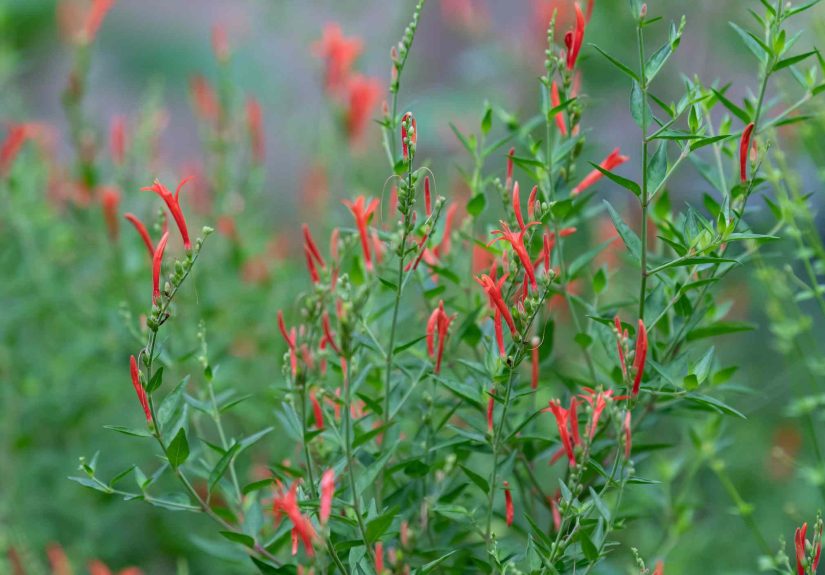
meet hummingbird bushalso called flame acanthus (Anisacanthus quadrifidus var. wrightii).
It’s famous for fiery tubular blooms that hummingbirds treat like a drive-thru, plus a rugged attitude toward heat,
drought, rocky soil, and the general chaos of real life.
This guide breaks down exactly how to plant, water, prune, and troubleshoot flame acanthusso you get more flowers,
more pollinators, and fewer “why does this shrub hate me?” moments.
Quick plant profile (so you know what you’re signing up for)
- Botanical name: Anisacanthus quadrifidus var. wrightii
- Common names: Hummingbird bush, flame acanthus, Texas firecracker, Wright’s desert honeysuckle
- Type: Deciduous shrub (often dies back in colder winters, then rebounds)
- Size: Typically 3–5 ft tall and 3–4(+) ft wide
- Sun: Full sun is best; light shade is tolerated
- Water: Low once established; appreciates strategic drinks in peak heat
- Bloom season: Summer into fall (often blooms in flushes after rain)
- Wildlife: Hummingbirds, butterflies, and other pollinators love it
Where hummingbird bush grows best
1) Sunlight: more sun = more fireworks
For maximum bloom power, plant flame acanthus in full sun (think 6+ hours).
It will tolerate light shade, but heavy shade tends to turn it into a leafy roommate who “forgets”
to contribute flowers.
2) Soil: well-drained is the only non-negotiable
This plant is famously chill about soil typerocky, caliche, clay, poor soilsfine.
The one thing it dislikes is soggy feet. If your soil stays wet for long stretches,
improve drainage before planting (or choose a raised bed / mound).
3) Hardiness: know your winter behavior
In warmer zones, it may keep some structure in winter. In colder parts of its range, it can
freeze back to the ground and then regrow from the roots when temperatures rise.
Don’t write the eulogy too earlythis shrub is famous for coming back when other plants are still hitting snooze.
How to plant flame acanthus (step-by-step)
-
Pick the spot: Aim for full sun, good drainage, and enough space for a relaxed,
informal shape (about 3–5 feet wide). -
Dig smart, not heroic: Make the hole about as deep as the root ball and 2–3x as wide.
Rough up slick clay sides so roots can explore instead of circling like they’re stuck in a roundabout. -
Plant at the right height: The top of the root ball should sit level with (or slightly above)
surrounding soil. - Backfill and settle: Backfill with native soil. Water deeply to settle air pockets.
- Mulch lightly: Add a light layer of mulch around the base (keep it a few inches away from stems).
Watering hummingbird bush: the “deep sip” strategy
Year 1: establishment phase (the plant is making roots, not promises)
For the first growing season, water deeply when the top few inches of soil dry outespecially during hot spells.
Deep watering encourages deep roots, which is the secret to drought tolerance later.
After establishment: less often, but more meaningful
Once established, hummingbird bush is a low-water shrub. In many climates, natural rainfall is enough.
During extended drought or extreme summer heat, a deep soak can boost flowering.
The biggest mistake is watering frequently “just because”that’s how you invite root problems.
How to tell if you’re overwatering
- Soil stays wet for days after watering
- Leaves yellowing without obvious drought stress
- Weak growth and poor flowering
- General “sad plant energy” despite plenty of water
Fix it by spacing out irrigation, improving drainage, and letting the soil dry between deep waterings.
Fertilizer and mulch: keep it simple
Flame acanthus isn’t a heavy feeder. In fact, overly rich fertilizer can push leafy growth at the expense of blooms.
If you want a gentle boost, top-dress with compost in early spring.
Mulch helps conserve moisture and buffers temperature swings. A thin layer is plentyespecially in humid regions.
Think “cozy blanket,” not “swamp simulator.”
Pruning: when (and how) to cut back for more blooms
The goal: a fuller shrub, not a weird haircut
Hummingbird bush is naturally informal. You can leave it mostly alone, but smart pruning can improve shape and bloom.
Best time for a hard cutback
Many gardeners prune in late winter by cutting stems back to a low framework (often within several inches of the ground),
especially where plants die back or look twiggy after winter. In areas where it freezes to the ground, wait until you see
new growth waking up, then remove dead wood.
In-season trimming (the “don’t ruin the show” rule)
- Early summer: A light trim can help control size and encourage branching.
- Late summer: Avoid heavy pruningthis can reduce flowering right when hummingbirds are counting on you.
A practical pruning plan
- Every year: Remove dead, damaged, or crossing stems once new growth begins.
- Every few years: Do a more severe renewal prune to keep it compact and vigorous.
- Don’t panic: If it’s late to leaf out in spring, that’s normal for many gardenerswait before cutting everything.
How to get more blooms (aka: make the hummingbirds RSVP “yes”)
1) Give it sun
Full sun is your best bloom insurance.
2) Water strategically during peak heat
In the hottest, driest stretch of summer, a deep soak can help maintain bloom productionespecially if your plant is in
fast-draining soil or a container.
3) Don’t over-fertilize
Too much fertilizer often means you get more leaves and fewer flowers. Compost is usually enough.
4) Appreciate the “rain trigger” effect
Flame acanthus is known for pushing fresh blooms after rainfall. If you see a bloom explosion after a storm,
that’s not magicit’s the plant doing what it evolved to do.
Cold, heat, and winter care
In hot climates, this plant is built for summer. In colder areas, it may act like a perennial shrub that
dies back and returns. Leave stems standing through winter if you like the structure and exfoliating bark,
then prune once spring growth starts.
If you garden near the colder end of its hardiness range, a light mulch layer over the root zone in late fall can help
buffer freeze-thaw swings (again: light, not soggy).
Pests, disease, and deer
One of the best parts of hummingbird bush care is that it’s typically a low-problem plant.
Serious pest and disease issues are uncommon. The main avoidable issue is root rot from wet soil.
Deer often skip it (no plant is 100% deer-proof, but this one is commonly described as deer-tolerant).
Translation: it’s not a deer salad barmore like a deer “hard pass.”
Propagation: how to make more (without summoning chaos)
Softwood cuttings (fast, reliable)
- In late spring to mid-summer, take a 4–6 inch cutting from healthy, non-flowering growth.
- Remove lower leaves, leaving a few at the top.
- Stick into a sterile, well-drained medium; keep evenly moist (not soggy) until rooted.
- Once you see new growth and resistance when gently tugged, pot up or plant out.
Seed (easy… and sometimes too easy)
Flame acanthus can produce seed capsules that disperse seeds. If you like surprises, you’ll get volunteers.
If you don’t like surprises, you’ll still get volunteersjust fewer of them if you remove seed pods before they fully dry.
Growing hummingbird bush in containers
Yes, you can grow flame acanthus in potsjust pick a container with excellent drainage and a gritty, well-draining mix.
Container plants dry out faster, so you’ll water more often than in-ground plants, especially in summer.
The rule remains the same: deep watering, then let it dry down.
- Pot size: Bigger is better for heat and drought buffering.
- Sun: Full sun for bloom.
- Winter: If your area gets hard freezes, protect the pot (move to a sheltered spot, insulate the container).
Landscape design ideas (so it looks intentional)
Flame acanthus is a natural fit for xeriscapes, rock gardens, pollinator borders, and informal hedges.
Because it has a looser shape, pair it with plants that provide contrasting structurespiky, mounding, or finely textured companions.
- Use it as: specimen shrub, informal hedge, mixed border anchor, pollinator magnet near patios
- Pair with: other heat-loving perennials and natives that don’t mind lean soil
- Design tip: Give it breathing room so it can do its airy, arching thing without looking “unkempt by accident.”
Troubleshooting: common issues (and easy fixes)
“It’s not blooming much.”
- Likely causes: not enough sun, too much fertilizer, constant irrigation, or heavy late-season pruning
- Fix: move/plant in full sun, ease off fertilizer, water deeply but less often, prune at the right time
“It looks dead in spring.”
- Likely cause: it’s a late starter or it died back from cold
- Fix: wait for consistent warmth, scratch-test stems, prune dead wood once new growth appears
“Leaves are yellowing.”
- Likely cause: wet soil / poor drainage
- Fix: reduce watering, improve drainage, consider raising the planting area
“It’s flopping everywhere.”
- Likely cause: it’s doing its natural informal shape… enthusiastically
- Fix: light early-summer tip pruning, or a renewal prune in late winter for a sturdier framework
Final thoughts
If you want an easygoing shrub that blooms through the heat, shrugs off tough soil, and makes hummingbirds show up like
you’re hosting a tiny flying concerthummingbird bush (flame acanthus) is a powerhouse.
Put it in sun, keep the drainage decent, water wisely, and prune at the right time. Then let it do what it does best:
bring the fireworks.
Experience notes: what caring for flame acanthus feels like in real life (about )
Here’s the part most care guides don’t say out loud: hummingbird bush has a sense of timing that can mess with your confidence.
In many gardens, it’s a late starter in spring. You’ll look at it, then look at your other plants,
then look back at it and think, “Okay, so… is this a stick collection now?” The trick is to wait for consistent warmth.
Once it wakes up, it doesn’t tiptoe into the seasonit cannonballs.
The second “aha” moment is learning the difference between helpful watering and helicopter watering.
When it’s newly planted, regular deep watering matters. But once established, it prefers you to back off.
A lot of gardeners accidentally over-love it: a little sprinkle here, a little sprinkle thereuntil the soil never fully dries.
The plant may respond with fewer blooms, yellowing, or just a general “meh” vibe. Then you skip watering for a bit,
give it one deep soak when it truly needs it, and suddenly it’s like, “Oh wow, thanks for respecting my boundaries.”
And the blooms? Flame acanthus can behave like it’s running on a weather app. After a good rain, many gardeners notice
a fresh flush of flowers that makes the shrub look newly upgraded. It’s the kind of plant that rewards patience:
you might get a lull, thenbambright tubular flowers everywhere. If you’ve planted it where you can see it from a window
or patio, you’ll start noticing the hummingbird pattern too: they’ll learn your shrub’s location and check in like regulars
at a favorite café. Once that happens, you’ll catch yourself watching them more than your streaming shows.
Pruning is another real-world learning curve. A hard cutback at the right time (late winter, or once spring growth begins)
often leads to a fuller, tidier shrub. But pruning too late in the season can reduce flowering right when you want the show.
Many gardeners land on a rhythm: do the serious work early, do a tiny “shape-up” in early summer if needed,
and then leave it alone so it can focus on blooming instead of recovering from a haircut.
Finally, there’s the “placement lesson.” In full sun, flame acanthus tends to bloom more and look more compact.
In light shade, it can still performbut it may stretch. If you’ve ever planted it in a spot that’s “kind of sunny”
and then wondered why it’s reaching like it’s trying to escape, you’re not alone. The fix is simple: more sun,
or a pruning plan that encourages branching. Once you dial in sun + drainage + a sensible watering routine,
hummingbird bush becomes the garden friend who shows up, brings snacks, and never asks to crash on your couch.