Table of Contents >> Show >> Hide
- Why Cleaning Your Water Bottle Matters
- How Often Should You Clean a Water Bottle?
- What You Need to Clean a Water Bottle Properly
- How to Clean a Water Bottle Every Day
- How to Deep-Clean a Water Bottle
- Can You Put a Water Bottle in the Dishwasher?
- How to Clean Specific Problem Areas
- Common Water Bottle Cleaning Mistakes
- How to Keep Your Water Bottle Cleaner Between Washes
- When to Replace the Bottle Instead of Cleaning It Again
- Real-World Experiences With Water Bottle Cleaning
- Conclusion
If your reusable water bottle could talk, it would probably beg for a bath. Think about it: you fill it, sip from it, toss it in your bag, leave it in the car, refill it, and repeat. Somewhere between your third refill of the day and that mysterious “why does this smell like a gym sock?” moment, your trusty bottle becomes less hydration hero and more tiny science fair.
The good news? Cleaning a water bottle is not complicated. The bad news? A quick rinse and a hopeful attitude do not count as hygiene. If you want to prevent germs, mold, funky odors, and mineral buildup, you need a simple routine that actually reaches the places grime loves most: lids, straws, threads, gaskets, and those suspicious little crevices that seem designed by chaos itself.
In this guide, you’ll learn how to clean a water bottle the right way, how often to do it, what to use for deep cleaning, and how to keep it fresh without damaging the bottle in the process. Whether you carry stainless steel, glass, plastic, or a trendy tumbler the size of a flower vase, the rules are mostly the same: wash it well, dry it completely, and do not ignore the lid.
Why Cleaning Your Water Bottle Matters
A reusable bottle may look clean even when it isn’t. Moisture, warmth, direct mouth contact, leftover drink residue, and sealed-up darkness create a cozy environment for bacteria and mold. In plain English: if you keep using your bottle without washing it, you’re basically offering microbes a long-term lease.
This risk goes up fast if you fill your bottle with anything besides plain water. Sports drinks, flavored water, protein shakes, tea, coffee, juice, and smoothie leftovers leave behind sugars, proteins, oils, and stains. Those residues cling to surfaces and feed the kind of buildup that turns a clean bottle into a “what is that smell?” situation.
The material matters a little, but not enough to save you from laziness. Stainless steel may resist buildup better than some plastics, but any bottle can harbor germs if it’s not cleaned regularly. And while the bottle body gets most of the blame, the dirtiest troublemakers are often the removable parts: spouts, straws, silicone seals, flip tops, and threaded caps.
How Often Should You Clean a Water Bottle?
If you use your bottle daily, clean it daily. That is the gold standard. At the very least, rinse it thoroughly every day and wash it properly with hot, soapy water on a regular schedule. If you only remember one thing from this article, let it be this: the bottle you use every day should not go all week without a real wash.
Best cleaning schedule
- Every day: Rinse after use and wash with warm or hot, soapy water if you use it throughout the day.
- Every 2 to 3 days: Do a more thorough hand wash or run it through the dishwasher if the manufacturer says it’s safe.
- Immediately after sugary or protein drinks: Clean it the same day. No exceptions. Smoothies are basically mold fan clubs.
- Once a week: Deep-clean the bottle, lid, straw, and gaskets.
- After illness: Give it a deeper clean before using it again.
If the bottle belongs to a child, an older adult, or someone with a weakened immune system, cleaning should be even more consistent. A bottle that stays damp, sealed, and half-clean is not a personality trait. It is a problem.
What You Need to Clean a Water Bottle Properly
You do not need a laboratory. You need a few practical tools and the good sense to use them.
Basic supplies
- Mild dish soap
- Hot or warm water
- A bottle brush
- A straw brush for narrow pieces
- A small soft brush or clean toothbrush for lid threads and crevices
- A drying rack or a clean towel with good airflow
Optional deep-clean supplies
- White vinegar for odor and occasional deep cleaning
- Baking soda for deodorizing stubborn smells
- Cleaning tablets made for bottles or hydration systems
- Denture tablets for stain or odor removal, if the bottle maker allows it
- A diluted bleach solution for sanitizing in special cases, used carefully and only when appropriate
Avoid abrasive scrubbers and harsh tools that can scratch surfaces or damage silicone parts. Tiny scratches and torn seals make future cleaning harder, not easier.
How to Clean a Water Bottle Every Day
This is your basic routine, and it works for most reusable bottles.
Step 1: Empty and disassemble it
Pour out any remaining liquid. Then take the bottle apart as much as possible. Remove the lid, straw, mouthpiece, gasket, seal, and any detachable insert. If a part comes off, it should probably be cleaned separately.
Step 2: Wash with hot, soapy water
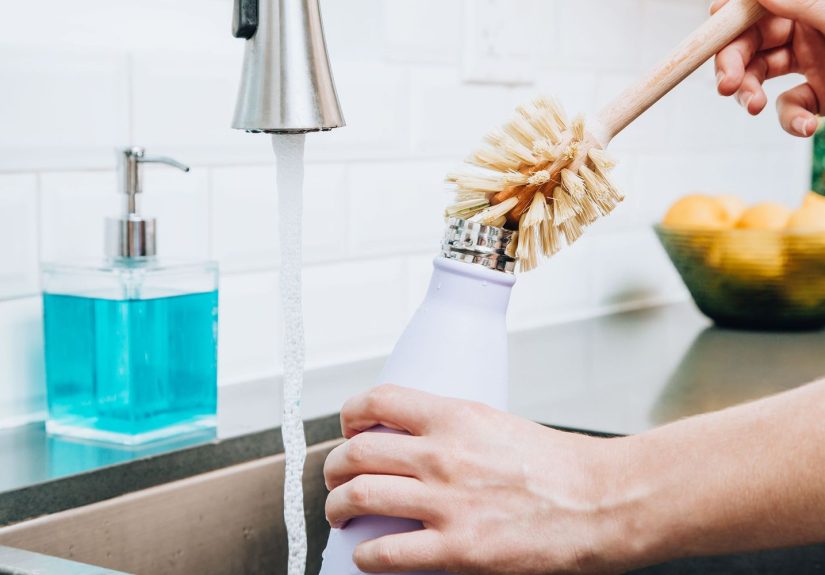
Fill the bottle with warm or hot water and add a little dish soap. Use a bottle brush to scrub the inside, especially the bottom and the neck. Wash the outside too, because your hands touch that part all day, and hands are not exactly famous for their restraint around germs.
Wash the lid separately. Scrub around the mouthpiece, threads, hinge points, and underside of the cap. If your bottle has a straw, run a straw brush through it. If it has a silicone gasket, wash that on its own. The gasket may be tiny, but it can hold impressive amounts of hidden moisture and gunk.
Step 3: Rinse thoroughly
Rinse every part until the water runs clear and you do not see soap bubbles. Leftover soap can trap odors, affect taste, and make your next sip feel like a disappointing chemistry experiment.
Step 4: Air-dry completely
This step matters more than most people realize. Place all parts upside down or spread them out so air can circulate. Let everything dry completely before putting the bottle back together. Reassembling while it is still damp is one of the easiest ways to encourage mold and musty smells.
How to Deep-Clean a Water Bottle
Sometimes your bottle needs more than a normal wash. Maybe it smells weird. Maybe you forgot it in your car for two days. Maybe it held a protein shake and now the lid smells like regret. That is when deep cleaning comes in.
Option 1: Vinegar soak
For a bottle with odor, mild residue, or early signs of buildup, fill it with a mixture of equal parts white vinegar and water. Let it soak for several hours or overnight. Soak removable parts in a separate container with the same mixture. Afterward, scrub everything, rinse thoroughly, and air-dry completely.
This is especially useful for stubborn smells and light mold concerns in hard-to-reach areas. Just remember: vinegar can help with odor and grime, but it is not a magic wand for every neglected bottle on Earth.
Option 2: Baking soda paste or soak
If the bottle smells stale but is not visibly moldy, try baking soda. You can make a loose paste with warm water for spot scrubbing, or add baking soda to warm water and let it sit in the bottle for a while before scrubbing. Baking soda is helpful for deodorizing and loosening residue.
Option 3: Cleaning tablets
Bottle-cleaning tablets or hydration-system tablets are convenient, especially for narrow bottles and reservoir-style systems. Follow the product instructions, then scrub if needed, rinse well, and let the bottle dry completely. These tablets are great when you want less measuring and fewer kitchen experiments.
Option 4: Bleach sanitizing, only when needed
If a bottle is seriously funky, has visible mold, or needs sanitizing after a particularly gross incident, a diluted bleach solution may be appropriate. But this is where you need to use your adult brain. Use only unscented bleach, dilute it properly, follow the bottle maker’s care guidance, rinse very thoroughly, and never mix bleach with any other cleaner.
If you are dealing with mold and the bottle has worn, torn, or permanently stained seals, it may be smarter to replace the gasket or the bottle entirely. Sometimes the most hygienic decision is to stop trying to resurrect a doomed lid.
Can You Put a Water Bottle in the Dishwasher?
Maybe. Maybe not. This is where many bottles enter the “I used to look nice” phase of their lives.
Some stainless steel and plastic bottles are dishwasher safe. Some are only partially dishwasher safe. Some brands allow the bottle body in the dishwasher but recommend hand washing certain lids, caps, straws, or gaskets. Others say top rack only. And some bottles, especially certain insulated or specialty designs, should be hand washed.
Always check the manufacturer’s instructions before using the dishwasher. If the bottle is dishwasher safe, disassemble it first and place smaller parts where they will not melt, warp, or vanish into the machine’s mysterious underworld. If the care instructions are unclear, hand washing is the safer choice.
How to Clean Specific Problem Areas
Lids and threaded caps
These areas collect saliva, residue, and moisture. Use a small brush to scrub around threads, under flip tops, and along the underside of the lid.
Straws and sip tubes
These need more than a rinse. Use a straw brush every time you do a real wash. If the straw still smells odd after cleaning, soak it and scrub again.
Silicone gaskets and seals
Remove them if the design allows it. Wash them separately and dry them completely before reinstalling. Black spots around seals are often the red flag people notice last, which is unfortunate because seals are usually the first place that moisture goes to throw a party.
Mineral buildup and stains
If you use hard water, you may see white film or chalky buildup. A vinegar soak can help dissolve mineral residue. For coffee or tea staining, some manufacturers suggest cleaning tablets or denture tablets. Just rinse thoroughly afterward and check the care instructions for your specific bottle.
Common Water Bottle Cleaning Mistakes
- Only rinsing with water: Better than nothing, but not enough for daily hygiene.
- Ignoring the lid: The lid is often dirtier than the bottle body.
- Reassembling while damp: That is how musty odors and mold get invited back.
- Using the dishwasher without checking first: Great way to ruin a bottle you paid too much for.
- Leaving drinks overnight: Especially flavored drinks, shakes, and sweet beverages.
- Not removing gaskets and seals: Hidden moisture loves hidden parts.
- Using abrasive scrubbers: Scratches can make surfaces harder to keep fresh.
- Sharing your bottle: Direct mouth contact increases contamination risk.
How to Keep Your Water Bottle Cleaner Between Washes
Good habits reduce buildup before it starts.
- Rinse the bottle as soon as you finish your drink.
- Store it with the lid off when possible so moisture can escape.
- Do not leave sweet drinks sitting inside for hours.
- Do not toss a sealed damp bottle into a gym bag and hope for the best.
- Avoid sharing bottles, especially mouthpiece styles.
- Clean it more often if you take it to the gym, keep it in a hot car, or use it while sick.
When to Replace the Bottle Instead of Cleaning It Again
Not every bottle deserves a redemption arc. Replace your bottle, lid, straw, or seals if:
- Mold keeps returning after proper cleaning
- Silicone parts are torn or permanently stained
- The interior is scratched, cracked, or peeling
- The smell never fully goes away
- The bottle is visibly damaged and no longer easy to clean safely
Reusable bottles should save money and reduce waste, not become long-term roommates with mystery odors.
Real-World Experiences With Water Bottle Cleaning
One of the most common experiences people have is assuming plain water means a bottle stays clean on its own. It sounds reasonable until the lid starts smelling odd or a faint slippery film appears inside the bottle. Office workers often notice this first because they refill the same bottle all day, every day, then leave it at their desk overnight with the cap screwed on tight. The bottle still looks innocent, but the smell says otherwise. Once they start taking the lid apart and letting the bottle dry open, the problem usually disappears.
Gym users run into a different issue. Their bottles get handled with sweaty hands, tossed into duffel bags, left in warm cars, and filled with electrolyte drinks or protein shakes. That combination is basically a speedrun for odor and residue. A lot of people say they didn’t realize the straw or flip spout was the real culprit until they cleaned it separately with a straw brush. Suddenly the bottle that seemed “permanently gross” was fine again. The lesson is simple: if the bottle smells dirty, the lid is probably where the drama started.
Parents know a special category of bottle chaos. Kids’ bottles often have bite valves, straws, and tiny silicone parts that trap moisture like it’s their full-time job. A bottle can look clean from the outside and still hide black specks around the seal. Many parents end up creating a routine: disassemble at night, wash with hot soapy water, dry on a rack, reassemble in the morning. It sounds a little extra until you realize it saves time, prevents mold, and avoids the deeply unpleasant surprise of finding a science project in a lunchbox bottle on Friday afternoon.
Travelers and commuters have their own bottle-cleaning stories too. People who carry a bottle in the car or on public transit often admit they’re good at drinking water and terrible at cleaning the container it comes in. The bottle gets dropped, rolled around, stored in cup holders, and refilled whenever convenient. Then one day the cap smells stale, or the inside picks up a metallic or sour odor. Usually the fix is not complicated: a full wash, a deep clean for the lid and gasket, and a complete air-dry before the next use. What feels like a “bad bottle” is often just a neglected one.
Another common experience comes from people who switch from plain water to flavored drinks and discover their old cleaning habits are suddenly not enough. Lemon slices, electrolyte powders, sweet tea, and smoothie leftovers change everything. A bottle that could survive a lazy rinse when it only held water now needs same-day washing. People are often surprised by how quickly smells appear when sugar, dairy, or protein enters the picture. The bottle did not betray them; the cleaning routine simply failed to keep up with what was inside.
Over time, most people who successfully keep their bottles fresh settle into the same basic pattern: rinse right away, wash the bottle and lid often, deep-clean weekly, and never store it sealed while damp. Not glamorous, not revolutionary, but effective. And honestly, that is the charm of it. Water bottle hygiene is not about perfection. It is about preventing tiny avoidable grossness from becoming a daily habit. A clean bottle tastes better, smells better, lasts longer, and makes hydration feel a lot less like a microbial side quest.
Conclusion
If you want to know how to clean a water bottle to prevent germs, mold, and buildup, the answer is refreshingly simple: wash it often, take it apart, scrub the hidden parts, deep-clean when needed, and let every piece dry completely before you put it back together. That’s it. No magic, no drama, no need to pretend a quick swish counts as sanitation.
A reusable bottle is one of the easiest healthy habits to keep, but only if the bottle itself stays clean. Treat your water bottle like any item that touches your mouth every day: with regular care, a little attention to detail, and zero tolerance for mystery smells. Your future self, your taste buds, and everyone sitting near you in a meeting will appreciate it.