Table of Contents >> Show >> Hide
- Why Office Chair Cleaning Matters More Than You Think
- Before You Start: Identify the Chair Material
- What You Need to Clean an Office Chair
- How to Clean an Office Chair: Step-by-Step
- Step 1: Remove loose dirt, crumbs, dust, and hair
- Step 2: Spot-test your cleaner
- Step 3: Clean the fabric seat and back
- Step 4: Clean a mesh office chair the gentle way
- Step 5: Clean leather or faux leather office chairs
- Step 6: Wipe down arms, frame, controls, and base
- Step 7: Clean the office chair wheels
- Step 8: Deodorize the chair
- Step 9: Let everything dry completely
- How to Remove Common Office Chair Stains
- Common Mistakes to Avoid
- How Often Should You Clean an Office Chair?
- Final Thoughts
- Real-World Experiences: What Cleaning an Office Chair Actually Taught Me
- SEO Tags
Your office chair works hard. It catches coffee drips, lunch crumbs, mystery dust, body oils, and the occasional “I’ll just wipe that later” lie. Then one day, you look at it in natural light and realize it has seen things. The good news? Cleaning an office chair is not difficult if you use the right method for the right material. The bad news? Going in with random spray cleaner and blind optimism is how people end up with water rings, cracked faux leather, or fabric that smells “fresh” and somehow still suspicious.
This guide walks you through exactly how to clean an office chair step by step, whether you have a fabric task chair, a breathable mesh chair, or a leather executive throne that makes you feel like you should be approving mergers. You will learn how to remove dust, tackle stains, deodorize the seat, and clean the arms, base, and wheels without damaging the materials. If you have been searching for the best way to clean an office chair, this is your practical, no-nonsense, slightly judgmental roadmap.
Why Office Chair Cleaning Matters More Than You Think
A dirty chair is not just unattractive. Dust, food particles, skin oils, and sweat build up over time and can make upholstery look dull, smell stale, and wear out faster. Regular office chair cleaning also helps prevent grime from settling into seams, mesh, and cushion fibers where it becomes much harder to remove later. In other words, a five-minute routine now can save you from a dramatic weekend deep-cleaning session later.
There is also the comfort factor. Clean mesh breathes better. Clean fabric feels better. Clean wheels roll better. A chair that is free of sticky residue and lint is simply nicer to use, which matters when you spend hours in it every week. Your back may not write thank-you notes, but it notices.
Before You Start: Identify the Chair Material
Before you clean an office chair, figure out what you are working with. This is the step people skip right before they say, “Huh, that wasn’t supposed to happen.”
Common office chair materials
- Fabric upholstery: Soft, padded, and great at collecting dust and stains like a tiny sponge with career goals.
- Mesh: Breathable and modern, but dust loves hiding in the weave.
- Leather or faux leather: Easier to wipe down, but sensitive to harsh cleaners and too much moisture.
- Plastic and metal: Usually found on arms, frames, bases, and adjustment levers.
Check for a care label or manufacturer instructions
If your chair has upholstery, look for a cleaning code or care instructions from the manufacturer. These codes often mean:
- W: Water-based cleaners are okay
- WS: Water-based or solvent-based cleaners may be used
- S: Solvent-based cleaner only
- X: Vacuum only; no water-based cleaning
If you cannot find a label, start with the gentlest method possible: vacuum first, then use a barely damp cloth and a mild soap solution only if the material seems water-safe. Always test a hidden spot before cleaning the whole chair.
What You Need to Clean an Office Chair
- Vacuum with a brush or upholstery attachment
- Microfiber cloths or soft white cloths
- Mild dish soap
- Lukewarm water
- Soft-bristle brush or old toothbrush
- Spray bottle
- Baking soda for odor control
- Upholstery cleaner or foam cleaner, if appropriate for the fabric
- Leather-safe cleaner or conditioner for leather chairs
- Cotton swabs for tight corners
Skip harsh all-purpose cleaners, bleach-heavy improvisations, and anything that sounds like it belongs in a garage more than a home office. Your chair is not a driveway.
How to Clean an Office Chair: Step-by-Step
Step 1: Remove loose dirt, crumbs, dust, and hair
Start by vacuuming the entire chair. Use the upholstery attachment on the seat, backrest, and armrests. Switch to a crevice tool for seams, edges, and the spot where crumbs go to start a new civilization. If you have mesh, vacuum gently so you pull out debris without stretching the material. If you have fabric, avoid aggressive rotary brushes that may rough up the fibers.
This step matters more than people think. If you apply moisture before removing loose grime, you are basically turning dust into mud. Efficient? No. Memorable? Unfortunately, yes.
Step 2: Spot-test your cleaner
Pick a hidden area under the seat or behind the backrest and test your cleaning solution. Wait a few minutes to check for discoloration, fading, texture change, or water rings. This is especially important for microfiber, dyed fabrics, and faux leather.
Step 3: Clean the fabric seat and back
If you have a fabric office chair, mix a small amount of mild dish soap with lukewarm water. Do not create a bubble bath. Dampen a microfiber cloth or dip a soft brush into the suds rather than soaking the fabric directly. Then gently blot or lightly brush the soiled area.
Work from the outside of the stain toward the center so it does not spread. Avoid scrubbing hard. Scrubbing can damage fibers, grind the stain deeper into the upholstery, or leave the fabric looking worn and fuzzy. Once the stain lifts, use another cloth dampened with clean water to remove soap residue. Then blot dry.
If the chair fabric is heavily soiled, a water-based upholstery shampoo or foam cleaner may help, but only if the care instructions allow it. Do not over-wet the seat cushion. Office chair padding can trap moisture, and that can lead to slow drying, odor, or mildew. If the stain still refuses to cooperate after a reasonable effort, professional upholstery cleaning is the smarter move.
Step 4: Clean a mesh office chair the gentle way
To clean a mesh office chair, vacuum first and be patient. Mesh traps dust in all those tiny openings, so take your time around the center back, lumbar area, and edges. For dirt or light stains, wipe with a cloth that is only slightly damp with mild soapy water. Never drench mesh. It is not trying to win a wet T-shirt contest.
If grime is caught deep in the weave, use a soft brush with a small amount of cleaner and very light pressure. Wipe away any residue with a second cloth dampened with plain water, then dry thoroughly. Good airflow helps. Open a window, use a fan, and let the chair dry completely before sitting on it again.
Step 5: Clean leather or faux leather office chairs
Leather office chair cleaning is less about force and more about restraint. Start with a dry microfiber cloth to remove dust. Then wipe the surface with a cloth lightly dampened with lukewarm water or a leather-safe cleaner. For minor stains, use a mild, nonabrasive soap solution and wipe gently. Avoid soaking the leather, and never blast it dry with a hair dryer or direct heat.
For grease or oily marks, resist the urge to add more liquid. Blot with a dry cloth first. On real leather, too much water and harsh cleaner can strip oils and leave the surface dull or stiff. Once the chair is clean and dry, a leather conditioner can help keep the material from drying out and cracking. Faux leather usually does not need conditioning, but it still benefits from gentle cleaning and quick drying.
Step 6: Wipe down arms, frame, controls, and base
Now move to the plastic and metal parts. Mix a mild soap solution and wipe the armrests, back frame, seat pan, adjustment levers, and five-star base with a soft cloth. If there is sticky residue, let the damp cloth sit on the spot for a few seconds before wiping. A soft toothbrush or cotton swab can help clean around adjustment knobs and screw heads.
Dry all hard surfaces with a clean cloth after wiping. This keeps water from sneaking into mechanical areas and helps prevent streaks. If you used any disinfecting product on hard parts, wipe off residue according to the product instructions and make sure the finish is compatible with the material.
Step 7: Clean the office chair wheels
Chair wheels are where dust, hair, and thread go to form an alliance. Turn the chair carefully or lay it on its side. Pull out visible hair and debris from each caster by hand, with tweezers, or with a small brush. Then wipe the wheels and outer housing with a damp cloth and mild soap solution. Dry them thoroughly before setting the chair back upright.
If your chair still rolls like it is moving through peanut butter, check for trapped debris around the axle or consider replacing worn casters. Sometimes cleaning helps; sometimes the wheel has simply retired emotionally.
Step 8: Deodorize the chair
If the chair smells less “professional workspace” and more “forgotten gym bag,” sprinkle baking soda lightly over fabric upholstery. Let it sit for at least 30 minutes, or longer for stubborn odors, then vacuum it away thoroughly. This works best on dry fabric and is a simple way to freshen the seat between deep cleans.
Do not use baking soda on leather in the same way, and do not leave powder trapped in mesh where it is hard to remove. Fabric chairs are the best candidates for this step.
Step 9: Let everything dry completely
This is the part people rush, and it is why clean chairs sometimes end up smelling worse later. After cleaning, allow the chair to air dry fully before using it. Use a fan if necessary. Do not sit on a damp seat “just for a minute.” That minute becomes a new stain with a sequel.
How to Remove Common Office Chair Stains
Coffee stains
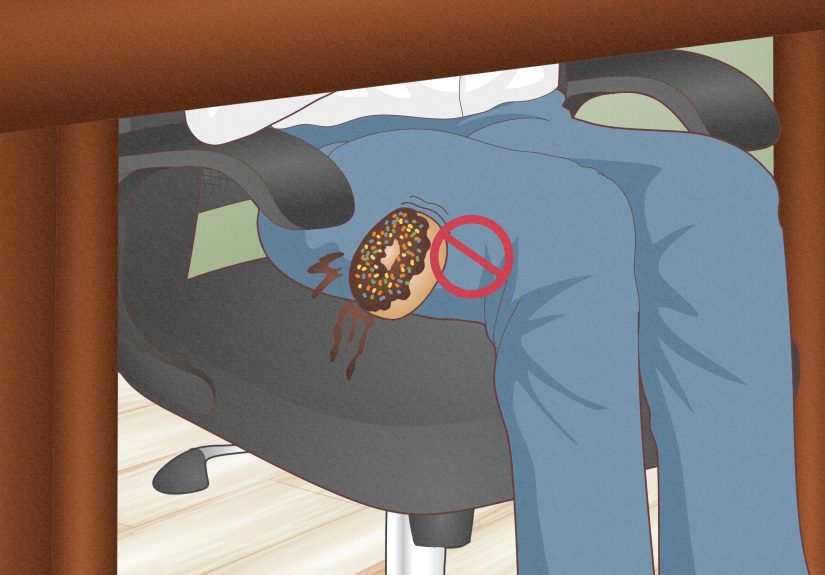
Blot immediately. Use a mild water-based cleaning solution on fabric if allowed, or a barely damp cloth on leather and faux leather. Repeat gently and avoid hot water, which can set the stain.
Grease and food marks
Lift as much residue as possible with a dry cloth first. On fabric, use the cleaner recommended for the care code. On leather, blot and clean gently with a leather-safe method instead of soaking the area.
Ink
Ink is tricky and can spread quickly. Test any treatment first and use the manufacturer-approved method for your material. When in doubt, call a pro instead of turning a pen mark into an abstract mural.
Odors
For fabric, vacuum first, then use baking soda. For recurring smells, the real issue may be moisture trapped in the cushion, which means the chair needs a more careful deep clean and a longer dry time.
Common Mistakes to Avoid
- Skipping the vacuum and rubbing dirt deeper into the fabric
- Using too much water and soaking the cushion
- Scrubbing instead of blotting
- Using all-purpose cleaner on upholstery
- Ignoring care codes and manufacturer instructions
- Using high heat to dry leather or fabric
- Spot-cleaning one tiny patch on certain materials and leaving a ring
- Forgetting to remove soap residue, which attracts more dirt later
How Often Should You Clean an Office Chair?
A simple maintenance schedule keeps office chair cleaning manageable:
- Weekly: Quick vacuum and wipe-down of arms and frame
- Monthly: Spot clean stains, remove hair from wheels, deodorize fabric if needed
- Every 3 to 6 months: Deep clean the seat, back, mesh, and hard surfaces
- Immediately: Clean spills as soon as they happen
If you work from home full time, eat at your desk, have pets, or share your chair with children who treat furniture like a craft supply station, increase the cleaning frequency. The chair will not complain.
Final Thoughts
Learning how to clean an office chair is mostly about matching the cleaning method to the material and resisting the urge to overdo it. Vacuum first, use gentle products, spot-test everything, and keep moisture under control. Fabric needs patience, mesh needs a light touch, and leather needs respect. Clean the hard surfaces, do not neglect the wheels, and always let the chair dry completely before use.
A clean office chair looks better, smells better, and usually lasts longer. It also sends a subtle message to your workspace: we are no longer accepting crumbs as permanent décor. Whether you are refreshing a home office chair, cleaning a gaming chair, or trying to rescue the seat that got hit by one tragic iced coffee, the steps above will get you there without turning your chair into a DIY cautionary tale.
Real-World Experiences: What Cleaning an Office Chair Actually Taught Me
The first time I deep-cleaned an office chair, I made the classic mistake of assuming “more cleaner equals more clean.” This is the kind of logic that feels powerful for about six minutes and then leaves you staring at a damp cushion that smells like soap and regret. The chair was a fabric model I had been using daily for remote work, and I had ignored it for months because, from a distance, it looked “fine.” Then sunlight hit it one afternoon and exposed every crumb, dusty seam, and mysterious shadow like a brutal reality show reveal.
I vacuumed it first and was honestly offended by how much debris came out. Tiny snack crumbs, lint, hair, and the remains of what I can only describe as desk life. That part alone made the chair look better. It also taught me that most office chair cleaning should start dry. Once loose dirt is gone, you are cleaning the actual material instead of making a gritty paste.
The next lesson came from a coffee stain. I had always been the kind of person who says, “I’ll wipe that up in a second,” which is very inspiring and not at all effective when you forget for three hours. By the time I got to it, the stain had dried. I used a mild soap solution, blotted instead of scrubbing, and worked from the outside in. It took patience, but it came out far better than I expected. That experience changed how I deal with spills now. Immediate blotting saves time, saves fabric, and saves you from having to invent a personality around having a “rustic” chair stain.
I also learned that mesh chairs are sneaky. They look cleaner than they are because dust hides in the weave instead of announcing itself. When I cleaned a black mesh office chair for a friend, the vacuum pulled out enough fine dust to make us both reconsider eating crackers near electronics. A lightly damp cloth helped with the grime, but the real key was not soaking the mesh. Too much moisture just pushed dirt around and made drying take forever. Gentle cleaning worked better than aggressive cleaning, which is an annoying but useful life lesson.
Leather taught a different lesson: surfaces can look tough while being surprisingly easy to damage. I once used a generic household cleaner on a faux leather chair arm because I was in a hurry. It cleaned the mark, sure, but it also dulled the finish slightly. Not enough for anyone else to notice, of course, but enough for me to see it forever like a tiny monument to impatience. Since then, I stick to mild soap, soft cloths, and leather-safe products when needed. The process is slower, but the finish stays intact.
Perhaps the most humbling moment involved the caster wheels. I had spent all my energy making the seat spotless and then pushed the chair back under the desk only to hear a sad, crunchy little roll. The wheels were packed with hair and dust. Cleaning them took maybe ten minutes, but the difference was immediate. The chair moved smoothly again, and suddenly the whole thing felt newer. That was the day I realized a chair can be clean and still not feel clean if the wheels, arms, and base are neglected.
So if there is one thing experience has taught me, it is this: office chair cleaning is not about heroic effort. It is about consistent, sensible maintenance. Vacuum first. Use less moisture than you think. Treat stains early. Clean the wheels. Dry everything fully. And maybe, just maybe, stop balancing coffee over your lap during meetings.