Table of Contents >> Show >> Hide
- Why Cleaning Ceiling Fans Matters More Than People Think
- What You Need to Clean Ceiling Fans
- How To Clean Ceiling Fans Step by Step
- How To Clean Ceiling Fans With High Ceilings
- How Often Should You Clean Ceiling Fans?
- Common Ceiling Fan Cleaning Mistakes to Avoid
- Can Cleaning Fix a Wobbly or Noisy Ceiling Fan?
- Quick FAQ: How To Clean Ceiling Fans
- Final Thoughts
- Real-World Experiences With Cleaning Ceiling Fans
Cleaning a ceiling fan is one of those chores that sounds easy until you actually do it and discover you’ve created a tiny indoor dust storm over your couch, coffee table, and, somehow, your soul. The good news? Learning how to clean ceiling fans is not difficult. It just works better when you use the right tools, the right order, and a little common sense before you start swatting dust around like you’re in a low-budget weather event.
If your fan blades are coated in fuzzy gray buildup, your room can start looking dingy even when everything else is clean. On top of that, a dusty fan can fling debris back into the air every time you switch it on. So whether you’re dealing with a bedroom fan, a kitchen fan with greasy buildup, or a tall ceiling fan that seems to live in another zip code, this guide will walk you through the smartest, safest, and least messy way to handle it.
Why Cleaning Ceiling Fans Matters More Than People Think
Ceiling fans are excellent at moving air, which is exactly why they are also excellent at moving dust. When blades collect buildup, that dust does not politely stay put. It circulates through the room, settles on furniture, and can make the whole space feel less fresh. In kitchens, the problem gets worse because dust can mix with grease and turn into a sticky layer that clings to the blades like it signed a lease.
There’s also a practical reason to stay on top of ceiling fan maintenance. Dirty blades can contribute to wobbling, rattling, and reduced performance. In many homes, cleaning the fan regularly is part of basic seasonal upkeep, right alongside changing the fan direction and checking that the screws are still snug.
What You Need to Clean Ceiling Fans
You do not need a dramatic amount of gear. This is not a home improvement montage. In most cases, a short supply list will get the job done:
- Microfiber cloths
- An old pillowcase
- A sturdy step stool or ladder
- An extendable duster for high ceilings
- A vacuum with brush attachment or extension hose
- Mild dish soap or all-purpose cleaner
- A small bowl of warm water
- Dry towel or lint-free cloth
- Optional: compressed air for the motor housing area
- Optional: drop cloth, old sheet, or towel for furniture below
The best tool for routine ceiling fan dusting is usually a microfiber cloth or microfiber duster. For deeper cleaning, the famous pillowcase trick is popular for a reason: it traps dust instead of sending it snowing into your living room like an extremely disappointing holiday special.
How To Clean Ceiling Fans Step by Step
Step 1: Turn the Fan Off and Prep the Area
First, turn off the ceiling fan and wait until the blades stop moving completely. This is the part where patience beats bravery. Do not try to clean moving blades. Also, avoid balancing on a rolling chair, the arm of the sofa, or your own overconfidence. Use a stable ladder or step stool positioned slightly off-center so you can reach each blade without leaning awkwardly.
Before you touch the fan, place a drop cloth, old sheet, or towel over furniture underneath. This is especially helpful if the fan has not been cleaned in a while and the dust layer has achieved archaeological significance.
Step 2: Remove Loose Dust Without Making a Giant Mess
If the buildup is light, start with an extendable duster or a vacuum brush attachment to remove loose dust from the top and bottom of each blade. This works well for quick maintenance and for high ceiling fans that are hard to reach up close.
If the fan is really dusty, use the pillowcase method:
- Slide a clean pillowcase over one blade.
- Press the fabric gently against the top and bottom of the blade.
- Slowly pull the pillowcase back off, trapping the dust inside.
- Repeat on each blade.
This method is especially useful when you want to clean ceiling fan blades without coating the room in debris. Once you finish, take the pillowcase outside, shake it out, and toss it in the wash. Your laundry room may judge you, but your living room will not.
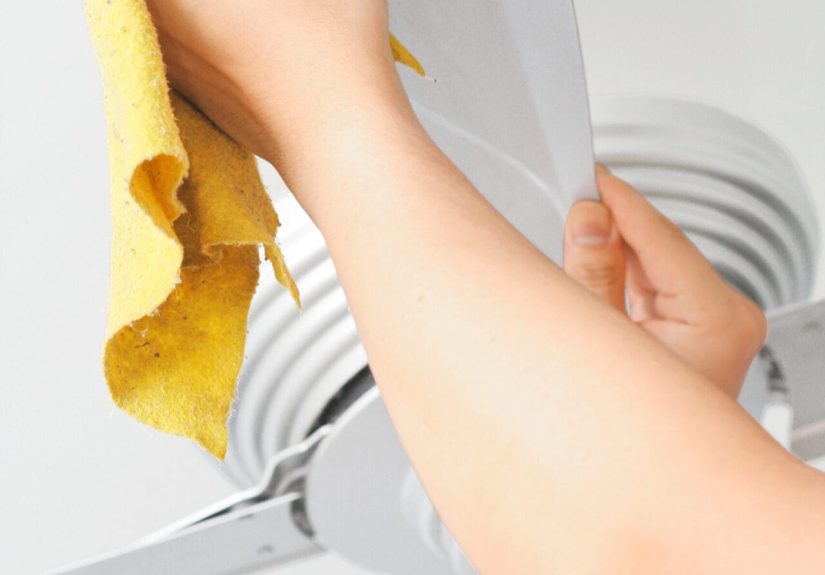
Step 3: Wipe the Blades for a Deeper Clean
After the loose dust is gone, inspect the blades. If they still look dingy, sticky, or streaky, it is time for a damp wipe-down. Mix a small amount of mild dish soap with warm water, or use a gentle all-purpose cleaner. Lightly dampen a microfiber cloth. The key word here is lightly. You want the cloth damp, not dripping. Do not spray cleaner directly onto the fan, and do not soak the blades.
Wipe both sides of every blade from the base to the tip. If your fan is in the kitchen, you may need an extra pass to remove grease film. For stubborn grime, a little patience beats aggressive scrubbing. You do not want to push hard enough to bend the blades or loosen the hardware.
If your fan blades are made from engineered wood, MDF, or other moisture-sensitive materials, be even more careful. Use minimal moisture and dry each blade right away with a clean cloth. When in doubt, follow the care instructions in the fan’s manual. Some manufacturers recommend only a dry or barely damp cloth.
Step 4: Clean the Motor Housing, Pull Chain, and Light Kit
Once the blades are clean, wipe the motor housing, canopy, and pull chain with a dry or slightly damp microfiber cloth. If dust has settled in vents or crevices around the housing, compressed air can help clear it out. Just keep moisture away from the motor and electrical parts.
If your ceiling fan has light bulbs, shades, or glass globes, make sure the bulbs are cool before touching them. Dust the bulbs gently with a dry microfiber cloth. Removable glass shades can usually be washed in warm, soapy water and dried completely before you reinstall them. Fully dry is the goal here. Not “probably dry.” Actually dry.
Step 5: Dry Everything and Test the Fan
Before turning the fan back on, make sure all cleaned surfaces are dry. Then switch it on and watch how it runs. If the fan looks smooth and quiet, congratulations: you are now officially the kind of person who has opinions about clean ceiling fan blades.
If it still wobbles or rattles, cleaning may have revealed another issue, such as loose screws, blade misalignment, or mounting problems. More on that in a minute.
How To Clean Ceiling Fans With High Ceilings
High ceiling fan cleaning requires a slightly different strategy because the “just grab a ladder” approach becomes much less charming when the ceiling is fourteen feet up. For tall or vaulted ceilings, an extendable microfiber duster is usually the safest first choice. A flexible head helps you reach the top, bottom, and edges of the blades with better control.
If the fan is very dirty and needs more than dusting, you may need an extension pole fitted with a microfiber pad or a microfiber mop head that can be lightly dampened. Work slowly and avoid over-wetting the surface. If you cannot safely reach the fan without stretching or climbing higher than recommended, it may be worth hiring help. There is no prize for deep-cleaning a ceiling fan while making eye contact with the emergency room.
How Often Should You Clean Ceiling Fans?
The honest answer is: more often than most people do. A good routine looks like this:
- Weekly or every other week: quick visual check and light dusting if needed
- Monthly: wipe the blades with a microfiber cloth
- Every season: deep clean the blades, motor housing, pull chain, and light kit
If you have pets, allergies, heavy foot traffic, open windows, or construction dust nearby, you may need to clean more often. Kitchen ceiling fans also usually need extra attention because airborne grease makes dust stick faster. One practical trick is to check the blade tops for a month and see how quickly dust returns. Your house will tell you the schedule; it is rarely shy.
Common Ceiling Fan Cleaning Mistakes to Avoid
Using Too Much Cleaner
More cleaner does not equal more clean. It often equals drips, streaks, and moisture where moisture should not be. Always spray cleaner onto the cloth, not directly onto the fan.
Using the Blades for Support
Do not grab the blades to steady yourself. They are not handlebars. Pushing down on them can bend the blades, throw off balance, and create wobbling later.
Ignoring Sticky Buildup
Dust is one thing; grease-coated dust is another beast entirely. If the fan is in the kitchen, a dry duster alone may just smear grime around. Use a lightly damp microfiber cloth with mild soap or gentle cleaner, then dry thoroughly.
Cleaning Only the Blade Tops
Dust collects on top, but the bottoms matter too. If you skip the underside, you may still see grime when the fan is off and still circulate dust when it is on.
Forgetting the Season Change
When you switch the fan direction for summer or winter, that is the perfect reminder to clean it. In summer, most fans run counterclockwise to create a cooling downdraft. In winter, many fans run clockwise on low to help circulate warm air. Seasonal direction checks pair beautifully with seasonal cleaning because adulthood is apparently just putting chores into themed bundles.
Can Cleaning Fix a Wobbly or Noisy Ceiling Fan?
Sometimes, yes. Dust buildup can affect balance, especially when one blade has more grime than the others. If your fan hums, rattles, or wobbles, start by cleaning the blades and housing thoroughly. Then check for loose screws around the blade arms, light kit, and mounting hardware.
If the wobble continues, compare blade alignment. A blade that is slightly bent or sitting lower than the others can throw things off. Some fans may need a balancing kit, while more serious issues may require repair. But cleaning is still the smartest first step because it solves the easiest problem before you start buying parts.
Quick FAQ: How To Clean Ceiling Fans
What is the easiest way to clean a ceiling fan?
The easiest mess-free method is the pillowcase trick, followed by a microfiber wipe. For routine dusting, an extendable duster works well.
Can I use vinegar to clean ceiling fan blades?
Yes, a mild vinegar-and-water solution can work for grime on many fans, but use it sparingly and apply it to a cloth, not directly to the fan. If the manufacturer recommends a dry cloth only, follow the manual instead.
Should I clean my ceiling fan while it is on?
Absolutely not. Turn it off and let it stop completely before cleaning.
How do I clean a ceiling fan without a ladder?
Use an extendable microfiber duster or extension pole tool designed for ceiling fans. This works best for regular dusting and moderately dirty blades.
How do I clean a greasy ceiling fan in the kitchen?
Dust first, then wipe with a lightly damp microfiber cloth and mild dish soap solution. Dry the blades immediately so moisture does not sit on the finish.
Final Thoughts
Knowing how to clean ceiling fans is one of those deceptively simple home skills that pays off fast. The room looks cleaner, the air feels fresher, and the fan runs better when you are not asking it to slice through a coat of dust every day. The trick is to make the job routine before it becomes dramatic.
Stick to three rules: turn it off, trap the dust, and use only light moisture when needed. Do that, and your ceiling fan cleaning routine becomes a ten-minute task instead of a full-blown dust opera. Which is nice, because nobody has ever looked at a cloud of fan dust floating onto freshly folded laundry and thought, “Ah yes, exactly how I hoped this afternoon would go.”
Real-World Experiences With Cleaning Ceiling Fans
The experience of cleaning ceiling fans usually starts the same way: you look up one day, notice the blades, and realize they have been quietly collecting evidence against you for months. At first, the dust seems harmless. It is just a little fuzz, right? Then you turn the fan on and the room suddenly feels like it is participating in a tiny airborne parade of lint, pet hair, and mystery fluff. That is the moment ceiling fan cleaning stops being optional and becomes personal.
One of the most common experiences people have is underestimating how much dust is actually up there. The fan looks mildly dirty from the floor, but once you get on a ladder, you discover each blade has a thick line of buildup along the top edge. It is like finding out your “slightly cluttered” junk drawer is actually a small archaeological dig. This is why the pillowcase trick gets so much praise. The first time you use it and realize the dust stays inside the case instead of drifting onto your face, your couch, and your coffee, it feels weirdly victorious.
Another familiar lesson comes from cleaning a fan in the kitchen. Bedroom and living room fans usually collect dry dust. Kitchen fans collect drama. Dust mixes with cooking grease and forms a sticky film that laughs at dry paper towels. Many people try to dust it off first, only to smear the mess into streaks that somehow look worse than the original grime. The better experience comes from dusting lightly first, then using a barely damp microfiber cloth with mild soap. Suddenly the blade changes from “old beige sadness” back to “oh, it was white all along.” That is a deeply satisfying household plot twist.
High ceilings create a different kind of experience: the kind where you become very aware of gravity and your own life choices. People often start with unrealistic optimism, thinking they can stretch a bit from the top step and finish quickly. Five seconds later, they are reconsidering everything. In practice, using an extension duster is usually the turning point between a smart cleaning session and a story you tell beginning with, “So there I was, wobbling slightly…” Ceiling fans are not worth reckless improvisation.
There is also a surprisingly strong emotional payoff to cleaning them regularly. A freshly cleaned fan changes the feeling of a room more than expected. The air seems lighter. The furniture looks better. Even the light fixture appears brighter once the bulbs and glass shades are dust-free. It is one of those chores that does not get much glory, but the room notices immediately. You may not post about it online. You probably should not. But you will absolutely stand under that fan afterward and admire your work like you just completed a tasteful home makeover.
Perhaps the biggest real-world takeaway is that ceiling fan cleaning gets dramatically easier once it becomes maintenance instead of rescue. When you wipe the blades monthly, the job is quick. When you ignore them for half a year, it turns into a negotiation with dust, grease, ladders, and regret. Most people learn this the hard way once, then become fiercely loyal to microfiber cloths forever. And honestly, that is fair. A clean ceiling fan may not change your life, but it can save your room from looking tired, your air from feeling stale, and your Saturday from becoming an accidental dust festival.