Table of Contents >> Show >> Hide
- Why Your Phone Case Gets So Dirty (So Fast)
- Before You Start: Know Your Case Material
- Safety First: Cleaning and Disinfecting Basics
- Method 1: Everyday Cleaning with Soap and Water
- Method 2: Disinfecting with Rubbing Alcohol
- Method 3: Removing Stains with Baking Soda
- How Often Should You Clean Your Phone Case?
- Common Phone Case Cleaning Mistakes to Avoid
- Quick Tips by Case Type
- Real-Life Experiences: Lessons from Cleaning Too Many Phone Cases
- Conclusion: A Simple Routine for a Cleaner Phone Case
Your phone case has seen things. Coffee runs, sweaty gym sessions, that time it fell under the car seat and came back covered in mystery crumbs. It’s literally designed to protect your phone from the outside worldwhich also means it quietly collects a lot of dirt, oils, and germs.
The good news? You don’t need fancy gadgets or harsh chemicals to clean a phone case properly. With simple tools like soap, rubbing alcohol, and baking soda, you can get your case looking (and smelling) way betterwithout damaging it or your phone.
In this guide, we’ll walk through exactly how to clean different types of phone cases using those three workhorse cleaners, when each method works best, what products to avoid, and how often you should actually be washing that case you’re touching all day.
Why Your Phone Case Gets So Dirty (So Fast)
Think about everything your hands touch in a day: door handles, keyboards, public transit poles, grocery carts. Then those same hands are glued to your phone. Add in sweat, makeup, skin oils, food splatters, and the occasional bathroom scroll (we’re not judging), and your phone case becomes a bacteria-friendly hangout.
On top of the germs, you’re also dealing with:
- Grime buildup: Oils and dirt cling especially well to silicone and rubbery cases.
- Stains: Dark denim, makeup, and ink can discolor light-colored or clear cases.
- Odors: Sweat and moisture can leave a musty or sour smell if the case never fully dries.
- Mold and mildew: Cases that trap moisturelike silicone cases in humid environmentscan develop mold inside if they’re never cleaned or dried.
The point isn’t to freak you out, but to make a case (pun absolutely intended) for a regular cleaning routine that’s quick, simple, and safe for your device.
Before You Start: Know Your Case Material
Before you grab the nearest cleaner and go to town, check what your case is made of. Different materials can handle different treatments:
- Silicone / TPU / rubbery cases: Usually very forgiving. Soap and water are perfect. Baking soda can help with stains. Alcohol is typically fine for quick disinfecting, but avoid soaking.
- Hard plastic cases: Soap and water are safe. Alcohol is usually okay in small amounts, but avoid strong solvents or abrasive scrubbing that can scratch glossy finishes.
- Clear cases: These love to show stains and yellowing. Soap and water plus baking soda are your best friends. Be gentle to avoid scratching the surface.
- Leather cases: Treat them like leather, not plastic. Use mild soap and water on a soft cloth. Avoid alcohol, bleach, or harsh cleaners that can dry or discolor leather.
- Fabric or woven cases: Often handle mild soap and water, but spot test first. Too much water can affect adhesives or backing.
Always remove the phone from the case before cleaning, and if you can’t remember exactly what your case is made of, err on the gentle side with mild soap and water.
Safety First: Cleaning and Disinfecting Basics
- Power down your phone and remove the case before cleaning.
- Keep liquids away from ports and buttonsnever soak the phone itself.
- Use a soft, lint-free cloth or soft toothbrush to avoid scratching.
- Avoid harsh products like bleach, ammonia, hydrogen peroxide, and strong household cleaners, which can damage coatings or discolor cases.
- Let the case dry completely before snapping it back on your phone, especially around corners where moisture can hide.
Method 1: Everyday Cleaning with Soap and Water
Think of soap and water as your basic shower for the phone caseideal for everyday grime, fingerprints, and light stains.
Best For
- Silicone and TPU cases
- Hard plastic cases
- Clear cases with mild discoloration
- Fabric or woven cases (with a gentle touch)
What You’ll Need
- Mild dish soap or gentle hand soap
- Warm water
- A small bowl or sink
- Soft cloth or microfiber cloth
- Soft toothbrush or small cleaning brush
- Towel for drying
Step-by-Step: Soap and Water Wash
- Remove the case. Take the phone out of the case and set your phone aside, far away from the sink.
- Make a soapy solution. Add a few drops of mild dish soap to a bowl of warm water. You want a light sudsy mix, not a bubble bath.
- Soak the case. Place the case in the soapy water for 5–10 minutes. This loosens oils and grime.
- Scrub gently. Use the toothbrush to clean along edges, around button cutouts, and inside corners where dirt hides. Use the soft cloth for larger surfaces.
- Rinse thoroughly. Rinse the case under warm running water to remove all soap residue.
- Dry completely. Pat dry with a towel, then leave the case to air dry until there’s zero moisture, especially in crevices.
If your phone spends a lot of time at the gym, in your kitchen, or in the bathroom (again, no judgment), doing this once a week is a smart habit.
Method 2: Disinfecting with Rubbing Alcohol
Soap and water are great at removing dirt and many germs, but if someone in your home is sick, you’re traveling a lot, or you just want to be extra cautious, rubbing alcohol can help disinfect a phone casewhen used correctly.
When to Use Alcohol
- After being in crowded public places (public transit, airports, concerts)
- When someone in your household is sick
- When the case feels sticky or grimy even after soap and water
- If you share your phone frequently
What Type of Alcohol to Use
- 70% isopropyl alcohol (rubbing alcohol) is ideal for disinfecting hard, non-porous surfaces.
- Pre-moistened alcohol wipes with around 70% alcohol also work well.
Important: Use alcohol only on the casenever pour it into or onto the phone itself, and avoid soaking the case, especially if it has printed designs, painted details, or leather elements.
Step-by-Step: Alcohol Disinfection
- Remove and clean first. For best results, start with a basic soap-and-water clean to remove dirt, then disinfect. Dry the case thoroughly.
- Dampen a cloth. Lightly dampen a microfiber cloth or cotton pad with rubbing alcohol. It should be moist, not dripping.
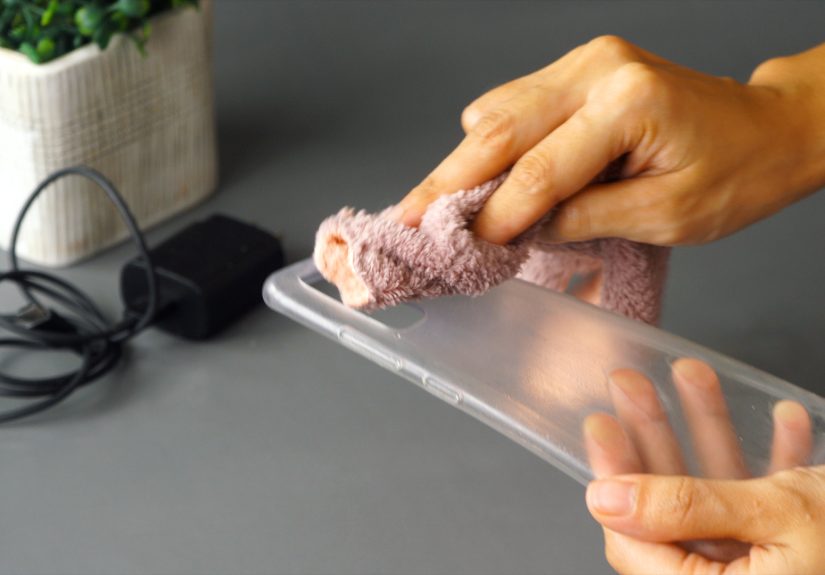
- Wipe all surfaces. Gently wipe the inside and outside of the case, paying special attention to high-touch areas around buttons and the bottom edge.
- Let it air dry. Alcohol evaporates quickly. Let the case sit for a few minutes until completely dry.
When to avoid alcohol: Skip this method for leather cases and some specialty finishes, since alcohol can dry, fade, or crack the material over time. For those, stick to mild soap and water on a barely damp cloth.
Method 3: Removing Stains with Baking Soda
Baking soda is the household MVP for tackling odors and stains, and it can help brighten up a dingy phone caseespecially clear or light-colored ones that have taken on a grayish or yellowish tint.
Best For
- Clear plastic or silicone cases
- Light-colored silicone or TPU cases
- Cases with stubborn scuffs or surface stains
Baking soda is a mild abrasive, so it helps scrub away surface stains without being as harsh as scouring powders or stiff brushes.
Step-by-Step: Baking Soda Scrub
- Start with a basic wash. Wash the case with soap and water first to remove loose dirt and oils, then pat dry.
- Make a paste. In a small dish, mix baking soda with a few drops of water until it forms a thick, spreadable paste.
- Apply to stained areas. Spread the paste over yellowed or stained spots, especially on the back and corners.
- Scrub gently. Use a soft toothbrush to work the paste into the stains in small circles. Don’t go too hardlet the baking soda do the work.
- Rinse well. Rinse the case thoroughly under warm running water until all baking soda is gone.
- Dry completely. Pat with a towel and let it air dry before putting it back on your phone.
Note: Baking soda can’t repair plastic that’s permanently aged or UV-damaged, but it can absolutely make a cloudy or lightly stained case look fresher and cleaner.
How Often Should You Clean Your Phone Case?
There’s no law that says “thou shalt wash thy phone case every Tuesday,” but a simple routine keeps things under control:
- Quick wipe: Daily or every couple of days with a dry microfiber cloth.
- Soap-and-water clean: About once a week for most people.
- Alcohol disinfecting: As neededafter travel, during illness, or if you’re extra germ-conscious.
- Baking soda stain treatment: Once a month or whenever the case starts looking dingy.
If you often bring your phone into steamy bathrooms, gyms, or any humid environment, cleaning and thoroughly drying the case more frequently can help prevent mold and funky smells.
Common Phone Case Cleaning Mistakes to Avoid
- Using bleach or harsh household sprays: These can discolor cases, damage coatings, and aren’t necessary for routine cleaning.
- Scrubbing with abrasive pads: Steel wool or rough scrub sponges can leave permanent scratches, especially on clear or glossy cases.
- Not rinsing soap or baking soda fully: Residue can feel gritty or sticky and attract even more dirt.
- Putting the case back on while damp: Trapped moisture can lead to mold, clouding, or water spots on your phone.
- Using strong alcohol repeatedly on delicate finishes: Over time, alcohol can fade printed patterns or dry out faux leather.
Quick Tips by Case Type
Silicone and TPU Cases
These are low-maintenance and tough. Soap and water once a week usually keep them in good shape. For lingering smells or light stains, add a baking soda scrub. You can occasionally wipe them with rubbing alcohol for disinfection, but don’t soak them or leave alcohol sitting on the surface.
Hard Plastic Cases
Use soap and water, then a soft cloth to dry. Avoid harsh solvents or super abrasive scrubbing. If the plastic is clear, baking soda can help with surface stains, but be extra gentle to avoid scratching.
Clear Cases
Clear cases are the drama queens of the case worldthey show everything. Pair regular soap-and-water cleaning with periodic baking soda treatments. Store the phone away from direct sun and high heat to slow yellowing, which can be caused by UV exposure and the natural aging of the material.
Leather Cases
Leather likes gentle care. Wipe it down with a slightly damp cloth and a tiny bit of mild soap if needed, then dry it immediately with a soft towel. Use a leather conditioner occasionally to keep it from drying out. Skip alcohol, bleach, and abrasive cleaners.
Fabric or Woven Cases
Spot clean with mild soap and water using a cloth or soft brush. Avoid dunking the whole thing if adhesives or backing might be affected. Let it air dry completely before use.
Real-Life Experiences: Lessons from Cleaning Too Many Phone Cases
Let’s be honest: most people don’t suddenly decide “Today is phone case spa day!” until something forces the issuelike a suspicious sticky patch or a faint whiff of gym socks every time they pick up their phone.
One common scenario: the “clear case that isn’t clear anymore.” Someone buys a crystal-clear case to show off their phone color, and within a few months, it turns cloudy and yellow. A basic soap rinse doesn’t help, so they assume it’s ruined. In reality, a lot of that dinginess is surface grime and stains. A thorough soap-and-water soak followed by a baking soda scrub can make a surprising difference. It might not look brand new, but it usually goes from “old smoker’s window” to “respectably transparent.”
Another frequent experience: the case that smells… off. Maybe it’s from sweaty workouts, daily commutes, or living in a humid climate. People often try to fix it with strong perfume sprays or heavily scented cleaners, which just layer fragrance on top of the funk. A better approach is a deep clean: soap-and-water wash, a baking soda paste for odor control, and then a full air-dryideally overnight. Baking soda naturally absorbs odors, so when it’s rinsed off, you’re not just masking the smell; you’re actually removing some of what caused it.
Then there’s the “oops, I went too hard with the cleaning” story. Someone grabs a multi-surface kitchen spray or bleach wipe, determined to sanitize everything, and ends up with a faded logo or a case that looks like it’s been sandblasted. That’s where knowing your materials really pays off. A few minutes spent sticking to mild soap, water, and properly diluted alcohol can save you from buying a new case every few months.
Plenty of people also learn the hard way that moisture and phone cases don’t mix. Maybe they shower with their phone nearby, or leave it on a damp bathroom counter. Over time, moisture sneaks between the phone and case. When they finally pop the case off, they’re greeted by condensation marks or, in extreme cases, a bit of mold starting in the corners. The fix? Make a habit of taking the case off at least every week or two, giving both the phone and case a chance to air out. If the case ever feels damp, don’t just wipe the outsideremove it, clean it, and let it fully dry.
Another lesson people end up learning after a spill: acting fast matters. If coffee, soda, or makeup gets on the case, rinsing it off with water and a bit of soap right away is usually enough to prevent stains and stickiness. Waiting until “later” lets pigments and sugar really grab onto the material, making them harder to remove even with baking soda.
Over time, the people who keep their cases looking decent aren’t necessarily the ones with the fanciest cleaning productsthey’re the ones who build tiny, low-effort habits. A quick wipe with a microfiber cloth at the end of the day. A five-minute soapy soak every weekend. A baking soda treatment when the case starts looking sad. Those small routines keep the case clean enough that it never becomes a full-blown science project.
In the end, cleaning your phone case is one of those tiny chores that has outsized benefits. You get a fresher-looking phone, fewer questionable smells, and fewer germs hitching a ride on something you’re touching constantly. And once you do it a couple of times, it stops feeling like a project and starts feeling like just another simple part of taking care of the tech you use every day.
Conclusion: A Simple Routine for a Cleaner Phone Case
You don’t need industrial-strength cleaners or complicated routines to keep your phone case in good shape. Mild soap and water are your everyday workhorse, rubbing alcohol is your targeted disinfecting tool for hard, non-porous cases, and baking soda is your go-to for stains and odorsespecially on clear or light-colored cases.
Remove the case, clean it according to the material, avoid harsh chemicals, and let it dry completely. Build a simple routine that fits your life: quick wipes during the week, a deeper wash on the weekend, and an occasional baking soda treatment when the case starts looking older than it really is.
Your phone case doesn’t have to be perfectbut it also doesn’t have to be a portable germ magnet. With a few minutes of care and three basic cleaners, you can keep it looking fresher, smelling better, and doing its job for longer.