Table of Contents >> Show >> Hide
- Meet the artist behind the clever overlays
- Why we can’t stop looking: your brain loves “hidden shapes”
- From scissors-and-glue to layers-and-masks: a mini history of the technique
- The anatomy of a great “reimagined landscape”
- A quick tour of the “29 pics” vibe (highlights without spoiling everything)
- How this kind of art is made (without making it sound like a software manual)
- When famous characters show up: the practical (not scary) copyright conversation
- Why this style performs so well online
- If you want to try making your own “reimagined landscape”
- Conclusion: the world is full of jokes hiding in plain sight
- Experiences: what it feels like to scroll, laugh, and start seeing the world differently (extra)
There are two kinds of people in the world: the ones who see a bridge, and the ones who see a giant paperclip politely pretending to be infrastructure.
If you’re in the second group (welcome, we have snacks), you’ll instantly understand why this kind of art is so weirdly addictive.
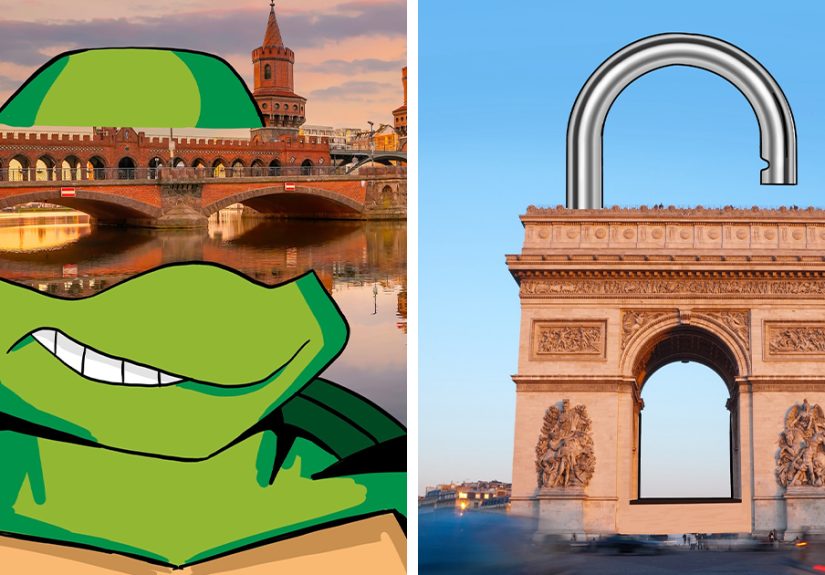
One illustrator has been going viral for doing exactly thattaking real photos of famous places and everyday streets, then dropping in playful drawings that flip the scene into something totally unexpected.
The result feels like a travel postcard got hit with a cartoon ray… in the best possible way.
This article breaks down what makes these “29 pics” so satisfying, how the illusion works, why our brains eat it up like popcorn, and what to keep in mind when pop-culture characters show up in your art.
We’ll keep it fun, but also actually usefulbecause “I laughed” is great, and “I learned why I laughed” is even better.
Meet the artist behind the clever overlays
The artist at the center of this series is illustrator Robin Yayla, known for blending simple, humorous drawings into real photos to reinterpret landmarks and city scenes.
His whole vibe is: “What if the world is already a drawing… and we just need to connect the lines?”
That mindset turns ordinary structures into visual punchlineswhere a tower becomes an object, a monument turns into a character moment, and a street corner suddenly feels like it belongs in an animated universe.
Yayla’s background is rooted in art and design, and his public bio emphasizes a cheerful mission: make people smile.
That sounds simpleuntil you realize how hard it is to create a joke that works instantly, in a single image, without any captions doing the heavy lifting.
These pieces succeed because they’re not just “random doodles.”
They’re carefully chosen visual metaphors that feel obvious after you see themlike your brain is mad it didn’t think of it first.
Why we can’t stop looking: your brain loves “hidden shapes”
A big reason these edits land so well is psychological: humans are pattern-finding machines.
We’re wired to detect meaning in messy visualsfaces in clouds, animals in rock formations, and “wait… is that building smirking at me?”
That tendency has a name: pareidolia.
It’s the brain’s habit of turning vague shapes into recognizable objects or faces, and it’s a core ingredient in why these landscape reimaginings feel so instantly “clickable.”
The art takes that half-formed “I kinda see it…” moment and finishes the thought for you.
The illustrator isn’t forcing randomness onto the photo; they’re revealing a hidden possibility that was already there in the geometry.
It’s like the photo was quietly whispering, “I could be a zipper,” and the artist finally said, “You know what? You’re right.”
From scissors-and-glue to layers-and-masks: a mini history of the technique
Even though these pieces feel modern (hello, digital overlays), the underlying idea has deep roots in art history.
Collage and photomontage exploded in the early 20th centuryartists cut, rearranged, and remixed images to create new meanings.
In movements like Dada, that “mix-and-match” approach was used to shock, satirize, and challenge how people saw the world.
Today’s tools are different, but the creative logic is similar:
combine separate visual languages (photography + drawing) so the viewer experiences one unified message.
The difference is that digital workflows allow for cleaner perspective matching, seamless edges, and quick experimentationso an artist can try five jokes, discard four, and keep the one that makes people snort-laugh.
The anatomy of a great “reimagined landscape”
1) The photo has to do half the work
The best base photos are already suggestive: a tower shaped like a blade, a curved bridge that resembles a clip, a monument that hints at a zipper pull.
If the photo doesn’t offer a strong shape cue, the drawing has to work too hardand the joke feels forced.
When the cue is strong, the illustration feels inevitable.
2) Perspective is the difference between “wow” and “why is it floating?”
These images look convincing because the added elements respect the camera angle.
If a character is “standing” on a rooftop, their feet align with the plane of the roof.
If an object is “attached” to a structure, the edges follow the building’s vanishing lines.
Our eyes forgive a lot, but they do not forgive physics getting lazy.
3) Color and line weight have to agree on the rules
A common winning formula is simple, clean linework over a realistic photo.
That contrast is part of the charm: the drawing announces, “I’m obviously an illustration,” while still behaving like it belongs in the scene.
When the palette is thoughtfully chosenmatching or complementing the environmentthe overlay feels less like a sticker and more like a clever extension of reality.
4) One clear punchline per frame
The strongest pieces usually deliver a single, readable idea.
Not three jokes, not a full comic stripone visual twist.
That’s what makes them perfect for social scrolling: your brain gets the reward fast, and your thumb pauses without being asked.
A quick tour of the “29 pics” vibe (highlights without spoiling everything)
Because the set is designed as a playful scroll experience, it helps to think of it as a collection of “visual one-liners.”
Here are a few representative flavors you’ll run into across the series:
- Everyday-object transformations: landmarks that turn into practical itemslike clips, zippers, locks, or anything you’d find in a junk drawer that somehow becomes architecture.
- Pop-culture cameos: familiar characters dropped into the scene as if they’ve always lived there, quietly making the place weirder (and more fun).
- “The city has a secret identity” edits: buildings that become animals, outfits, or propslike the skyline is cosplaying.
- Playful travel humor: iconic locations remixed into something that feels like a souvenir your imagination brought home.
In this particular installment, some pieces lean into recognizable titles and fandom nods (think: a game-world reference here, a cartoon portal there),
while others are delightfully low-tech: a simple drawn addition that turns a serious landmark into a visual pun.
The variety keeps the set from feeling repetitiveand the “29 pics” format works because each image resets your expectations just when you think you’ve figured out the pattern.
How this kind of art is made (without making it sound like a software manual)
The workflow behind photo-and-illustration hybrids typically looks like this:
-
Choose (or shoot) a photo with strong shapes.
The best candidates have clean silhouettes, clear contrast, and a readable focal point. -
Spot the “hidden object.”
This is the creative leap: identifying what the structure could become.
Many artists treat this like a game of visual associationalmost like brainstorming metaphors, but with geometry. -
Sketch the overlay.
Often on a tablet or digitally on top of the image, roughing in the idea quickly before committing. -
Refine and blend.
Digital compositing tools (layer masks, blend modes, subtle shading) help the overlay sit convincingly in the scenewithout losing that “hand-drawn” personality. -
Test for instant readability.
A strong piece is understandable even when viewed smallbecause that’s how most people will see it first.
The funny part is that “simple” art is often the most engineered.
A single line placed a few pixels too far left can turn a clever illusion into a confusing scribble.
These images feel effortless because the artist has done the invisible work of making the idea legible.
When famous characters show up: the practical (not scary) copyright conversation
Let’s talk about the elephant in the roomexcept in this case, the elephant is wearing a cape and is owned by a major studio.
When artists add famous characters into their work, the result can be hilarious and culturally resonant… and also legally complicated, depending on how the work is used.
In the United States, fair use is a legal doctrine that can allow limited use of copyrighted material without permission, but it’s evaluated case-by-case.
Courts commonly weigh factors like purpose, the nature of the original work, how much was used, and the effect on the market.
“Transformative” useswork that adds new meaning, message, or purposeoften have a stronger argument than straight copying.
What does that mean in real life for this style of landscape remix?
If you’re making fan-inspired art for personal enjoyment or commentary, the risk profile may be different than selling prints that prominently feature copyrighted characters.
And if you’re building a business, it’s smart to explore licensing, permissions, or using original characters that capture the same playful energy without borrowing protected IP.
(Not legal advicejust the grown-up reminder that creativity and rights management sometimes share the same room.)
Why this style performs so well online
This genre is basically engineered for the internet:
- Fast payoff: you “get it” in a second, then you grin, then you zoom in.
- Shareable surprise: it’s easy to send to a friend with a message like, “This is so you.”
- Remix energy: it taps into the same cultural muscle as memesfamiliar inputs, clever twist, new meaning.
- Travel nostalgia: landmarks trigger memory, then the overlay rewrites the memory in a funnier key.
There’s also something gently optimistic about it.
The world can feel heavy.
This art says, “Surebut also, what if this tower was a rocket and we all just agreed to be slightly happier about it?”
That’s not escapism; it’s reframing.
And reframing is basically therapy… but with better linework.
If you want to try making your own “reimagined landscape”
Start with three easy prompts
- Object swap: “This building looks like a ____.”
- Character cameo: “Who would definitely be hanging out here?”
- Function flip: “What if this landmark was actually used as a ____?”
Five practical tips that save hours
- Work small first: thumbnail sketches prevent overcommitting to a weak concept.
- Honor lighting direction: even a tiny shadow cue can sell the illusion.
- Match the camera angle: align the drawing to the photo’s planes before you detail anything.
- Keep the idea readable: if it needs explaining, simplify it.
- Use restraint: one bold edit beats ten tiny ones fighting for attention.
Conclusion: the world is full of jokes hiding in plain sight
“Artist reimagines landscapes by adding famous characters and everyday objects” sounds like a fun headlineand it isbut it’s also a reminder that creativity is often just perception with better follow-through.
These 29 images work because they take a familiar world and reveal a second version of it: the one your imagination almost noticed.
And maybe that’s the real magic here.
Not the software, not the characters, not even the landmarks.
It’s the idea that the ordinary is still full of surpriseif you’re willing to look at it like a kid with a pencil and no respect for “how things are supposed to be.”
Experiences: what it feels like to scroll, laugh, and start seeing the world differently (extra)
The first experience most people have with this kind of artwork is a very specific three-step reaction: pause, smirk, zoom in.
You pause because the image looks normal at firstjust a scenic photo, a famous landmark, a street you’ve seen a thousand times in travel posts.
Then the smirk arrives when your brain catches the twist.
It’s almost like a magic trick, but instead of “Is this your card?” it’s “Is this your city… or a giant office supply?”
That moment hits especially hard when the illusion is based on a shape you’d subconsciously noticed before.
The art doesn’t feel like it’s adding something random; it feels like it’s revealing something you were one second away from discovering on your own.
The second experience is nostalgiabecause landmarks aren’t just buildings; they’re memory triggers.
Even if you’ve never visited a place, you’ve probably seen it in movies, games, documentaries, or a friend’s vacation dump.
When an artist overlays a playful idea on top of an iconic location, it rewires the “official” version you carry in your head.
The place becomes less intimidating and more human.
A monument that usually screams HISTORY now whispers, “I’m also kind of a zipper, and I’m okay with that.”
It’s oddly comforting, like the city is letting its hair down.
Then comes the sneaky third experience: you start doing it yourself.
Not drawing (yet), just noticing.
You look at a tower and think, “That could be a lightsaber.”
You see an arch and wonder what it would become if you added one line.
It’s the same mental habit that makes people name clouds or see faces in the front of cars, but now it’s focused and playful.
The artwork trains you to scan the environment for “potential jokes.”
And once you’ve been trained, you can’t unsee it.
A normal commute becomes a gallery of half-formed visual metaphors.
You start spotting accidental characters hiding in signage, shadows, and street furniture.
If you’ve ever tried creating this styleeven casuallythe experience shifts again.
You realize the hardest part isn’t drawing; it’s choosing the right idea.
Most concepts sound funny in your head but collapse when placed on the photo.
Others are visually perfect but emotionally flat.
The sweet spot is when the edit is both obvious and unexpecteda contradiction that takes real skill to pull off.
You may find yourself taking photos differently, too: framing shots around shapes, leaving “blank space” for future doodles, hunting for silhouettes that look like objects.
Suddenly you’re not just photographing a place; you’re collecting raw material for a joke your future self might finish.
And finally, there’s the social experience: these images beg to be shared.
They’re conversation starters that don’t require context.
You can send one to a friend who’s stressed and say, “Here, your brain deserves something silly for a minute.”
Or you can post one and watch the comments turn into a game: people pile on with their own interpretations, spotting alternative objects and making up new captions.
In a world where so much content is designed to outrage or exhaust, this genre offers a gentler kind of viralityone built on surprise, play, and the simple joy of seeing the familiar in a completely new way.