Table of Contents >> Show >> Hide
- Why Baking Soda Works So Well in a Toilet Bowl
- Before You Start: What You’ll Need
- Safety First: Don’t Accidentally Gas Yourself
- The Simple Weekly Method: Baking Soda Toilet Bowl Refresh
- The Power Combo (Used the Smart Way): Vinegar + Baking Soda for Stains and Odors
- How to Remove Specific Toilet Bowl Stains (Because Stains Have Personalities)
- How to Get Rid of Toilet Odors (Even the Ones That Come Back)
- How Often Should You Clean With Baking Soda?
- Common Mistakes (That Make Toilets Harder to Clean)
- Quick “Choose Your Method” Cheat Sheet
- Conclusion: A Cleaner Toilet Without the Chemical Circus
- Extra: Real-World Experiences (The Good, the Gross, and the Surprisingly Fixable)
Let’s be honest: the toilet bowl is the one household “feature” nobody wants to admire up closeuntil it’s not clean,
then suddenly everyone becomes a detective. The good news? Baking soda is a low-drama, high-impact cleaning MVP.
It’s cheap, easy to find, gentle on porcelain, and weirdly good at taking a toilet from “crime scene” to “company-ready.”
In this guide, you’ll learn exactly how to clean a toilet bowl with baking soda for everyday grime, how to tackle stubborn
rings and stains (hard water, rust, and “how is that even possible?” spots), and how to eliminate odors that keep coming back.
No gimmicks, no mystery chemicalsjust practical steps that work.
Why Baking Soda Works So Well in a Toilet Bowl
Baking soda (sodium bicarbonate) shines in the bathroom for three main reasons:
- It’s a gentle abrasive: It scrubs without scratching most porcelain when used correctly.
- It neutralizes odors: It helps tame funky smells instead of just perfume-bombing them.
- It plays nicely with other helpers: Used smartly with vinegar or citric acid, it helps loosen mineral buildup and stains.
Bonus: baking soda is typically a safer-feeling option for routine cleaningespecially if you’re trying to cut down on harsh fumes
(your lungs deserve rights, too).
Before You Start: What You’ll Need
Basic Supplies
- Baking soda
- Toilet brush (or a sturdy scrub brush)
- White vinegar (optional but helpful for hard water stains)
- Spray bottle (optional)
- Gloves (recommendedunless you enjoy living dangerously)
- Old toothbrush or small detail brush (for under the rim)
- Microfiber cloth or paper towels (for wiping splashes)
Optional “Stain Boss” Add-ons
- Citric acid powder (great for mineral deposits)
- Hydrogen peroxide (use separately; don’t mix with vinegar)
- Pumice stone made for toilets (use gently and keep it wet)
Safety First: Don’t Accidentally Gas Yourself
Quick public service announcement: never mix bleach with vinegar, ammonia, or acidic toilet bowl cleaners. That combo can release
dangerous fumes. If you use bleach-based products for disinfection, use them alone, follow label directions, and rinse/flush thoroughly
before switching to anything else. When in doubt: one product at a time, and ventilation is your friend.
The Simple Weekly Method: Baking Soda Toilet Bowl Refresh
This is your “keep it nice” routineperfect if your toilet isn’t hosting a mineral-deposit convention.
Step-by-step
- Flush once to wet the bowl and rinse loose debris.
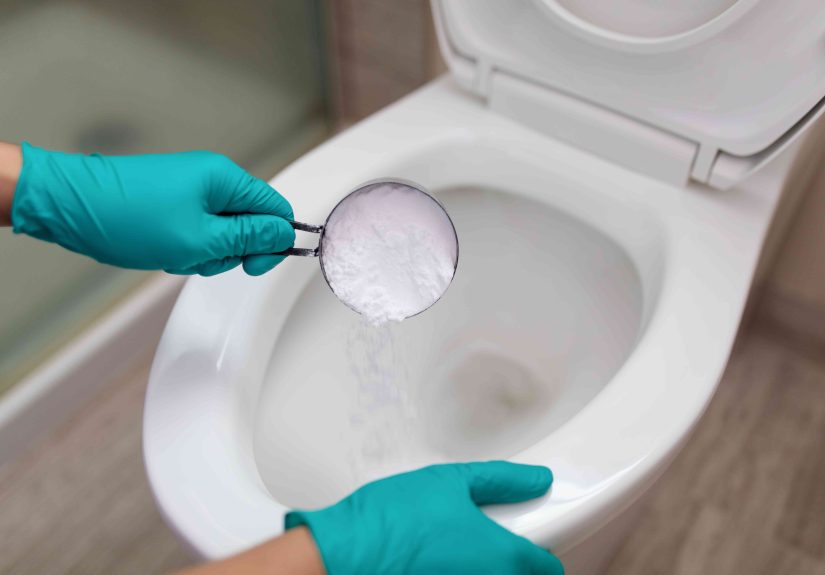
- Sprinkle baking soda around the inside of the bowl (about 1/2 cup is plenty). Aim for the waterline and the sides.
- Let it sit for 10–15 minutes. This gives it time to deodorize and soften grime.
-
Scrub thoroughly with a toilet brush, focusing on the waterline and under the rim.
Use a toothbrush for the rim jets if you’ve got persistent odor or stains hiding there. - Flush to rinse. Admire your work like you’re judging a bathroom makeover show.
If your toilet smells “fine” but you still get a whiff of doom occasionally, the problem is often under the rim or around the hinge area
not the middle of the bowl. Detail scrubbing matters.
The Power Combo (Used the Smart Way): Vinegar + Baking Soda for Stains and Odors
Yes, vinegar and baking soda fizz like a science fair volcano. The fizz is mostly carbon dioxide, which helps agitate loosened grime.
But here’s the trick: for the best cleaning effect, don’t premix them into a sad, flat potion. Use them in sequence.
Best for
- Hard water stains and dull rings
- Light-to-moderate mineral buildup
- Odors that linger after regular brushing
Step-by-step (sequential method)
- Pour vinegar into the bowl (about 1–2 cups). Make sure it coats stained areas.
- Let it sit 30–60 minutes (longer for heavier buildup).
-
Sprinkle baking soda onto tough spots (especially along the ring line).
Expect fizzingthis is normal and oddly satisfying. - Scrub thoroughly with the toilet brush.
- Flush to rinse.
If your stains are mild, you can shorten the sit time. If the stains look like they pay rent, extend the soak and repeat once.
Stubborn mineral buildup often responds better to time than to rage-scrubbing.
How to Remove Specific Toilet Bowl Stains (Because Stains Have Personalities)
1) Hard Water Stains and Mineral Rings (Limescale)
Hard water stains usually show up as a chalky ring at the waterline or crusty buildup under the rim. Vinegar is especially helpful here.
For extra stubborn deposits:
- Do the sequential vinegar soak (30–60 minutes), then baking soda scrub.
- Try an overnight soak with vinegar for tough rings (lid down, let it marinate).
-
If you have citric acid powder: sprinkle a small amount into the bowl (follow package guidance), let it sit, then scrub.
Citric acid can be excellent on mineral deposits.
Pro move: scrub under the rim where water flows. Mineral buildup there can cause both stains and persistent odor (and weaker flushing).
2) Rust Stains
Rust stains often look orange-brown and tend to cling like they’re emotionally attached. Baking soda helps with scrubbing, but rust may need
a more targeted approach:
- Make a thick baking soda paste with a little water and press it onto the stain.
- Let it sit 20–30 minutes, scrub, and repeat if needed.
-
If it barely budges, consider a toilet-safe pumice stone (wet it and the porcelain, and use gentle pressure).
If you’re unsure about your toilet finish, test a small hidden spot first.
If rust keeps returning quickly, check your tank componentsrusty bolts or parts can send rusty water into the bowl.
Cleaning the bowl is great; stopping the source is legendary.
3) Organic Stains (Mildew-ish Smudges, “Mystery Shadows”)
For grayish or brown smudges that aren’t clearly mineral-related, a baking soda scrub often works. If not:
- Use baking soda + elbow grease first.
-
If needed, try hydrogen peroxide as a separate step (do not combine with vinegar).
Apply, let sit, scrub, then flush.
If you’re cleaning after someone has been sick and you need disinfection, follow a disinfectant product’s directions carefully.
(Cleaning removes gunk; disinfection is a separate mission with separate rules.)
How to Get Rid of Toilet Odors (Even the Ones That Come Back)
Toilet odor isn’t always “the bowl.” Sometimes it’s the hidden grime in the usual suspects:
- Under the rim: bacteria and mineral buildup love it there.
- The waterline ring: odor can cling to the film.
- The outside base and floor: splashes happen. Life happens.
- The toilet tank: not often, but mold/mildew can build up in humid bathrooms.
Odor-busting routine
- Sprinkle baking soda in the bowl and let it sit 10–15 minutes.
- Scrub under the rim with a toothbrush and a little baking soda paste.
- Wipe the outside base and floor around the toilet with a mild cleaner.
- Flush and re-check odor after 10 minutes. (Odor sometimes “releases” after agitation.)
If odor is strongest near the base, it could be grime trapped where the toilet meets the flooror in rare cases, a failing wax ring.
If cleaning doesn’t improve it and the smell is persistent, it may be worth having it checked.
How Often Should You Clean With Baking Soda?
- Weekly: quick baking soda scrub to prevent rings and odors.
- Every 2–4 weeks: vinegar soak + baking soda scrub (especially with hard water).
- Seasonally: detail-clean under the rim jets and consider checking the tank if you notice musty smells.
Common Mistakes (That Make Toilets Harder to Clean)
Mistake 1: Scrubbing too soon
If you attack stains immediately, you’re doing the hardest version of the job. Let the cleaner sit first.
Time is a cleaning ingredient.
Mistake 2: Mixing too many products
More chemicals doesn’t equal more clean. It can mean canceled-out cleaning poweror dangerous fumes.
Use one approach, rinse/flush, then switch if you need to.
Mistake 3: Ignoring under the rim
That’s where the stink likes to hide. If your bowl looks clean but smells off, go under the rim like you’re investigating a mystery novel.
Mistake 4: Using abrasive tools incorrectly
Pumice can help on porcelain, but always keep it wet and be gentle. Never use it on plastic parts, and don’t treat your toilet like it owes you money.
Quick “Choose Your Method” Cheat Sheet
- Just a little dull + minor odor: baking soda, sit 10–15 minutes, scrub, flush.
- Hard water ring: vinegar soak 30–60 minutes, sprinkle baking soda, scrub, flush.
- Stubborn stains: longer soak (even overnight), repeat once, consider citric acid or a toilet-safe pumice.
- Odor won’t quit: detail-clean under rim + outside base and floor area; check tank if musty.
Conclusion: A Cleaner Toilet Without the Chemical Circus
Baking soda is the unsung hero of toilet bowl cleaning: it scrubs gently, neutralizes odors, and plays well with other helpers when used correctly.
For everyday maintenance, it’s fast and effective. For stains and hard water buildup, pairing it with a vinegar soak (in sequence) gives you a
bigger punch without turning your bathroom into a chemistry lab.
The best part? Once you get into a weekly rhythm, your toilet stops developing “character,” and starts looking like a normal, clean toilet again.
Which is the exact vibe we want.
Extra: Real-World Experiences (The Good, the Gross, and the Surprisingly Fixable)
Cleaning advice always sounds neat on paperuntil you’re staring at a toilet ring that looks like it’s been there since the invention of indoor plumbing.
Here are a few common real-life scenarios people run into, plus what typically works (and what usually doesn’t).
Scenario 1: “My toilet is clean… so why does it smell weird?”
This is incredibly common. The bowl might look spotless, but odor often lives under the rim. When you scrub only the visible area, you’re basically
cleaning the living room and ignoring the attic full of raccoons. A small detail brush (or old toothbrush) with baking soda paste under the rim jets
can make a dramatic difference. The first time people do this, the reaction is usually: “Oh. That’s where the smell has been paying rent.”
Scenario 2: “I tried baking soda and vinegar… and nothing happened.”
Usually, this is either a timing issue (not letting it sit long enough) or a mismatch between stain type and method. Mineral buildup is stubborn and
often needs a longer soaksometimes overnightespecially in hard-water areas. Another common issue is premixing vinegar and baking soda into a bottle,
which mostly turns them into a less-effective solution before they ever hit the stain. Using vinegar first to soak, then adding baking soda for scrubbing,
tends to be way more satisfying.
Scenario 3: “The ring keeps coming back every few days.”
If a ring returns fast, there’s usually a reason: hard water plus frequent evaporation, a slow leak from the tank into the bowl, or mineral-heavy water
constantly refreshing the ring line. People often assume it’s “dirty,” but it’s sometimes just “mineral-rich water doing mineral-rich water things.”
Keeping a weekly baking soda scrub habit helps. If you suspect a slow leak (you notice constant trickling or the water level changes), fixing that can
reduce repeat staining massively.
Scenario 4: “I got aggressive and now the toilet looks worse.”
Rage-scrubbing is emotionally valid, but it can rough up deposits without removing them fully, leaving the bowl looking patchy. The better strategy:
let cleaners sit longer, then scrub. Also, some people use the wrong toolslike overly abrasive padswhich can dull the finish. If you’re going to use a
toilet-safe pumice stone, keep everything wet and use gentle pressure. Think “polishing,” not “sanding a deck.”
Scenario 5: “The odor is strongest near the base, not the bowl.”
This surprises people. Sometimes it’s just splashes and grime around the base or floor (especially if the bathroom is heavily used). A thorough wipe-down
around the base and floor edges can fix it. If the smell persists and cleaning doesn’t touch it, it could be a wax ring issueless common, but worth checking
if the odor is constant and unmistakably sewer-like.
The big takeaway from real-world toilet cleaning: the method matters, but consistency matters more. A weekly, low-effort baking soda routine prevents the
“how did it get this bad?” moment. And if you do end up facing a legendary stain, time + the right product sequence usually winswithout needing a dozen
bottles and a hazmat suit.