Table of Contents >> Show >> Hide
- What Is an Ingrown Toenail?
- Can You Cut an Ingrown Toenail at Home?
- Tools You Need Before Cutting
- How to Cut an Ingrown Toenail Safely
- What Not to Do With an Ingrown Toenail
- When to See a Doctor or Podiatrist
- How to Prevent Ingrown Toenails
- Special Advice for Athletes and Active People
- Experience-Based Tips: What People Learn the Hard Way
- Conclusion
An ingrown toenail has a special talent for turning one tiny corner of your foot into the main character of your day. One minute you are walking normally; the next, your big toe is acting like it has filed a formal complaint. The good news is that mild ingrown toenails can often be managed at home with careful trimming, warm soaks, clean tools, and a firm refusal to perform “bathroom surgery” with random scissors.
Before we go further, here is the golden rule: learning how to cut an ingrown toenail does not mean digging, stabbing, carving, or trying to yank out a buried nail edge. If the nail is severely painful, swollen, infected, draining fluid, very red, or you have diabetes, poor circulation, nerve problems, or a weakened immune system, skip the DIY routine and contact a healthcare provider or podiatrist. Your toe is small, but infection can be very serious.
This guide explains how to trim a mildly ingrown toenail safely, what not to do, when to stop, and how to prevent the nail from growing into the skin again. Think of it as a calm, practical foot-care manualnot a toe horror movie.
What Is an Ingrown Toenail?
An ingrown toenail happens when the edge or corner of a toenail grows into the surrounding skin instead of over it. It most often affects the big toe, though any toenail can get involved if it feels ambitious. The area may feel tender, sore, swollen, or irritated, especially when you wear shoes or press on the toe.
Common causes include cutting toenails too short, rounding the corners too deeply, wearing tight shoes, toe injuries, naturally curved nails, sweaty feet, poor foot hygiene, and certain sports that put repeated pressure on the toes. Sometimes the nail is not the only problemthe shoe is the villain wearing a size too small.
Can You Cut an Ingrown Toenail at Home?
You may be able to trim a mildly ingrown toenail at home if the nail edge is visible, the pain is mild, there is no pus or spreading redness, and you can cut the nail without forcing tools into the skin. The goal is not to remove the buried part like a surgeon. The goal is to trim the nail properly so it can grow forward and stop pressing into the skin.
You should not cut an ingrown toenail at home if you see signs of infection, if the toe is very swollen, if the pain is worsening, or if the nail edge is hidden under inflamed skin. You should also avoid self-treatment if you have diabetes, poor blood flow, nerve damage, or a condition that makes healing slower. In those situations, a podiatrist can treat the nail safely and reduce the risk of complications.
Tools You Need Before Cutting
Gather everything before you start. Hobbling around the bathroom with one damp foot while searching for clippers is not the spa experience anyone ordered.
- Clean toenail clippers, preferably larger straight-edge clippers
- Warm water and mild soap or Epsom salt for soaking
- A clean towel
- Rubbing alcohol for cleaning tools
- A nail file
- Clean cotton or dental floss, only if recommended and used gently
- Antibiotic ointment and a bandage, if the skin is irritated but not severely infected
- Roomy sandals or shoes with a wide toe box
Clean tools matter. A tiny break in the skin can invite bacteria, and bacteria do not need a printed invitation. Wash your hands, clean the clipper with rubbing alcohol, and use a fresh towel.
How to Cut an Ingrown Toenail Safely
Step 1: Soak the Foot First
Soak your foot in warm water for 10 to 20 minutes. Warm water softens the nail and surrounding skin, making trimming easier and less dramatic. You can use plain warm water, mild soapy water, or Epsom salt if your skin tolerates it. After soaking, dry the toe carefully, especially around the nail folds.
Do not use very hot water. Your toe needs comfort, not soup preparation. If you have reduced sensation in your feet, test the water carefully or ask someone to check the temperature.
Step 2: Look Closely at the Nail
Before cutting, inspect the nail. Ask yourself: Can I clearly see the edge? Is there drainage? Is the skin extremely swollen? Is the pain sharp or severe? If the answer suggests infection or a hidden nail edge, stop. This is the point where a professional should take over.
If the nail is only mildly curved into the skin and you can see the edge without digging, you may continue with gentle trimming.
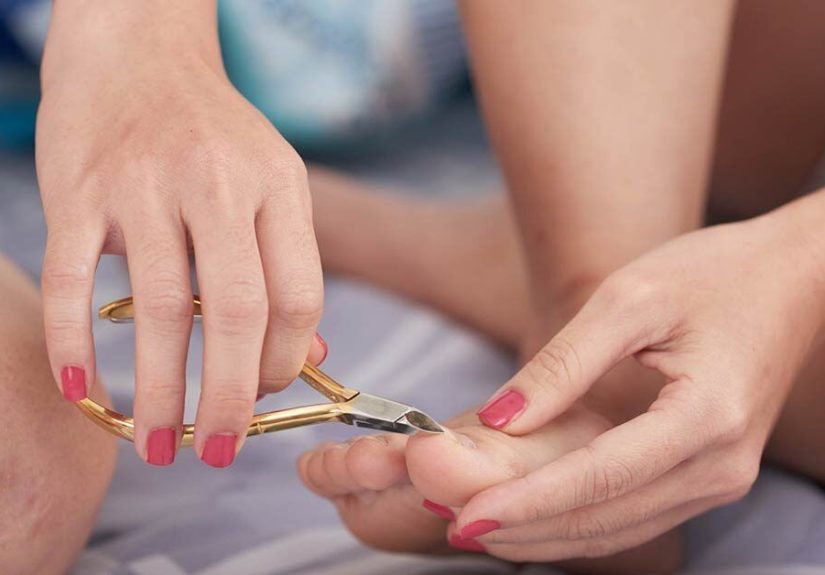
Step 3: Cut Straight Across
Trim the toenail straight across. Do not round the corners down into the sides. Do not cut a deep V shape in the center of the nail. That old trick sounds clever, but it does not reliably fix the problem and may encourage poor nail growth habits.
Leave the nail long enough so the corners can grow over the skin instead of into it. A good general rule is to keep the nail edge roughly even with the tip of the toe. Cutting too short is one of the fastest ways to invite the ingrown toenail back for a sequel.
Step 4: Avoid Digging Into the Corner
This is the most important part. Do not force the clipper under the skin. Do not cut into the side groove. Do not pull out a sharp hidden piece with tweezers. That can create a wound, worsen inflammation, and raise the risk of infection.
If a small nail corner is visible and loose, trim only what is clearly above the skin. If it is embedded, painful, or hard to reach, leave it alone and see a podiatrist. A medical professional can numb the area and remove the ingrown portion safely if needed.
Step 5: File Sharp Edges Smooth
After trimming, use a clean nail file to smooth any rough edges. File lightly in one direction. The goal is to remove sharp corners that could poke the skin as the nail grows. Do not file the sides too aggressively, because that can make the nail narrower and encourage future ingrowth.
Step 6: Protect the Toe After Trimming
If the skin is tender, apply a thin layer of antibiotic ointment and cover it with a clean bandage. Change the bandage daily or whenever it gets wet or dirty. Keep the foot dry between soaks. Moist, tight shoes create the kind of environment bacteria would rate five stars.
What Not to Do With an Ingrown Toenail
Some home remedies sound bold but are not toe-friendly. Avoid cutting a notch or V shape into the nail, ripping the nail edge, using dirty tools, cutting the nail extremely short, or repeatedly digging under the side of the nail. Also avoid wearing tight shoes while the toe is healing.
Do not use harsh chemicals on the skin, and do not try to numb the toe with ice for aggressive cutting. If you need to numb the toe to tolerate the trimming, that is a sign the problem is beyond simple home care.
When to See a Doctor or Podiatrist
Professional care is the smart choice if the toe has pus, spreading redness, warmth, worsening swelling, red streaks, fever, severe pain, or a bad smell. You should also seek care if the ingrown toenail keeps coming back, the nail is thick or curved, or you cannot trim it safely.
A podiatrist may gently lift the nail, place material under the edge, prescribe medication if infection is present, or remove part of the nail in a controlled setting. For recurring ingrown toenails, a procedure may be used to prevent the problem edge from growing back. That sounds intimidating, but it is often much less miserable than repeatedly battling the same angry toenail every few months.
How to Prevent Ingrown Toenails
Trim Toenails the Right Way
Cut toenails straight across and avoid rounding the corners too deeply. Use toenail clippers instead of small fingernail clippers. Trim after a shower or foot soak when the nail is softer. If your nails are thick, cut in small sections rather than one dramatic clip.
Choose Shoes With Room
Tight shoes squeeze the toes and push skin against the nail. Look for shoes with a wide toe box, especially if you run, play sports, walk a lot, or stand for long periods. Your toes should have enough room to wiggle without negotiating with the shoe.
Keep Feet Clean and Dry
Wash your feet regularly, dry between the toes, and change socks when they get sweaty. Breathable socks and properly fitting shoes can reduce moisture and friction. If your feet sweat heavily, rotating shoes and using moisture-wicking socks may help.
Be Careful With Pedicures
If you get pedicures, ask the technician not to cut the corners too short. Avoid aggressive trimming along the sides of the nail. A beautiful pedicure should not come with a free future podiatry appointment.
Special Advice for Athletes and Active People
Runners, soccer players, hikers, dancers, and people who wear cleats are more likely to irritate toenails because repeated pressure pushes the nail into the skin. Keep nails trimmed straight across, make sure athletic shoes are not too tight, and replace shoes that crowd the toes. If a sport requires snug footwear, check your toes after practice and treat soreness early.
For long walks or hikes, trim nails a few days before the activity rather than the morning of. Freshly over-trimmed nails can become irritated when your foot slides forward downhill. Your toenails may be small, but on mile seven they can become very opinionated.
Experience-Based Tips: What People Learn the Hard Way
One of the most common experiences with an ingrown toenail is waiting too long. At first, it feels like a tiny pinch. Then it becomes tender in shoes. Then the toe starts protesting every step. Many people ignore it because it seems too minor for medical attention. The lesson is simple: early care is easier than late rescue.
Another real-world lesson is that cutting the nail shorter often makes the problem worse. It feels logicalif the nail hurts, cut more nail. But when the corner is cut too short, the skin can fold over the edge as the nail grows back. A few weeks later, the same corner returns like a villain in a low-budget action movie.
People also learn that shoe pressure matters more than they expected. A perfectly trimmed toenail can still become irritated if the shoe squeezes the toe all day. Dress shoes, narrow sneakers, tight cleats, and pointed shoes can all press the nail into the skin. Switching to roomy footwear for a few days can make a noticeable difference in mild cases.
Warm soaks are another underestimated habit. They do not magically “cure” every ingrown toenail, but they can soften the skin, reduce discomfort, and make gentle nail care easier. The key is consistency. Soaking once and then returning to tight shoes is like brushing one tooth and declaring dentistry complete.
Many people discover that their bathroom tools are not ideal. Small fingernail clippers can leave jagged edges on thick toenails. Dull clippers crush instead of cut. Shared or dirty tools increase infection risk. Upgrading to clean, sturdy toenail clippers is a small change that can prevent big toe drama.
Another experience worth mentioning: pain level is a useful guide. Mild tenderness during trimming may be manageable, but sharp pain is a stop sign. If you are holding your breath, sweating, or bargaining with your toe, it is time to stop and get help. Home care should feel careful, not heroic.
People with recurring ingrown toenails often say the same thing after seeing a podiatrist: “I wish I had gone sooner.” Professional treatment can be quick, clean, and targeted. Instead of repeatedly cutting the same painful corner every month, a podiatrist can identify whether the problem is nail shape, footwear, trimming technique, or repeated pressure.
Parents and teens often run into this issue during sports seasons. A teenager may wear tight cleats, trim nails in a hurry, and ignore soreness until game day becomes toe day. A simple routinetrim straight across, check shoes, dry feet well, and speak up when pain startscan prevent a small nail problem from interrupting activities.
Finally, the biggest experience-based takeaway is this: an ingrown toenail rewards patience. Do not attack it. Soften it, trim it properly, protect it, give it space, and monitor it. If it worsens, let a medical professional handle it. Your toe does not need a brave warrior; it needs a calm manager.
Conclusion
Knowing how to cut an ingrown toenail starts with knowing when not to cut it. For a mild case, soak the foot, clean your tools, trim the nail straight across, avoid digging into the corners, smooth sharp edges, and protect the toe afterward. For severe pain, infection, diabetes, poor circulation, or repeated ingrown nails, professional care is the safest path.
The best long-term strategy is prevention: trim toenails properly, wear shoes with enough toe room, keep feet clean and dry, and avoid aggressive corner cutting. Your toenails may not ask for much, but they do appreciate not being corneredliterally.
Note: This article is for general educational information and should not replace medical advice. If the toe looks infected, symptoms are getting worse, or you have a medical condition that affects healing, contact a healthcare professional.